
From Box Office Flops to Cult Icons: Five Sci-Fi Masterpieces That Defined a Genre

In the volatile ecosystem of Hollywood, the metrics of success are often reductive. Studios, shareholders, and trade publications frequently conflate "cultural impact" with "opening weekend gross." However, film history is littered with massive financial successes—franchises like Police Academy or the Francis the Talking Mule series—that dominated their respective eras only to vanish entirely from the modern pop-culture zeitgeist. Conversely, some of the most influential works in the history of cinema were initially dismissed, ignored, or outright lambasted by contemporary audiences.
As the musician Brian Eno famously noted regarding the Velvet Underground’s debut album: "The first record only sold 10,000 copies, but everyone who bought it formed a band." In the world of science fiction, this phenomenon is not merely common; it is foundational. The following five films suffered ignominious defeats at the box office, yet each went on to fundamentally alter the DNA of the genre.
1. Blade Runner (1982): The Blueprint of Dystopia
The Facts
Directed by Ridley Scott, Blade Runner adapted Philip K. Dick’s 1968 novel Do Androids Dream of Electric Sheep? with a vision of 2019 Los Angeles that remains the industry standard for "tech-noir." The narrative follows Rick Deckard (Harrison Ford), a specialized police operative tasked with "retiring" rogue replicants—bio-engineered androids seeking to extend their finite lifespans.

Chronology and Financial Impact
Released in June 1982, Blade Runner arrived during a summer dominated by the warm, optimistic wonder of Steven Spielberg’s E.T. the Extra-Terrestrial. With a production budget of $30 million—a significant sum for the era—the film struggled to connect with audiences, earning only $32 million domestically. It was widely perceived as cold, slow, and overly cerebral.
Legacy and Implications
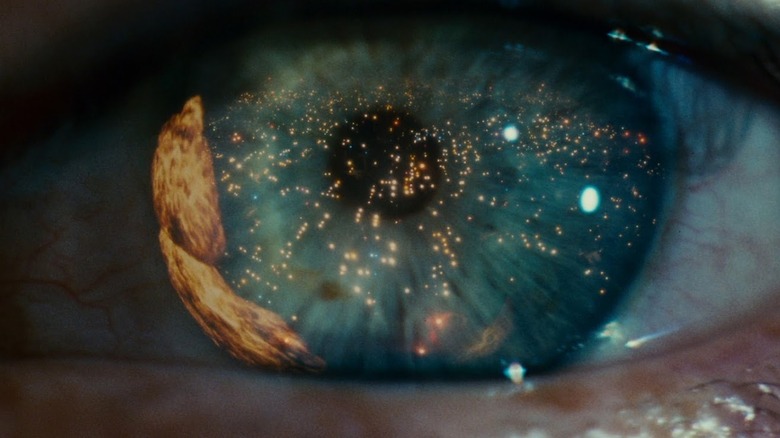
The film’s legacy is defined by its production design. Scott’s vision of a rainy, neon-drenched, multicultural urban sprawl created a visual shorthand for "the future" that has been replicated in countless films, video games, and television series. While audiences in 1982 were looking for the comfort of space-traveling aliens, they were unprepared for the existential dread of Blade Runner. Through multiple "Director’s Cuts" and ongoing critical reappraisal, the film has ascended to the status of a high-art classic, proving that deep philosophical inquiry into the nature of humanity often requires time to settle into the collective consciousness.
2. The Thing (1982): A Masterclass in Paranoia
The Facts
John Carpenter’s The Thing is often cited as the pinnacle of practical horror-sci-fi. Set at an isolated Antarctic research station, the film follows a group of men who encounter a shape-shifting extraterrestrial organism capable of perfectly imitating any living creature it consumes.

Supporting Data and Context
Released on June 25, 1982—a mere two weeks after E.T.—The Thing was decimated by the critical and commercial success of Spielberg’s family-friendly blockbuster. While E.T. was a celebration of hope, The Thing was an exercise in absolute, nihilistic paranoia. Critics at the time, such as those at the Los Angeles Times, dismissed the film as a "wretched excess" of gore and special effects.
Official Responses and Cultural Shift
Rob Bottin’s groundbreaking practical effects remain the gold standard for creature design. Despite its initial failure, the film’s influence is now omnipresent. From the claustrophobic tension of the survival-horror genre to the social deduction mechanics of modern pop culture hits like the game Among Us, The Thing effectively taught a generation of filmmakers that the most dangerous monster is the one you cannot identify.
3. Gattaca (1997): The Ethics of Genetics
The Facts
Andrew Niccol’s Gattaca presents a "biopunk" vision of a near-future society where one’s social standing is dictated entirely by genetic perfection. Ethan Hawke stars as Vincent, an "in-valid" who assumes the identity of a genetically superior "valid" (Jude Law) to achieve his dream of space travel.
Financial Performance
With a budget of $36 million, Gattaca earned a disappointing $12.5 million domestically. In 1997, the public was more interested in the spectacle of The Lost World: Jurassic Park and Independence Day than they were in a quiet, moody exploration of eugenics and human potential.
Implications for the Genre
Gattaca proved that high-concept science fiction did not require massive explosions to be effective. Its exploration of the "genetic underclass" has become a touchstone in political and scientific discourse. Today, whenever the ethics of CRISPR or gene editing are debated in mainstream media, Gattaca is the standard reference point. It serves as a stark reminder that the most compelling science fiction is often the kind that holds a mirror to our own technological trajectory.
4. Starship Troopers (1997): The Satire That Was Too Sharp
The Facts
Paul Verhoeven’s Starship Troopers was marketed as a straightforward space-marine action film. In reality, it was a searing, subversive satire of fascism, military propaganda, and the Jingoism found in Robert A. Heinlein’s original source material.

Chronology of Misunderstanding
The film’s failure at the box office was largely due to a marketing disconnect. Critics and audiences alike took the film’s recruitment-style imagery at face value, accusing the director of glorifying war. Few recognized the irony embedded in the "Would you like to know more?" propaganda segments or the fact that the human protagonists were effectively the villains of their own story.
The Turn in Reception
Decades later, Starship Troopers is celebrated for its brilliance. By casting "perfect", fresh-faced actors in the roles of soldiers, Verhoeven highlighted the hollowness of nationalist rhetoric. The film’s eventual success in the home video market and critical re-evaluation underscores a vital lesson in film studies: sometimes, a film’s greatest obstacle is the audience’s inability to grasp the nuance of its tone upon initial release.
5. Speed Racer (2008): The Avant-Garde Blockbuster
The Facts
The Wachowskis’ adaptation of the 1960s anime Speed Racer remains one of the most polarizing visual experiments in cinema history. It utilized a hyper-saturated, "liquid" aesthetic that eschewed traditional cinematography in favor of a 3D-space, collage-like visual language.

Supporting Data
Budgeted at $120 million, the film earned $94 million globally. The backlash was immediate; critics felt the film was "overstimulating" and "exhausting." It was viewed as a visual mess that lacked the grounded narrative structure expected of a summer blockbuster.
Implications and Future-Proofing
In hindsight, Speed Racer was a trailblazer. The visual language that once felt "exhausting" has since been co-opted by the Marvel Cinematic Universe and other high-octane franchises. As modern blockbusters have moved toward increasingly artificial, CGI-heavy environments, Speed Racer looks less like a failed experiment and more like a visionary blueprint. It was a movie that arrived ten years too early, demanding a visual literacy that the general public would not develop until the advent of the modern streaming era.
Conclusion: The Long Tail of Cinema
The trajectory of these five films suggests that the box office is a poor indicator of a film’s long-term health. The initial financial failure of these movies was not a reflection of poor quality, but rather a symptom of their deviation from the cultural norms of their time.

By challenging audiences—whether through the existential nihilism of Blade Runner, the political satire of Starship Troopers, or the visual density of Speed Racer—these directors were not merely making movies; they were expanding the boundaries of what the medium could accomplish. While the box office provides the capital for production, time remains the ultimate judge of artistic merit. These films prove that, in the long run, being "ahead of the curve" is far more valuable than simply meeting the demands of the present.
