
The Cul-de-Sac of the Soul: Re-examining Joe Dante’s The ’Burbs
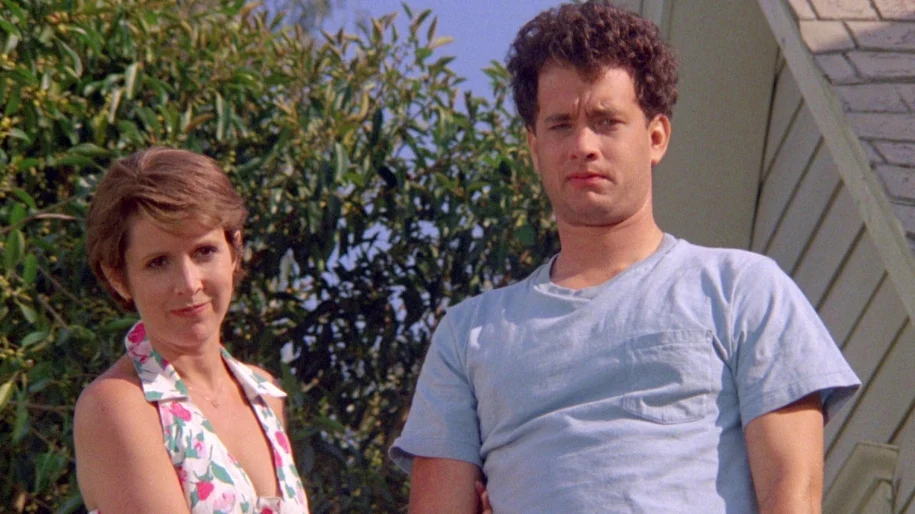
The American suburban experience has long been defined by a fundamental dialectic: the promise of a peaceful, private paradise versus the creeping, claustrophobic reality of a suburban hell. It is a landscape where the absence of city noise is replaced by a "screaming silence," and where the manicured green lawn often serves as a thin veneer over profound domestic instability. Nowhere is this tension more masterfully, and satirically, captured than in Joe Dante’s 1989 cult classic, The ’Burbs.
More than three decades after its release, The ’Burbs remains a definitive—if darkly comedic—commentary on the paranoia inherent in the suburban project. By framing the quintessential American "everyman" against the backdrop of an encroaching, mysterious "other," Dante exposed the rot beneath the white picket fences of the Reagan era.
Main Facts: The Anatomy of a Suburban Breakdown
At its core, The ’Burbs is a study in projection. The film follows Ray Peterson (Tom Hanks), a suburbanite who chooses to spend his vacation at home rather than seeking an escape. He is surrounded by a cast of neighbors who embody the various archetypes of the cul-de-sac: the nosy, gluttonous Art (Rick Ducommun); the hyper-militaristic, Vietnam-obsessed Rumsfield (Bruce Dern); and the cynical, voyeuristic teenager Ricky (Corey Feldman).
The catalyst for the film’s narrative—and its descent into madness—is the arrival of the Klopeks, a family of eccentric, shadowy figures who move into a dilapidated Victorian house at the end of the block. Their nocturnal digging, late-night furnace fires, and general lack of social grace turn the quiet cul-de-sac into a hotbed of conspiracy. For Ray, the question is not merely one of nosiness; it is a desperate search for meaning in a world where "nothing looks wrong, but several things feel so off."
Chronology: A Descent into Neighborhood Paranoia
The timeline of The ’Burbs mirrors the rapid erosion of social norms within a closed system.
- The Incubation (The Start of the Week): Ray begins his vacation with a desire for rest, but the stillness of the suburbs triggers an existential restlessness. He is quickly pulled into the orbit of his neighbors’ suspicions.
- The Escalation (Mid-Week): As the rumors about the Klopeks grow, the neighbors move from observation to active surveillance. The discovery of a human femur by Ray’s dog serves as the tipping point, transforming idle gossip into a perceived crusade against evil.
- The Climax (The Final Night): The paranoia reaches a fever pitch as the neighbors engage in a full-scale assault on the Klopek property, ultimately resulting in the destruction of the house.
- The Resolution: The film concludes with a twist that leaves the audience questioning the nature of the "enemy." The Klopeks are revealed to be actual villains, a narrative choice that Dante famously struggled with during production to ensure audience satisfaction.
Supporting Data: The Dante Aesthetic and the "Everyman"
Joe Dante is often described as the "poet laureate of suburban ambivalence." Unlike directors who approach suburban critique with heavy-handed polemics, Dante utilizes the visual language of The Twilight Zone—a murky balance between clear meaning and total absurdity.
The production of The ’Burbs was informed by the cultural shifts of the 1980s. Shot on the iconic Universal Colonial Street backlot—the same site used for The Munsters and later Desperate Housewives—the setting itself is a metatextual commentary on the artificiality of the suburban ideal. The film’s success rests heavily on the performance of Tom Hanks. At the time, Hanks was cementing his status as the "reigning everyman." His ability to navigate the transition from a calm, rational father to a frantic, sweating paranoid provided the emotional anchor for a story that could have easily veered into pure farce.
Production designer James Spencer’s work was equally pivotal. By transforming a set previously associated with the wholesome New Leave It to Beaver into a house of horrors, the film visually manifests the idea that the "monsters" are not just at the gate—they are a product of the gate itself.
Official Responses and Creative Conflict: The Ending Dilemma
One of the most revealing aspects of The ’Burbs is its history of alternate endings, which highlight the tension between artistic vision and audience expectations. Dante and his team shot multiple versions of the film’s conclusion.
In an early, un-screened version, Ray Peterson suffers a darker fate, succumbing to the Klopeks’ machinations. However, as Dante recalled in subsequent interviews, the studio and the director understood that killing off the audience’s surrogate, Tom Hanks, would be a fatal error in a comedic project.
A secondary ending featured a monologue from the Klopek patriarch, Uncle Reuben (Brother Theodore), providing a more nuanced, cynical critique of the neighbors’ meddling. Preview audiences, however, rejected this. They wanted the satisfaction of the "heroes" being vindicated. The theatrical ending, where the Klopeks are caught and Ray is carted off to the hospital in a state of manic relief, represents a compromise. It allows for a cartoonish victory while leaving the lingering, unsettling question: Are we the monsters we fear?
Implications: The Suburban Panopticon
The legacy of The ’Burbs lies in its prescient look at the "Us vs. Them" mentality that governs suburban living. The film’s most powerful moment occurs when Ray, standing amidst the ruins of his neighbors’ home, realizes the truth: "We’re the ones who are acting suspicious and paranoid! We’re the lunatics!"
This monologue is not just a character beat; it is a diagnosis of the American condition. The suburb, as designed, is a panopticon. It is built on property lines that define who is a guest and who is an intruder. When there is no common space to share, the only activity left is the policing of one’s neighbors.
The film suggests that the "suburban crack-up" is inevitable. The pressure to maintain the lawn, the social standing, and the illusion of safety creates a pressure cooker environment where any deviation from the norm is treated as an existential threat. The Klopeks were not necessarily the source of the neighborhood’s evil; they were merely the blank canvas upon which the residents of Mayfield Place projected their own suppressed anxieties, failures, and violent tendencies.
In the final analysis, The ’Burbs is not a message movie in the traditional sense. It does not offer a solution to the suburban malaise. Instead, it offers a mirror. It shows us that in a world where the highest value is "my house" versus "yours," the distance between a concerned citizen and a dangerous lunatic is often shorter than a manicured lawn. By blending the horror of the unknown with the comedy of the mundane, Joe Dante crafted a film that feels just as relevant in the era of Ring cameras and social media surveillance as it did in the twilight of the 1980s. The monsters are not under the floorboards; they are in the driveways, armed with lawn mowers and a desperate, gnawing need to belong.
