
The Ageless Nightmare: Why John Frankenheimer’s Seconds is the Defining Horror Film of the 21st Century
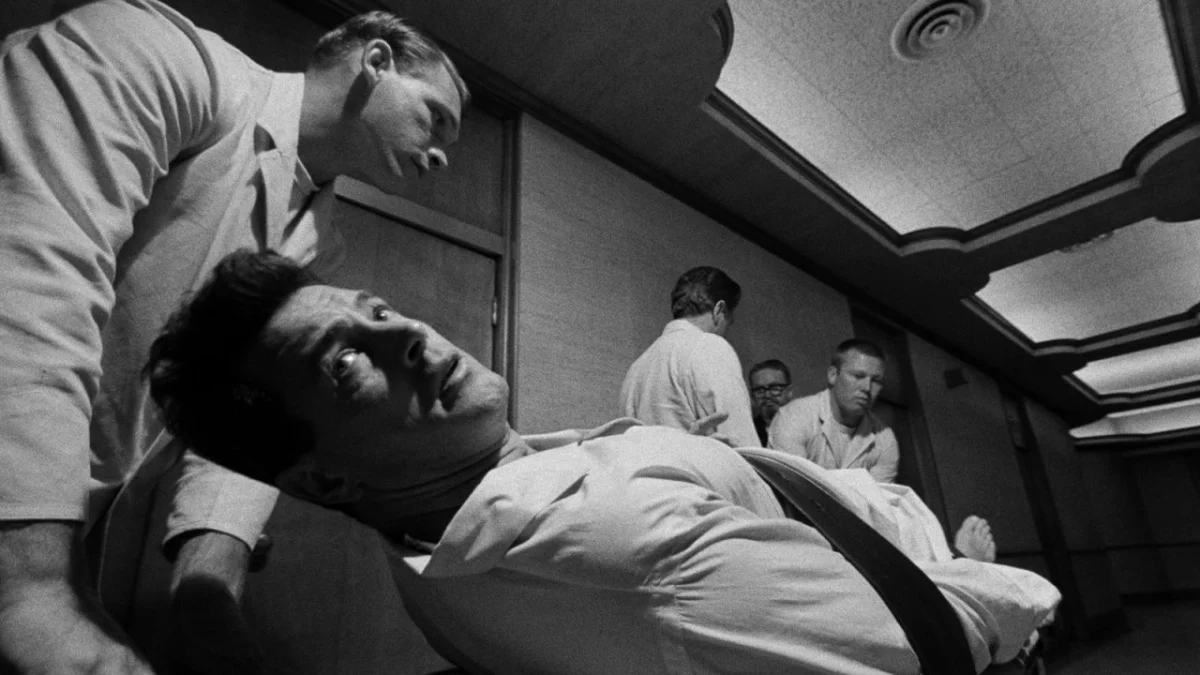
The operating room is bathed in the sterile, unforgiving glare of high-wattage surgical lamps. We are treated to a visceral montage: skin stretched taut, needles piercing tissue, the rhythmic, metallic clatter of scalpels, and the disembodied eyes of masked surgeons looming over a helpless subject. This is not a sequence from a contemporary body-horror masterpiece like Coralie Fargeat’s The Substance; it is a relic of 1966.
John Frankenheimer’s Seconds remains one of the most chilling, prescient, and misunderstood films in the history of American cinema. A harrowing exploration of the commodification of identity and the desperate, futile reach for eternal youth, the film was a colossal failure upon its initial release. Yet, today, it stands as a haunting mirror reflecting our current era of "Instagram face," billionaire-funded longevity research, and the relentless, expensive pursuit of aesthetic perfection.
The Anatomy of a Forgotten Masterpiece
Seconds follows Arthur Hamilton (John Randolph), a 52-year-old bank executive living a life of quiet, crushing despair. Trapped in an unfulfilling marriage and a sterile professional existence, Hamilton is approached by a secret organization—a shadow corporation that offers the ultimate service: "death" and a total rebirth. For a steep price, clients are surgically transformed into younger, "idealized" versions of themselves to begin life anew.
Hamilton undergoes the procedure and emerges as Tony Wilson, portrayed with haunting vulnerability by Rock Hudson. What follows is not the dream of a fresh start, but a descent into an existential purgatory. The promise of a second chance proves to be a gilded cage, revealing that no amount of surgical reconstruction can excise the hollowness of a soul that never had a dream to begin with.
A Chronology of Artistic Misunderstanding
The trajectory of Seconds is a tragedy of timing.
- 1966 (The Premiere): The film debuted at the Cannes Film Festival to widespread derision. Audiences, accustomed to Rock Hudson’s persona as the ultimate Hollywood romantic lead—the charming, square-jawed partner to Doris Day—were fundamentally repulsed by seeing him as a broken, terrified, and psychologically fractured man. The film’s experimental cinematography and uncompromising tone led to boos, and a demoralized Frankenheimer famously skipped the post-screening press conference.
- The Post-War Dissonance: In the mid-1960s, the American public was still clinging to the remnants of post-war optimism. The cynical, dystopian vision offered by Seconds—which suggested that even the "American Dream" of self-reinvention was a corporate pyramid scheme—was a pill too bitter to swallow.
- 1997 (The Re-evaluation): The film’s critical reputation began to shift with its laserdisc release, which allowed a new generation of film scholars to appreciate the technical mastery of cinematographer James Wong Howe.
- 2013–Present: The Criterion Collection restoration cemented Seconds as a cult classic. In an era of rampant body dysmorphia and the aesthetic homogenization of the internet, the film’s central conceit—that our obsession with the "perfect" self is a trap—has never felt more relevant.
Technical Brilliance: The Eye of James Wong Howe
The visual language of Seconds is inseparable from its message of alienation. Cinematographer James Wong Howe, a legend of the industry, employed innovative camera rigs that were physically strapped to the actors. By using wide-angle and fisheye lenses, Howe forced the viewer into an uncomfortably intimate space with Arthur Hamilton.
The viewer is never granted a stable, objective perspective. We are trapped in the claustrophobic, distorted reality of the protagonist. Howe’s work here is a masterclass in subjective cinematography, creating a sense of "dismal absurdism" that predates the surrealist nightmares of David Lynch or the dystopian aesthetic of Terry Gilliam’s Brazil. His refusal to provide a "comfortable" image was exactly what repulsed 1966 audiences, but it is precisely why modern viewers find the film so terrifyingly immersive.

Supporting Data: The Cost of the "Second Life"
The film’s narrative is built on the cold, hard logic of capital. The "Company" that manages these transformations is not a miracle clinic; it is a business.
- The Pyramid Scheme: The most chilling revelation of the film is that the "second chance" is a recruiting tool. The organization requires its beneficiaries to recruit new clients, turning the pursuit of youth into a multi-level marketing scheme of human misery.
- The Cultural Context: While audiences in the 60s rejected the depiction of plastic surgery as "disturbing and violent," current discourse has caught up to the film’s reality. In 2024, the "beauty economy" is a trillion-dollar industry. The film’s depiction of the "slaughterhouse" where the transition occurs acts as a brutal metaphor for the way society treats the aging body: as raw material to be processed, trimmed, and sold back to us.
Implications for the Modern Condition
Seconds serves as a grim prophecy for the 21st century. We currently live in a time where the "ennui of middle age" is treated as a medical condition to be "cured" rather than a part of the human experience to be navigated.
The Illusion of Identity
Arthur/Tony’s journey highlights the fallacy that we can change our essence by changing our exterior. Rock Hudson’s performance is the film’s anchor; he played the role with a level of desperation that was largely ignored at the time. Hudson, fighting his own internal battles with the disparity between his public persona and private reality, gave the performance of a lifetime. He portrays a man who has traded his life for a mask, only to realize the mask is heavy, stifling, and ultimately, fake.
The "Death of the Dream"
The film’s final lines—the Founder asking if Arthur has found his "dream come true," and Arthur’s hollow response, "I guess I never had a dream"—serve as an indictment of the modern pursuit of happiness. We are taught that if we are unhappy, we simply need a new face, a new body, or a new identity. Seconds posits that if the internal foundation is built on sand, no amount of exterior renovation will save the structure.
Conclusion: A Second Life for a Classic
John Frankenheimer once remarked that Seconds was the only film he made that "went from failure to classic without ever being a success." It is a sentiment that captures the film’s strange, liminal existence.
It is no longer "too soon" for this film. As we watch the lines between reality and digital filters blur, and as the wealthy continue to chase the promise of biological immortality, Seconds feels less like a work of fiction and more like a documentary of our own anxieties. It remains a mandatory watch—a brutal, beautiful, and unflinching look at the price of wanting to be someone else. The film teaches us that while we may be able to buy a new face, we cannot buy a new life, and the seconds we spend running from our own mortality are the only ones we will ever truly have.
