
The Ascent of ‘Industry’: From Financial Fringe to Emmy Frontrunner
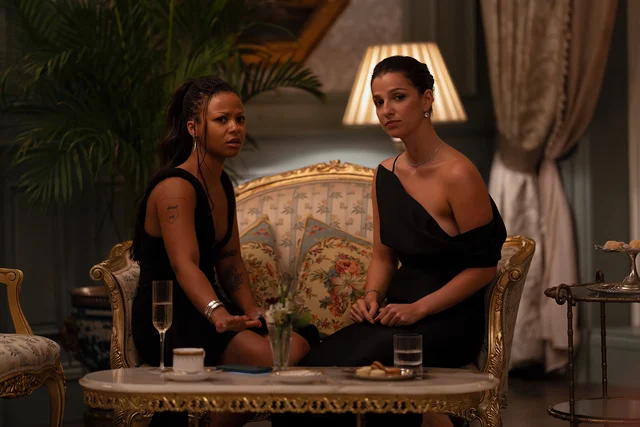
For the casual observer, HBO’s Industry has always been a high-octane, neon-soaked portrait of the London financial sector—a world where the air is thin, the drugs are abundant, and the moral compasses are perpetually spinning. However, for those tracking the evolution of prestige television, the series has undergone a metamorphosis that is as impressive as it is rare. As we look toward the 2026 Emmy Awards, Industry stands not merely as a cult favorite, but as one of the two or three best drama series eligible for the industry’s highest honors. Full stop, no qualifications.
A Legacy of Growth: The Architecture of Excellence
The journey to this moment has been anything but linear. The first three seasons of Industry famously received zero Emmy nominations. To the uninitiated, this might seem like a glaring oversight from the Television Academy, especially given the pedigree of HBO’s powerhouse awards machine. Yet, a dispassionate look at the show’s trajectory reveals a different story: it wasn’t until the third season that Industry truly solidified its status as "awards-worthy" television.

While early adopters championed the show for its raw ambition, sharp-tongued dialogue, and unflinching look at the pressure-cooker environment of Pierpoint & Co., the creators were the first to admit their own learning curve. Co-creators Mickey Down and Konrad Kay, who famously drew from their own experiences of failing in the financial world during their early twenties, treated the first two seasons as a rigorous masterclass in screenwriting.
As Kay once recounted, a candid HBO executive gave them the hard truth: "You’re incredible interior decorators, but you have no clue how to build a house." They took the note. Like the characters they write, Down and Kay matured, evolving from promising novices into master TV architects. By Season 3, the craftsmanship—bold, confident, and cinematically thrilling—was undeniable, culminating in a well-deserved BAFTA TV Award for star Marisa Abela.

Chronology of a Reinvention: Season 4’s Shift
If Season 3 was the show finding its footing, Season 4 was the show deciding to run a marathon in stilettos. Down and Kay flexed their newly developed creative muscles by executing a total reinvention of the series. They shifted the narrative framework away from the office floor and into the treacherous, shadowy territory of the conspiracy thriller.
This pivot didn’t mean abandoning the show’s DNA. Industry remains as salacious as ever—bursting with illicit substances, obscenities, and the kind of transgressive sexual dynamics that define its characters’ fractured lives. However, these elements are now wrapped in the skin of high-level, adult filmmaking reminiscent of the best political thrillers of the 1990s and 2000s.

The casting choices reflect this elevated ambition. The creators have turned a roster of talented performers into a powerhouse ensemble. Kiernan Shipka’s transformation into a cynical escort, Kit Harrington’s portrayal of a tragic aristocratic heir, and Max Minghella’s turn as a modern-day Tom Ripley have redefined the show’s landscape. Meanwhile, Marisa Abela and Myha’la have cemented themselves as arguably the two most exciting actresses of their generation, delivering performances that command the screen with a terrifying, magnetic intensity.
Supporting Data: Thematic Depth and Cultural Relevance
It might seem like a stretch for the Academy to embrace an episode titled "The Paypal of Bukkake," yet the sheer thematic density of Industry Season 4 is impossible to ignore. The show dug into the bottomless pit of its characters’ ambition, utilizing the lens of finance to explore the intersection of power and capital.

The narrative scope expanded significantly this season:
- The Rationalization of Autocracy: The show interrogates how those at the top justify the erosion of democratic norms.
- The Aristocratic Divide: It captures the stifling, claustrophobic contrast between the old-money British class system and the new-money tech disruptors.
- The Death of Journalism: Through a complex subplot, Industry examines the decay of the media’s ability to pierce through corporate and political corruption.
- The Final Gut-Punch: The season finale, which masterfully backdoored a Ghislaine Maxwell-inspired narrative, provided the kind of shocking, visceral conclusion that keeps audiences—and voters—talking.
Official Responses and Industry Reception
HBO, recognizing the critical momentum behind the show, has mounted a full-fledged Emmy campaign. While the "prestige TV" landscape is crowded, Industry has moved from the periphery to the center of the conversation. Critics have lauded the show for its willingness to be "unlikable," a quality that often alienates viewers but attracts serious artistic consideration.

The buzz surrounding the show is palpable. When asked about the lack of nominations in previous years, showrunners Down and Kay have maintained a stoic perspective, suggesting that the show simply had to "earn its keep." The current critical consensus suggests that the show has done exactly that. The shift in tone from a "financial drama" to a "political thriller" has broadened its appeal to voting blocks that typically favor high-stakes, issue-driven storytelling.
Implications: The Case for 12 Nominations
The implications of an Industry sweep at the 2026 Emmys would be significant. It would signal that the Academy is moving away from the traditional, earnest dramas of the past and toward a more cynical, fast-paced, and stylistically bold era of television.

Beyond the coveted "Best Drama Series" category, the case for Industry rests on 11 other potential nominations:
- Lead Actress (Marisa Abela & Myha’la): Both carry the show with a complexity that demands top-tier recognition.
- Supporting Actor (Kit Harrington): His transition into a more tragic, vulnerable role has been a revelation.
- Directing for a Drama Series: The visual language of the conspiracy arc is unlike anything else on cable.
- Writing for a Drama Series: The dialogue remains the sharpest on television.
- Casting: The ensemble is, quite simply, perfectly curated.
- Cinematography: The cold, sterile, yet beautiful visuals of the London financial world set a new standard.
- Production Design: The transition from office cubicles to the opulent, rot-filled rooms of the aristocracy.
- Editing: The pace of the Season 4 narrative is a masterclass in tension.
- Music Composition: The score’s pulse-pounding rhythm is essential to the show’s identity.
- Costume Design: The high-fashion, high-stakes aesthetic is a character in its own right.
- Sound Mixing: The auditory experience of the trading floor, layered with the secrets whispered in private, is immersive.
Conclusion: Why Now?
The Academy is notorious for "eating up" exactly what Industry is now serving: topical, aggressive, and visually exciting filmmaking that doesn’t hold the viewer’s hand. For years, the show was the scrappy underdog of the HBO lineup, a title that felt like a "guilty pleasure." Today, it is a sophisticated, mature piece of art that reflects the anxieties and corruption of the modern age.

If the Emmys are truly meant to honor the best of what television can be, then Industry is no longer an outlier; it is the standard. A nomination or two would be a polite nod, but the quality of the work suggests that the show is a shoo-in for a major haul. It has grown up, built its house, and is now inviting the industry to witness its structural perfection. In an era of content fatigue, Industry proves that if you have a singular vision and the courage to evolve, the audience—and the awards—will eventually follow.
