
The Impossible Script: How "The Ballad of the Ember Knight" Shattered the 110-Page Ceiling
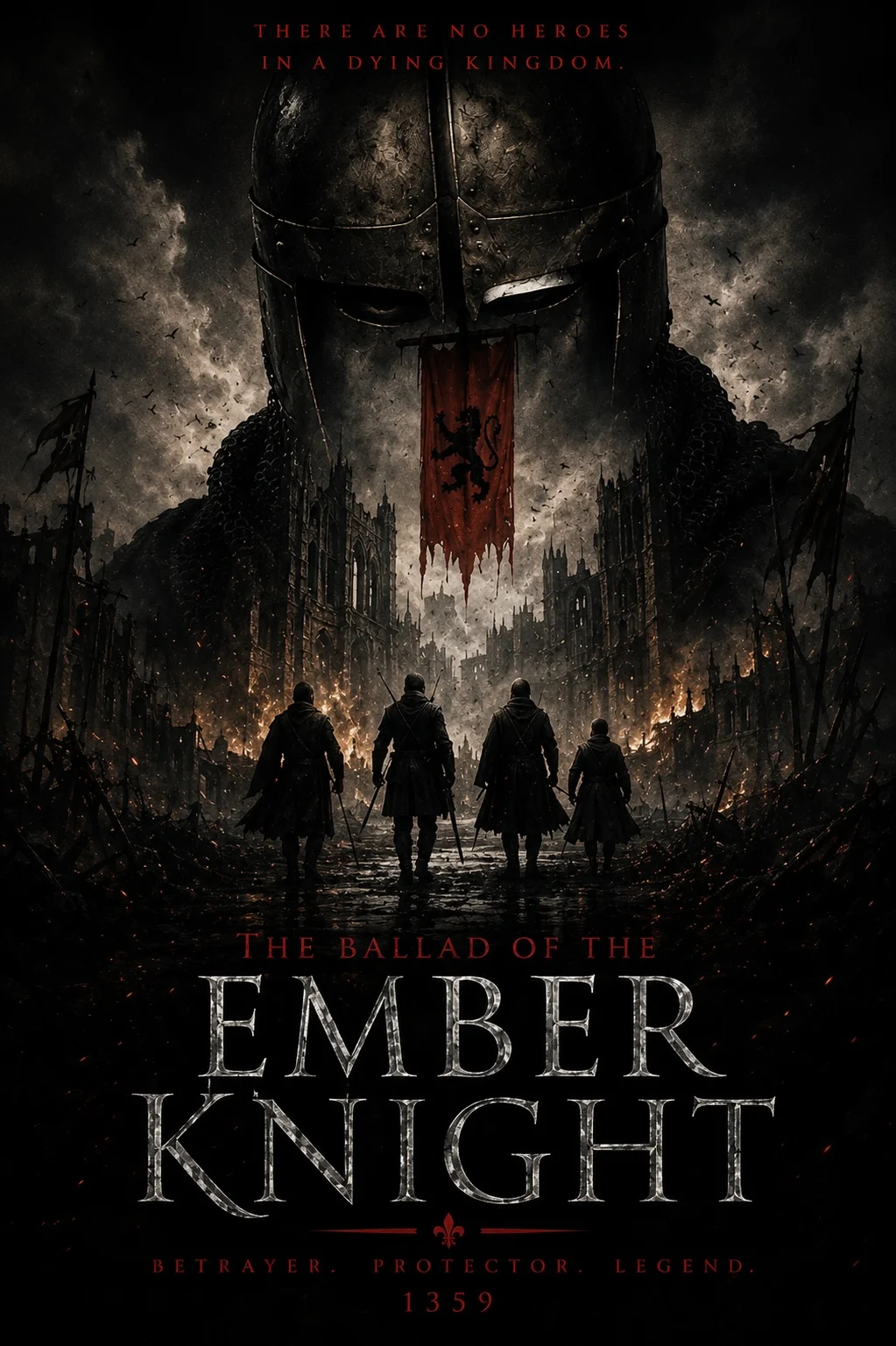
In an industry where the "110-page rule" is treated as a sacred commandment, a 186-page screenplay by amateur writers Kieran and Brennan O’Dea has done the unthinkable. It has not only bypassed the skepticism typically reserved for "overwritten" spec scripts, but it has officially cemented its place in the prestigious Scriptshadow Top 25 list—a tier usually reserved for professional-grade work or breakout industry hits.
The Ballad of the Ember Knight is a sprawling, period-adventure epic set against the backdrop of 14th-century France. Its entry into the Top 25 represents a rare triumph of craft over convention, proving that if a story is compelling enough, the rules of page count become secondary to the power of the narrative.
The Anatomy of the Narrative: 1359 France
The premise is deceptively simple yet carries the weight of a classic odyssey. Amidst the carnage of the Hundred Years’ War, the French countryside has devolved into a lawless wasteland. It is a world of famine, plague, and opportunistic warlords.
The story follows a man known only as "The Prisoner." A former titan of the battlefield now reduced to rags and silence, he is a man attempting to escape his own violent history. His path crosses with a young woman, Marie, who is being terrorized by a cruel royal, Sir Jean Devar. In a pivotal, gut-wrenching sequence, The Prisoner breaks his vow of neutrality, brutally ending Devar’s life to save Marie.
This act of violence forces him into a desperate deception: he assumes Devar’s identity to navigate the treacherous checkpoints of a country falling apart at the seams. He soon discovers that he isn’t just fleeing his past; he is carrying it. He is revealed to be Roland Chandos, the legendary "Ember Knight," rumored to have betrayed the French crown by murdering the King and his sons.
The plot thickens when he encounters two monks—who are actually the surviving Prince of France and his protector—fleeing an assassination plot. The unlikely quartet, including a mysterious hermit, must traverse the dying country to reach Avignon and restore the throne, all while the man protecting the future king is the very man blamed for the dynasty’s collapse.
Chronology of a "Hail Mary" Success
The journey of the O’Dea brothers’ script is a masterclass in the struggles of the modern amateur screenwriter.
- The Initial Struggle: Like most aspiring writers, Kieran and Brennan faced the wall of the "attention span-challenged" Hollywood executive. Their script, clocking in at 186 pages, was a non-starter for most agents and managers who reflexively discard anything exceeding 120 pages.
- The "Hail Mary" Consult: Recognizing the uphill battle, the writers approached industry analyst and critic Carson Reeves for a professional consultation. Despite initial trepidation regarding the length—and the logistical nightmare of reading a 186-page period piece—the script’s quality became immediately apparent upon reading.
- The Evaluation: What followed was a rare endorsement. Rather than highlighting the "bloat," the review focused on the pacing, character stakes, and the masterful use of conflict to justify every page.
- The Verdict: The script was elevated to the Top 25, effectively signaling to the industry that while the page count is unconventional, the writing is elite.
Supporting Data: Why Length Doesn’t Always Equal "Bad"
The industry standard of 110 pages exists for a reason: it keeps production costs manageable and adheres to the average viewer’s attention span. However, The Ballad of the Ember Knight defies this through a specific structural technique: persistent, compounding conflict.
In weaker scripts, long page counts are often the result of "fluff"—redundant dialogue or aimless subplots. In the O’Dea script, the length is a direct result of the sheer density of the journey. By forcing the protagonist, Roland, to inhabit a disguise that is a constant liability, the writers ensure that every scene serves a dual purpose: advancing the physical journey while deepening the emotional or political stakes.
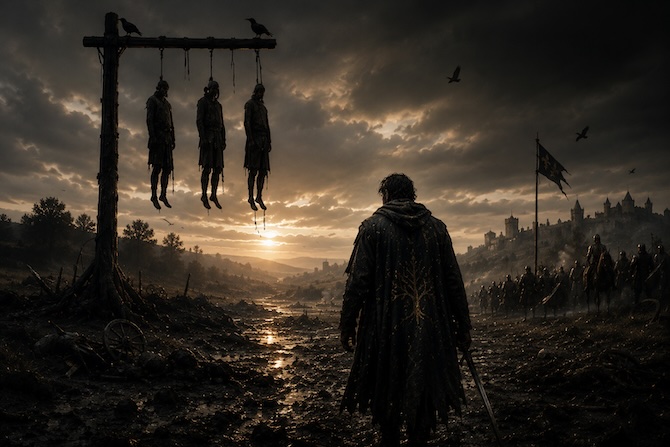
Statistically, long scripts are often rejected not because of the reading time, but because the length implies a lack of discipline. The O’Dea brothers avoided this stigma by ensuring the narrative arcs were tight. They applied the "milk the scene" philosophy: instead of rushing through key dramatic moments, they allowed the tension to ferment, letting the reader feel the weight of every choice.
Implications for the Future of Period Epics
The success of this script suggests a shift in the market, particularly regarding streaming platforms.
Why Netflix is the Natural Home
While a traditional studio might demand the script be slashed to 120 pages to maximize theater showtimes, a platform like Netflix is not constrained by the same clock. The "event-series" or "prestige film" model allows for the expansive world-building that The Ballad of the Ember Knight requires.
The implications are clear:
- Genre Resurgence: There is a latent, massive hunger for "adult" hero’s journey tales. The success of Lord of the Rings and Star Wars proved the formula, but modern audiences, now older, are looking for the same epic scope with a grittier, more mature edge.
- The "Hook" Matters More Than the Format: The lesson for amateur writers is that the "rules" of screenwriting are subservient to the "laws" of storytelling. If the protagonist is compelling—if the audience is "ride or die" for them by the end of the first act—the reader will forgive a higher page count.
- The Death of Exposition: The O’Dea brothers have proven that the best way to handle world-building is through immediate, high-stakes action rather than dry, explanatory dialogue.
The Art of the "Ride or Die" Scene
Perhaps the most significant takeaway from the script’s reception is the "Ride or Die" principle. Many writers focus exclusively on the introductory scene, hoping to make the hero likable. The O’Dea brothers, however, understood that likability is not enough; the reader needs to be invested in the hero’s moral choices.
By placing Roland in a situation where doing the "right thing" (saving Marie) actively endangers his own survival, the writers manufactured an instant connection with the audience. This isn’t just heroism; it’s sacrifice. It establishes the cost of the hero’s integrity. It is this level of dramatic sophistication that elevates the script from a standard adventure to a piece of high-stakes literature.
Final Thoughts: A Blueprint for Aspiring Writers
For the thousands of writers struggling to get their work read in an era of TikTok-length attention spans, The Ballad of the Ember Knight serves as a beacon of hope and a manual for excellence. It demonstrates that:
- Conflict is King: If a scene doesn’t add conflict or escalate the stakes, it shouldn’t be there—regardless of whether your script is 90 pages or 180.
- Milk the Moments: Don’t rush through the "juicy" drama to get to the next plot point. The buildup is where the audience finds their emotional anchor.
- Take Risks: A 186-page period piece is a bold risk. By writing something with such high ambition, the O’Dea brothers forced the industry to look at them.
As the script continues to circulate, it serves as a stark reminder that in the world of professional screenwriting, the "impossible" is only impossible until someone actually sits down and writes it. The Ballad of the Ember Knight has arrived, and it has done so with the force of a battering ram, proving that quality, at its core, is the only metric that truly matters.
