
The Evolution of Hands-Free Reading: Kindle Click vs. Kobo Remote
For years, the dedicated e-reader community was forced to rely on "Frankenstein" solutions to achieve a truly hands-free reading experience. Enthusiasts would purchase third-party Bluetooth clickers—often bulky, clunky, and aesthetically jarring—that utilized a physical arm to tap the screen of their Kindle or Kobo. These workarounds, while functional, were the hallmark of a market segment that manufacturers had long ignored.
That narrative has shifted dramatically over the past year. As e-reading technology matures, the major players have finally acknowledged that convenience is as much about the hardware peripheral as it is about the E-Ink display itself. With the introduction of the official Kindle Click to complement the existing Kobo Remote, the industry has officially moved from DIY hacks to refined, first-party accessories.
The Chronology of Hands-Free Innovation
The path to official remote-control support for e-readers was not instantaneous. For a long time, the prevailing wisdom in the e-reader industry was that the touch-screen interface was sufficient. However, the rise of "cozy reading"—reading while curled up in bed, or while multitasking on a treadmill or exercise bike—highlighted a significant ergonomic gap.
Rakuten Kobo was the first to recognize this demand, launching the Kobo Remote in November 2025. The release was met with immediate, overwhelming enthusiasm, leading to a supply shortage that lasted for months. The device’s ability to pair seamlessly with Kobo’s Bluetooth-enabled e-readers validated the concept that users were willing to pay for official, low-latency page-turning hardware.
Amazon, historically more conservative with its accessory ecosystem, took its time to respond. It wasn’t until late 2026 that the company unveiled the Kindle Click. By entering the space more than a year after Kobo, Amazon had the advantage of observing market feedback and identifying where the Kobo Remote could be improved. The launch of the Kindle Click marks a new chapter in the Kindle’s lifecycle, transforming the device from a standalone tablet into a more integrated part of a home-media ecosystem.
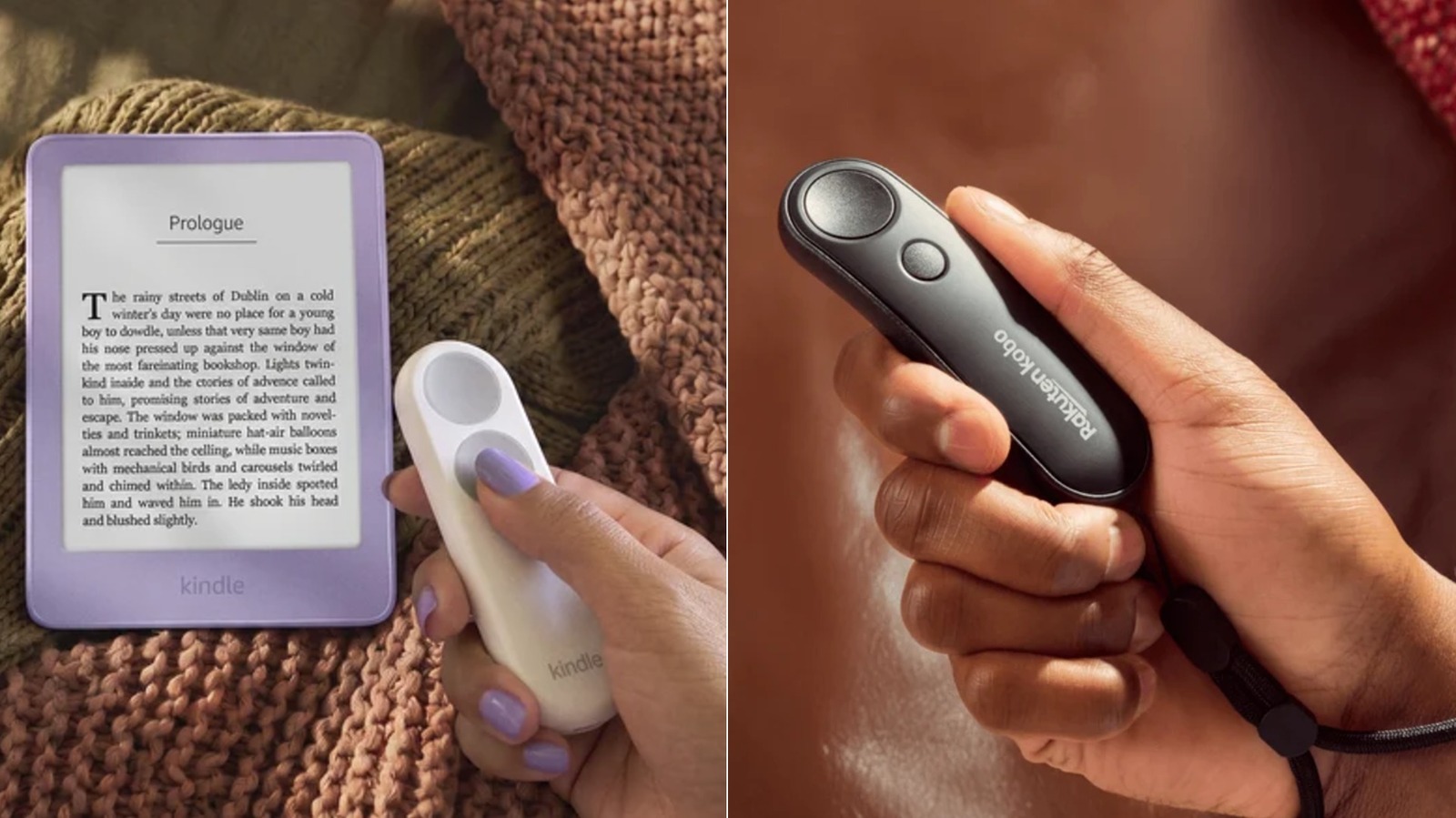
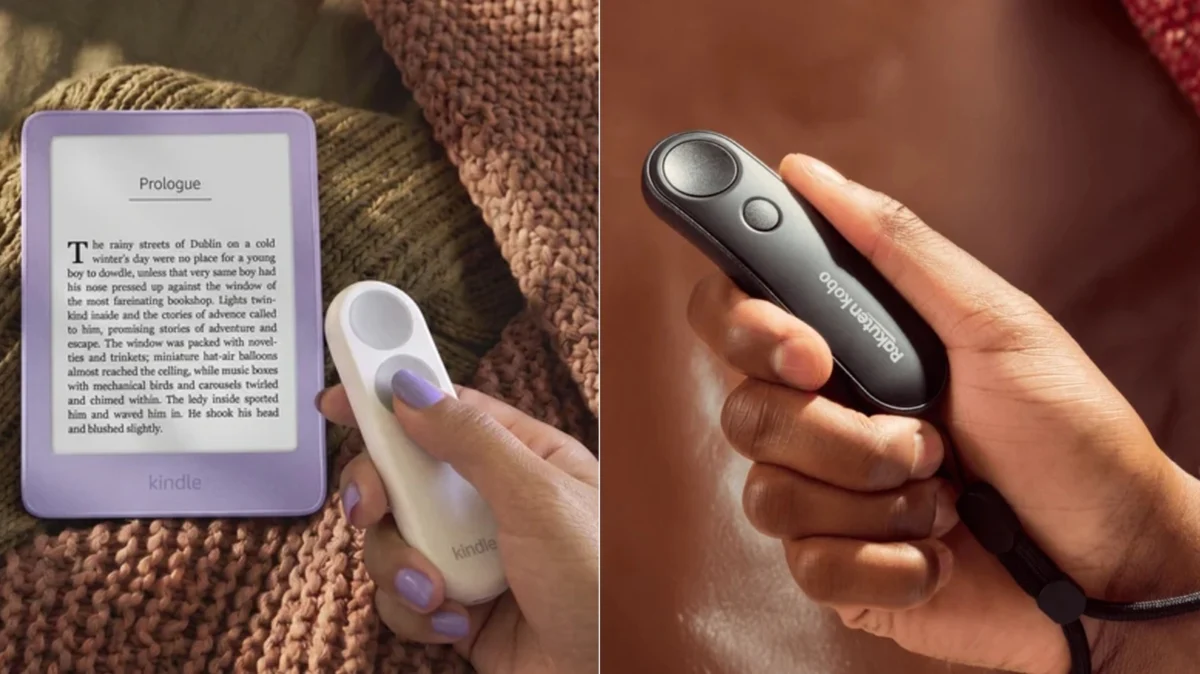
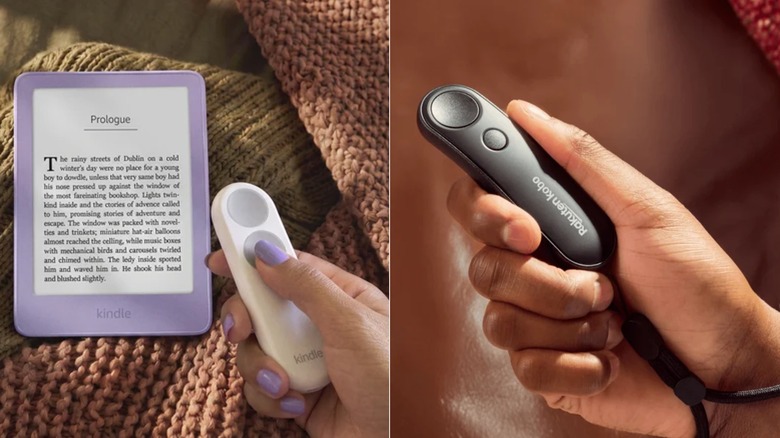
Comparative Hardware Breakdown
While both devices occupy the same niche, their design philosophies diverge in ways that reflect the broader corporate strategies of Amazon and Kobo.
The Kindle Click: Utility and Integration
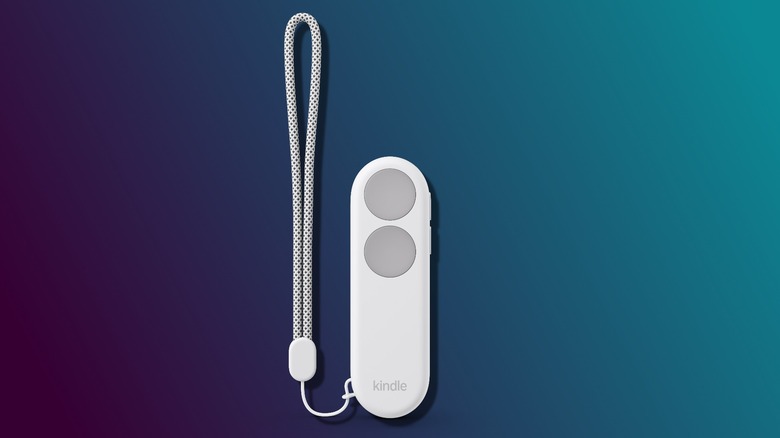
The Kindle Click ($34.99) is designed with a focus on deep integration. Unlike the Kobo Remote, which is strictly a page-turner, the Click serves as a mini-controller for the Kindle experience.
- Functionality: Beyond the standard "forward" and "back" page-turning buttons, the Click features side-mounted controls that allow users to adjust screen brightness on the fly. This eliminates the need to dive into software menus, maintaining the user’s immersion. Additionally, a simultaneous press of both brightness buttons puts the device into sleep mode, a thoughtful touch for those who read until they fall asleep.
- Power Management: Amazon has opted for a rechargeable internal battery via USB-C. This aligns with the modern trend of reducing e-waste and keeping user maintenance to a minimum.
- Compatibility: The Click is engineered for the future, supporting all 2024-and-later Kindle models. However, it leaves legacy users behind, serving as a catalyst for Amazon to encourage upgrades to its latest hardware.
The Kobo Remote: Ergonomics and Simplicity
The Kobo Remote ($29.99) prioritizes the physical tactile experience of the user.
- Ergonomics: The device features a 20-degree natural curve. This arc is specifically designed to sit within the palm, reducing strain during long reading sessions.
- Tactile Feedback: Kobo utilized different textures and shapes for its buttons—one is large and concave, the other smaller and convex. This allows users to navigate their books purely by touch, without needing to glance down at the remote.
- Power Management: Kobo opted for a replaceable AAA battery. While this necessitates occasional shopping trips for batteries, it ensures that the remote is essentially "always on" and ready to go without needing to be tethered to a charging cable.
Supporting Data and User Experience
In analyzing the two devices, it is clear that both manufacturers have succeeded in eliminating the "lag" that plagued early third-party accessories. Both remotes utilize Bluetooth protocols optimized for low power consumption and fast re-pairing.
Price and Availability Metrics:
- Kobo Remote: While the MSRP is $29.99, market fluctuations at retailers like Target ($31.99) and Amazon ($33.99) have created a slightly confusing pricing landscape.
- Kindle Click: Priced at $34.99, it sits at the premium end of the spectrum.
However, the "cost" of these devices must be viewed through the lens of ecosystem lock-in. For the average user, the $5 price difference is effectively irrelevant. If you own a Kindle, you are essentially forced into the Kindle Click; if you own a Kobo, the Kobo Remote is your only native option. The true value proposition lies in the feature set: the Kindle Click offers more "bells and whistles," whereas the Kobo Remote offers a more refined, ergonomic physical shell.
Official Responses and Industry Positioning
Industry analysts note that both companies are framing these accessories not just as gadgets, but as "lifestyle enhancers." In official press communications, Amazon has emphasized the "seamless connectivity" of the Kindle Click, positioning it as an essential tool for "hands-free, comfortable reading."
Kobo, conversely, has leaned into the "cozy" aesthetic. By releasing the remote in both black and white, and emphasizing the ergonomic curve, they are targeting the reader who views their e-reader as a sanctuary.
Interestingly, both companies have faced criticism for their lack of color variety. In an era where e-reader users often decorate their devices with stickers, skins, and cases, the bland white-and-gray palette of both remotes is a noted missed opportunity. Critics argue that a more vibrant, personalized range of accessories would have further solidified the bond between the user and their reading device.
The Long-Term Implications for E-Reading
The introduction of these remotes signals a fundamental shift in how we define the e-reading experience. For years, the industry was focused on "paper-like" displays and battery longevity. Now, the focus has shifted to interaction.
- Accessibility: The primary benefit of these remotes is accessibility. For readers with limited mobility, or those who suffer from conditions like arthritis, these devices remove the physical burden of holding a device and tapping a screen. This is a massive leap forward for inclusivity in digital literature.
- The "Workstation" E-Reader: As e-readers move closer to the "mounted" experience—where users prop their devices on stands while on a treadmill or at a desk—the e-reader is becoming more of a media workstation. We can expect to see more accessories, such as specialized stands and mounts, designed to work in tandem with these remotes.
- The Future of Control: Looking forward, we may see the integration of these remote functions into other smart home devices. Imagine a future where your smart-home hub or voice assistant could be synced with your e-reader to turn pages via voice command or gesture.
Final Verdict: Which One Wins?
If we evaluate the two based solely on technical capability, the Kindle Click emerges as the more feature-rich product. The inclusion of brightness controls and the sleep-mode toggle adds a level of utility that the Kobo Remote lacks. For the power user who wants to control their environment without touching their screen, the Kindle Click is the superior piece of hardware.
However, the Kobo Remote remains the champion of ergonomics. For users who prioritize the feel of the device in their hand and the convenience of a long-lasting, battery-powered solution that doesn’t require a USB-C cable, the Kobo Remote remains a highly attractive, well-thought-out accessory.
Ultimately, the "difference" between the two is less about the hardware and more about the user’s existing library. The industry has reached a point of parity where neither the Kindle nor the Kobo user is being short-changed. We have entered the era of the sophisticated e-reader accessory, and for the avid reader, the days of reaching for the screen are finally numbered.
