
Edward Said: Between Worlds – A Definitive Cinematic Exploration of the Intellectual Titan
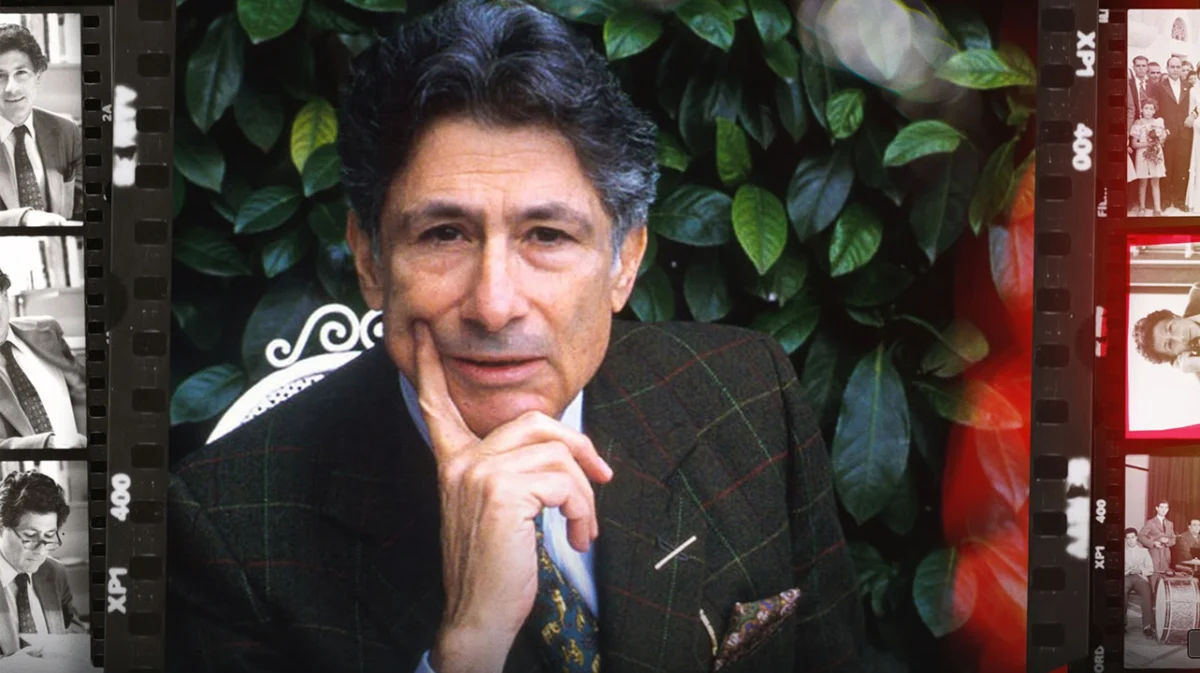
NEW YORK — As global audiences grow increasingly sensitized to the complexities, histories, and humanitarian crises surrounding the Palestinian cause, documentary filmmaking is once again turning its lens toward the foundational figures who shaped modern post-colonial discourse. Among them, few stand as tall as Edward Said.
Premiering at the 64th New York Film Festival, director Maiken Baird’s Edward Said: Between Worlds arrives as a timely, concise, and deeply personal primer on one of the most consequential academic and public intellectuals of the late 20th century. Balancing the delicate task of educating neophytes without alienating seasoned scholars who know Said’s work intimately, the film offers a rare visual and auditory journey through the life of a man whose mind transcended borders, disciplines, and political divides.
Main Facts: The Scope and Substance of Between Worlds
At its core, Edward Said: Between Worlds functions as a biographical documentary driven almost entirely by the subject’s own voice. Moving away from traditional, overly didactic third-person narration, director Maiken Baird—known for her work producing acclaimed, accessible biographical documentaries such as Venus and Serena and the Academy Award-winning Icarus—makes the editorial choice to restrict the film’s voiceover to archival interview recordings of Said himself.
The most prominent audio anchors include a riveting 1986 televised discussion between Said and writer Salman Rushdie, alongside extensive footage from a 2002 interview that ultimately birthed the celebrated documentary Edward Said: The Last Interview.
Beyond audio mastery, the film’s distinct visual identity is rooted in unprecedented access. Because Baird enjoyed a long-term personal association with Said—first as a family friend and later as his student—she and her production team secured exclusive rights to intimate family archives and 8mm home movies. These rare visual elements breathe life into the documentary’s opening passages, seamlessly weaving together with broader historical footage and choice on-camera snippets to paint a comprehensive portrait of a multifaceted intellectual.
Chronology: From Jerusalem Exile to Global Icon
To understand Edward Said is to understand a life shaped by turbulent historical currents and displacement. The documentary traces his journey across decades, mapping his evolution from a privileged yet detached student of literature to a fierce political firebrand and the preeminent voice of the Palestinian diaspora.
Early Life and Privilege
Born in Jerusalem in 1935, Said’s early life was upended by the 1948 Nakba and the subsequent establishment of the State of Israel, which forced his family into permanent exile. Despite this foundational trauma, his youth bore little direct resemblance to the political radicalism that would later define him.
The son of a successful entrepreneur who specialized in office supplies and stationery—serving British colonial administrators as major clients—Said received an elite, cosmopolitan education. He attended the Victoria School in Alexandria, Egypt (historically dubbed the "Eton of the Middle East"), before moving to a Massachusetts boarding school and eventually matriculating at Princeton University. During these formative years, Said found sanctuary in canonical English literature and classical music, fields in which he trained proficiently.
Awakening and the Academy
For years, Said maintained a comfortable distance from overt political activism, focusing instead on establishing his academic credentials. Upon securing a teaching position in English literature at Columbia University, he immersed himself in Western canons. However, his political conscience was sharply awakened by the 1967 Six-Day War. The documentary provides a lesser-known snapshot of this era, highlighting Said’s deep alienation and disdain upon witnessing the mass celebrations in New York following Israel’s military victory.
Beirut and the Crucible of Activism
By the 1970s, Said’s intellectual trajectory merged irrevocably with direct solidarity for the Palestinian cause. Beirut served as an existential ground zero during this period. In the Lebanese capital, Said reconnected with his mother, who had settled there, introduced his children to their cultural heritage, and established direct contact and intelligence exchanges with key Palestine Liberation Organization (PLO) leaders headquartered in the city.
This era of intense engagement coincided with his most groundbreaking scholarly contributions:
- 1978: The publication of Orientalism, a monumental text that dissected and dismantled the systemic distortions, cultural biases, and power dynamics inherent in Western perspectives and scholarship concerning the Middle East.
- 1978: The release of The Question of Palestine, which articulated a robust historical counter-narrative to Israeli erasure and colonization, proposing an origin myth for future Palestinian statehood.
Supporting Data: Archival Riches and Critical Nuance
While Between Worlds succeeds admirably in its visual presentation—particularly when translating anecdotes from Said’s critically acclaimed 1999 memoir, Out of Place, into moving images—critics have noted certain structural limitations in how the film engages with his vast body of work.
The documentary is at its most potent when illustrating Said’s early upbringing, contrasting his affluent schooling with his eventual political radicalization. However, when tackling his intellectual output, the film occasionally pulls its punches. Said is universally respected as a media pundit and revered as a cultural theorist, yet the documentary hesitates to dive deeply into the dense, highly theoretical textual arguments of Orientalism.
Fearful of getting bogged down in the intricate mechanics of post-colonial theory and Said’s meticulous deconstruction of historical Western texts, the film remains somewhat impersonal on Baird’s part. Cinema purists and literary scholars have noted that a more ambitious structural approach—perhaps akin to Mariano Llinás’s innovative Life of Jorge Luis Borges or John Berger’s legendary television program Ways of Seeing (co-created by Mike Dibb, who notably directed Edward Said: The Last Interview)—might have taken audiences deeper into the brilliant machinery of Said’s mind.
Nevertheless, the documentary succeeds on its own terms as an introductory masterclass, reminding viewers of the sheer breadth of Said’s erudition, which spanned music criticism, literary theory, political commentary, and cultural critique.
Official Responses and Festival Reception
Premiering to an engaged and reflective audience at the 64th New York Film Festival, Edward Said: Between Worlds drew significant attention from film critics, academics, and political commentators alike.
Festival organizers praised the film for its timeliness, noting that contemporary audiences are engaging with Palestinian history with a degree of urgency and global awareness not seen in decades. Early reviews have commended Baird for weaponizing restraint—allowing Said’s charisma, intellect, and eloquence to drive the narrative forward without heavy-handed modern framing.
While institutional and official political responses to the documentary are still emerging, cultural institutions across the United States and Europe have expressed strong interest in screening the film as part of educational programming surrounding Middle Eastern studies, post-colonial literature, and documentary arts. Scholars of Said have largely welcomed the film as a vital tool for introducing younger generations to a thinker whose frameworks remain indispensable for understanding modern geopolitical conflicts.
Implications: A Legacy That Echoes Through Contemporary Crises
Edward Said passed away in 2003, tragically too soon to witness the turbulent unfolding of America’s post-9/11 "War on Terror," the Second Intifada, and the increasingly devastating cycles of violence in Gaza and the broader Levant.
While it is ultimately speculative to predict exactly how Said would analyze today’s geopolitical landscape—including the ongoing humanitarian catastrophes and the polarization of global discourse—his foundational concepts provide the very vocabulary through which these crises are understood.
Today’s most trenchant commentators, critics, and human rights advocates—spanning Palestinian, Arab, Israeli, and Jewish communities alike—operates firmly in his wake. By insisting on intellectual rigor, moral clarity, and the fundamental right of marginalized peoples to narrate their own histories, Said fundamentally altered how the West perceives the Middle East.
In bringing Edward Said: Between Worlds to the silver screen, Maiken Baird has done more than simply catalog the life of a brilliant academic. She has delivered a timely reminder that the battle over representation, truth, and justice is as vital today as it was when Said first picked up his pen. As festival-goers and film lovers exit screenings in New York and beyond, they are left with the echoing conviction that Edward Said’s voice—defiant, brilliant, and resolutely human—is one the world cannot afford to forget.
