
The Sound of Survival: Milan Records Announces Physical Release for Zach Cregger’s ‘Resident Evil’ Soundtrack
Main Facts: A Collector’s Edition for a Modern Horror Epic
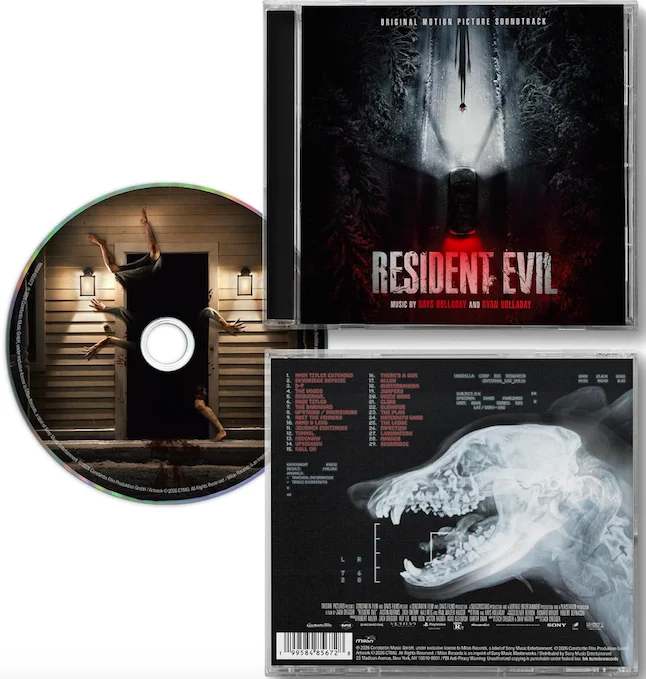
Milan Records has officially announced that it will be expanding the physical footprint of the critically discussed Resident Evil original motion picture soundtrack. Following the successful digital launch of the score last month, the label is set to release a premium jewel-case CD edition on December 11, 2026. This physical iteration is designed for the audiophile and the franchise completionist alike, featuring exclusive artwork and comprehensive liner notes penned by the composers themselves, Hays and Ryan Holladay.
The score, which serves as the sonic backbone for director Zach Cregger’s reimagining of the legendary video game franchise, has been widely lauded for its atmospheric tension and industrial soundscapes. The film, which stars an ensemble cast including Austin Abrams, Zach Cherry, Kali Reis, and Paul Walter Hauser, hit theaters nationwide last month via Sony Pictures. With the digital version already available on streaming platforms, the upcoming CD release—and the previously announced vinyl edition—solidifies the soundtrack’s status as a must-have piece of media for fans of the Resident Evil cinematic universe.
Chronology: From Concept to Cinema and Beyond
The journey of this Resident Evil adaptation has been marked by a rigorous production timeline and a meticulous approach to its musical identity.
The Development Phase
The project was first brought to public attention following the industry-shaking success of Zach Cregger’s Barbarian. When it was revealed that Cregger would be tackling the Resident Evil franchise, expectations regarding the film’s tone—specifically its commitment to visceral horror—reached a fever pitch. By early 2026, the casting announcements of Abrams, Cherry, Reis, and Hauser suggested a film that prioritized character-driven drama amidst the chaos of a biological apocalypse.
The Musical Score
The Holladay brothers, Hays and Ryan, were tapped early in the pre-production process. Having made a name for themselves with their work on Weapons, Class Action Park, and Roommates, the duo was tasked with translating the frantic, claustrophobic energy of the source material into a modern musical language. The digital soundtrack was released in September 2026, serving as a teaser for the film’s theatrical debut.
The Physical Rollout
Recognizing the resurgence of physical media in the horror genre, Milan Records mapped out a tiered release strategy.
- September 2026: Digital soundtrack launch across all major streaming services.
- Late 2026: Announcement of the vinyl edition, catering to the growing collector’s market.
- December 11, 2026: The official release of the jewel-case CD, complete with exclusive supplementary materials.
Supporting Data: The Holladay Aesthetic and The Film’s Impact
To understand the significance of the Resident Evil soundtrack, one must examine the methodology of Hays and Ryan Holladay. Known for their ability to blend organic instrumentation with synthesized sound design, the brothers have created a soundscape that mirrors the decaying environments of the Raccoon City setting.
Technical Composition
The music for Resident Evil relies heavily on dissonance and rhythmic instability. By utilizing analog synthesizers, the composers create an "audio-uncanny" effect that keeps the audience in a state of constant, low-level anxiety. According to early reviews of the soundtrack, tracks such as "Alley"—which was shared as a promotional single—demonstrate a mastery of pacing, shifting from minimalist ambient textures to overwhelming, percussion-heavy crescendos that define the horror genre’s modern era.
Market Context
The decision to release this music on multiple physical formats is not merely a nostalgic choice but a calculated market strategy. Industry data from 2025 and 2026 indicates that horror soundtracks are among the highest-performing genres in the vinyl and CD markets. Collectors value the visual components of these releases, particularly the "exclusive artwork" mentioned by Milan Records. For Resident Evil, which boasts a visual identity steeped in industrial grit and biological horror, the packaging serves as a tactile extension of the film’s artistic direction.
Official Responses and Creative Commentary
The collaboration between Cregger and the Holladay brothers has been highlighted as one of the most symbiotic director-composer relationships in recent memory. While specific quotes from the upcoming CD liner notes remain under embargo until the release, early press releases from Milan Records have emphasized the composers’ dedication to the "horror-first" philosophy.
"We wanted the music to feel like a living, breathing part of the infection," noted a representative for the production team. "Hays and Ryan weren’t just scoring scenes; they were building an environment that the audience could feel vibrating through their chests."
The choice of Austin Abrams and Paul Walter Hauser, actors known for their ability to ground fantastical premises in reality, has also influenced the music. The score supports these performances by stripping back the bombastic, heroic themes often associated with video game adaptations in favor of something more intimate, isolated, and ultimately more terrifying.
Implications: The Future of Franchise Soundtracks
The release of the Resident Evil soundtrack in various formats has several implications for the film industry and the legacy of the game franchise.
1. The Elevation of Horror Scores
For decades, horror music was relegated to "background noise" meant only to trigger jump scares. The success of the Resident Evil score proves that audiences now view horror music as a standalone listening experience. By releasing the album on CD and vinyl, Milan Records is validating the work of the Holladay brothers as high-art, positioning the film as a cultural touchstone rather than a disposable blockbuster.
2. Physical Media as a Collector’s Asset
In an era where streaming dominates, the commitment to jewel-case CDs and high-fidelity vinyl highlights a shift in consumer behavior. The "exclusive artwork" and "composer notes" act as incentives for fans to move away from digital convenience and toward physical ownership. This strategy suggests that future adaptations of major IP will continue to lean into "limited edition" physical releases to drive fan engagement and social media buzz.
3. Setting a New Standard for Adaptations
Zach Cregger’s Resident Evil is being closely watched as a benchmark for how video game properties can be adapted without sacrificing artistic integrity. The music plays a pivotal role in this. By allowing the Holladay brothers to craft a distinct sonic identity, the production team has successfully differentiated this film from previous iterations of the franchise. It sets a precedent that the "audio branding" of a franchise is just as important as the visual effects or the casting.
Conclusion: A Must-Have for the Archive
As December 11 approaches, the buzz surrounding the Resident Evil CD release continues to grow. For fans of the franchise, the soundtrack is more than just a companion piece—it is a critical component of the experience that Zach Cregger envisioned. With its blend of technical innovation, atmospheric depth, and collectible physical design, the Milan Records release is poised to become a staple in the libraries of horror aficionados.
Whether you are a devotee of the Resident Evil games or a newcomer to Cregger’s unique brand of tension-filled cinema, the soundtrack stands as a testament to the power of film music. Those looking to secure their copy are encouraged to pre-order via Amazon, as the exclusive nature of these physical editions historically leads to rapid sell-outs. As the film continues its theatrical run, the legacy of its sound will undoubtedly linger, proving that in the world of Resident Evil, the music is truly the heartbeat of the nightmare.
