
Two Decades of Despair and Defiance: Why Alfonso Cuarón’s Children of Men Remains the Definitive Sci-Fi Masterpiece of Our Time
By Carolyn Jenkins
Published September 24, 2026
Main Facts
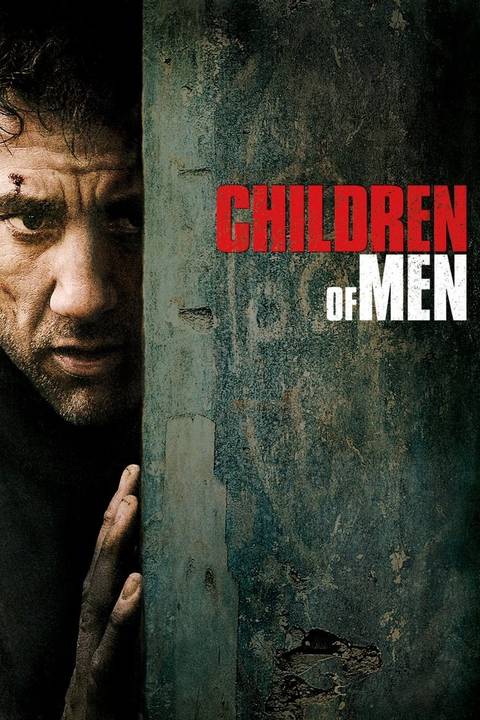
Two decades after its initial theatrical release, Alfonso Cuarón’s dystopian masterpiece Children of Men has transformed from a critically acclaimed piece of speculative fiction into an uncomfortably prophetic vision of the modern world. Set in a collapsing future society gripped by global infertility, the film portrays a civilization on the brink of extinction. For nearly two decades, no children have been born, driving human morale to absolute rock bottom.
Amidst this existential despair, England stands as one of the last militarized, totalitarian bastions of human order. However, this fragile peace is maintained through draconian policing, systemic oppression, and intense xenophobia directed at the waves of refugees seeking shelter within its borders.
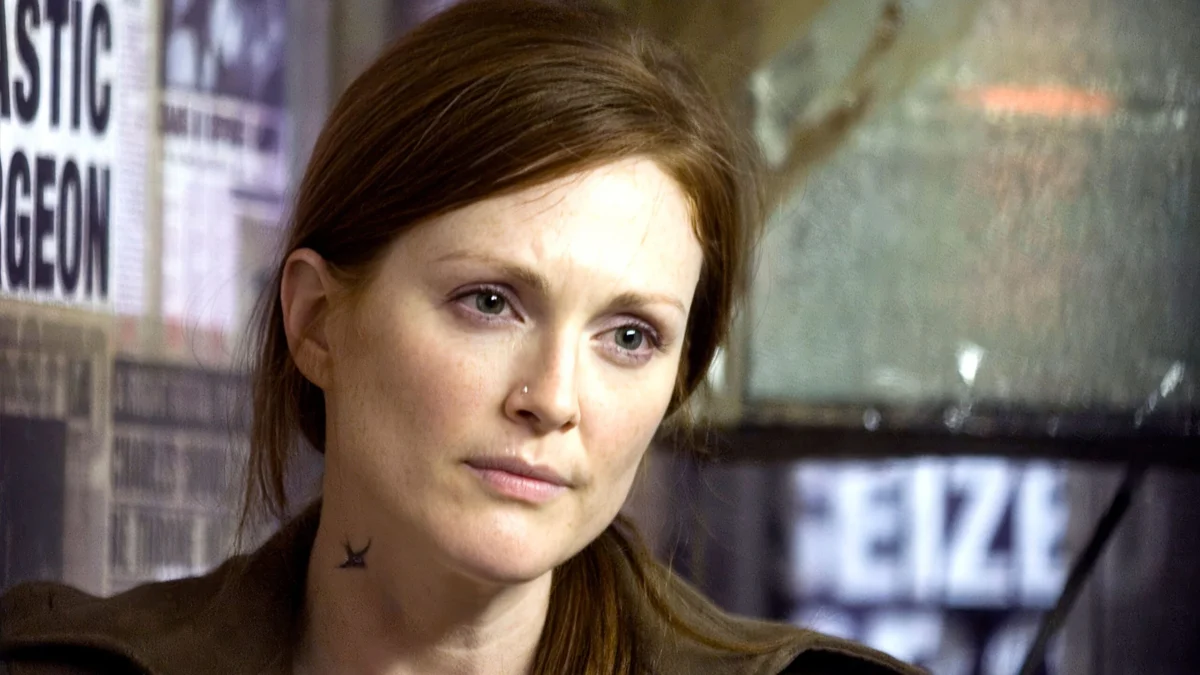
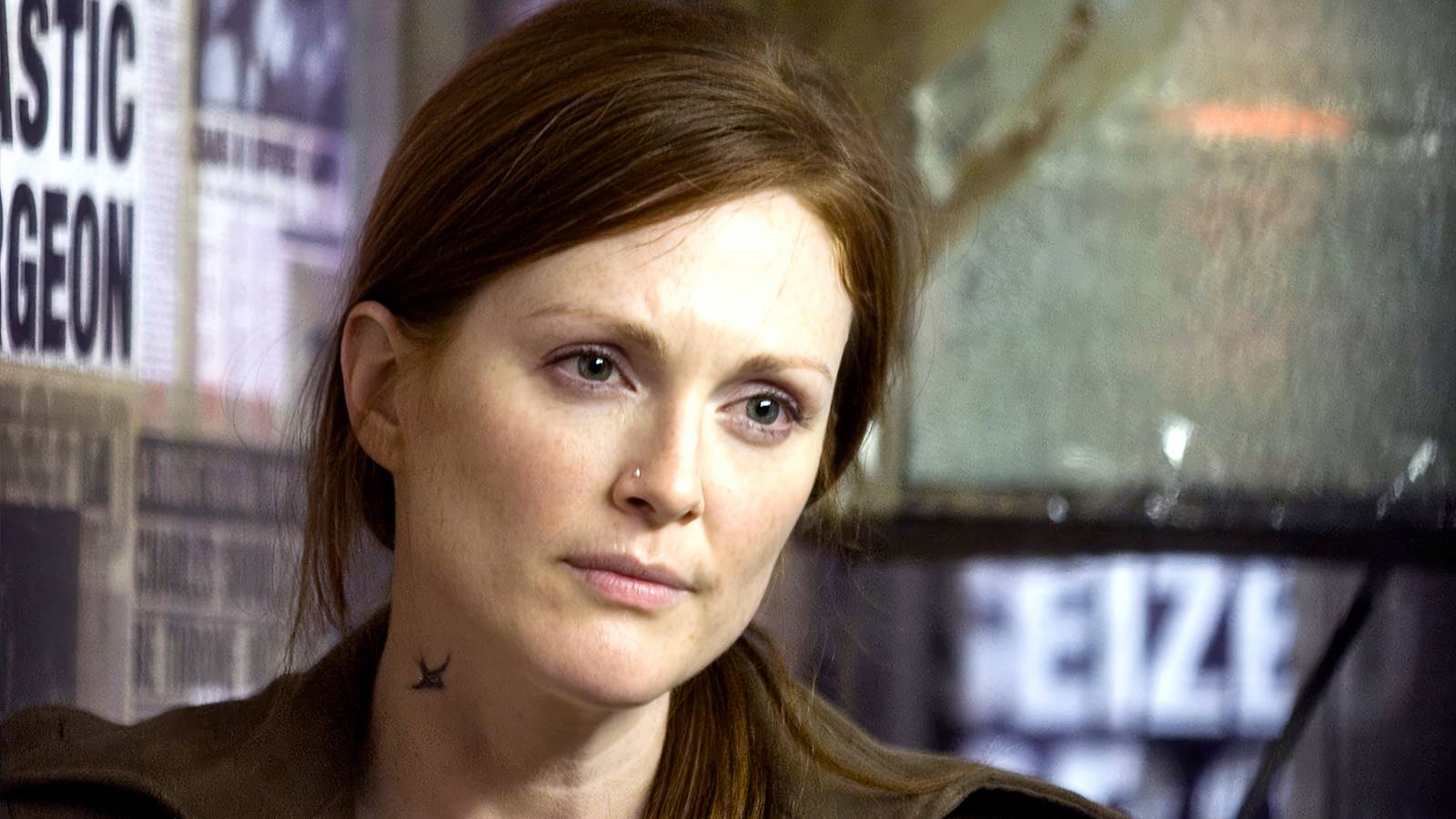
The narrative anchors itself around Theo Faron (portrayed by Clive Owen), a disillusioned, grieving bureaucrat who has surrendered all hope for the future following the tragic death of his young son. Theo’s mundane, survival-driven existence is upended when he is kidnapped by "The Fishes," an extremist anti-government faction led by his estranged ex-wife, Julian (Academy Award winner Julianne Moore).
Although Moore’s screen time is restricted to the film’s gripping first act, her presence defines the emotional weight of the entire cinematic journey. As Julian, Moore delivers a powerhouse performance as a grieving mother weaponizing radicalism to cope with an unbearable loss. Her character sets the plot into irreversible motion, pulling Theo into a desperate, high-stakes mission to transport a young refugee named Kee (Clare-Hope Ashitey) out of war-torn London.
The revelation that Kee is pregnant—the first pregnancy documented in 18 years—instantly shifts the stakes of the geopolitical landscape. What follows is an unrelenting, white-knuckle flight for survival across a battlefield of clashing ideologies, state-sponsored brutality, and desperate militants, all culminating in one of the most resonant conclusions in cinematic history.
Chronology
To fully understand the structural brilliance of Children of Men, one must trace the chronological escalation of despair and awakening that defines Theo Faron’s journey:
- The Prelude (The 18-Year Infertility Crisis): Decades prior to the film’s primary events, human reproduction abruptly ceases. Global governments collapse one by one, leaving the United Kingdom as a heavily policed, authoritarian police state characterized by cage-like detention centers and routine deportations.
- Act I: The Inciting Incident: Theo Faron is abducted off the streets of London by the extremist group known as the Fishes. He reunites with Julian, his former wife and the leader of the group. Julian tasks Theo with securing transit papers for a young refugee named Kee, utilizing his government connections.
- The Turning Point (The Caravan Ambush): While transporting Kee and her protectors through the English countryside, the group is violently ambushed by the Fishes, who have hidden agendas regarding the unborn child. Julian is tragically killed in the attack, shattering Theo’s emotional armor and forcing him to take direct responsibility for Kee’s safety.
- Act II: The Flight Through the War Zone: Theo discovers the staggering truth: Kee is nine months pregnant. Realizing that both the authoritarian government and the radical Fishes intend to exploit the child as a political symbol, Theo navigates treacherous terrain, seeking out the enigmatic "Human Project"—a rumored scientific collective dedicated to saving humanity.
- Act III: The Siege of Bexhill and Birth: Theo and Kee infiltrate the chaotic Bexhill refugee camp just as a full-scale military offensive breaks out between the army and the insurgent Fishes. Amidst exploding artillery and falling debris, Kee gives birth to a healthy baby girl.
- The Resolution: As mother and infant emerge into the war-torn streets, the fighting momentarily halts. Soldiers and rebels alike drop their weapons, staring in reverent awe at the first generation of new life. Theo, fatally wounded during their escape, successfully guides Kee to the rendezvous boat before succumbing to his injuries, leaving behind a legacy of hard-won hope.
Supporting Data & Production Overview
Released by Universal Pictures on January 5, 2007 (following a late 2006 limited release), Children of Men was adapted from P.D. James’s 1992 novel of the same name. Despite its eventual status as a critical darling and a fixture on "Best Films of the 21st Century" lists, the film faced a challenging path at the box office, grossing roughly $70 million worldwide against a production budget estimated at $76 million.
Key Production Metrics:
- Release Date: January 5, 2007 (US Wide)
- Runtime: 109 minutes (1 hour, 49 minutes)
- Director: Alfonso Cuarón
- Screenwriters: Alfonso Cuarón, David Arata, Timothy J. Sexton, Hawk Ostby, Mark Fergus, and P.D. James (based on the novel)
- Producers: Eric Newman, Hilary Shor, Iain Smith, Marc Abraham, and Tony Smith
- Cinematography: Emmanuel Lubezki
- Key Cast: Clive Owen (Theo Faron), Julianne Moore (Julian Taylor), Clare-Hope Ashitey (Kee), Michael Caine (Jasper Palmer), Chiwetel Ejiofor (Luke), and Charlie Hunnam (Patric).
A massive component of the film’s enduring technical acclaim rests on the shoulders of cinematographer Emmanuel "Chivo" Lubezki and director Alfonso Cuarón. Eschewing traditional action-movie editing, the film relies heavily on extended, unbroken tracking shots—most notably the agonizingly tense interior car ambush in Act I and the devastating apartment-complex-turned-battlefield sequence in Act III. These immersive long takes strip away cinematic distance, forcing the audience into the trenches alongside the characters.
Official Responses and Critical Legacy
Upon its release, Children of Men received widespread critical acclaim, though general audiences were initially hesitant due to its relentlessly grim atmosphere. Over time, however, its reputation has snowballed into that of a modern masterwork.

The film earned three Academy Award nominations at the 79th Academy Awards: Best Adapted Screenplay, Best Film Editing, and Best Cinematography for Lubezki. While it did not take home the statuettes that night (facing stiff competition from films like The Departed and Pan’s Labyrinth), its cultural footprint has only expanded.
Critics and academic institutions frequently praise the film for its layered visual metaphors and world-building details. In retrospective reviews, outlets like Collider, Rotten Tomatoes, and Letterboxd routinely rank it among the greatest hard science-fiction films ever produced.
Director Alfonso Cuarón noted in various historical interviews that the film was never meant to be a straightforward prediction of the future, but rather a mirror reflecting the socio-political anxieties of the mid-2000s—specifically surrounding immigration policies, state surveillance, and institutional decay. Yet, contemporary critics note with irony that the real world of the 2020s has increasingly begun to resemble Cuarón’s artistic rendering.
Implications: A Masterpiece for an Increasingly Divisive Age
Two decades on, the ultimate triumph of Children of Men lies not in its depiction of dystopian despair, but in its uncompromising thesis on the endurance of hope.
Through Theo Faron, the film charts an emotional evolution from absolute nihilism to radical self-sacrifice. Theo begins the story dead to the world, emotionally paralyzed by grief over his lost child. His evolution into Kee’s protector demonstrates that human existence finds its truest meaning when we choose to invest in a future we may never personally witness.
The film’s iconic closing sequence—where soldiers and insurgents drop their weapons at the sound of an infant’s cry—is often debated by cinephiles. Is it an overly naive utopian fantasy, or a necessary reminder of our shared humanity? Cuarón’s direction leans into the latter. The sudden cessation of violence is not permanent; the war outside the camp continues, and human nature remains deeply flawed. However, for one breathless, suspended moment, the miracle of new life pierces through the noise of hatred and division.
As contemporary society navigates compounding crises of geopolitical instability, refugee displacement, and widespread polarization, Children of Men serves as both a warning and a beacon. It warns of the horrors born from prejudice and structural collapse, yet it insists that even under the most terminal circumstances, humanity retains the capacity to choose a better path. Julianne Moore’s grieving activist, Clive Owen’s world-weary savior, and Clare-Hope Ashitey’s resilient mother combine to form a cinematic trinity that reminds viewers why storytelling matters: to help us carry on when the night feels endless.
