
The Rise of The Ballad of the Ember Knight: How an 186-Page Amateur Screenplay Crashed Hollywood’s Gatekeepers
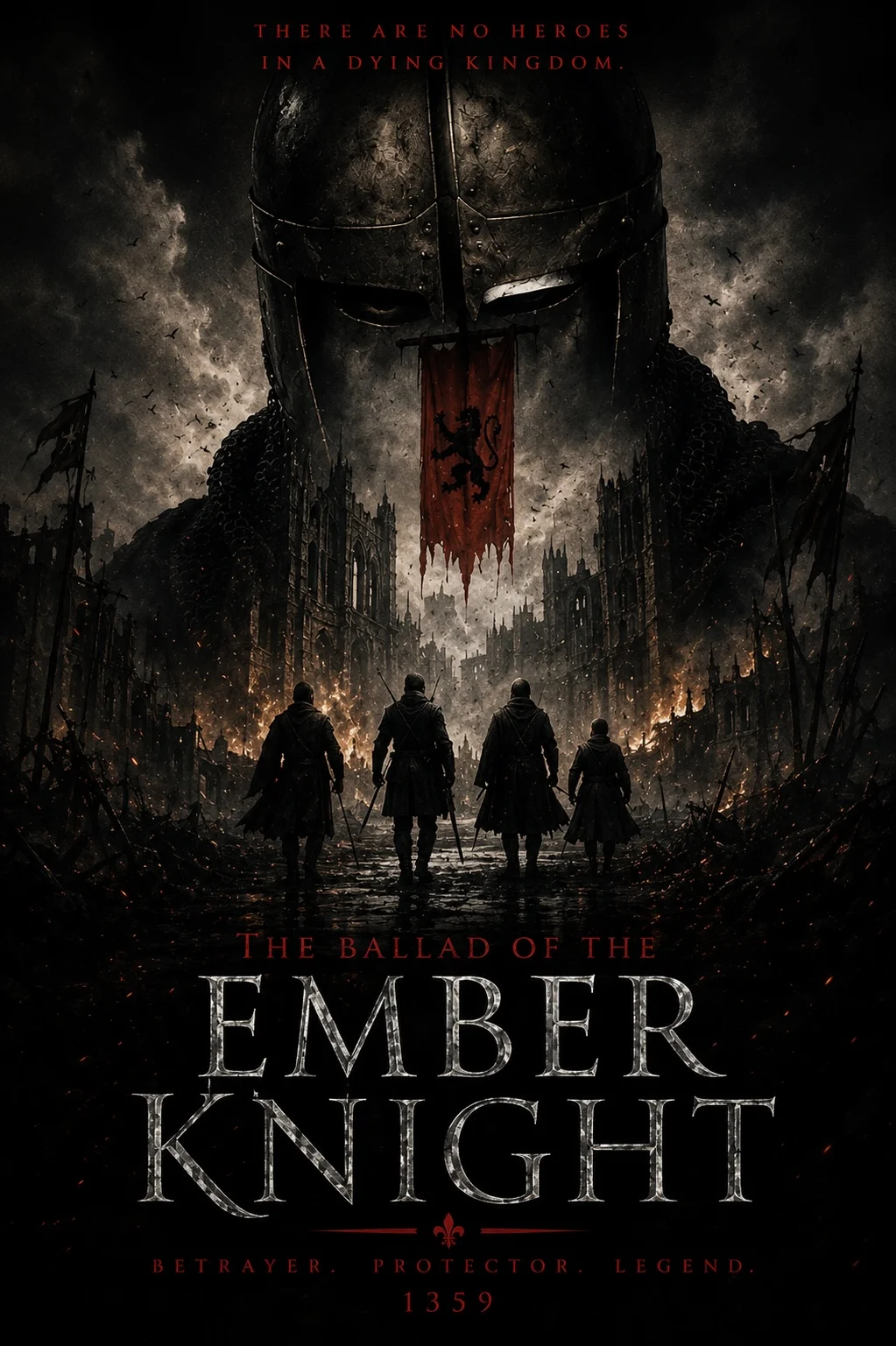
In an industry obsessed with algorithmic formulas, 110-page maximums, and pre-branded intellectual property, breaking through the Hollywood wall as an unknown writer feels akin to scaling a sheer cliff face with bare hands. For writing duo Kieran and Brennan O’Dea, that mountain was literal—and historical. Their 186-page period-adventure epic, The Ballad of the Ember Knight, defied every modern screenwriting convention regarding length, subject matter, and format.
Yet, against all odds, the script has managed the impossible: crashing its way into the elite Top 25 Screenplay rankings on the prominent industry review platform Scriptshadow.
Set against the apocalyptic backdrop of 14th-century France during the Hundred Years’ War, this sprawling medieval odyssey has stunned critics and readers alike. It offers a masterclass in pacing, high-stakes character development, and narrative tension, proving that when foundational screenwriting elements are executed to absolute perfection, page counts and industry rules suddenly cease to matter.
Main Facts: Defying the Rules of Modern Screenwriting
To understand the magnitude of the O’Dea brothers’ achievement, one must first understand the rigid constraints of contemporary Hollywood. Standard industry practice dictates a tight 110-page limit for speculative scripts. In an era dominated by micro-attention spans and risk-averse studio executives, submitting an 186-page period piece without a prior production track record is essentially a rejection letter waiting to happen.
Hollywood executives rarely reject long scripts out of a mere reluctance to read; rather, length is viewed as a proxy for discipline. An overly long script often signals an undisciplined writer who lacks the editorial mettle to cut the fat. Consequently, when Kieran and Brennan O’Dea faced continuous rejections through standard channels, they turned to a high-risk strategy: paying for a professional script consultation with industry insiders.
What followed was a profound validation of craft over convention. Far from collapsing under the weight of its own historical mythology, extensive character roster, and complex timeline, The Ballad of the Ember Knight proved that exceptional storytelling possesses an undeniable gravitational pull. Reviewers noted that the narrative succeeds precisely because it does not rush its emotional beats, choosing instead to milk high-value dramatic sequences for all their structural worth.
Chronology: The Journey to the Top 25
The trajectory of The Ballad of the Ember Knight from an unread digital file to a critical darling reflects a grueling indie development cycle:
- The Query Phase: For months, Kieran and Brennan O’Dea attempted to route their monumental 186-page manuscript through traditional querying channels. As expected, the sheer page count and unbranded 14th-century French setting proved to be insurmountable barriers for conventional gatekeepers.
- The Hail Mary Consult: Recognizing they needed a breakthrough, the writers submitted the manuscript for professional evaluation, crossing a major threshold where every page past standard limits incurs additional review costs.
- The Critical Evaluation: Reviewers initially approached the 186-page period piece with palpable dread, anticipating a tedious slog through dense historical exposition and bloated subplots. Instead, they discovered a tightly wound, psychologically resonant epic.
- The Verdict: The script bypassed the amateur tiers entirely, rocketing straight into the platform’s all-time Top 25 list—a rare distinction typically reserved for polished, professionally produced works.
- Public Release: With the creators’ permission, the script was cleared for public readership via Google Drive, immediately sparking intense discussions within online screenwriting communities regarding its unique narrative structure.
Supporting Data: Dissecting the Anatomy of a Medieval Epic
At its core, The Ballad of the Ember Knight thrives by subverting familiar structural tropes while maintaining a primal, emotional anchor reminiscent of classic hero’s journeys like Star Wars and The Lord of the Rings.
The Premise and Setting
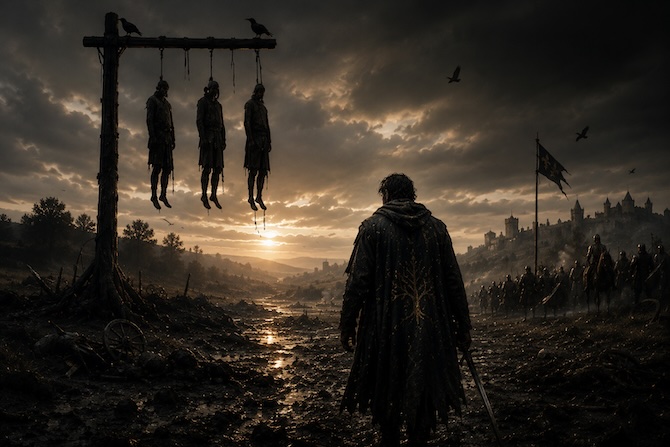
The story unfolds in the brutal year of 1359. France is not merely at war with England; it is suffering a complete moral and structural collapse. Warlords roam unchecked, institutions have crumbled, and the general populace exists in a state of perpetual trauma. Into this lawless void steps "The Prisoner"—a filthy, rag-clad wanderer running from a dark past, desperate only to slip across the border and escape his sins.
Narrative Inciting Incidents and Character Arcs
- The Moral Crossroads: While staying at an inn, The Prisoner overhears a corrupt royal knight, Sir Jean Devar, casually inform the innkeeper’s daughter, Marie, of his plans to assault her that evening. In a world without police or justice, The Prisoner faces a definitive moral choice: protect his anonymity and flee, or intervene. When he chooses to brutally beat Devar to death, he sacrifices his escape plan, immediately signaling to the audience that he is a protagonist worth rooting for.
- The Disguise and the Complication: To navigate military checkpoints, The Prisoner steals the dead knight’s royal uniform. However, the O’Dea brothers implement a brilliant screenwriting maneuver: rather than using the disguise as a convenient cheat code for travel, they turn it into a liability. The dead man is universally despised, forcing The Prisoner into compounding conflicts that continually derail his overarching objective.
- The True Identity: It is soon revealed that "The Prisoner" is actually Roland Chandos, the legendary Ember Knight and the king’s most trusted confidant, falsely rumored to have massacred the royal family. Simultaneously, two monks traveling the countryside are revealed to be Prince Charles—the sole surviving heir—and his protector, Bernard, fleeing for their lives.
- The Unlikely Alliance: Bernard hires Roland and a young squire named Thomas for 5,000 gold pieces to escort the prince to Avignon. The resulting physical and emotional journey forms the backbone of the narrative, culminating in an inevitable reckoning when the prince discovers his protector is the very man who destroyed his family.
Official Responses and Industry Reception
Industry analysts have drawn immediate comparisons to modern prestige television and cinematic epics like Gladiator. While traditional theatrical studios would likely balk at the financial risk of an unproven historical property of this length, streaming giants are increasingly viewed as the ideal landing pad for such ambitious material.
According to industry insiders, the script’s success offers a vital lesson in modern cinematic pacing. While conventional screenwriting wisdom preaches relentless momentum—pushing characters from plot point to plot point as quickly as possible—The Ballad of the Ember Knight takes the opposite approach.
"When you have a truly juicy scene, you want to get the most out of it possible," industry analysts noted regarding the O’Dea brothers’ patient execution of the inn sequence. By letting the tension build around Marie’s impending danger, the writers establish a profound emotional texture that rapid exposition could never achieve.
Implications: What This Means for Speculative Screenwriters
The sudden prominence of The Ballad of the Ember Knight carries significant implications for the broader screenwriting community:
- Execution Over Arbitrary Rules: The primary takeaway for aspiring writers is that structural "rules" like page limits are flexible if and only if the core elements—compelling characters, high-stakes conflict, and emotional resonance—are executed flawlessly. When a reader is deeply invested in a protagonist, page counts disappear.
- The Return of the Adult Epic: Modern cinema has largely abandoned the sweeping, character-driven geographical adventures that defined the late 20th century, favoring instead static universe-building or juvenile IP. This script proves there is a starving demographic of adult audiences yearning for gritty, high-stakes storytelling built in the classic mold.
- The Power of the Definitive Hero Moment: The script underscores the necessity of writing a "ride-or-die" scene—a specific narrative beat where the protagonist makes a costly, defining sacrifice that irrevocably binds the audience to their fate.
Ultimately, The Ballad of the Ember Knight has proven that talent and structural mastery can still shatter industry gatekeeping. Whether the project eventually finds its way onto a Netflix streaming queue or remains a legendary text within screenwriting forums, Kieran and Brennan O’Dea have delivered a potent reminder of what happens when a timeless narrative is forged with uncompromising vision.
