
Miraculous Adaptation on the Big Screen: Austin Abrams Anchors Brian Duffield’s Earnest Survival Thriller ‘Whalefall’
Main Facts: A High-Concept Adaptation Defies Expectations
For years, Daniel Kraus’s 2023 bestselling novel Whalefall was widely categorized by publishers, critics, and readers alike as fundamentally "unadaptable." Translating an intensely internal, scientifically grounded, yet surreal story of a scuba diver swallowed whole by a sperm whale into moving pictures seemed a bridge too far for Hollywood. Yet, under the visionary direction of filmmaker Brian Duffield—known for high-concept genre fare like Spontaneous and the alien-invasion thriller No One Will Save You—the seemingly impossible has been achieved.
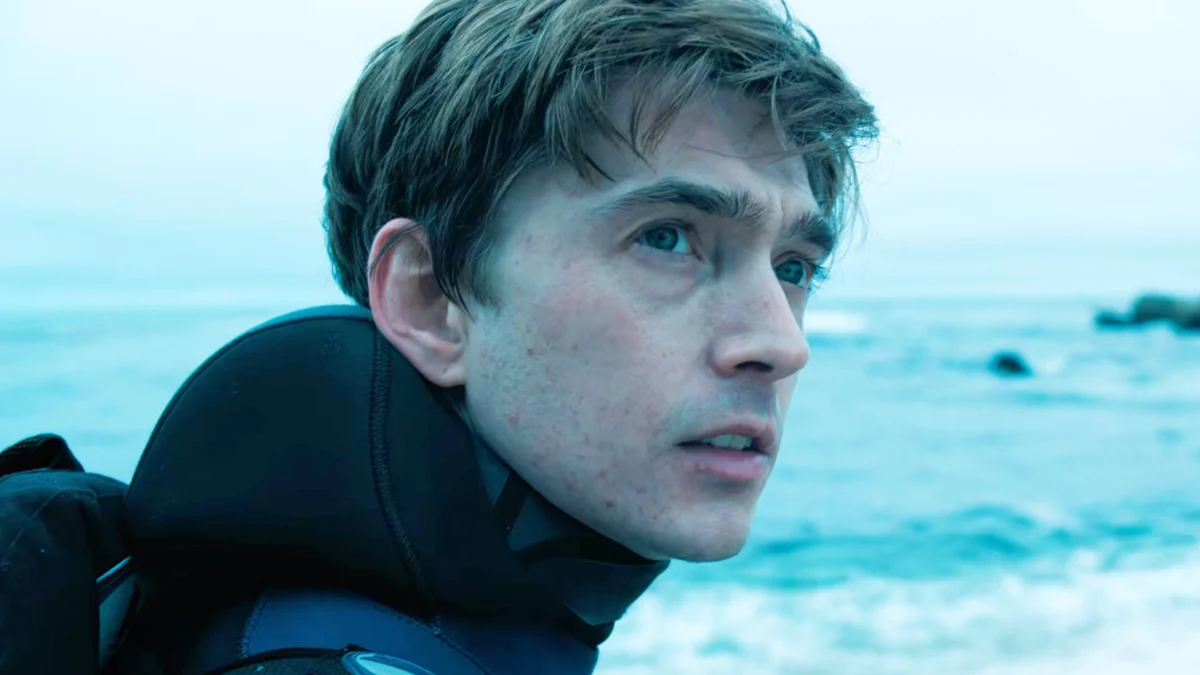
Distributed by 20th Century Studios and arriving in theaters on October 16, 2026, the film adaptation of Whalefall is a masterclass in modern survival cinema. Co-written by Duffield and original author Daniel Kraus, the movie pairs a relentless, claustrophobic narrative with surprising emotional depth. Anchored by a remarkably physical and emotionally raw lead performance from Austin Abrams as scuba diver Jay Gardiner, the film balances the visceral, deep-sea terror reminiscent of Ridley Scott’s Alien with the profound existential grief and awe of Alfonso Cuarón’s Gravity.
Earning a stellar 8 out of 10 rating from /Film, the movie emerges as a rare commercial blockbuster that refuses to dilute its source material’s abstract, metaphysical, and heart-on-its-sleeve sensibilities.
Chronology: From Monastery Beach to the Belly of the Beast
To fully understand the relentless momentum of Whalefall, one must examine the carefully structured chronology of its 106-minute runtime, which weaves past trauma with present-day peril.
Act I: The Haunting Ghost of Monastery Beach
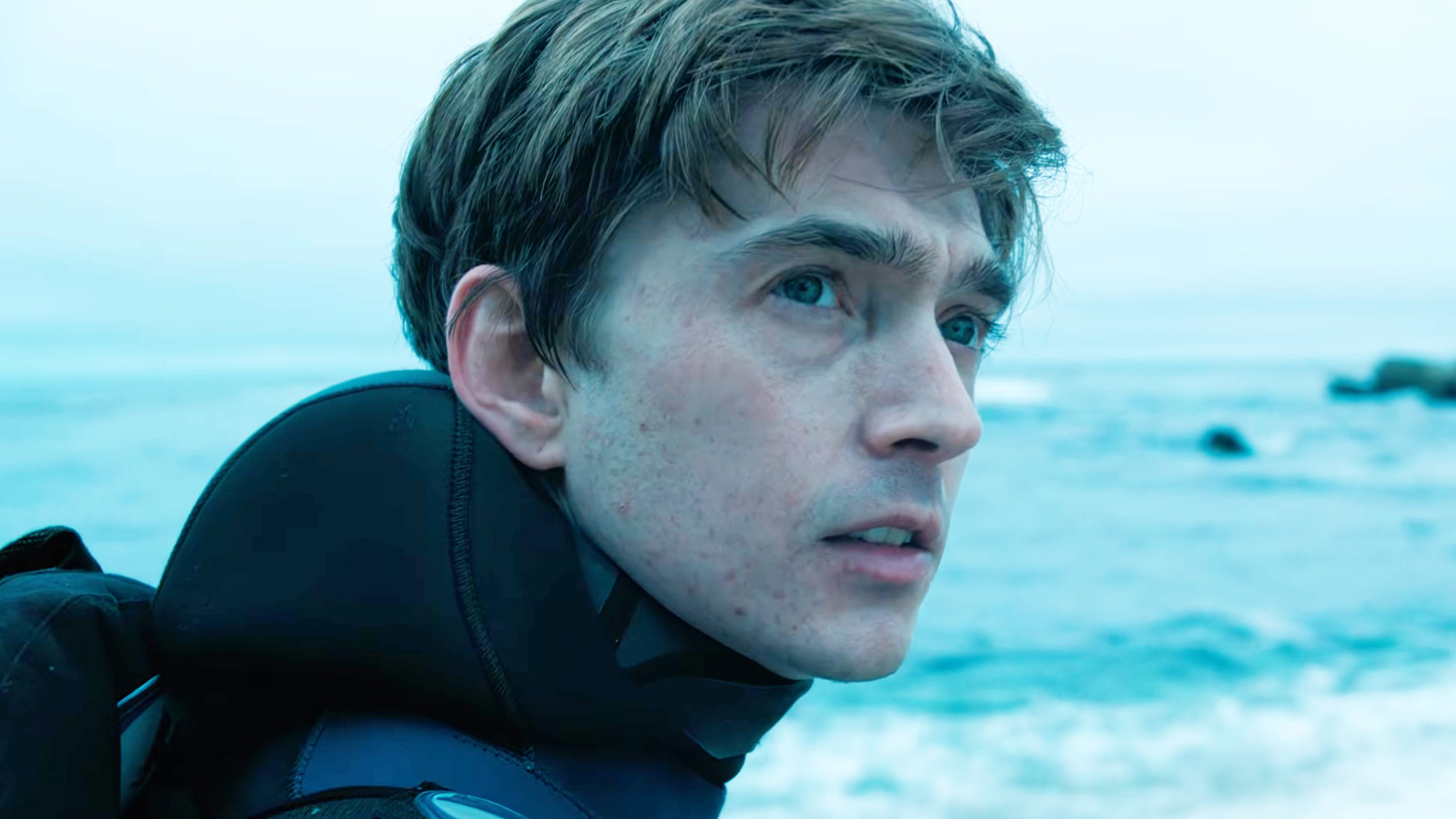
In its opening acts, the film wastes little time establishing the complicated, fractured relationship between Jay Gardiner (Austin Abrams) and his late father, Mitt Gardiner (Josh Brolin). Set against the rugged backdrop of California’s Monastery Beach community, flashbacks reveal Mitt as an overbearing, occasionally cruel figure who dominated Jay’s childhood and adolescence. Despite being remembered by the local community—including Jay’s mother (Elizabeth Shue) and sisters (Emily Rudd and Jane Levy)—as a heroic local diving legend, the reality for Jay was marked by psychological scars.
The younger Gardiner fled the moment he was old enough, running away from the trauma of his last interaction with the terminally ill Mitt. Now, a year after Mitt’s death by suicide, Jay returns to the ocean waters where his father’s remains were lost, seeking both closure for his family and peace for himself.
Act II: The Deep-Sea Ambush
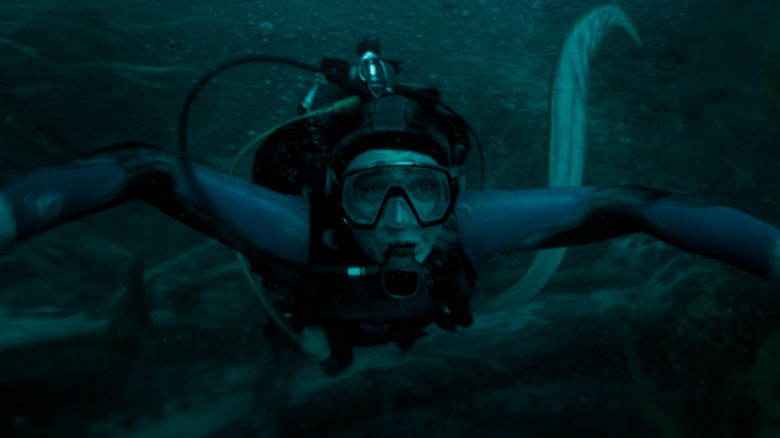
The inciting incident of Whalefall is destined to go down in cinematic history as one of the most terrifying sequence introductions of the decade. While attempting to recover his father’s remains, Jay encounters a majestic yet terrifying giant squid in the pitch-black abyss. The encounter spirals out of control when a massive sperm whale hunting the squid intervenes.
In a breathtaking and visceral set piece, Jay is swept up in the carnage and accidentally swallowed whole by the colossal marine mammal. What begins as a deep-sea exploration narrative instantly transforms into a terrifying race against time, with Jay trapped inside the stomach chambers of the whale, armed only with limited oxygen, a rebreather, and his fading will to live.
Act III: The Internal Awakening
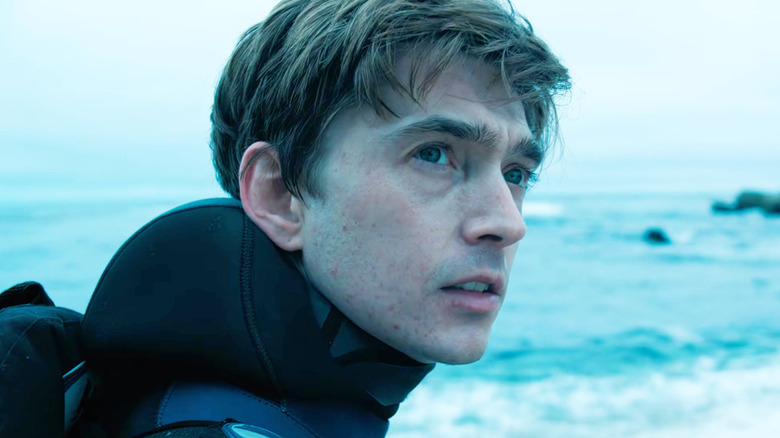
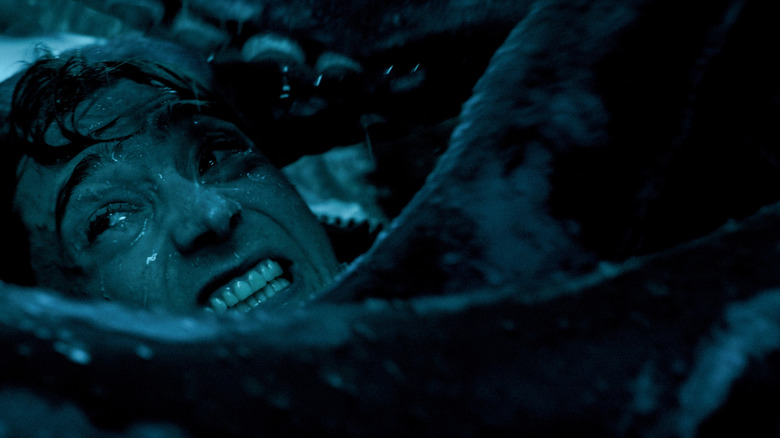
The remainder of the film chronicles Jay’s agonizing, half-flooded journey of survival. As he navigates the organic machinery of the whale’s digestive tract—fending off lingering hazards, including an aggressively persistent squid tentacle—the physical journey mirrors an internal spiritual awakening. Stripped of distractions, Jay is forced to confront his unresolved grief, his father’s suffocating legacy, and the things left unsaid between them. The narrative shifts from pure external terror to an emotional reconciliation, culminating in a climax that tests the boundaries of both physical endurance and metaphysical storytelling.
Supporting Data: Technical Wizardry and Production Excellence
The success of Whalefall hinges entirely on its technical execution, transforming what could have easily devolved into camp into a terrifyingly authentic cinematic experience.
- The Production Design: Led by production designer Ramsey Avery, the internal sets of the whale’s stomach chambers act as living, breathing characters in their own right. Constructed with staggering tactile detail, the half-flooded, slimy, and shifting chambers immerse the audience directly into Jay’s claustrophobic nightmare.
- Cinematography and Soundscapes: Cinematographer Aaron Morton keeps the camera intensely close to Austin Abrams, heightening the intimacy and isolation of the character. However, when the lens occasionally pulls back to capture the vast, terrifying scale of the deep ocean, the visual contrast is staggering. Meanwhile, composer Joseph Trapanese anchors the film with a stirring score that strategically drops out at pivotal moments, leaving the hyper-detailed sound design to stoke an unyielding sense of dread.
- Abrams’ Physical Commitment: Taking on what is essentially a grueling one-man show, Austin Abrams delivers a monumental physical performance. Laden with heavy scuba gear, a restrictive rebreather mask, and soaking wet for the majority of the runtime, Abrams crawls, squeezes, and fights his way through the film with a wholehearted, uncompromising intensity.
Official Responses and Creative Insights
Adapting a novel where a significant portion of the narrative takes place inside a whale’s stomach—relying heavily on the protagonist’s internal monologue—posed a monumental challenge for the filmmakers.
Speaking about the adaptation process, co-writer and director Brian Duffield noted the importance of staying true to the book’s more surreal and metaphysical elements. Rather than stripping away the spiritual undertones that Daniel Kraus penned into the source material, Duffield leaned into them, creating a cinematic language that externalizes Jay’s internal psychological collapse and recovery.
"This is a narrative all about trying, and oftentimes failing, to forge connections with those who loom largest in our lives," production insiders noted during early press screenings. The filmmakers deliberately chose not to shy away from the naked emotional sincerity of the book, even knowing it might alienate more cynical audience members.
Josh Brolin, reflecting on his role as the complicated patriarch Mitt Gardiner, praised the script’s refusal to sugarcoat family dynamics. "It’s a story about the messy, painful ways we inherit our parents’ shadows, and how hard it is to step out of them," Brolin shared in production notes.
Implications: A Polarizing Masterpiece and a New Benchmark for Survival Thrillers
The arrival of Whalefall carries significant implications for both the survival thriller genre and Hollywood’s willingness to adapt challenging literary works.
1. Redefining the Survival Subgenre
For decades, creature features and survival thrillers have relied on external threats—sharks, aliens, serial killers, or natural disasters—to drive tension. Whalefall proves that a narrative can successfully merge monster-movie terror with deep psychological and existential drama. By trapping its protagonist inside a living organism, the film eliminates traditional avenues of escape, forcing a masterclass in tension-building that film historians will likely compare to classic milestones like Jaws.
2. The Divide Over Cinematic Sincerity
One of the most profound takeaways from early reviews is the film’s unapologetic earnestness. In an era where modern blockbuster cinema often hides behind layers of irony, self-awareness, or detached cynicism, Whalefall wears its heart entirely on its sleeve.
This creative choice is expected to sharply divide audiences. Viewers who resonate with the complexities of parental loss and complex family grief will find the film deeply moving, frequently bringing them to the verge of tears. Conversely, more cynical moviegoers may stumble over lines of dialogue lifted directly from the page—such as the bluntly philosophical "The whale is forever."
Ultimately, Whalefall does not compromise its artistic vision to pase critics of sentimentality. By embracing its high-concept premise with absolute sincerity, stellar technical wizardry, and Austin Abrams’ career-best anchor performance, 20th Century Studios has delivered a miraculous adaptation that will haunt, move, and captivate audiences long after the credits roll.
