
Broadway’s New Check-Up: Bill Irwin and Rachel Bloom Lead a Polarizing Revival of Molière’s The Imaginary Invalid
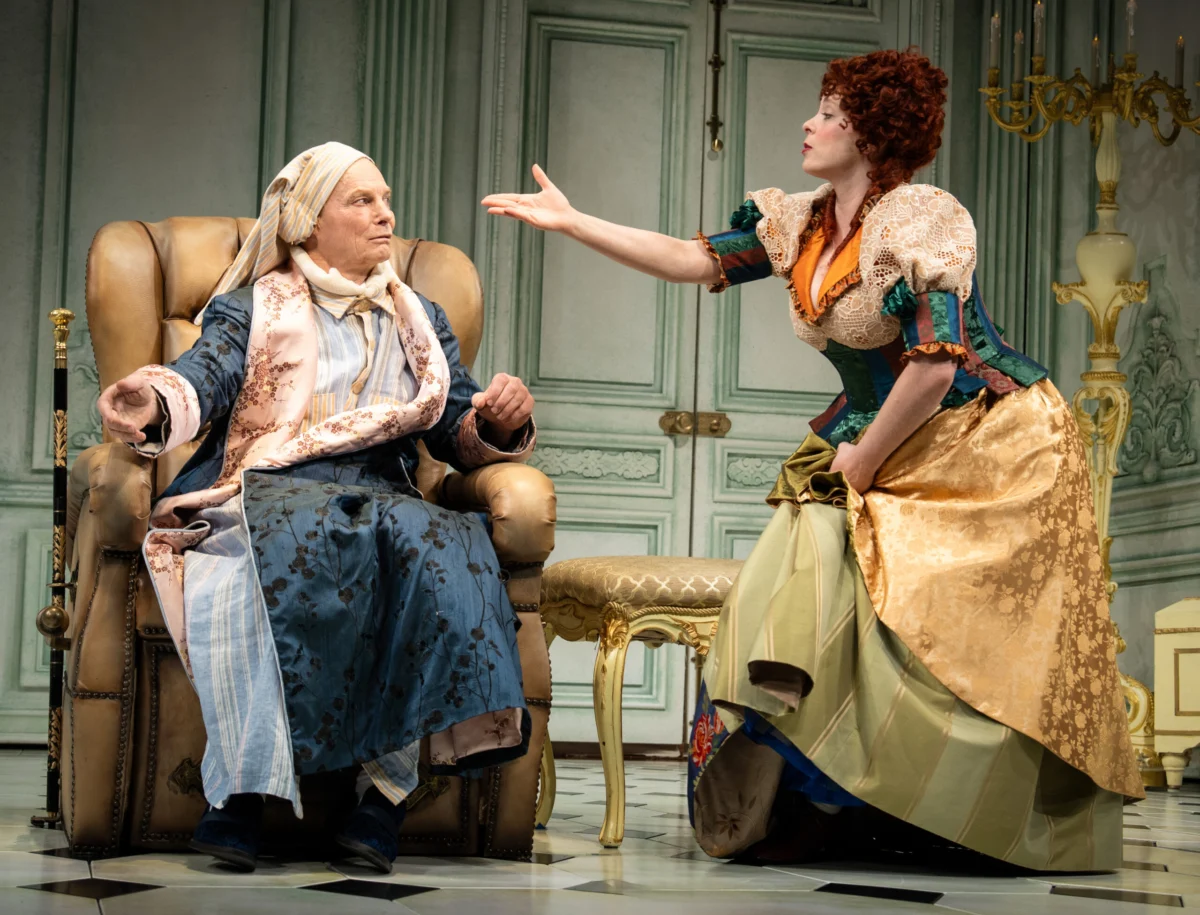
NEW YORK — Broadway is officially making a house call. Bill Irwin, the celebrated Tony Award-winning actor and master clown, is back on the Great White Way, ready for both his close-up and a thorough medical examination. Irwin leads the cast of a brand-new, fast-paced Broadway revival of The Imaginary Invalid, a 17th-century satirical masterpiece originally penned by the undisputed French master of theatrical farce, Molière.
In this fresh adaptation—written by Irwin himself—the veteran stage performer takes on the role of Argan, a wealthy, completely healthy man who has convinced himself he is terminally ill. Argan is a committed hypochondriac who happily pours his fortune into keeping an army of sycophantic doctors at his constant beck and call. If a physician fails to find a mysterious, catastrophic illness on their first visit, Argan simply keeps them coming back until they diagnose something, anything, to feed his obsession.
Following a highly anticipated opening night on Thursday, the production has sparked a flurry of critical debate. Clocking in at a brisk 90 minutes with no intermission, the staging is designed for maximum comedic velocity. Yet, despite the star-studded marquee—which features Dylan Baker alongside Crazy Ex-Girlfriend creator and star Rachel Bloom making her official Broadway debut—critics remain deeply divided over whether this theatrical remedy is just what the doctor ordered, or an ineffective dose of medicine.
Main Facts: Inside the Production
The Imaginary Invalid marks another high-profile theatrical chapter for Bill Irwin, who claimed a Best Actor Tony Award in 2005 for his harrowing and acclaimed performance in Who’s Afraid of Virginia Woolf? alongside Kathleen Turner, Mireille Enos, and David Harbour. Irwin returns to the New York stage fresh off a critically praised, surprisingly sympathetic turn as a Cyclops in Christopher Nolan’s blockbuster film The Odyssey.

Directed by Brandon J. Dirden, the 90-minute revival leans heavily into screwball comedy mechanics, utilizing extravagant costume designs by Karen Perry and balancing historical French farce with contemporary sensibilities. The narrative centers on Argan’s frantic efforts to marry off his daughter to a sycophantic medical student—ensuring free lifetime healthcare for himself—while his clever, overworked maid, Toinette (played by Bloom), plots to undermine his delusions.
However, the production has triggered a starkly mixed reaction from major New York theater critics. While some have praised its sparkling energy and sharp satirical subtext, others argue that the frantic pacing and uneven performances leave the production gasping for air.
Chronology of Development and Opening
The journey of bringing this new version of The Imaginary Invalid to Broadway has been closely watched by theater enthusiasts.
- Adaptation and Pre-Production: Bill Irwin spent considerable time reworking Molière’s original 1673 text, aiming to strip away centuries of academic stiffness to find the beating heart of physical comedy underneath. The goal was to transform a sprawling, multi-act French text into a breathless, modern sprint.
- Casting Announcements: The production generated significant industry buzz with the casting of Rachel Bloom, marking her theatrical debut on Broadway following her celebrated run leading the musical comedy television series Crazy Ex-Girlfriend. Veteran character actor Dylan Baker was similarly announced to round out the principal creative ensemble.
- Rehearsal and Out-of-Town Preparation: Under the guidance of director Brandon J. Dirden, the cast focused on blending classical farce with modern meta-theatrical elements, particularly capitalizing on Bloom’s skill at breaking the fourth wall.
- Opening Night (Thursday): The production officially opened its doors to Broadway critics, resulting in an immediate wave of polarized reviews across major cultural publications.
Supporting Data and Creative Team
To fully understand the theatrical ecosystem surrounding The Imaginary Invalid, it is helpful to examine the key players and their previous accolades:

| Cast / Creative Member | Role / Contribution | Notable Past Work |
|---|---|---|
| Bill Irwin | Adapter / Argan | Who’s Afraid of Virginia Woolf? (Tony Award), The Odyssey |
| Rachel Bloom | Toinette (Maid) | Crazy Ex-Girlfriend (Broadway Debut) |
| Dylan Baker | Featured Cast | Renowned stage and screen character actor |
| Brandon J. Dirden | Director | Acclaimed Broadway director and actor (Root Hog or Die) |
| Karen Perry | Costume Designer | Elaborate 17th-century meets screwball operatic styling |
Critical Reactions: A Divided Diagnosis
The critical landscape for The Imaginary Invalid reads like a chart split down the middle between glowing praise and sharp clinical diagnoses.
The Enthusiastic Reviews
Writing for The New York Times, Helen Shaw described Irwin’s adaptation as "sparkling" and "exquisite," praising both its casting and its ability to unearth deeper thematic layers beneath the comedic tomfoolery.
"You could very easily enjoy The Imaginary Invalid as a hilarious, champagne-light bagatelle and never think about what it suggests about the predatory wellness industry, or about what it means to be ruled by a self-obsessed paterfamilias," Shaw wrote. "But Irwin will not entirely let us leave without thinking. Right at the end of this charming show… his Argan addresses us with some true doctoring."
Similarly, Greg Evans of Deadline found the show to be a buoyant triumph. "Irwin knows how to clown an audience, and in this enjoyable, broadly comic interpretation, the buffoonery is at least as much the point as some pointed critiques of modern-day American health care," Evans noted, singling out Rachel Bloom for special praise. "Bloom, as the jester-like truth-teller, is a stand-out, pointedly delivering her lines with a modern-sounding ease rather than the amusing Mid-Atlantic upper crusty thespianism the posher characters utilize."

The Mixed and Negative Responses
Not all critics felt revitalized by the production, however. Robert Hofler of The Wrap offered a harsher critique, arguing that the revival suffered from creative anemia.
"This revival… has a bad case of anemia despite Brandon J. Dirden directing the Moliere classic as if it were a screwball comedy," Hofler wrote. He also took issue with the condensed runtime and stylistic choices, adding, "Back in the 17th Century, this French comedy… probably ran over three hours with two liquor-laced intermissions. Irwin’s adaptation cuts it down to an interminable 90 minutes with no break to get a much-needed drink."
Adam Feldman of Time Out New York echoed these sentiments, writing, "This should be a cakewalk for Irwin, a supremely gifted clown; instead, it feels rushed and fumbled (and mumbled). Irwin contorts his face into multiple comic grimaces… but his highly precise physical comedy seems out of step with the performances of the other actors."
The sharpest jab came from Johnny Oleksinski of The New York Post, who panned the broader ensemble performances while sparing Bloom. "In what turns into an unpalatable silly voice contest, most of the actors are unbearably cheesy and thus grate," Oleksinski wrote. However, praising Bloom’s understated approach, he added, "The best actor in the play is the person who does the least… Simple and with crystalline diction, the Crazy Ex-Girlfriend star is witty and cutting as she buzzes around annoyed."

Implications for Broadway and Molière Revivals
The polarizing reception of The Imaginary Invalid highlights a perennial challenge in modern theater: how to successfully translate 17th-century French farce for contemporary audiences without losing the text’s inherent sharpness or reducing it to cheap shtick.
For Bill Irwin, the production represents a continuation of his lifelong artistic mission to keep classical clowning alive and relevant on major stages. By injecting meta-theatrical elements—largely anchored by Rachel Bloom’s fourth-wall-breaking presence—the creative team attempted to bridge the gap between Molière’s era and today’s satirical media landscape.
Whether audiences will embrace the frantic, 90-minute dash through hypochondria remains to be seen at the box office. However, the production has unquestionably sparked a vital conversation about the state of American healthcare satire, the pressures of modern wellness culture, and how contemporary performers handle classical texts.
The Imaginary Invalid is currently running on Broadway. As Argan’s medical journey proves, audiences looking for a theatrical remedy will simply have to take their seats and judge the prescription for themselves.
