
The Last of the Independents: Reassessing Don Siegel’s Charley Varrick
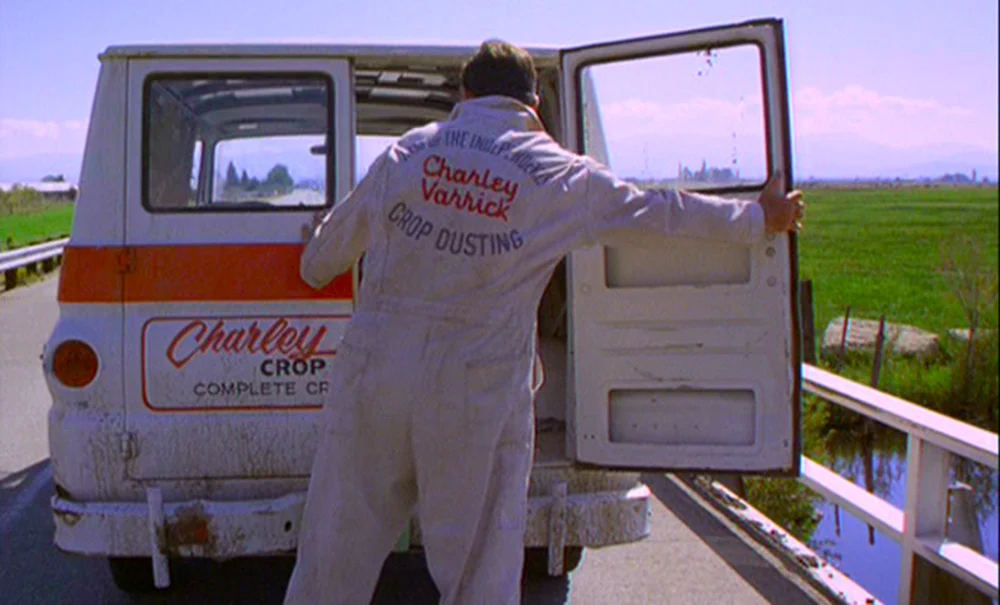
In the pantheon of 1970s American cinema, few films occupy as curious or as enduring a position as Don Siegel’s 1973 crime thriller, Charley Varrick. Initially dismissed by critics and hampered by a tepid box-office performance, the film has since been reclaimed as a masterpiece of economy, dark humor, and subversion. At its core, the film is a masterclass in the "rural noir"—a genre-bending exercise that replaces the shadowy urban alleys of the 1940s with the blinding, bleached-out sunlight of the Nevada desert.
The film follows the titular character, a crop-duster pilot and small-time bank robber who accidentally robs a bank holding the illicit "cleaning" funds of a powerful syndicate. What ensues is a high-stakes chess match between a man who refuses to be crushed by the modern economic machine and the ruthless, faceless corporate entities—the "Combine"—that seek to eliminate him.
The Genesis of a Counter-Culture Classic
The production history of Charley Varrick is as fascinating as the film itself. Based on the novel The Looters by John Reese, the project was originally developed with Clint Eastwood in mind. Fresh off the massive success of Siegel’s Dirty Harry (1971), Eastwood was the natural choice for the studio, Universal. However, the actor famously declined the role, reportedly because he could find no redeeming qualities in Varrick.
This rejection led to the casting of Walter Matthau, an actor better known for his comedic turns in films by Billy Wilder and Neil Simon. While Matthau and Siegel famously clashed over the script—with Matthau struggling to understand the protagonist’s motivation—the resulting performance is widely considered the peak of Matthau’s dramatic career. His portrayal of Varrick as a weary, pragmatic, and fundamentally "human" anti-hero provides the film with its distinctive, slightly contrarian allure.
Chronology of a Heist and Its Aftermath
The film’s narrative structure is as precise as a clock. It opens with the heist of a small-town bank, a sequence that immediately establishes the film’s tonal dissonance. Varrick, his wife, and a dimwitted accomplice pull off the robbery, but the job goes catastrophically wrong. The wife is killed, and the accomplice is left injured.
- The Discovery: As Varrick counts the haul, he realizes the magnitude of his mistake. The cash far exceeds the amount a rural branch should possess. He quickly deduces that he has unwittingly stolen from the mafia.
- The Hunt: The syndicate dispatches two representatives to recover the money: the polished, corporate-minded Maynard Boyle (John Vernon) and the psychopathic hitman Molly (Joe Don Baker).
- The Counter-Strategy: Recognizing he cannot win through brute force, Varrick uses his wits. He navigates a web of corrupt officials, forgers, and double-crosses, culminating in a climactic aerial set-piece that serves as the film’s grand, ironic finale.
The film is bracketed by two significant action sequences, yet the intervening time is defined by character work. The tension is generated not through constant gunfire, but through the claustrophobic inevitability of Varrick’s predicament as he is slowly cornered by the Combine.
Supporting Data: The Craft of the "Laconic" Thriller
The film’s brilliance lies in its technical restraint. Don Siegel, a veteran of the studio system, utilized a "laconic" approach that prioritized efficiency over spectacle. The film is a study in how to frame a scene so that details—a wart, a pair of thick glasses, or a discarded wedding ring—do the heavy lifting of exposition.
The Role of Location
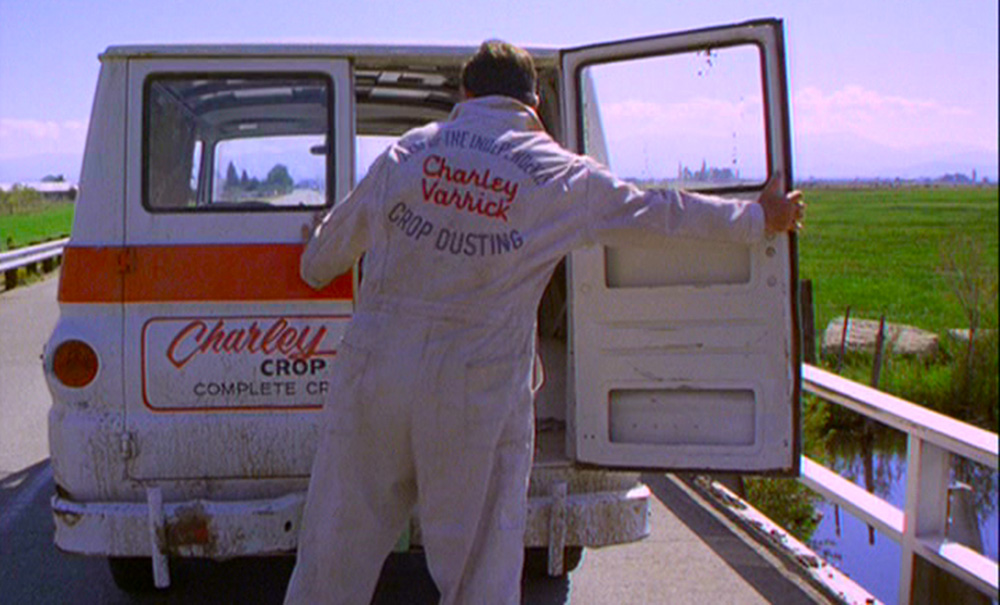
The choice of a rural, dusty Nevada setting provides a stark contrast to the traditional noir aesthetic. As noted by filmmakers Veronika Franz and Severin Fiala, the locations are not just backdrops; they are essential to the film’s sense of realism. From the cramped, dingy interior of Varrick’s trailer to the vast, indifferent expanse of the desert, every setting feels lived-in and authentic. The "Combine" is not a shadowy room in a skyscraper, but a corporate presence that has infiltrated even the most remote corners of the American landscape.
Character Actors as Narrative Tools
Charley Varrick is a goldmine for character acting. Every supporting role, from the nervous, handkerchief-clutching bank manager to the icy, fearless women who populate the film, is rendered with surgical precision. Joe Don Baker’s portrayal of Molly remains a standout in the history of cinema villains—a character who is at once terrifyingly violent and absurdly mundane.
Official Responses and Critical Reception
Upon its release, Charley Varrick was met with mixed reviews. The studio’s lack of interest, exacerbated by Matthau’s public complaints regarding the script, contributed to its initial failure to find an audience. Universal honcho Lew Wasserman famously blocked the original, more poetic title, Last of the Independents, in favor of the more conventional Charley Varrick.
However, the film’s reputation shifted significantly over the decades. In 1974, Matthau won a BAFTA for his performance—a poignant irony given his initial insistence that he did not understand the character. Critics now look back at the film as a seminal work of the 1970s, praising it for its subversive critique of American capitalism and its refusal to rely on the standard tropes of the action genre.
Implications: The Death of the Independent?
The title that never was—Last of the Independents—serves as the film’s thematic anchor. Charley Varrick is a man who remembers a time when a pilot could make a living on his own terms, before the "Combine" commodified every aspect of life. His struggle against the syndicate is a struggle against a system that leaves no room for the individual.
In the contemporary context, Charley Varrick feels remarkably prescient. The encroachment of large-scale monopolies on small businesses and the erosion of personal autonomy are themes that have only gained relevance. Unlike the action heroes of today’s blockbusters, Varrick is not a superhero. He is a man with a "slightly better than average IQ" who survives through cunning, preparation, and a healthy dose of cynicism.
Why the Film Resonates Today
The film stands as a rejection of the "message-heavy" cinema that often dominates the industry. Siegel’s philosophy—"If I had a message, I’d send a telegram"—allows the audience to engage with the film on their own terms. The ambivalence of Varrick’s actions ensures that the viewer never feels entirely comfortable. We are rooting for a man who is, by all accounts, a criminal, simply because the alternative is a system that is far more malignant.
Conclusion
Charley Varrick is more than just a crime thriller; it is a complex, meticulously crafted artifact of its time that continues to offer new rewards upon repeated viewing. Its success lies in its ability to balance the absurd with the deadly serious, and its refusal to provide easy answers. By championing the "last of the independents," Don Siegel created a film that remains stubbornly, and gloriously, outside the system. Whether viewed as an indictment of corporate greed or a love letter to the character-driven films of the 1970s, Charley Varrick remains a towering achievement that deserves its place among the greatest Hollywood pictures of the 20th century.
