
Rewriting the Rules of Terror: An In-Depth Look at V/H/S/Mixtape
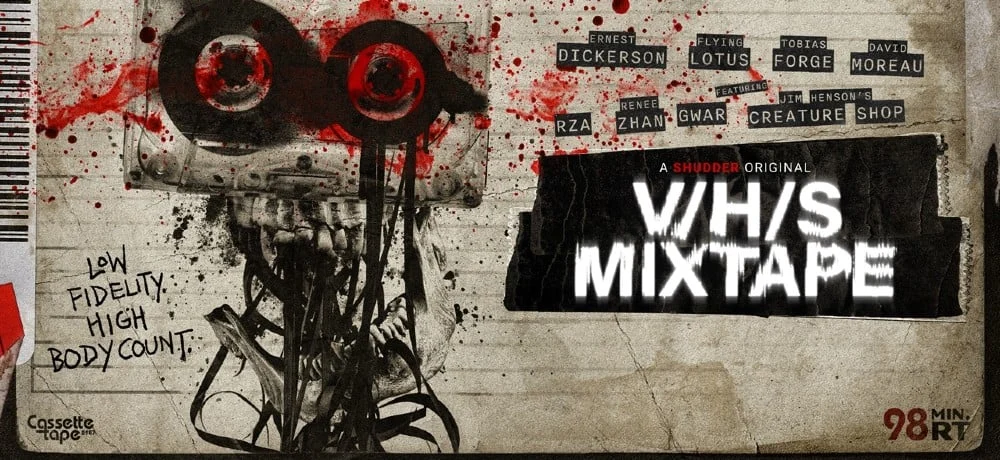
The V/H/S franchise, once a scrappy experiment in digital-age found-footage horror, has evolved into a cornerstone of the genre. Now, with the release of V/H/S/Mixtape, the anthology series under the stewardship of producer Josh Goldbloom proves that it is not merely aging—it is becoming increasingly rebellious. If previous installments were explorations of technological anxiety, V/H/S/Mixtape is an auditory assault, a high-octane celebration of sound, fury, and the visceral power of practical gore. By shifting the focus toward the intersection of music and horror, the film establishes itself as the definitive centerpiece for this year’s October cinematic landscape.
The Architecture of Chaos: Main Facts
V/H/S/Mixtape operates on a simple, effective premise: the anthology format is a mixtape, and the tracks are various sonic nightmares. The film leans heavily into its thematic hook, curating segments that revolve around 80s-era metal videos, apocalyptic symphonies, and songs composed by the dead. It is a kaleidoscopic display of talent, featuring a diverse lineup of directors—from Wu-Tang Clan’s RZA to stalwarts of New French Extremity—all tied together by a punk-rock sensibility that rejects polished perfection in favor of raw, rhythmic carnage.
While not every segment lands with the same impact, the collection is, by design, a grab-bag of unpredictable thrills. It embraces the “slop-horror” aesthetic, celebrating gnarly practical effects and narrative unpredictability. At its core, the film is a testament to the endurance of the anthology format in an era dominated by sprawling cinematic universes.
A Chronological Descent: From GWAR to the Grand Finale
The film wastes no time in establishing its tone. Before the audience can even get comfortable, the screen is overtaken by the legendary Virginia shock-rock icons, GWAR. Serving as the film’s wraparound hosts, the band—featuring Blothar the Berserker, Beefcake the Mighty, and Balsac the Jaws of Death—infuses the proceedings with their signature brand of chaotic, slime-drenched insanity. Within the first two minutes, viewers are treated to the sight of space-green ichor coating hot dogs, a classic GWAR aesthetic that sets the stage for the absurdity to follow.
The Opening Act: Puppetry and Peril
The anthology kicks off with Renee Zhan’s “Dance, Dance, Dance, Dance.” Written by Zoe Cooper, the segment feels like an episode of The Muppets directed by a disciple of Five Nights at Freddy’s. Barbara Crampton stars in this descent into a cancelled children’s program, where the felt-covered puppets eventually turn on their human guests. It is a masterclass in tone, transitioning from nostalgic whimsy to claustrophobic horror as the Henson-esque warehouse comes to life with murderous intent.
The Mid-Section: A Bumpy, Bizarre Ride
As with any anthology, the middle acts fluctuate in intensity. The film navigates through diverse soundscapes, from David Moreau’s “Heartbeat”—a tense, claustrophobic look at vloggers trapped in a sound-deprivation chamber—to Ernest Dickerson’s “The Music of Mr. Sze.” The latter, while visually stunning in its final act, suffers from a slightly bloated first half. Similarly, segments by Flying Lotus and Tobias Forge of Ghost serve as bite-sized, high-concept music videos. While Forge’s “Premature Burial” fits the metal-horror aesthetic seamlessly, Flying Lotus’s “Another Cabin” feels somewhat disconnected from the traditional found-footage constraints, highlighting the inherent friction that arises when stylistic ambition clashes with the franchise’s established format.
The Grand Finale: Death Tone
The film concludes with RZA’s “Death Tone,” a standout segment that brings the audience home with a narrative riff on Dexter meets American Psycho. Set within the cutthroat world of the music industry, it follows a serial-killer protagonist whose gruesome exploits are set to a rhythmic, pulsating soundtrack. With a captivating performance by Neela Jolene, who wields an axe with chilling charisma, the film ends on a high note, leaving viewers gobsmacked by the audacity of turning human remains into a chart-topping hit.
Supporting Data: The Craft of Gore
Central to the success of V/H/S/Mixtape is the work of Los Angeles-based SFX company Little Shop of Gore, spearheaded by Ryan and Salina Ward. Their contribution to the film cannot be overstated. In an industry increasingly reliant on digital augmentation, the Wards double down on prosthetics, cosmetics, and old-school, do-it-yourself practical effects.
The gore is not merely gratuitous; it is curated. The kills in “Dance, Dance, Dance, Dance” are particularly noteworthy, blending the adorable with the horrific in a way that feels singular. These practical effects serve as the connective tissue of the film, providing a tactile reality to the supernatural and the technological threats that populate the anthology. The Wards, alongside other hired SFX artists, have effectively cemented V/H/S as the industry’s most reliable source for “exquisite violence.”
Official Responses and Creative Direction
Producer Josh Goldbloom has once again proven his ability to curate a roster of filmmakers that operates on diverse, often conflicting, wavelengths. By allowing artists like RZA, Ernest Dickerson, and the members of GWAR to operate with significant creative freedom, Goldbloom has fostered an environment where the franchise can experiment.
In internal discussions regarding the production, it was noted that the goal was to push the boundaries of what a “found footage” movie could represent. By incorporating music videos, stop-motion animation, and avant-garde orchestral pieces, the production team sought to mimic the feeling of flipping through channels on a cursed television set at 3:00 AM. While GWAR’s involvement as the wraparound hosts—marked by scatological improv and meta-commentary—might be polarizing to some viewers, it reflects the film’s broader commitment to a “no-holds-barred” creative philosophy.
The Implications: Why the Franchise Matters
The success of V/H/S/Mixtape—the ninth entry in the series—carries significant implications for the future of horror anthologies. Nine films in, most franchises would be suffering from creative exhaustion. Instead, V/H/S continues to inspire optimism.
- The Resilience of the Anthology: V/H/S has become the definitive Halloween tradition for Shudder, proving that audiences remain hungry for bite-sized, high-impact storytelling that doesn’t require a three-hour commitment to a singular plot.
- The "Mixtape" Model: The structural decision to group segments by auditory themes suggests a new path forward for anthologies. By tying disparate stories together through a sonic thread, the filmmakers have created a more cohesive experience than previous entries, which often relied on loose or non-existent narrative bridges.
- The DIY Revival: The reliance on Little Shop of Gore demonstrates a shift in the independent horror market. There is a palpable audience appetite for the “shabby-chic” look of practical effects, which feels more authentic and frightening than the often-sterile output of high-budget CGI.
V/H/S/Mixtape is a triumph of curatorial ambition. It is a messy, loud, and unapologetically violent love letter to the horror genre. By embracing the highs and lows of the anthology format, it succeeds in being exactly what it set out to be: a slaughter-happy, amp-bursting bang that serves as the perfect ignition for any horror fan’s October marathon. While it may not be for the faint of heart—or for those who prefer their horror neat and tidy—it remains a vital, pulsing example of what happens when talented filmmakers are given a canvas and told to burn it down.
Movie Score: 3.5/5
