
Universal Pictures Unveils the Definitive "Frankenstein: Complete Legacy Collection" on 4K Ultra HD
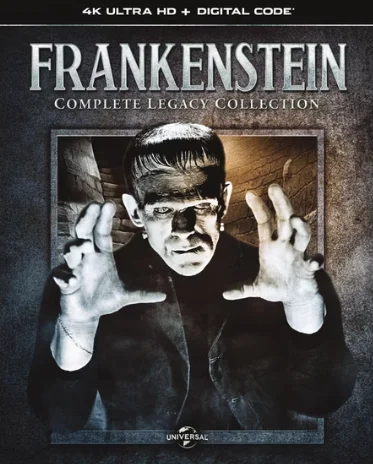
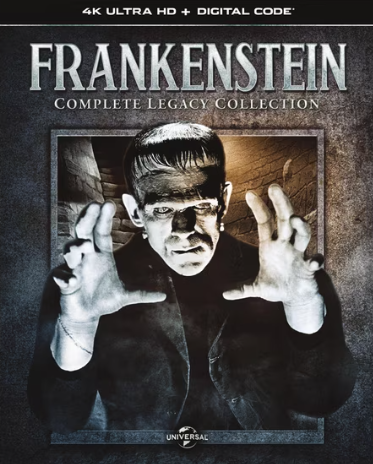
Universal Pictures Home Entertainment (UPHE) has announced a monumental release for cinephiles and horror enthusiasts alike: the Frankenstein: Complete Legacy Collection arrives on 4K Ultra HD. For the first time in the history of physical media, all eight foundational horror masterpieces from the original Universal Monster cycle have been gathered into a single, breathtaking ultra-high-definition box set. Released on September 29, 2026, this definitive collection marks a watershed moment for home video preservation, breathing new life into the silver-screen nightmares that defined a genre, launched a studio, and forever altered pop culture.
Spanning nearly two decades of gothic atmosphere, innovative practical effects, and tragic storytelling, the collection traces the cultural evolution of Mary Shelley’s timeless creation from a terrifying cinematic experiment into a beloved pop-culture icon. Every crackling laboratory spark, deep-focus shadow, and expressionistic set design has been meticulously remastered to preserve the historic craftsmanship of the Universal Classic Monsters era.
Main Facts: What’s Included in the Box Set
The Frankenstein: Complete Legacy Collection on 4K UHD is not merely a compilation; it is a meticulously curated museum-grade release designed to honor the legacy of early Hollywood horror.
The core of the release features all eight cinematic landmarks of the original Universal Frankenstein cycle, fully restored for modern displays with high dynamic range (HDR) and pristine, cleaned-up audio tracks:
- Frankenstein (1931): The tragic, genre-defining masterpiece directed by James Whale, starring Boris Karloff in his star-making, iconic turn as the misunderstood Monster, and Colin Clive as the dangerously obsessed Dr. Henry Frankenstein.
- The Bride of Frankenstein (1935): Widely regarded as one of the greatest cinematic sequels ever produced. Whale returns to direct this stylistic, camp-infused, yet deeply tragic triumph introducing Elsa Lanchester as the electrifying Bride.
- Son of Frankenstein (1939): The lavish, expressionistic final entry of the original core trilogy, starring Basil Rathbone as the titular son, a returning Boris Karloff in his final franchise performance as the Monster, and Bela Lugosi delivering a career-defining performance as the broken-necked Ygor.
- The Ghost of Frankenstein (1942): Lon Chaney Jr. steps into the heavy boots of the Monster, injecting a new physical brutality into the role as the legacy of scientific madness continues in the fictional village of Frankenstein.
- Frankenstein Meets the Wolf Man (1943): The historic motion picture that officially launched the cinematic "monster rally" trend, pitting Lon Chaney Jr.’s tormented Wolf Man against Bela Lugosi’s lumbering iteration of the Frankenstein Monster.
- House of Frankenstein (1944): A thrilling multi-monster extravaganza uniting Count Dracula, the Wolf Man, the Frankenstein Monster, and a mad scientist played by original icon Boris Karloff.
- House of Dracula (1945): The atmospheric gothic continuum bringing the studio’s legendary cinematic menagerie together under one roof for one final, moody hurrah before the classic era wound down.
- Abbott and Costello Meet Frankenstein (1948): The genius comedy-horror hybrid that paired the legendary comedic duo with Dracula, the Wolf Man, and the Frankenstein Monster, serving as a triumphant and culturally significant capstone to the golden age of the Universal Monsters.
Beyond the films themselves, the physical release includes an array of collector’s items. The set features an exclusive 40-page commemorative booklet filled with rare archival promotional images and historical essays, a double-sided theatrical poster featuring brand-new, breathtaking artwork by renowned contemporary illustrator Alex Ross, and 10 reproduction worldwide theatrical lobby cards. The entire collection is housed in a deluxe, custom-designed rigid slipcase. Furthermore, the release retains a massive vault of legacy bonus features, headlined by the acclaimed feature-length documentary The Frankenstein Files: How Hollywood Made a Monster, alongside vintage featurettes, audio commentaries by film historians, and rare production galleries.
Chronology: The Evolution of Universal’s Monster Legacy
To understand the weight of this 4K release, one must look back at how Universal Pictures transformed from a modest Hollywood studio into the epicenter of horror in the early 20th century.
The journey began in 1931 with the release of director James Whale’s Frankenstein. Capitalizing on the unexpected, massive financial and cultural success of Tod Browning’s Dracula earlier that same year, Universal cemented its identity as the undisputed home of the cinematic macabre. Boris Karloff’s haunting visage—complete with Jack Pierce’s revolutionary makeup design featuring flat-topped skull prosthetics, heavy eyelids, and neck electrodes—instantly became an indelible part of global iconography.
As the decade progressed, Universal expanded the mythos. The Bride of Frankenstein (1935) pushed artistic boundaries, blending dark comedy, gothic horror, and deep pathos. By the time Son of Frankenstein arrived in 1939, budgets were larger, sets were more grandiose, and the studio had established a dependable blueprint for serialized thrills.
However, as World War II reshaped global anxieties in the early 1940s, Universal shifted strategies from gothic tragedy to audience-pleasing crossovers, or "monster rallies." Films like Frankenstein Meets the Wolf Man and House of Frankenstein satisfied a wartime public hungry for escapist thrills by throwing multiple studio properties into the same frame. Finally, in 1948, Abbott and Costello Meet Frankenstein gently satirized the very tropes the studio had spent nearly two decades building, successfully closing the book on the classic era before the monsters faded into late-night television syndication and eventual modern reverence.
Supporting Data: The 4K Ultra HD Restoration Process
The transition of these historic black-and-white films to 4K Ultra HD represents a massive technological undertaking. For decades, home video releases—ranging from VHS and LaserDisc to DVD and standard Blu-ray—have struggled with the inherent limitations of nitrate-derived source materials, generational loss, and fluctuating audio quality.
Universal’s preservation teams utilized original 35mm safety fine-grain master elements and surviving nitrate prints, scanning them at high resolutions to capture the maximum dynamic range possible. Unlike previous generations of digital transfers, which often suffered from heavy-handed digital noise reduction (DNR) that scrubbed away authentic film grain, the new 4K masters respect the organic texture of the celluloid.
Key technical aspects of the restoration include:
- High Dynamic Range (HDR10): Maximizes the stark, German Expressionist lighting styles popularized by cinematographers like Arthur Edeson. Deep, inking blacks and luminous, piercing highlights are rendered with incredible fidelity, allowing viewers to see shadow details in Karl Freund’s legendary laboratory sets that have been obscured for decades.
- Lossless Audio Restoration: The original mono tracks have been carefully scrubbed of hiss, hum, and surface crackle without compromising the fidelity of Franz Waxman, Herman Stein, and other legendary composers’ sweeping orchestral scores, as well as Karloff’s guttural grunts and Colin Clive’s frantic, manic screaming.
- Bitrate Optimization: Spanning across multiple high-capacity 4K UHD discs, the transfer minimizes compression artifacts, ensuring that fast-moving atmospheric effects—such as cascading smoke, driving rain, and flickering laboratory electricity—remain razor-sharp.
Official Responses and Industry Reception
The announcement of the Frankenstein: Complete Legacy Collection on 4K Ultra HD has sent shockwaves of excitement through the physical media community, a market that has experienced a steady resurgence driven by passionate cinephiles demanding premium product curation.
In an official statement accompanying the release, Universal Pictures Home Entertainment emphasized the cultural duty of preserving these cinematic treasures for a new generation:
"Universal’s classic monsters are the foundation upon which modern horror and fantasy cinema are built. Bringing the entire Frankenstein legacy to 4K Ultra HD is our love letter to generations of fans who have kept these tragic, misunderstood characters alive in the cultural zeitgeist for nearly a century. With pristine restorations and world-class physical packaging, this collection honors the historic artistry of James Whale, Boris Karloff, Jack Pierce, and the countless craftsmen who shaped Hollywood history."
Film historians and preservationists have similarly lauded the release. Dr. Elena Vance, a cinema studies professor specializing in early Hollywood horror, noted the importance of the box set:
"For too long, later sequels like The Ghost of Frankenstein or House of Dracula have been treated as minor footnotes in home video releases. Presenting all eight films with equal 4K reverence allows audiences to trace the fascinating sociological and artistic shift of Hollywood across the 1930s and 1940s. It’s a masterclass in genre evolution."
Retail partners, including major outlets like Walmart and specialty boutique distributors like Gruv Entertainment, reported unprecedented pre-order velocity, indicating that physical media collectors remain eager to invest in high-end, comprehensive box sets that cannot be permanently altered or removed by shifting streaming licensing agreements.
Implications: The Future of Classic Monster Preservation
The release of the Frankenstein: Complete Legacy Collection on 4K Ultra HD carries significant implications for the entertainment industry at large, demonstrating the enduring commercial and cultural viability of classic cinema in the modern ultra-high-definition landscape.
1. A Blueprint for Future Legacy Box Sets
The success of this comprehensive multi-film 4K set proves that consumers are willing to pay a premium for all-encompassing packages rather than piecemeal releases. Industry watchers anticipate that this release may pave the way for similar ultra-HD treatments for Universal’s other crown jewels, such as the Dracula, The Mummy, and The Invisible Man legacy collections.
2. The Triumph of Physical Media Ownership
In an era dominated by digital streaming fragmentation, where movies and television shows frequently disappear overnight due to corporate tax write-offs or shifting streaming rights, robust physical media releases like the Frankenstein: Complete Legacy Collection serve as permanent cultural archives. By offering exclusive physical goods—such as the Alex Ross poster, lobby cards, and the 40-page booklet—UPHE has reinforced the value proposition of owning physical artifacts over renting digital pixels.
3. Redefining Classic Cinema for Modern Displays
For decades, younger audiences have struggled to connect with vintage black-and-white cinema due to subpar, muddy television broadcasts or low-resolution home video transfers. By presenting these films with modern 4K clarity, HDR contrast, and restored audio, Universal is effectively modernizing the viewing experience. Viewers can now appreciate the micro-expressions in Boris Karloff’s eyes beneath layers of heavy makeup, the intricate needlework on the Bride’s costume, and the brilliant spatial design of Whale’s direction as though viewing the films on opening night in 1931.
The Frankenstein: Complete Legacy Collection is available now through major physical media retailers, including Walmart and Gruv Entertainment. As horror fans dust off their home theaters to witness the lightning strike once more, one thing is certain: the monster created by Mary Shelley, brought to life by Universal, and preserved by modern technology is truly immortal.
