
From a Misheard Lyric to a Sci-Fi Opus: The 30-Year Odyssey of Brad Bird’s ‘Ray Gunn’
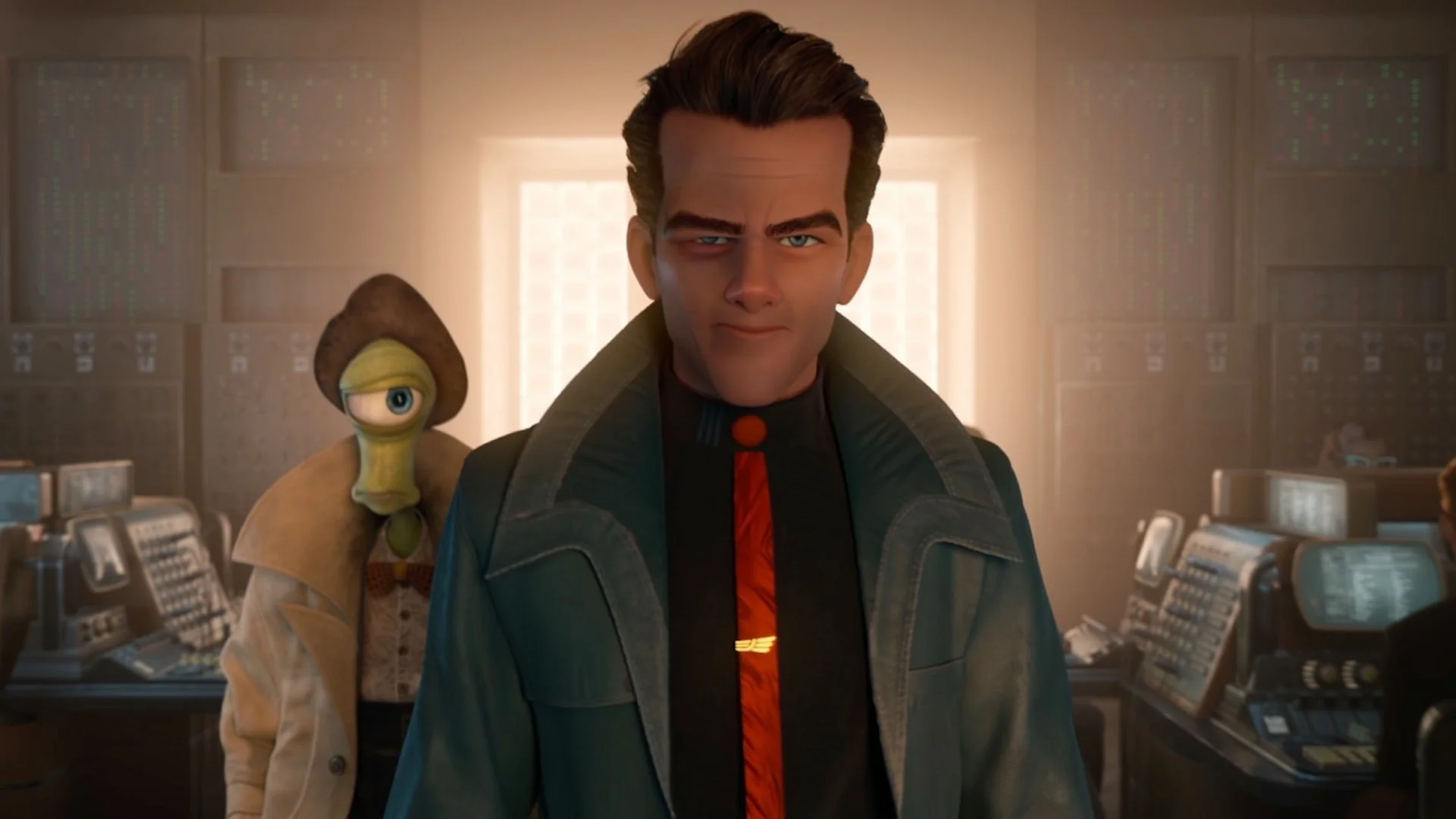
In the pantheon of Hollywood development, projects often die in the "cemetery of ideas"—that metaphorical place where scripts go to gather dust after being rejected by studio executives. Rarely does a project survive for three decades, dormant yet potent, only to emerge fully realized in the modern era. Yet, that is precisely the story of Ray Gunn, the long-gestating animated sci-fi noir from visionary director Brad Bird.
While the film is currently generating buzz for its stylistic departure from Bird’s Pixar-adjacent roots, the most compelling aspect of Ray Gunn is its origin. It did not begin with a high-concept pitch meeting or a massive acquisition; it began with a classic case of auditory serendipity. As Bird recently revealed during a post-screening Q&A in Los Angeles, the genesis of his latest project lies in a simple, humorous misunderstanding of a 1980s new-wave anthem.
The Spark: A Sonic Misinterpretation
The creative process is rarely linear. For Bird, the seed for a multi-decade project was planted when he first heard The B-52s’ quirky, atmospheric track, "Planet Claire." The song’s iconic, surf-rock-inflected opening riff bears a striking, albeit fleeting, resemblance to Henry Mancini’s legendary, brass-heavy theme for the 1950s detective series Peter Gunn.
"Yeah, I misunderstood a song," Bird admitted to the audience, reflecting on the moment that changed his career trajectory. "I heard ‘Planet Claire’ for the first time, and it started out with that driving rhythm—dun, dun, dun, dun, dun. I thought I was listening to a radical new version of Henry Mancini’s Peter Gunn theme, which, if you don’t know the name, you’ve definitely heard the melody. Trust me."
However, as the track progressed, the musical landscape shifted. The song transitioned from the familiar, punchy jazz-noir aesthetic of a detective procedural into something far more ethereal and extraterrestrial. "It started to sound like an alien planet," Bird recalled. "In that moment, I realized it wasn’t Peter Gunn at all. My brain just jumped to ‘Ray Gunn.’ And then I started asking myself, ‘Ray Gunn? What would that be?’ The world-building began right there."
A Chronology of Persistence
The concept of Ray Gunn predates The Iron Giant (1999), the film that effectively launched Bird’s career as a feature director. In the early 1990s, Bird was already sketching out the parameters of this noir-inspired future—a world defined by flying cars, trench-coat-clad detectives, and the sleek, dangerous allure of a neon-drenched cityscape.
The Initial Rejection
Following his initial conceptual work, Bird took the project to Turner and later to Warner Bros. During that era, the animation industry was vastly different; the "prestige" animated feature, outside of the Disney canon, was a difficult sell. Executives struggled to grasp the tone Bird was aiming for—a blend of cynical hard-boiled detective tropes and optimistic, mid-century retro-futurism.
When the studios passed, Bird did not nurse a grudge, nor did he spend the intervening years obsessively pitching the script. Instead, he treated the project with the pragmatic resignation of a seasoned professional. "I put it away," Bird said. "I thought, ‘Well, that’s that idea.’ It was kind of like the end of Raiders of the Lost Ark, where the Ark is crated up and sent into a massive warehouse, never to be seen again. I truly thought that would be the fate of Ray Gunn."
The Long Hiatus
For thirty years, the project lived in the periphery of Bird’s imagination while he went on to redefine the landscape of modern animation and live-action filmmaking. He directed The Iron Giant, The Incredibles, Ratatouille, Mission: Impossible – Ghost Protocol, Tomorrowland, and Incredibles 2.
Through all those successes, the "Ray Gunn" folder remained in the drawer. It was not a matter of obsession, but of timing. In the film industry, success grants a director "social capital," allowing them to finally pull passion projects from the "forgotten" category. As Bird’s reputation as one of the most bankable and critically acclaimed directors in the business solidified, the industry began to ask, "What else do you want to make?"
Supporting Data: Why Now?
The emergence of Ray Gunn in the current market is not coincidental. The animation landscape has shifted dramatically since the 1990s. The success of adult-oriented or stylized animation—such as the Spider-Verse franchise or various streaming series—has created a space where a noir sci-fi film is no longer considered a commercial liability.
Furthermore, the technological advancements in rendering have allowed Bird to capture the specific "look" he envisioned three decades ago. The aesthetic of Ray Gunn requires a specific blend of 2D sensibilities and 3D depth, a technique that has only recently become efficient enough to maintain a cohesive visual language across a feature-length runtime.
Official Responses and Creative Intent
In his remarks at the Los Angeles screening, Bird emphasized that his return to the project was not an act of nostalgia, but an act of completion. He spoke to the importance of the "fun" factor in filmmaking.
"When I had some success, people started asking if there was anything I wanted to do," Bird explained. "Among many things, I still had this. And fortunately, eventually, somebody saw it the way I saw it—that this would be a fun movie."
The director’s perspective on the project has shifted with age. While the 1990s version of Ray Gunn might have been a darker, more rigid noir, the version that eventually hit the screen benefits from the decades of storytelling experience Bird gained while directing high-octane action sequences in Mission: Impossible and the emotional beats of The Iron Giant. The film is a synthesis of his entire career, filtered through the lens of that first, strange, misheard B-52s song.
Implications: The Legacy of "Stalled" Ideas
The existence of Ray Gunn serves as a case study for young filmmakers and creatives in any medium: the "no" you receive today is not necessarily a permanent "no."
The Value of the "Long Game"
There is a profound implication in Bird’s success: patience is a creative asset. Many modern creatives feel the pressure to churn out content at a breakneck pace. Bird’s trajectory suggests that some ideas require a "gestation period." By allowing Ray Gunn to sit, Bird allowed his own creative sensibilities to evolve, ensuring that when the project finally entered production, he had the wisdom to execute it properly.
The Evolution of Genre
Ray Gunn bridges the gap between the gritty detective serials of the 1940s and the optimistic sci-fi of the 1950s—the exact era that birthed the "Planet Claire" sound. By committing to this aesthetic, Bird is effectively challenging the current trend of "gritty realism" in sci-fi. He is returning to a world of laser guns, femme fatales, and mystery, proving that there is still a massive, hungry audience for stylized genre exercises that don’t take themselves too seriously.
Conclusion: A Dream Realized
It is a rare and beautiful thing to see a filmmaker return to their "white whale" after thirty years. Most directors would have let such an idea fade into total obscurity, but Brad Bird’s commitment to his vision—and his ability to recognize when the time was right—has resulted in a unique entry into his filmography.
Ray Gunn stands as a testament to the idea that creativity is not just about the flash of inspiration, but the endurance to hold onto that spark until the world is ready to see it. What began as a misunderstood B-52s lyric has transformed into a fully realized, neon-drenched noir adventure. As Bird himself might note, sometimes the best ideas are the ones you set aside, waiting for the right moment to come back and finish what you started.
