
The Human Element: Composers Unite at World Soundtrack Awards to Face an AI-Driven Future
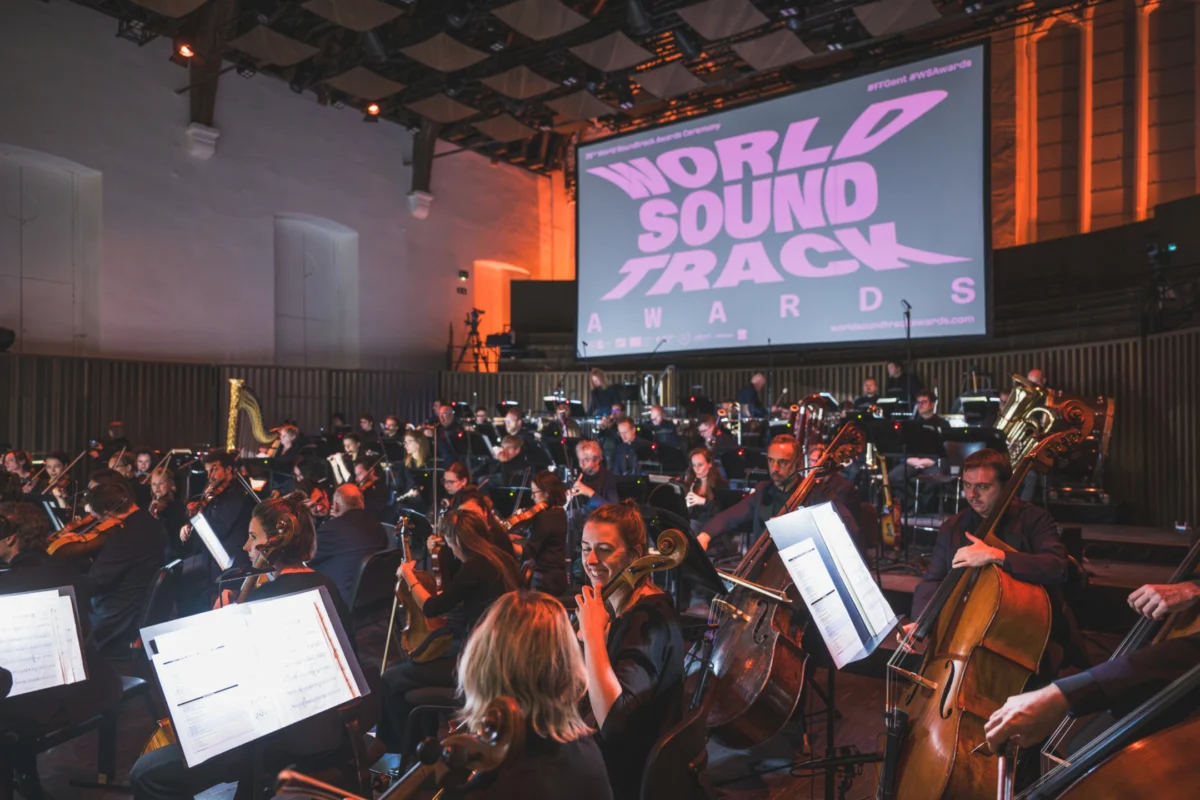
The annual World Soundtrack Awards (WSA) Film Music Days, held this October in Ghent, Belgium, have long served as a sanctuary for the global film scoring community. Yet, this year’s gathering—spanning October 8 through 10—felt decidedly different. While the event celebrated the artistry of cinematic music, the underlying atmosphere was one of urgent transition. From the looming shadow of generative artificial intelligence to the persistent struggle for labor rights in a fragmented global market, the industry is currently grappling with an existential question: In an era of infinite digital replication, what is the irreplaceable value of human emotion?
The Soul of the Score: Why Human Connection Prevails
The event opened with a poignant reminder of what is at stake. Composer Simon Franglen, discussing his work on the highly anticipated Avatar: Fire and Ash, shared a moment of profound clarity that defined the spirit of the conference.
“We had hundreds of musicians in a room, pouring their emotion out in that precise second,” Franglen recalled. “How can that ever be replicated by AI?”
This sentiment became the rallying cry of the summit. The industry’s elite argued that the “imperfections”—the slight breath of a flute player, the subtle variation in a violinist’s vibrato, the collective energy of a live orchestra—are precisely what lend a film score its power. As the technological landscape shifts toward automated synthesis, these composers contend that the "human touch" is not merely a stylistic choice; it is the fundamental heartbeat of the medium.
Strength in Numbers: The Fight for Collective Representation
One of the most significant themes of the event was the stark reality of the composer’s labor environment. Unlike directors, cinematographers, or screenwriters, film composers in the U.S. and the U.K. often find themselves operating in a legal vacuum. Without robust unions or collective bargaining rights, these creatives frequently face lopsided contract negotiations, leaving them vulnerable to predatory practices by major studios and production entities.
The European Composer and Songwriter Alliance (ECSA) took center stage in Ghent, serving as a beacon for what the industry’s future might look like if composers successfully organize. Representing over 30,000 creators across 57 member organizations, ECSA is actively working to bridge the gap between creative autonomy and professional security.
Helienne Lindvall, president of ECSA, accepted the WSA Industry Award with a sobering, yet empowering message. “There’s still a long way to go and a lot of work to do,” Lindvall told the attendees. “But one thing is clear: We have become a voice to be reckoned with, giving composers and songwriters a seat at the table. Because, as someone once said, if you’re not sitting at the table, chances are you’re on the menu.”

The AI Confrontation: Authorization, Remuneration, and Transparency
The shadow of generative AI loomed over every roundtable and mixer. The consensus among the industry’s leading voices is that the current trajectory of AI development is incompatible with the protection of intellectual property. ECSA is currently spearheading a campaign to influence the European Union’s evolving AI Act, centering their advocacy on three non-negotiable pillars:
- Authorization: AI companies must be legally required to obtain explicit permission before utilizing copyrighted musical works to train generative models.
- Remuneration: Creators must receive fair, recurring compensation when their works are ingested into training datasets.
- Transparency: Platforms must disclose which catalogs and datasets are used to build their models, ensuring that creators know exactly when and how their art is being leveraged.
Lindvall issued a stark warning to those tempted by the convenience of AI music generators like Suno. She urged composers to read the fine print of service agreements, noting that many platforms demand the right to use uploaded music for commercial exploitation in perpetuity. “If we want to protect those at the heart of music creation,” Lindvall stated, “we must continue to defend these fundamental principles. In other words, our art.”
The Pipeline Problem: Protecting the Next Generation
A recurring fear voiced throughout the three-day summit was the potential loss of the "entry-level" rungs of the career ladder. As AI-generated music begins to populate the lower tiers of the industry—such as stock music, background filler, and low-budget commercial work—the traditional training grounds for the next Hans Zimmer or Hildur Guðnadóttir are disappearing.
Simon Franglen pointed to the history of the industry, noting that titans of the field did not emerge in a vacuum. “Hans Zimmer wouldn’t be who he is today without getting a gig on the 1980s British game show Going for Gold,” Franglen reminded the audience. “We all start somewhere, and we all have our various steps. It’s essential that those steps exist.”
Darrell Alexander, founder of the prominent agency Cool Music, reinforced this by emphasizing the mentorship model. “It’s still better to try to be an additional composer to a master,” he noted. “We accept applications for jobs, and I think that’s really important, because you can study and learn and see.”
This commitment to mentorship was echoed by composer Adiescar Chase, who has made it a priority to bring assistants onto her projects, including the hit series Heartstopper. “I told production before we started, ‘Just so you know, I’m going to have an assistant this time,’” she said. “They had to trust me. I hope that in my community, the people I bring on to assist know I’m trustworthy.”
Innovation through Customization: The "Sound Bank" Strategy
Beyond the anxieties of AI and labor law, the WSA provided a masterclass in modern workflow efficiency. Many top-tier composers are moving away from generic, pre-packaged samples toward the creation of bespoke, highly unique "sound banks."

Paris Hurley, whose work on The Chronology of Water eschewed traditional scoring-to-picture methods, described a process where she utilized her own body and environment to generate a unique sonic fingerprint. “This is a story that’s only told once,” she explained, “and it would almost be a disservice to just rock up with a collection of familiar sounds.”
Daniel Pemberton, the acclaimed composer behind the Slow Horses series, shared this philosophy. By dedicating significant time to building a unique sound palette for each project, composers are essentially creating an "exclusive instrument" that is unavailable to anyone else.
“It’s like getting a new instrument each time,” Pemberton noted. “There’s a naivety to that, but also a freshness.” This approach not only provides an artistic advantage but also offers a practical one: once the sound bank is built, it allows for a faster, more cohesive workflow during the intense crunch of a television schedule. “It’s like having a synthesizer with presets that no one else has,” Pemberton added.
Looking Ahead: A Human-Centric Future
As the 2026 WSA Film Music Days concluded, the prevailing sentiment was not one of defeat, but of defiance. While the rise of generative technology is inevitable, the industry’s leadership remains convinced that the unique, messy, and profound nature of human collaboration cannot be replaced.
Martin Phipps, the composer behind The Crown, offered a pragmatic view of the future. While he acknowledged the rapid evolution of prompt-based composition, he suggested that the human element remains the final arbiter of quality. “It’s a skill in itself to prompt an AI,” Phipps noted. “You need to employ someone to do that, and that somebody’s got to be there, for a while anyway. Though I do know a few directors who would quite like to write the music themselves, which is a worry!”
Ultimately, the event proved that the future of film scoring relies on the preservation of the community. Whether through legal advocacy, the mentorship of the next generation, or the pursuit of unique, artisanal sound design, composers are choosing to double down on what makes their work human. As long as directors and audiences continue to prioritize the emotional resonance that only a human heart—and a human hand—can provide, the art of the score will endure. The challenge ahead lies in ensuring that the structures supporting these artists remain as resilient as the music they create.
