
Misty Green Review: Chris Rock’s Hollywood Satire is a Misguided Misfire
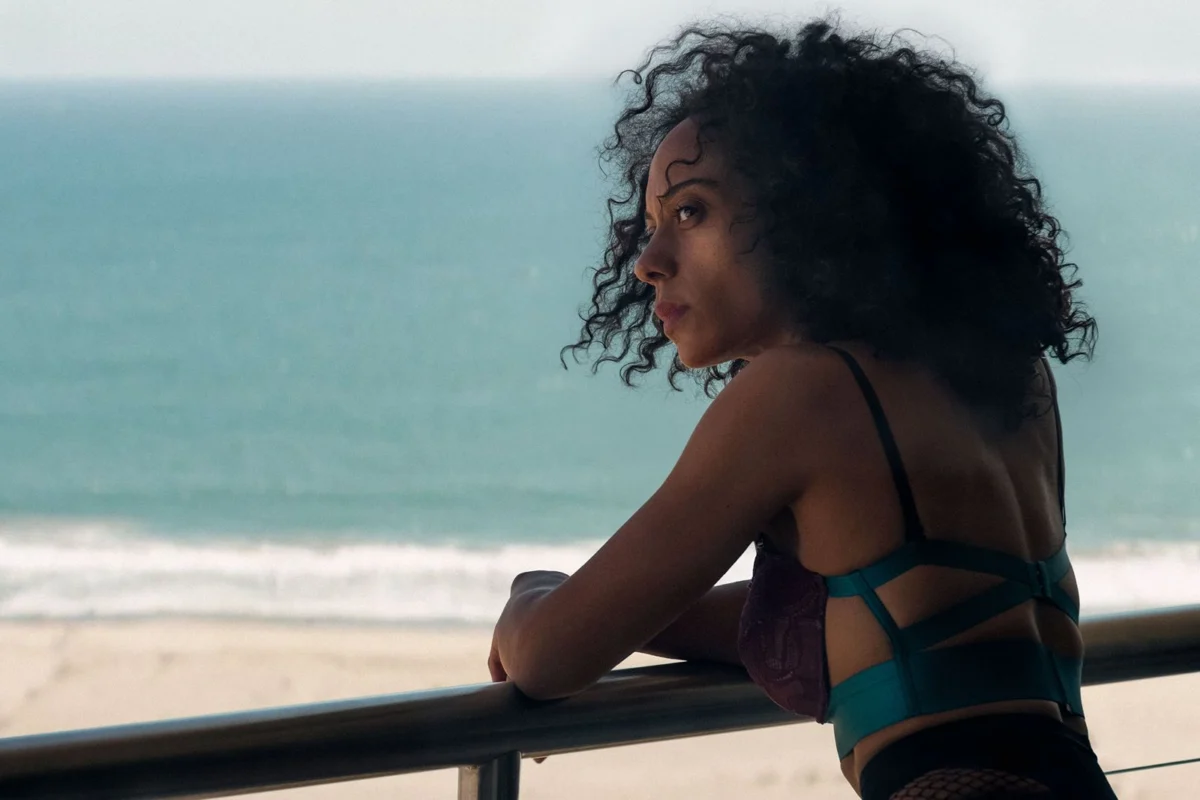
By Film & Culture Desk
Published: October (Special NYFF Coverage)
Following its buzzed-about premiere at the 64th New York Film Festival, Chris Rock’s latest directorial effort, Misty Green, is heading for its official theatrical release on October 9. Billed as a sharp Hollywood satire and a deep-dive character study into the precariousness of modern fame, the film has instead generated intense critical division. Far from offering a nuanced critique of the entertainment industry or the specific systemic hurdles faced by Black women in Hollywood, the movie emerges as a bitter, meandering cautionary tale.
Featuring an ensemble cast led by Rosalind Eleazar, Daniel Kaluuya, Anna Kendrick, Adam Driver, and Chris Rock himself, the film aims to skewer the superficiality of celebrity culture. Instead, critics argue it collapses under the weight of its own cynicism, offering a punishing narrative that feels less like a polished satire and more like an exercise in mean-spirited character assassination.
Main Facts: Plot, Cast, and Creative Direction
At its core, Misty Green follows the tumultuous life of its titular character, played with high-energy commitment by Rosalind Eleazar. Misty is a television actress who once tasted critical acclaim, winning an Emmy Award for Best Supporting Actress in a Drama for a fictional, Shondaland-esque series titled Red Eye. Despite her past success, her current reality is defined by financial instability, substance abuse, and a trail of fractured relationships.
The narrative introduces a ticking-clock dilemma early on: Misty has been living in a high-end Los Angeles apartment purchased for her by a wealthy, married benefactor. One year following his sudden death, the man’s widow (played by Amy Landecker) moves to legally seize the property, threatening Misty with imminent homelessness. Rather than addressing the crisis, Misty spirals, partying with industry acquaintances—such as a dispassionate Zach, played by Adam Driver—the night before a high-stakes audition.
Written and directed by Chris Rock, the film also features Rock on-screen as Jordan Green, a hapless director whose name awkwardly mirrors both the protagonist and her mentally ill brother, Jay (portrayed by Academy Award-winner Daniel Kaluuya). Alongside a supporting turn from Anna Kendrick as Misty’s gym-going best friend, Naomi, the film builds a sprawling architecture of Los Angeles excess, desperation, and social collapse. Yet, despite the marquee talent involved, the film has been heavily scrutinized for its structural and thematic shortcomings.
Chronology of Production and Festival Reception
The trajectory of Misty Green traces a conventional festival-to-theatre pipeline, though the public response during its rollout has been notably fraught:
- Pre-Production and Development: Developed under considerable secrecy, the project was positioned as Chris Rock’s return to serious behind-the-camera filmmaking, blending comedy, drama, and industry critique.
- Festival Circuit Debut: The film made its global debut at the prestigious 64th New York Film Festival (NYFF). Early screenings immediately sparked polarized conversations among critics, with many questioning the film’s tonal consistency and its harsh treatment of its central character.
- Theatrical Rollout: Following its festival reception, distributor plans locked in a wide theatrical release date of October 9, pushing the controversial project directly into the competitive autumn awards season market.
Throughout this timeline, promotional materials have leaned heavily into the star-studded cast and Rock’s directorial pedigree. However, festival reviews have consistently highlighted a disconnect between the film’s ambitious framing and its execution.
Supporting Data & Critical Analysis: A Breakdown of the Film’s Flaws
An examination of Misty Green reveals a series of glaring narrative inconsistencies and perplexing creative choices that undermine its satirical ambitions. Critics have pointed to several key areas where the film struggles to maintain credibility:
Anachronistic and Unrealistic Audition Material
One of the most frequently cited criticisms of Rock’s screenplay is its staggering disconnect from how contemporary Hollywood operates, particularly regarding the audition processes for Black actresses. Throughout the film, Misty reads for or discusses roles that strain credulity:
- She auditions for a part using direct quote lines from N’Bushe Wright’s character in the 1994 urban crime drama Fresh.
- She reminisces about a past audition for Anne Hathaway’s role in The Devil Wears Prada, a stretch given her purported level of fame.
- She chases a prominent role in a Cinderella reboot—evoking the 1997 Brandy and Whitney Houston classic—and mentions previous involvement in a Shaft reboot (likely the 2019 iteration).
- Most prominently, Misty relentlessly pursues the role of Deena in Dreamgirls—a part immortalized in the 2006 cinematic adaptation by Beyoncé. Industry analysts and reviewers have noted the implausibility of a mid-tier television actress competing for parts previously owned by global music icons.
The Treatment of its Protagonist
Misty Green exists in a perpetual state of punishment. Every aspect of her lifestyle—her designer handbags, her cocaine use, her gym routines with Naomi, and her fleeting sexual encounters—is framed not as agency or even reckless fun, but as self-harm and vanity. The script systematically strips her of interiority, leaving Eleazar to navigate scenes with rigid stiffness while her character is reduced to a cipher whose primary function is to let the men in her life down.
Furthermore, the film’s handling of systemic issues is dismissive. Sexism and racism in the entertainment industry are brushed past as non-factors, allowing Rock to pivot the narrative toward moralizing tropes about financial ruin and homelessness in Los Angeles. As Misty’s world crumbles, the camera frequently lingers on unhoused individuals living in tents—a narrative device that equates poverty with personal failure and societal nuisance.
Official Responses and Industry Reactions
As of the film’s festival premiere and the lead-up to its October 9 release, representatives for Chris Rock, Rosalind Eleazar, and the distributing studios have largely declined to comment on the widespread critical backlash. Publicly, the promotional campaign continues to emphasize the star power of the cast, highlighting Kaluuya’s dramatic weight, Kendrick’s comedic relief, and Eleazar’s physical commitment to a demanding role.
Industry insiders have noted that studio faith in auteur-driven passion projects often shields controversial titles from early editorial intervention. However, the overwhelmingly negative consensus emerging from critics at the New York Film Festival suggests that word-of-mouth could play a volatile role in the film’s commercial viability at the box office.
Implications: What Misty Green Says About Hollywood Satire
The release of Misty Green raises broader questions about how Hollywood chooses to satirize itself—and who gets to tell marginalized stories within the industry.
When a prominent filmmaker like Chris Rock turns his lens toward the struggles of a Black actress navigating the upper echelons of entertainment, audiences naturally anticipate an insider’s perspective filled with sharp observations, structural critique, or empathetic human truth. Instead, Misty Green presents a woman’s story told entirely through a lens that many reviewers describe as intensely personal, punitive, and devoid of genuine empathy.
By failing to interrogate the actual mechanisms of Hollywood racism, classism, and misogyny, the film defaults to tired tropes: the vain starlet brought low by her own hubris, the long-suffering male savior, and the moral panic surrounding urban decay. Whether mainstream audiences will embrace this bleak cinematic vision or reject its punishing worldview will be decided when Misty Green officially opens in theaters nationwide on October 9.
