
A Decade of Moonlight: Tarell Alvin McCraney on Memory, Vulnerability, and a Modern Masterpiece
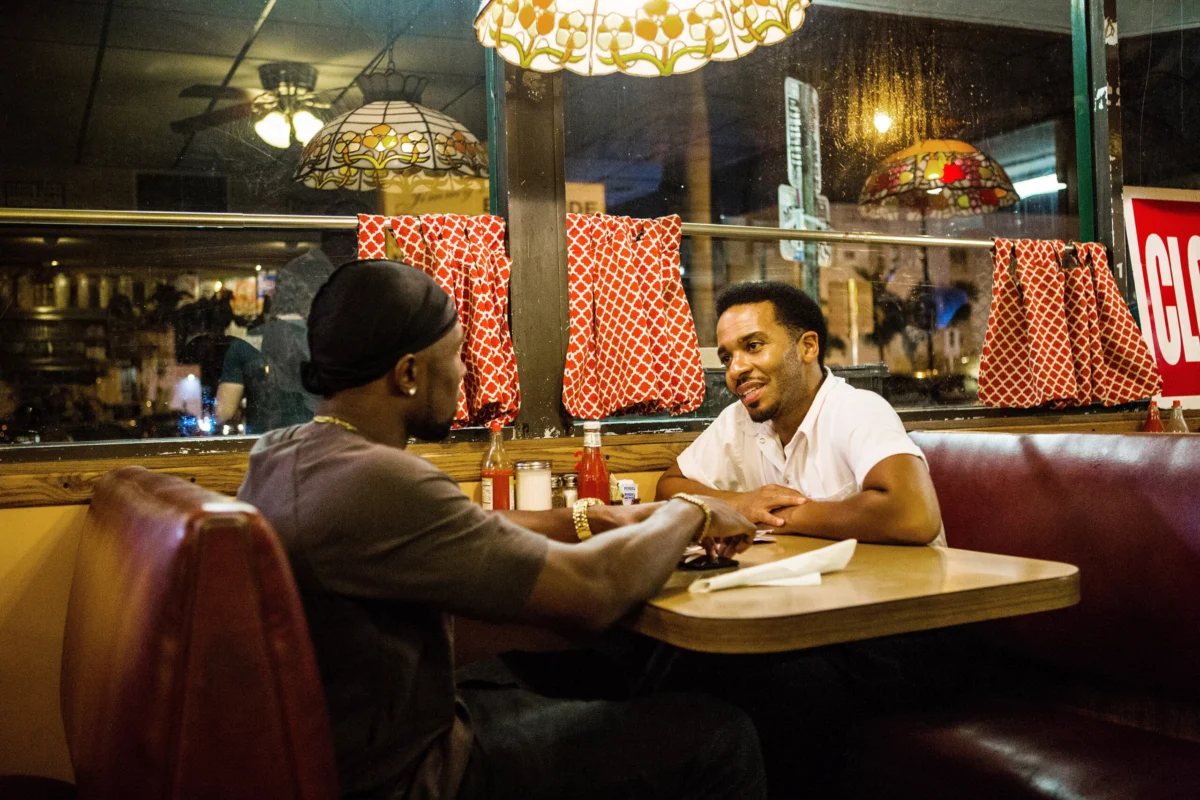
On Wednesday, October 21, the cinematic landscape paused to commemorate a significant milestone: the 10th anniversary of Moonlight, the groundbreaking, Academy Award-winning film that redefined the boundaries of independent storytelling. For playwright and screenwriter Tarell Alvin McCraney, the journey of this deeply personal project—from a dormant, unproduced play to a global cultural touchstone—remains, in his own words, “incredible.”
Speaking via Zoom, the Best Adapted Screenplay Oscar winner reflected on the enduring power of the film. “Seeing it now is worth the price of admission,” McCraney said, noting that even a decade later, the film continues to pose the fundamental questions that drove its creation: “Who am I, and who can I be?”
The Genesis of an Unproduced Vision
The story of Moonlight began long before the cameras rolled. In 2003, in the wake of his mother’s death from AIDS-related complications, a young McCraney sought to reconcile his grief by documenting the geography of his childhood in Liberty City, Miami. He penned In Moonlight Black Boys Look Blue, a hybrid script that lived in the liminal space between a play and a screenplay.
His high school mentor, Rafael Lima, had instilled in him a foundational rule of storytelling: if the narrative arrived in images, it was a film; if it was anchored in dialogue, it was a play. McCraney’s work was uniquely both. It was an attempt to piece together the fragmented memories of his upbringing, a process he now recognizes as a universal human response to profound loss.

For years, the script sat on his computer, a quiet testament to a singular vision. Despite the interest of peers like André Holland and Glenn Davis, the industry in the early 2000s was not prepared to champion an intimate, indie drama centered on the life of a Black, queer youth in Miami. It wasn’t until 2012, when he met director Barry Jenkins at a Miami film festival, that the project found its catalyst.
“Barry said, ‘Look, I want to make this into a film. I’ve read the script,’” McCraney recalled. “I was like, ‘Great, we should.’” It took several rounds of persistence from Jenkins, and a healthy dose of skepticism from a jaded McCraney, before the partnership truly solidified. Jenkins eventually transformed the script from a collection of memories into a palpable, visceral cinematic experience.
The Role of Community: YoungArts and Local Mentorship
McCraney is quick to credit the institutional support of organizations like YoungArts for the film’s existence. Growing up in Miami, he viewed the organization as a vital engine for artistic development. He recounts sneaking out of his own classes just to witness the discipline and dedication of the young dancers and artists fostered by the foundation.
“YoungArts has really paved a way,” he noted. “They have dedicated themselves to nurturing local artists and supporting them for longer stretches of time.” It was through these connections that Andrew Hevia—a YoungArts alumnus—introduced McCraney to Jenkins, recognizing the shared Miami DNA between the two future collaborators. The organization provided the space and support necessary for the film’s pre-production, proving that local foundations often do what national entities cannot: they build the infrastructure for the next generation of voices.

The TIFF Moment: From Intimacy to Global Impact
Despite his involvement in the creative process, McCraney chose not to be on set during the filming of Moonlight. The locations—the very streets he had lived on—felt too raw. He preferred to view the work in the sterile, safe environment of screening rooms. When he finally saw the finished product, his initial reaction was one of profound relief. He was grateful that these memories had been immortalized by such talented artists.
However, the reality of the film’s reach didn’t fully materialize until the Toronto International Film Festival (TIFF). “I really thought, ‘Yeah, a few hundred thousand people may see this film in total,’” he admitted, laughing at his own perceived naivety. Growing up on a steady diet of art-house cinema, he viewed Moonlight as a niche, albeit important, contribution to the canon. Seeing it resonate with an audience of over 2,000 people at TIFF was a transformative, disorienting experience. Today, the film has been seen by millions, a level of reach that McCraney still finds difficult to process.
Performance and Portrayal: Casting the Soul of the Story
The casting of Moonlight was a triumph of intuition and respect for the craft. McCraney and Mahershala Ali had crossed paths years prior, but scheduling conflicts prevented a collaboration on the stage. When Jenkins suggested Ali for the role of Juan, McCraney immediately concurred. “There was no doubt in my mind that Mahershala would be extraordinary,” he said. The character was modeled after a mentor who had been a formative influence on his own life, and Ali’s performance captured that weight with haunting grace.
Similarly, Naomie Harris’s portrayal of Paula, a character based on the complexities of his own mother’s struggle, left a lasting mark. Filmed over just a few days, Harris’s performance was an act of extreme vulnerability. “She could have played it safe and she didn’t,” McCraney said. He expressed deep gratitude that Jenkins maintained the scripted reconciliation, a moment of grace that elevated the film’s emotional resolution.

The Visual Legacy and the Democratization of Film
Beyond its narrative, Moonlight altered the visual language of independent film. Its success coincided with a massive shift in technology; the ability to create high-quality, cinematic imagery became more accessible than ever. McCraney notes that the film’s success inspired a new generation of creators to pick up cameras, with many citing Moonlight as the reason they entered film school or began taking cinematography seriously.
The film’s focus on the “intimacy of the gaze”—the close-ups, the lingering shots into the eyes of the protagonist—shattered the unspoken rules about how Black, queer subjects were depicted. “It was saying, ‘Hey, you can get closer to this and do more of it,’” McCraney explained. By demonstrating that vulnerability could be the primary engine of a film, Moonlight provided a blueprint for filmmakers to explore their own unique ideologies and perspectives.
Adaptation and the “Linear” Evolution
The film’s categorization as “Best Adapted Screenplay,” despite the source material being an unproduced play, was a point of clarification for many. For McCraney, it was the only logical classification. “You take a short, and you turn it into a feature length, and that’s an adaptation too,” he argued.
The process was a rigorous exercise in structural evolution. While his original script favored a circular, almost dreamlike narrative, Jenkins insisted on a linear, chapter-based structure that gave the film its pacing. The final act, specifically the last 20 to 30 minutes, was a collaborative labor of love. “It is an incredible Barry Jenkins lean-in,” McCraney noted, “but it’s also filled with the small, mundane things I do in my own life.”

The “La La Land” Moment: A Decade of Perspective
When asked about the infamous Best Picture mix-up at the 89th Academy Awards, McCraney remains characteristically philosophical. He treats the incident as a fixed point in the story—like a character arc that simply is.
“I don’t think that has tarnished the film in any way,” he said. Rather than dwelling on the chaos of that night, he chooses to frame it through the lens of joy. Citing a conversation with actor Jeremy Pope, he reiterated the philosophy of counting every experience, no matter how strange or surreal, as a joy.
Ten years later, Moonlight remains a beacon of artistic integrity. As the artistic director of the Geffen Playhouse, McCraney continues to look forward, working on new projects while refusing to settle into a static identity. “I’m still expanding like the universe,” he said. “And the moment that I stop, the moment that I just sit in it, then where am I?”
For the audience, the answer is clear: wherever we are, we are living in a world that is significantly more compassionate and visually diverse because of the story he dared to tell a decade ago.
