
The Telekinetic Connection: How Mike Flanagan’s ‘Carrie’ Mirrors the Marvel Multiverse
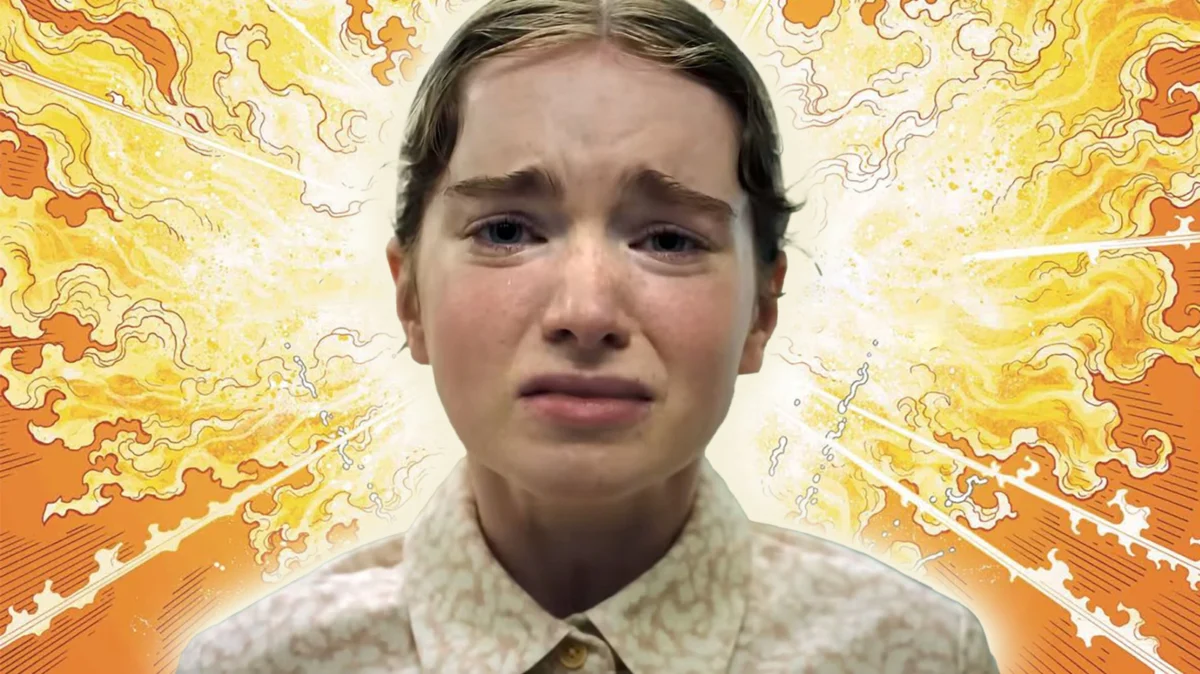
In the pantheon of horror literature and cinema, Stephen King’s Carrie stands as a foundational monolith—a tragic exploration of isolation, religious fundamentalism, and the terrifying volatility of adolescence. Yet, with Mike Flanagan’s new eight-episode television adaptation now streaming on Prime Video, a curious narrative evolution has taken hold. By reframing Carrie White (Summer H. Howell) not merely as a singular, cursed anomaly but as part of a broader "sorority" of telekinetic beings, Flanagan has inadvertently invited a direct comparison to the most iconic super-powered figures in pop culture: Marvel’s X-Men.
This thematic convergence is not entirely coincidental. The current media landscape is obsessed with the intersection of the supernatural and the superhuman. As Spider-Man: Brand New Day recently introduced a radicalized, telekinetic Jean Grey (Sadie Sink) to the Marvel cinematic ecosystem, audiences are finding that the lines between the "horror tragedy" and the "superhero epic" have never been more blurred.
The Convergence of Psychic Archetypes
To understand the current discourse, one must look at the structural parallels between Carrie White and Jean Grey. Both characters serve as archetypes of the "unstable conduit"—young women whose burgeoning mental faculties represent a threat to both themselves and the society that attempts to suppress them.
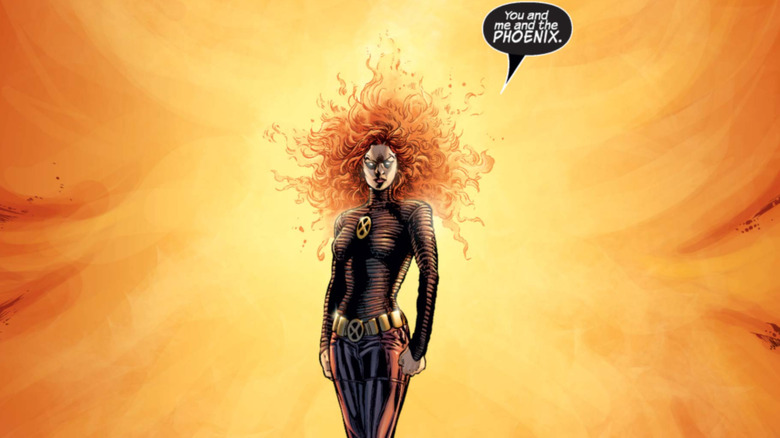
In Spider-Man: Brand New Day, the narrative shifts the familiar Jean Grey origin. Denied the mentorship of Professor Charles Xavier, this iteration of Jean finds herself in an adversarial role, driven by the trauma of her sister Sara’s abduction. Her arc, which culminates in a desperate confrontation with Peter Parker (Tom Holland) on the streets of Manhattan, echoes the classic "Dark Phoenix" narrative. In both instances, the character is defined by a loss of control, a sympathetic motivation, and a devastating capacity for mass destruction.
While Chris Claremont and John Byrne, the architects of the definitive Dark Phoenix Saga, may not have explicitly cited Carrie as a primary influence, the cultural osmosis is undeniable. By the late 1970s, Brian De Palma’s film adaptation of Carrie had firmly cemented the "telekinetic teen" trope into the public consciousness. Academics have long pointed out that the trajectory of a young girl forced to reckon with god-like power—and the subsequent moral fallout—is a thematic bridge connecting King’s small-town Maine to the cosmic scale of Marvel’s mutant dramas.
Chronology: From 1963 to the Modern Streaming Era
The evolution of these characters follows a distinct path through pop culture history:
- 1963: Jean Grey debuts in X-Men #1 as "Marvel Girl," a character defined largely by her fragility and limited agency.
- 1974: Stephen King publishes Carrie, a seminal work that grounds telekinesis in the brutal reality of bullying and domestic abuse.
- 1976: Brian De Palma’s Carrie hits theaters, solidifying the visual language of telekinetic rage.
- 1980: The conclusion of The Dark Phoenix Saga establishes Jean Grey as a character whose powers are inextricably linked to her moral corruption and eventual self-sacrifice.
- 2020s: The "Shared Universe" era of television and film begins to collapse genres. Mike Flanagan’s Carrie series and Marvel’s Brand New Day both lean into the "TK gene" (Telekinetic gene) theory, treating psychic ability as a scientifically quantifiable, albeit dangerous, trait.
Supporting Data: The "TK Gene" and the Science of Power
A significant point of divergence in the new Carrie series is Flanagan’s commitment to the "scientific" explanation of the protagonist’s abilities. In his interview with Entertainment Weekly, Flanagan clarified that his creative team intended to explore the "sorority of gifted women" that King hinted at in the original novel.
This is not a new interest for the filmmaker. Flanagan has consistently explored the mechanics of the supernatural through a lens of inherited or biological traits. In The Haunting of Hill House, for example, Theo Crain’s touch-based empathy is treated with the same weight as a mutant ability, complete with the protective gear (gloves) common to the X-Men aesthetic.
The inclusion of the character Emaline (Thalia Dudek) in the series serves as a critical narrative pivot. Emaline acts as a mirror to Carrie, possessing her own psychic gifts and operating with nebulous, clandestine goals. This dynamic mirrors the corruptive influence of Mastermind (Jason Wyngarde) in the Dark Phoenix storyline. By introducing a secondary, more manipulative telepath, Flanagan shifts the show from a singular horror story into a "secret society" drama that feels distinctly evocative of the Hellfire Club or the Brotherhood of Evil Mutants.
Official Responses and Creative Intent
Mike Flanagan has been transparent about his desire to move beyond the traditional "cursed girl" interpretation of Carrie. By emphasizing the science behind the "TK gene," Flanagan argues that he is remaining faithful to King’s broader world-building.
"Stephen King talks about the ‘TK gene’ and the science behind Carrie’s abilities," Flanagan noted. "The De Palma adaptation ignored her place in the larger universe… she is part of a sorority of very gifted women."
However, this intellectual approach has sparked debate among purists. Critics argue that by framing Carrie’s powers as part of a systemic "gifted" class, the series loses the intimate, isolated terror that made the original novel so visceral. When a character’s power is defined by its relationship to other, similar beings, the focus shifts from the internal struggle of a bullied girl to the external struggle of a "super-powered individual."
Implications for the Horror Genre
The implications of this shift are significant. If the modern trend in television is to "superhero-ify" horror icons, what is lost?
- Loss of Agency: In classic horror, the terror is often derived from the protagonist’s inability to understand or control their situation. In a superhero-coded narrative, the protagonist is often required to "master" their powers, which inherently diminishes the horror of the loss of self.
- The "Magneto" Problem: As noted, if a character like Carrie White is viewed through the lens of a mutant, she becomes a prime candidate for the Brotherhood of Evil Mutants. When a character is judged by their utility as a weapon rather than their humanity, the tragedy of their story is often eclipsed by their destructive potential.
- Genre Fatigue: With the saturation of the Marvel Cinematic Universe and the proliferation of "super-powered" streaming series, audiences may find that the "superhero" tropes are beginning to bleed into genres where they do not belong. While Carrie certainly has the DNA for a dark origin story, the question remains: does she work better as a victim of fate or as a recruit for a psychic revolution?
Conclusion
Mike Flanagan’s Carrie is a masterful exercise in technical filmmaking, but it serves as a fascinating case study in the current state of genre fiction. By choosing to highlight the "TK gene" and the wider community of telepaths, Flanagan has transformed a story of individual trauma into a story of systemic power.
Whether this move is seen as an ingenious expansion of the Stephen King mythos or a dilution of the core horror experience remains a matter of perspective. One thing is certain: the line between the horror protagonist and the super-powered mutant has all but vanished. As Spider-Man: Brand New Day and Carrie demonstrate, the modern audience is no longer interested in just watching a girl burn down a prom—they want to know where she fits in the broader, more complicated world of the gifted.
For better or worse, the days of the isolated horror figure may be coming to a close, replaced by a new era where everyone, even the most tragic characters, is just one "gene" away from being a hero or a villain.
