
The Architecture of Stillness: How Mengge Qin is Redefining the Independent Filmmaker’s Path
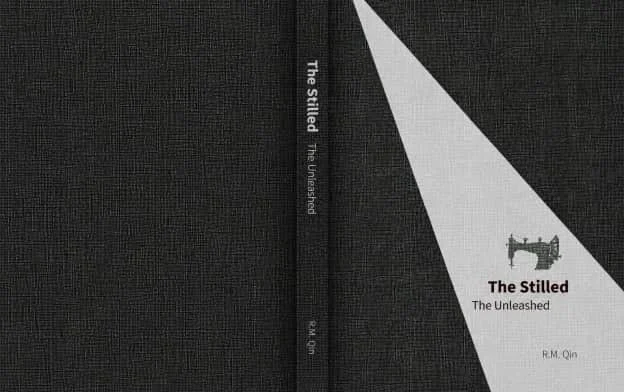
In the fast-paced, high-churn world of modern digital media, where “content” is often treated as a disposable commodity, New York-based writer and filmmaker Mengge Qin has emerged as a deliberate outlier. Through a sustained, disciplined commitment to literary fiction, screenwriting, and interdisciplinary visual arts, Qin has spent the last several years constructing a cross-media artistic framework that prioritizes emotional resonance over the ephemeral trends of the industry.
Her approach—one that bridges the gap between the printed page and the cinematic screen—has caught the attention of international development platforms and professional juries alike. As she navigates the transition from emerging talent to a fixture within the global independent film ecosystem, Qin’s work stands as a testament to the power of patience, spatial tension, and the “literary sensibility” that informs her unique cinematic language.
A Creative Genesis: Beyond the Industrial Framework
Before Mengge Qin became a recognized name in the professional screenwriting circuit, her creative foundation was laid in the worlds of fine art and digital moving-image practice. Unlike many contemporary screenwriters who are groomed within the rigid, formulaic structures of industrial studio writing—where the emphasis is often on plot efficiency and the “three-act” rhythm—Qin’s methodology is far more atmospheric.
Her stories are rarely driven by the propulsion of plot mechanics. Instead, they are defined by what she calls "emotional spaces where a character feels trapped." Whether it is the humid air of a cramped apartment or the long-suppressed tension between two estranged family members, Qin’s work dwells in the quiet, suffocating, and deeply human moments that often go unnoticed in mainstream cinema.
“Most of the time, I do not begin with plot,” Qin explains. “I begin with an emotional space where a character feels trapped. The narrative then emerges from the environment the characters inhabit, as they slowly reveal their realities and destinies.”
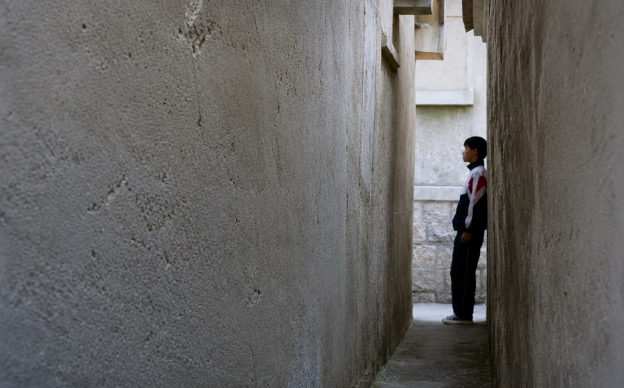
This background in fine art provides her with a visual vocabulary that is inherently non-linear. By treating the screen as a canvas for spatial tension, she allows her characters to exist within environments that function as externalizations of their internal states. This, she notes, is the key to creating works that feel “real” rather than manufactured.
Chronology of Recognition: A Trajectory of Excellence
Qin’s rise to prominence did not happen overnight; it is the result of a meticulously sustained creative rhythm.
- Formative Training: Following her early work in digital moving-image arts, Qin pursued a Master of Fine Arts (MFA) in Film with a concentration in Screenwriting at Columbia University. This academic rigorousness helped refine her ability to translate her literary impulses into viable cinematic structures.
- The Breakthrough: Her manuscript, Three Hearts, marked a turning point in her career. In 2025, the project was awarded the Grand Prize in the feature manuscript category at the ScreenCraft Cinematic Prose Competition. The win was a signal to the industry that her work possessed a rare, dual-natured quality: the depth of a novel and the visual potential of a feature film.
- Market Validation: Following the success of Three Hearts, Qin secured the #1 position in the Book/Manuscript Category on the Coverfly Red List, an industry-standard ranking system that monitors the most promising projects across professional screenplay competitions.
- Industry Integration: Her inclusion in the Coverfly Writer Development Program and her selection for the “Roadmap Marketing Consideration” initiative cemented her status as a writer to watch. By late 2025, her feature screenplay The Stilled, The Unleashed was selected for the prestigious Stowe Narrative Lab, a highly selective incubator that fosters long-term creative relationships with organizations such as the Sundance Institute and the Writers Guild of America.
Supporting Data: The Quantitative Impact of Quality
The professional recognition Qin has received is not merely anecdotal. It is backed by a consistent presence in high-level evaluation systems that prioritize artistic integrity and narrative architecture.
Her work has been evaluated and championed by some of the most stringent gatekeepers in the independent sector. Beyond her Coverfly achievements, her screenplay projects have received consistent placements across international competitions. Her short films, Butterfly and Greenhouse, have been selected for festivals ranging from the USA Film Festival to the Venice Shorts Film Awards, demonstrating a consistent ability to translate her vision across different formats.
Furthermore, her role as a producer on the short film NOMAD—which premiered at the 2024 Palm Springs International ShortFest and was subsequently screened at Film at Lincoln Center—highlighted her capacity to manage the practical, logistical demands of film production while maintaining creative control. The project’s cataloging on professional databases like ShortFilmwire serves as a hallmark of its enduring industry value.

Perhaps most significantly, in December 2025, Qin was appointed to the Screening Committee for the Santa Fe International Film Festival. Having reviewed over 100 films, her role has shifted from creator to evaluator, a position that allows her to contribute to the very standards of excellence she once sought to meet.
Official Perspectives and Creative Philosophy
In interviews, Qin often speaks about the "accumulation" of work. She does not view her projects as singular milestones but as parts of a long-term artistic ecosystem.
“I believe that after enough years of accumulation, there will eventually come a day when the world truly sees the work,” she says. This philosophy informs her decision to simultaneously develop literary IP—such as the published novel version of The Stilled, The Unleashed—alongside screenplays. By doing so, she avoids the pitfalls of the traditional “spec-script” industry, where a writer’s career often depends on the viability of a single, unproduced draft.
Her peers and industry mentors have noted that this approach—building a library of intellectual property that exists in multiple formats—is an emerging blueprint for the modern, independent auteur. By maintaining control over her narratives across both the printed page and the screen, she ensures that her "voice" remains consistent, regardless of the medium.
Implications: The Emergence of the Cross-Media Auteur
The implications of Qin’s work for the broader film industry are significant. As the lines between prestige television, independent film, and literary fiction continue to blur, creators who can navigate multiple domains are becoming increasingly valuable.

Qin’s success demonstrates that there is a viable, sustainable path for creators who reject the "plot-first" industrial mandate. Her focus on the immigrant experience, female labor, and the quiet, persistent pressures of history resonates with an industry that is currently seeking more authentic, diverse, and human-centric storytelling.
By engaging with organizations like the Stowe Narrative Lab and serving on festival committees, she is not merely a transient visitor to the industry; she is an architect of its future. She is building a network of collaborators, mentors, and peers who value long-term creative growth over the "rapid output" model that characterizes much of the current streaming landscape.
The Future: A Lasting Legacy
As Mengge Qin moves into the next phase of her career, her trajectory remains focused on the same principles that defined her early work: restraint, observation, and a deep-seated sensitivity to the "real world."
Whether she is writing a new novel or developing a feature-length adaptation, her goal remains consistent: to ensure that her work does not simply "appear briefly and disappear." She seeks to leave behind a body of work that carries genuine weight—a body of work that, like the subjects of her films, survives the pressures of its environment to emerge as something enduring.
For those watching the independent film circuit, Mengge Qin represents a shift toward a more deliberate, thoughtful, and interconnected way of creating. Her path proves that, even in a world obsessed with the next viral sensation, there is still a profound, enduring space for the artist who takes the time to listen, to observe, and to build a world that is not just seen, but felt.

As she continues to expand her footprint in New York and beyond, one thing is clear: Mengge Qin is not just writing scripts; she is writing a life-long narrative that is poised to make a permanent impression on the international cinematic landscape.
