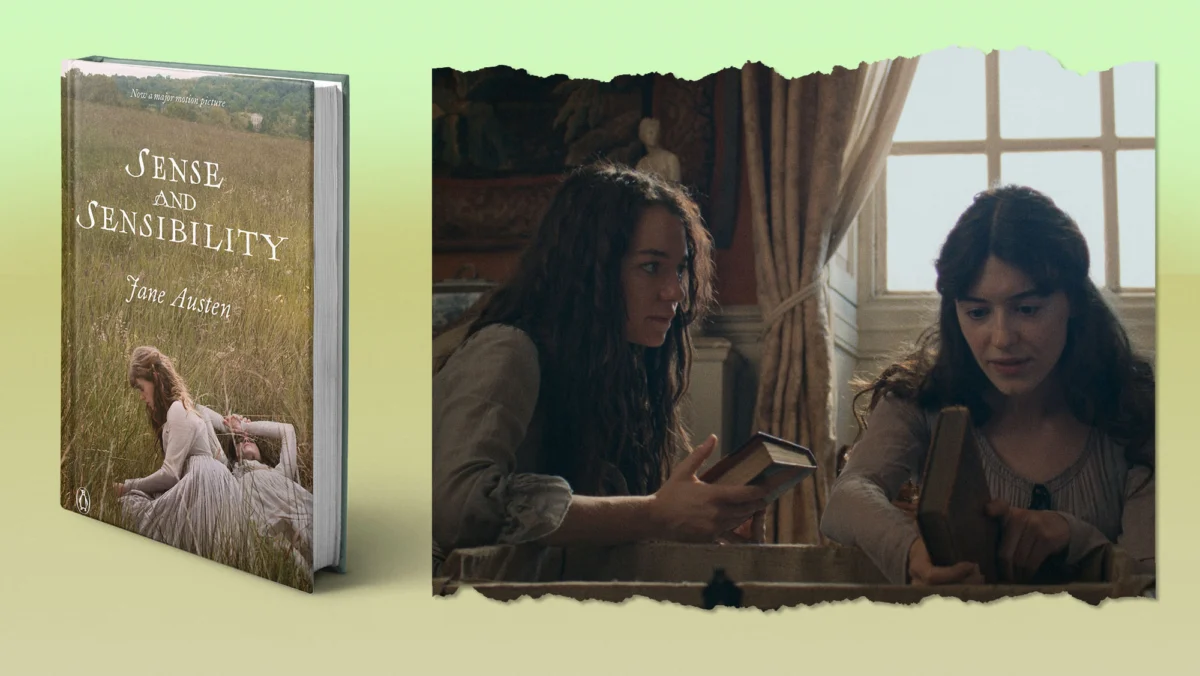
Beyond the Ballrooms: How Focus Features’ Sense and Sensibility Reimagines Jane Austen for a Grittier Era
Some stories refuse to stay on the page. The Hollywood Reporter’s Beyond the Book column explores what happens when books make the leap to screen and beyond — unpacking what stayed, changed, how it was done, and why it matters with the creatives who made it.
Main Facts: A Grittier, Grounded Adaptation Hits Theaters
FocusFeatures’ newly released cinematic adaptation of JaneAusten’s Sense and Sensibility, which premiered in theaters on October 16, offers a deliberate departure from the lavish, highly polished period dramas that have long dominated the genre. Directed by Georgia Oakley and starring Daisy Edgar-Jones as Elinor Dashwood and Esmé Creed-Miles as Marianne Dashwood, the film trades immaculate white muslins, sprawling sunlit manors, and glittering, chandelier-lit ballrooms for a darker, earthier, and intensely intimate world.
In this version, the tragedy of the Dashwood sisters’ sudden financial disenfranchisement following their father’s death is felt physically and immediately. There are no blazing chandeliers at the ball; the vast room is illuminated entirely by flickering candlelight. The sisters arrive in unadorned gold and silver dresses, missing the traditional feathers, jewels, and accessories worn by their peers—visible markers of their descent down the socioeconomic ladder. Gowns go unpressed, the youngest sister’s hems are permanently stained from foraging for berries, and their new countryside home is so cramped that guests require a family member to surrender a bedroom.
This distinct aesthetic choice was masterminded by a core creative team consisting of screenwriter Diana Reid, cinematographer Arnaud Potier, costume designer Grace Snell, and production designer Francesca Di Mottola. Together, they have forged a modern, lived-in adaptation designed to challenge the comforting escapism typically associated with Austen on screen.
Chronology: The Evolution from Page to Screen
The journey to reinvent Sense and Sensibility required a meticulous reevaluation of both Austen’s 1811 novel and the looming cultural footprint of Ang Lee’s beloved 1995 film adaptation, which starred Emma Thompson and Kate Winslet.
1. Re-evaluating the Text (The Screenwriter’s Approach)
For screenwriter Diana Reid—a published novelist and lifelong Austen aficionado—taking on the project began with a fundamental question of necessity. Approaching the material with "respect rather than reverence," Reid questioned whether she truly had anything new to offer after three decades of cinematic dominance by Lee’s masterpiece.
Upon reviewing the original text, Reid realized she could pivot the narrative focus away from the standard romantic plotlines and instead cement the sisters’ relationship as the true emotional core of the film. She aimed to make Elinor and Marianne mirror one another’s emotional evolutions: Elinor learning to embrace vulnerability, and Marianne adopting pragmatism.
Concurrently, the production recalibrated the male characters. Screenwriter Reid aged down Colonel Brandon (played by Herbert Nordrum) to strip away his traditional "father figure" dynamic, while rewriting Edward Ferrars’ (George MacKay) backstory to align his rigid sense of duty with Elinor’s.
2. Physical Production and Location Scouting
Moving from script to reality, production designer Francesca Di Mottola and cinematographer Arnaud Potier rejected soundstages in favor of authentic, tactile locations across Dorset and Devon.
Norland Park: Filmed at a private, inhabited estate in Dorset that had never before appeared on film, the ancestral home was purposefully styled to show the physical toll of the late patriarch’s multi-year illness. Frayed drapes, sun-bleached terracotta walls, and a muted color palette communicated financial strain long before the family was forced out.
Barton Cottage: Situated at Ditsworthy Warren House in south Devon, the cottage required extensive reconstruction. The production team rebuilt walls, ceilings, and roofs, transforming an abandoned shelter into an intimate, evolving family home over several weeks of intensive labor.
3. Costume Design and Cinematography Integration
Costume designer Grace Snell bypassed traditional historical tailoring guidebooks in favor of a naturalistic, sister-centric philosophy. Working alongside historical costume house Cosprop—the very institution that contributed to the 1995 film—Snell deliberately skipped steamers on garments, allowing the Dashwoods’ wardrobe to reflect their lack of domestic servants.
Simultaneously, cinematographer Arnaud Potier looked to Stanley Kubrick’s Barry Lyndon as a benchmark. Eschewing modern LED lighting fixtures in favor of authentic tungsten, filament bulbs, and period-accurate candlelight, Potier captured the film on celluloid using standard 35mm and 50mm lenses to keep the audience physically anchored inside the rooms with the characters.
Supporting Data: Production Metrics and Creative Parameters
To achieve this unvarnished aesthetic, the production relied on specific, measurable choices across departments:
Lighting Specifications: The production largely abandoned modern electrical setups, utilizing real tungsten lighting and actual candlelight to replicate the visual atmosphere of the early 19th century.
Lens Selection: Eschewing stylized or distorted wide lenses, cinematographer Arnaud Potier restricted the camera to 35mm and 50mm focal lengths to replicate natural human perspective within confined spatial environments.
Wardrobe Palette: Grace Snell utilized naturally dyed fabrics in muted tones, ensuring the costumes blended into the rural landscapes of Devon and Dorset rather than standing apart from them.
Location Footprint: 100% of the primary interiors and exteriors were shot on location rather than on controlled soundstages, necessitating custom-built flying walls and localized structural renovations to accommodate film crews.
Official Responses: Insights from the Creatives
Speaking exclusively with The Hollywood Reporter, the production team emphasized that their creative departures were calculated efforts to make Austen’s themes resonate with contemporary audiences.
Screenwriter Diana Reid explained the thematic architecture of the film’s relationships:
"I wanted Elinor to become a bit more like Marianne, and Marianne to become a bit more like Elinor. It’s almost like the romances are the reward for the journey they go on as sisters… They’re a bit unconformist, a bit less uptight, and they sit at odds with the conventions of the time."
Costume designer Grace Snell addressed the subversion of traditional period-piece aesthetics, noting that the goal was to avoid superficial glamour:
"Period costume is sometimes on a pedestal of escapism, but this isn’t really escapism. This is hitting home. You are in that room with them… Some of these dresses might have been on the floor, picked up and worn the next day."
Cinematographer Arnaud Potier defended the film’s heavy, low-light atmosphere against expectations of bright, cheerful Regency romps:
"What those girls were living through was super hard and harsh. The darkness through the movie brings something heavy in you, and you’re liberated at the end, way more than if everything were happy, bright and shiny."
Production designer Francesca Di Mottola highlighted the transformation of Barton Cottage into an organic, living space:
"At first, it’s pretty much an abandoned shelter… [It] slowly becomes a really lived-in, cozy family home, filled with objects the girls would’ve made themselves with driftwood like mobiles and painted shells."
Implications: Redefining the Modern Period Drama
The release of Sense and Sensibility arrives at a pivotal moment for literary adaptations on screen. For decades, the defining cinematic language of Jane Austen has been defined by sun-drenched pastoral vistas, immaculate wealth, and pristine costume design that function primarily as a form of historical escapism.
By aggressively grounding the narrative in economic precarity, psychological claustrophobia, and visual grit, Oakley’s adaptation shifts the genre’s paradigm. It suggests that contemporary audiences no longer require period dramas to sanitize the past to find emotional resonance. Instead, by stripping away the protective layers of luxury, the film treats Austen’s characters not as museum pieces, but as young women grappling with raw, universal anxieties regarding survival, autonomy, and familial duty.
Ultimately, the creative team hopes that this unvarnished approach will dismantle the ivory-tower intimidation often associated with literary classics. By bringing the audience directly into the unkempt, candlelit rooms of the Dashwood sisters, the film encourages viewers to see their own struggles mirrored in the 19th-century text—proving that while cinematic styles evolve, the emotional truth of Austen’s work remains entirely timeless.