
John Oliver Targets Healthcare System and Takes Aim at Incoming Paramount Chief David Ellison in Last Week Tonight Deep Dive
Main Facts
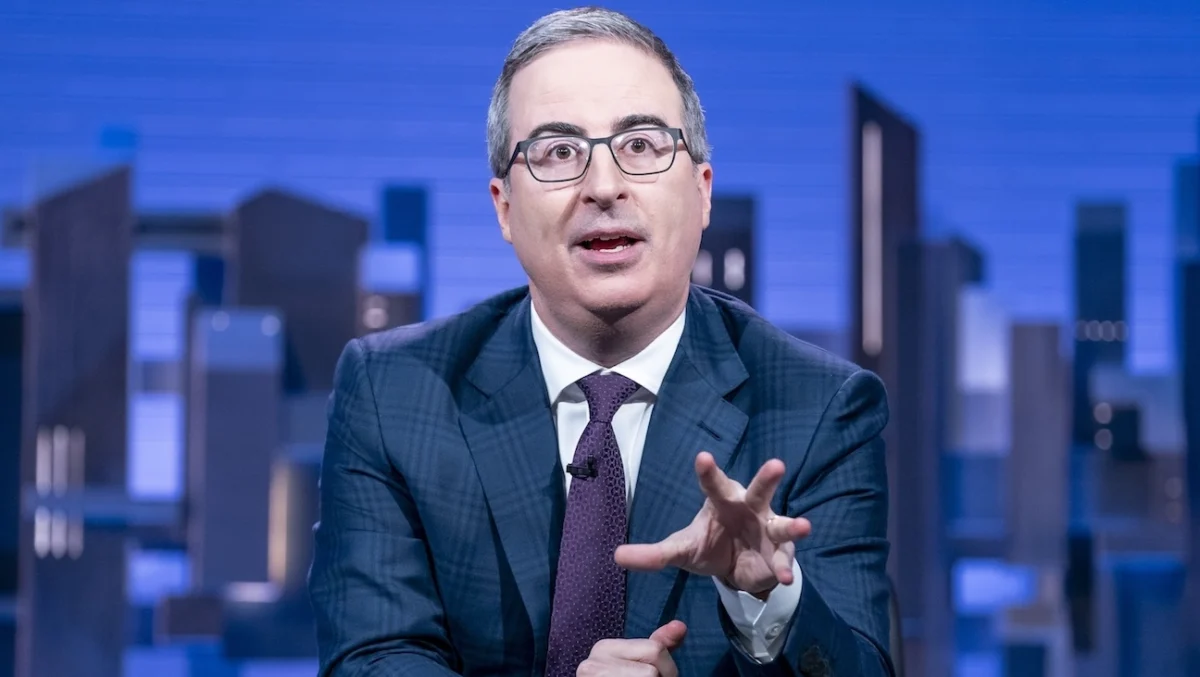
During Sunday night’s broadcast of HBO’s Last Week Tonight, host John Oliver delivered a searing, comprehensive critique of the American healthcare industry, focusing heavily on insurance giant UnitedHealthCare (UHC). True to the show’s signature style, Oliver used rigorous investigative reporting combined with biting satire to expose systemic flaws in coverage denials, patient suffering, and corporate greed.
However, the segment also generated significant media industry buzz when Oliver used the platform to direct a sharp comedic jab at David Ellison—the CEO of Skydance Media and the architect behind the impending Paramount-Skydance merger—who is poised to become the ultimate corporate overseer of Warner Bros. Discovery (WBD), the parent company of HBO.
The juxtaposition of a deeply sobering look at systemic patient abandonment by private insurers and a Hollywood-centric critique of nepotism and media consolidation highlighted the unique position Oliver occupies as a corporate employee who frequently critiques the very media conglomerates that sign his paycheck.
Chronology: From Tragic Headlines to Corporate Boardrooms
To understand the context of Oliver’s remarks, it is necessary to examine the sequence of events leading up to Sunday’s broadcast, both within the broader healthcare landscape and the upper echelons of the entertainment industry.
The Healthcare Crisis and Public Sentiment
The segment opened against the backdrop of widespread public frustration regarding the behavior of health insurance providers. Oliver directly addressed the public reaction to the killing of UnitedHealthCare CEO Brian Thompson, noting that the late executive’s death was met by many citizens with a disturbing degree of public rejoicing—a grim indicator of the profound desperation and anger felt by Americans trapped in a convoluted, frequently predatory healthcare system.
Oliver noted that Luigi Mangione, the suspect in the high-profile killing, is scheduled to face sentencing in December. Rather than dwelling solely on the criminal act, however, the host pivoted immediately to the structural violence perpetuated by the insurance industry on a daily basis: the routine denial of medically necessary treatments to vulnerable patients.
The Paramount-Skydance-WBD Pipeline
Shifting gears later in the segment, Oliver addressed the shifting tides of the media landscape. Skydance Media, led by David Ellison, has been moving aggressively to consolidate power, currently navigating the complex regulatory approval processes required to finalize its acquisition of Paramount. Furthermore, the broader media ecosystem faces constant speculation regarding further consolidation, including potential moves involving Warner Bros. Discovery.
David Ellison’s multi-billion-dollar maneuvers are heavily backed by his father, Oracle co-founder Larry Ellison, whose immense personal wealth forms the financial bedrock of the transaction. By injecting these corporate realities into a segment about healthcare accessibility, Oliver bridged the gap between everyday systemic inequalities and the elite dynastic wealth that dictates the media infrastructure.
Supporting Data: The Human Cost of Insurance Denials
To substantiate his claims against UnitedHealthCare, Oliver moved past abstract policy debates and presented concrete, heartbreaking case studies of patients victimized by administrative hurdles and aggressive coverage denials.
The Financial Toll on Families
Among the most striking examples featured on the program was the story of a young cancer patient whose life-saving treatment was repeatedly denied by UnitedHealthCare. Despite the clear medical necessity of the procedures, the family was forced to absorb the astronomical cost out of pocket.
Ultimately, the patient’s parents had to fork over $95,000 to cover the treatments that UHC refused to authorize. While Oliver shared the positive news that the medical intervention was ultimately successful in saving the patient’s life, he emphasized the grim systemic implication: relying on the financial fortitude of wealthy family members cannot and should not be the baseline mechanism for securing essential healthcare in a developed nation.
Systematic Denial Practices
Oliver’s team detailed how major insurance providers utilize automated algorithms, bureaucratic red tape, and aggressive legal teams to minimize payouts. By shifting the financial burden onto patients and their families, companies like UnitedHealthCare maximize quarterly profits at the literal expense of human lives. The segment underscored that these denials are rarely isolated administrative errors; rather, they function as a deliberate feature of a corporate model designed to obstruct care and deter claimants through exhaustion.
The Joke Heard Round Hollywood: Oliver’s Jab at David Ellison
It was during the discussion of the cancer patient’s $95,000 out-of-pocket ordeal that Oliver executed the transition from American healthcare policy to media industry satire, targeting David Ellison directly.
"Business Daddies" and Generational Wealth
“Now in the end her parents paid $95,000 out of pocket to cover the treatment, which in happy news did actually work,” Oliver told the studio audience, “but having access to wealthy parents just cannot be the system to get badly needed healthcare, even if it is apparently the system that lets you be in charge of HBO.”
As he spoke, a photograph of David Ellison appeared on the screen behind him. Oliver then leaned into the joke, highlighting the glaring irony of the corporate hierarchy:
“Yeah, my soon-to-be business daddy has a literal business daddy,” Oliver quipped.
The graphic on the screen then zoomed out to reveal David alongside his father, Larry Ellison, the billionaire tech titan and founder of Oracle. Larry Ellison’s financial involvement is not merely symbolic; he has agreed to personally backstop a staggering $40.4 billion in equity financing connected to the Paramount transaction, securing immense generational influence over major American cultural institutions.
A Nod to Stephen Colbert
Never one to miss an opportunity for self-deprecating humor and industry gossip, Oliver added a final layer of sarcasm to the bit:
“And to be very clear, I deeply respect that and I would never make fun of you for it, unlike that pesky Stephen Colbert.”
The reference to his fellow late-night host on CBS (which is itself intertwined with the broader Paramount ecosystem) added a layer of insider camaraderie, acknowledging the precarious tightrope comedians walk when poking fun at the corporate entities that distribute their work.
Implications: Media Consolidation, Corporate Accountability, and the Future of HBO
While John Oliver’s delivery was comedic, the underlying implications of his monologue touch upon profound structural questions regarding both American healthcare and the future of corporate media ownership.
The Irony of Corporate Satire
Last Week Tonight has long enjoyed a reputation for editorial independence, frequently biting the hand that feeds it by criticizing HBO’s parent companies, past and present (including AT&T, Discovery, and now the prospective Paramount-Skydance regime). Oliver’s willingness to mock David and Larry Ellison signals to viewers that despite corporate restructuring, the show intends to maintain its biting satirical edge. However, it also underscores the growing concentration of media power in the hands of a very small number of ultra-wealthy families and tech moguls.
The Intersection of Wealth and Power
The juxtaposition of the cancer patient’s family scrambling to raise $95,000 with the multi-billion-dollar backing provided by Larry Ellison was the analytical crux of Oliver’s segment. By placing the two realities side-by-side, the show illuminated a broader socio-economic critique: a society structured around hereditary wealth and dynastic backing creates profound inequities, whether in the healthcare marketplace or the media landscape.
While everyday citizens face life-or-death struggles against institutional gatekeepers like health insurance conglomerates, elite scions like David Ellison inherit the financial scaffolding necessary to command Hollywood studios and broadcast networks.
Looking Ahead
As the regulatory review of the Paramount-Skydance merger continues, industry watchers will be closely monitoring how editorial spaces within these newly consolidated entities operate. For now, John Oliver has made it abundantly clear that while his corporate hierarchy may be shifting toward a new "business daddy," his commitment to institutional critique remains firmly intact—even if it means risking an awkward conversation in the executive boardrooms of tomorrow.
