
The Final Bow: Tom Brooke Reflects on the Tragic End of J.K. Coe in Slow Horses
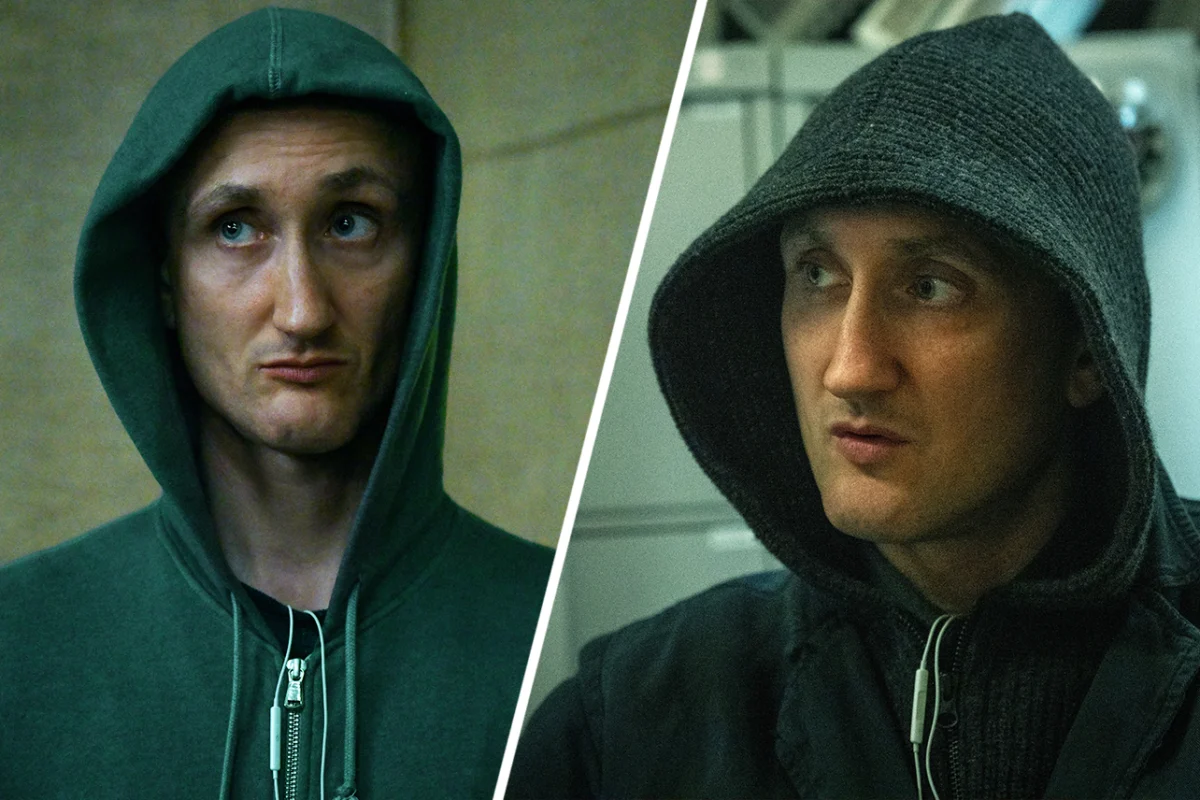
The halls of Slough House have grown a little quieter, and for the fans of Apple TV+’s hit espionage thriller Slow Horses, the world feels significantly less enigmatic. In the fourth episode of Season 6, titled “Lost and Found,” the series delivered one of its most gut-wrenching departures to date: the death of J.K. Coe. Played with haunting, understated intensity by Tom Brooke, Coe—the show’s resident "lovable little weirdo"—met his end in a visceral, high-stakes blade fight that served as the culmination of a years-long vision shared between the actor and the creative team.
For fans of the series, Coe was a character defined by his silence, his tactical prowess, and an unshakable devotion to his own peculiar internal moral code. As the dust settles on his departure, the narrative of his exit provides a masterclass in character closure, proving that even in a show defined by cynical incompetence, a "Slow Horse" can still go out on his own terms.
A Vision Realized: The Anatomy of a Farewell
The death of J.K. Coe was not a sudden pivot in the writers’ room; it was a narrative destination that Tom Brooke had been eyeing since he first stepped into the role in Season 4. In a candid conversation with Decider, Brooke revealed that his collaboration with former showrunner Will Smith was instrumental in shaping the character’s trajectory.
“The first conversation I had with Will Smith in Season 4, I said, ‘I want to do the scene in the book when he dies,’” Brooke recalled. “And he said, ‘You’re going to have to wait, because that’s not going to happen now, but thank you for your interest.’ I was like, ‘That’s cool, but if there’s going to be an arc, if there is going to be a journey, it has to end with that.’ And he was like, ‘It will.’”
This long-game approach allowed Brooke to inhabit Coe with a specific sense of finality. He wasn’t just playing a spy; he was playing a man walking a preordained path. When the time finally came for the showdown in the Season 6 episode, the execution was as brutal as it was inevitable.
Chronology of the Final Stand: A Bathroom Blade Ballet
The sequence that led to Coe’s demise is already being hailed as one of the standout moments of the current television season. Cornered in a public restroom by Jim (played by Kyle Soller), a ruthless Russian assassin from the GRU, Coe faced his end with the same cold, calculated composure that defined his tenure at Slough House.
The encounter was a stark reminder of the "Slow Horses" reality: no matter how competent they are, they are often outmatched by the professionals they are tasked with tracking. The scene saw the two men engage in a chaotic, visceral struggle. The choreography—which involved the destruction of mirrors, hand dryers, and a urinal—served as a metaphor for the collateral damage inherent in their line of work.
Despite landing several significant blows, Coe ultimately succumbed to a fatal stab wound to the stomach. The final image of the character—slumped against a wall, his signature hood up, and music blasting through his headphones—was a poignant nod to the solitary, rhythmic isolation that Coe used to survive the trauma of his past.
Supporting Data: The Music and the Method
A significant pillar of the character’s identity was his relationship with music, which served as a sensory anchor for his PTSD. Throughout the series, the audience watched Coe navigate his environment while plugged into a curated world of hip-hop.
Brooke shared that this wasn’t merely a stylistic choice but a collaborative discovery. “When Will asked me what podcast Coe would listen to, I said, ‘Oh, hang on a minute.’ I put my headphones in, and all this hip-hop started coming out,” Brooke explained. “It was a fluke, but we decided to run with it.”
From the sounds of Kofi Stone’s “Busker Flow” to the climactic moment where he dies listening to Fliptrix’s “Mantra No. 9,” the music provided a window into Coe’s interior life. Brooke and director Adam Randall meticulously curated the character’s playlist, drawing from artists like Jehst, who became a foundational influence for the "loner" aesthetic of the character. This attention to detail transformed Coe from a background operative into a fully realized human being, one whose internal world was as loud as his exterior was quiet.
Official Perspectives: The Collaboration Behind the Curtain
The impact of Coe’s death was heightened by the strength of the performances surrounding him, particularly his chemistry with Jack Lowden (River Cartwright) and Olivia Cooke. Brooke noted that the car scenes, which allowed for a more intimate exploration of their dynamics, were some of his favorite moments to film.
“Jack and I spent so long in the car in Season 5 that by that point we were like, ‘What if I say this? You could say this,’” Brooke shared. These collaborative impulses were encouraged by the production, leading to moments of levity and character-building that made the final loss feel personal.
The collaborative spirit extended to the fight scene itself. Kyle Soller, who played the antagonist Jim, shared a mutual desire with Brooke to make the encounter meaningful. “He’s coming out of himself, but this is the moment where it all ends,” Brooke said, reflecting on the desire to give Coe a moment of genuine human expression—even a smile—before the violence took over.
Implications: The Legacy of a "Slow Horse" and the Prequel Question
While the character of J.K. Coe has officially exited the timeline of Slow Horses, his presence continues to ripple through the narrative. The question now remains: how will his death affect the remaining members of the team, particularly Shirley?
“I hope so, I really hope so! I really want to destroy her!” Brooke joked regarding the impact of the loss. But behind the humor, there is a genuine weight to the character’s absence. The death of a colleague in the high-stress environment of Slough House is a trauma that reshapes the survivor’s identity.
Furthermore, the curiosity surrounding Coe’s backstory—much of which is hinted at in Mick Herron’s novels The List and Nobody Walks—has sparked intense fan speculation about a potential spin-off. When asked if he would be open to a Better Call Saul-style prequel, Brooke was enthusiastic.
“It would be an absolute blast,” he admitted. “It would be so cool to show pre-torture Coe.” Given the depth of the character’s trauma and the "extreme and awful" events that molded his personality, there is clearly enough narrative meat on the bone to sustain a deeper exploration.
Final Reflections
For Tom Brooke, the hardest part of leaving the show wasn’t just the professional transition; it was the loss of a character he deeply respected. He confessed that he recently picked up Clown Town, the latest entry in the Slough House series, but had to set it aside after only two pages.
“I was so upset that I wasn’t in it anymore,” he confessed. “I couldn’t read it. Just put it down. I was like, ‘Right. I’ll read that in a decade.’”
As Slow Horses continues its run on Apple TV+, the memory of J.K. Coe remains a testament to the show’s ability to find profound humanity in the margins. Whether through the silent intensity of his performance or the thoughtful, collaborative creation of his final act, Tom Brooke has ensured that J.K. Coe will not soon be forgotten. As Coe himself once mused, "When we die, nobody’s gonna think about us at all"—but in the case of this particular "Slow Horse," the audience is certain to prove him wrong.
