
Beyond the Pearly Gates and Hellfire: How Vivienne Medrano Built the Chaotic, Musical Universe of ‘Hazbin Hotel’
Main Facts: The Evolution of a Digital Phenomenon
For any independent creator, the chasm between mapping out a sprawling, multi-layered epic in one’s imagination and securing the institutional resources to realize it is vast. But bridging that chasm is a monumental challenge when your intellectual property is Hazbin Hotel—a profane, profoundly funny, and occasionally genuinely moving animated musical series that follows Lucifer’s optimistic daughter, Charlie Morningstar, as she operates a rehabilitation facility for damned souls. Battling the bureaucratic malice of Heaven and the ruthless machinations of Hell, the show occupies a singular space in modern adult animation.
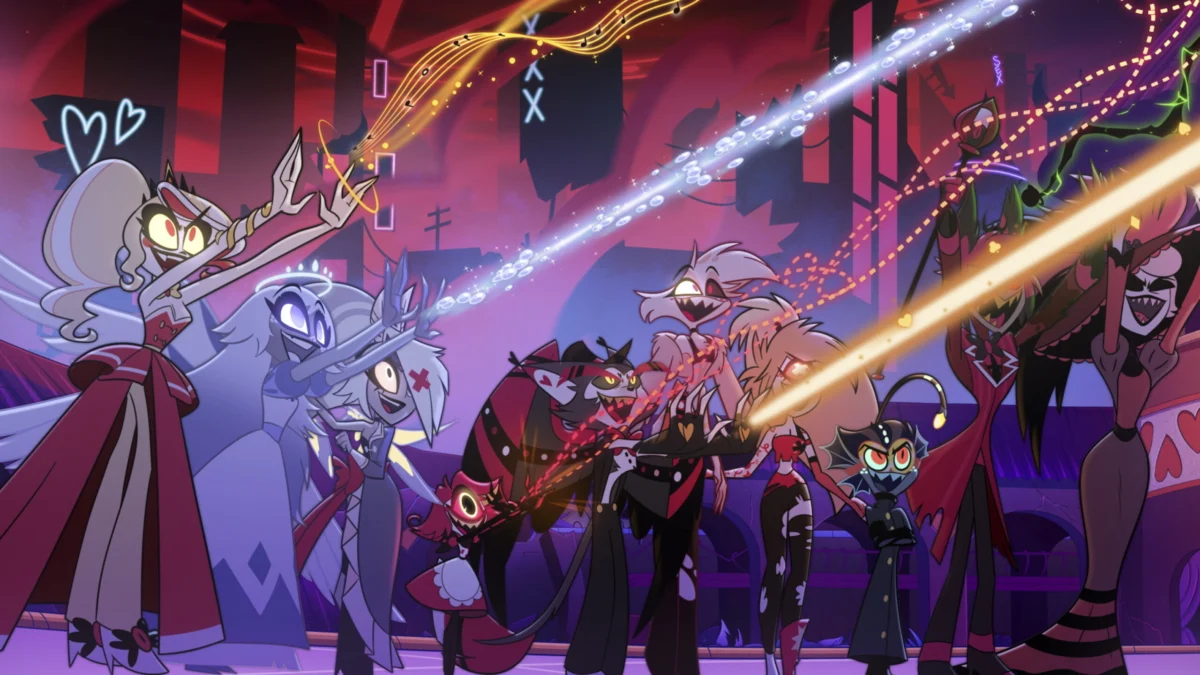
Following a triumphant Season 2 conclusion on Prime Video—part of a robust four-season order—creator Vivienne Medrano has reflected on the grueling yet rewarding production pipeline that brought her pet project from a viral YouTube pilot to a major streaming powerhouse. Produced through a partnership between Medrano’s independent studio, Spindlehorse Toons, Bento Box Entertainment, and prestige studio A24, Hazbin Hotel balances high-octane action sequences, elaborate Broadway-style musical numbers, unabashedly crude humor, and vibrant LGBTQ+ representation.
The series stands alongside its sister show, Helluva Boss (also produced by Spindlehorse within the same fictional cosmos), as a masterclass in independent-to-mainstream animation scaling. As Medrano navigates the show’s ongoing success, the triumphs of Season 2 have set a new benchmark for what her creative vision looks like when backed by adequate time, scope, and industry muscle.
Chronology: From Tumblr Concept Art to Prime Video Cornerstone
The journey of Hazbin Hotel is a quintessential modern entertainment fairy tale, mapping the shift from grassroots digital creation to corporate-backed prestige animation.
- The Early Years (The 2010s): Long before a multi-studio pipeline was established, Vivienne Medrano conceptualized the core cast of characters as edgy original characters (OCs) during her formative years on Tumblr. Developing a distinct, theatrical art style heavily inspired by early Nickelodeon, Disney, and Warner Bros. animation, Medrano built a dedicated online following.
- October 2019: Medrano drops the self-funded independent pilot episode of Hazbin Hotel directly onto YouTube. The episode becomes an overnight viral sensation, amassing tens of millions of views and cultivating a fiercely loyal fanbase—complete with passionate shipping communities like the beloved "Huskerdust" fandom.
- August 2020: A24 officially options Hazbin Hotel for a series adaptation, signaling a rare and major win for an independently seeded web animation project.
- January 2024: After years of quiet, meticulous development within the Spindlehorse and Bento Box partnership, Season 1 premieres globally on Prime Video, proving that its massive digital fanbase would successfully translate into traditional streaming metrics. Amazon promptly orders subsequent seasons, cementing the show’s long-term future.
- Late 2025 / Early 2026: Season 2 debuts on Prime Video. Bolstered by larger runtimes, a refined creative team, and deeper integration between the voice cast and the writing room, Season 2 delivers a tighter narrative focus and marks what Medrano considers the true realization of her original aesthetic and tonal ambitions.
Supporting Data: Production Pipeline and Collaborative Creative Loops
Scaling an indie web pilot into a heavily resourced Prime Video series required constructing an intricate pipeline between multiple distinct entities: Spindlehorse Toons, Bento Box Entertainment, and A24. According to Medrano, adapting to this vast institutional infrastructure was a steep learning curve.

"It’s a very complicated show, and the studio that took it on had never really done a show like ours before, so there’s been a lot of learning, a lot of growth," Medrano shared in an interview with IndieWire. "Because obviously the scope of the show just keeps growing. I have to give a shoutout to the incredible board artists who’ve worked on the show, both past and present, because it’s not easy. And it shows on the screen."
A fascinating dynamic within the Hazbin Hotel production pipeline is the symbiotic feedback loop between character archetypes and the voice actors cast to portray them. While characters often begin as broad strokes on a page—with voice actors selected to match a general vibe—the actual performance fundamentally alters how Medrano and her writing staff script and board future episodes.
A prime example is the ruler of Hell himself, Lucifer Morningstar, voiced by Jeremy Jordan.
"He was always meant to be this kind of goofy dad who was a big dreamer and like The Greatest Showman P.T. Barnum. But that could have gone so many different ways," Medrano explained. "I originally envisioned somebody for the role who was very silly, had comedy music at the forefront, very zany, but also very clean."
However, once Jordan stepped into the recording booth, the character evolved organically. Lucifer became more vulgar, delightfully erratic, and affectionately depressed.
"He has now become my favorite character, due partially to Jeremy Jordan’s incredible characterization of him. Like, he just came in, and when he is in that booth, he is that character. I have no idea how he can come up with such fun line reads and such character-filled moments. It’s really amazing. So now we know how he performs Lucifer, I’m able to write him much more naturally, knowing the characterization that he has now."
Official Responses: Vivienne Medrano on Artistic Growth and Tone
Reflecting on the trajectory of the series, Medrano draws a clear line of evolution between the monumental feat of pulling off Season 1 and the more creatively liberating environment of Season 2.

"I will forever be obscenely proud of Season 1. We pulled off something really fucking hard," Medrano stated. "[With] Season 2, I think what’s very cathartic for me is it was given more leeway. We had more time, in the runtime, to tell this story [and] because I knew there was a future for the show, it was able to allow this story to be more focused, and we found the creative team that really meshed with and made the show better. So for all those reasons, I feel like Season 2 is kind of the bar now for the show. Like, it just looks and feels the way I always wanted the show to look and feel."
This distinct "look and feel" involves walking a tightrope between visceral, edgy content and an inherently cartoony, light aesthetic. Medrano notes that while she occasionally wishes she could push the violence and darkness further—akin to gritty adult animation heavyweights like Invincible or Rick and Morty—her foundational art style inherently softens the blow, creating a unique tonal friction.
"There are times where I’m like, ‘I wish we could go darker.’ I just don’t know if my style is effective with it, especially in the violence. Like, I would love to push that further. But I am mindful that my style is inherently a lighter look," she noted. "Other shows like Invincible or even Rick and Morty have a style that serves that disturbance a lot more than mine [so] because of that, it’s fun finding the tone."
That juxtaposition is precisely what birthed iconic musical moments like the fan-favorite duet "Loser, Baby." The philosophy behind the show’s creation encapsulates both an intense dedication to the material and a healthy dose of self-awareness.
"I’m somebody who takes my world and my characters and my story obscenely seriously, but I don’t take myself that seriously," Medrano reflected. "Like, ultimately, I know that just one person, with my edgy Tumblr OCs that I came up with when I was young, and at the end of the day, that this is a cartoon. That level of ‘we take ourselves seriously but we also don’t’ is baked into the DNA of tone and style of the show."

When it comes to the show’s trademark musical numbers, the writing process has also matured. While earlier seasons required scrambling to find narrative justifications for musical numbers where the script demanded them, later seasons have allowed Medrano to finally execute songs she has envisioned in her head since the inception of the project years ago.
However, spontaneous "want" songs remain a writer’s room highlight. Medrano highlighted Niffty (voiced by Kimiko Glenn) as a prime example of an organic character-driven musical addition. "Niffty was one of the wants. I was like, ‘Niffty needs a song,’ and we were like, ‘What do we have? What’s an opportunity?’ So we added her into this plot [to hijack it], make the hotel look bad, but in her own twisted way, she’s praising it. That was our prompt, right? Then the songwriters absolutely killed it."
Implications: The Future of Adult Animation and Fan Culture
The ongoing success of Hazbin Hotel carries significant implications for the broader animation landscape. By proving that characters born from independent web culture and nurtured on platforms like YouTube can secure massive corporate backing from studios like A24 and distribution giants like Prime Video, Hazbin Hotel has rewritten the playbook for up-and-coming animators.
Furthermore, the series demonstrates the commercial and cultural viability of high-concept adult animation that refuses to choose between cynical edginess and genuine emotional earnestness. By centering a narrative around redemption, queer romance, and mental health struggles while wrapped in the colorful, musical trappings of classic Saturday morning cartoons, Medrano and her team have cultivated an intensely engaged global fandom.
As the series looks ahead to its remaining ordered seasons—with Charlie facing yet another massive cliffhanger following the Season 2 finale, "Curtain Call"—the expectations from both the "Huskerdust" shipping community and mainstream critics are higher than ever. With a stabilized pipeline, a deeply integrated creative team, and a creator who refuses to lose touch with her indie roots, Hazbin Hotel has firmly established itself as a defining animated touchstone of the decade.

Hazbin Hotel Season 2 is currently streaming globally on Prime Video.
