
The Social Reckoning Review: Aaron Sorkin’s Facebook Follow-Up Falls Flat in a Lifeless, Clunky Sequel
Release Date: October 9, 2026 (Sony Pictures Releasing)
Rating: 4/10
Main Facts
When David Fincher’s The Social Network premiered in 2010, the concept of a dramatic feature film about the founding of Facebook seemed like an uphill cinematic battle. Yet, fueled by a now-iconic teaser trailer featuring a haunting, eerie cover of Radiohead’s "Creep," the film defied expectations to become one of the most celebrated cinematic achievements of the 21st century.
A modern classic requires a rare alchemy of elements: moody, precise direction; a pitch-perfect ensemble cast; an electrifying, mind-altering score by Trent Reznor and Atticus Ross; and, above all, Aaron Sorkin’s crackerjack, Oscar-winning script. Sorkin’s trademark machine-gun dialogue delivered rapid-fire barbs that made the hyper-competitive, litigious atmosphere of Harvard dorms feel as high-stakes as a geopolitical thriller.
For over a decade, cinephiles and tech analysts alike have whispered about a potential follow-up. After all, the social media landscape has only grown more volatile, sprawling, and dystopian since 2010. That long-awaited sequel has finally materialized as The Social Reckoning. Unfortunately, the results are shockingly lackluster, lifeless, and fundamentally miscalculated.
Directed and written by Sorkin—with David Fincher noticeably absent while pursuing other projects, including Netflix’s Cliff Booth film—The Social Reckoning systematically misplaces everything that made its predecessor soar. Despite having a runtime technically shorter than the original, the new movie somehow drags on with an agonizing, leaden inertia, leaving audiences stranded in a frustrating cinematic dead-end.
Chronology
To understand how The Social Reckoning arrives at its narrative gridlock, one must examine its structural architecture. The film cuts back and forth across a non-linear timeline, juxtaposing two distinct arenas of modern conflict: the quiet, fluorescent-lit hotel rooms where a whistleblower collaborates with a journalist, and the sterile, corporate fortresses where a hardened tech mogul prepares to face the United States Congress.
- Phase One – The Disillusionment: The narrative kicks off by establishing Frances Haugen (played by Mikey Madison) as a dedicated, socially awkward data scientist who genuinely believes in Facebook’s potential to unify the globe. However, as she dives deeper into company metrics, she uncovers a terrifying reality: the platform’s algorithms are intentionally calibrated to maximize user engagement by amplifying toxic hate speech and political misinformation, particularly targeting vulnerable demographics.
- Phase Two – The Alliance: Unable to generate internal accountability or catch the attention of executives, Haugen takes the fateful step of leaking a massive cache of internal documents to Wall Street Journal reporter Jeff Horwitz (Jeremy Allen White). Horwitz, a self-confessed luddite unfamiliar with the mechanics of the platform, recognizes the monumental scale of the societal manipulation at play.
- Phase Three – The Deposition & Aftermath: Parallel to the investigative reporting, the film tracks Mark Zuckerberg (Jeremy Strong) as he readies himself for a high-profile congressional deposition. The climax attempts to bridge the journalistic exposé with the legislative theater, culminating in an awkward, out-of-character emotional pivot for the tech CEO that completely undercuts the narrative groundwork laid in the first two acts.
Supporting Data and Production Analysis
The film’s descent into mediocrity is puzzling, given the explosive nature of its real-world inspiration. Sorkin’s screenplay dramatizes the infamous 2021 whistleblower scandal, wherein Frances Haugen leaked internal research to the Wall Street Journal confirming that Facebook leadership was acutely aware of the platform’s damaging psychological effects on teenagers and its role in accelerating global political polarization.
Miscast Leads and Missing Chemistry
The casting choices represent a significant stumbling block. Mikey Madison, who delivered a powerhouse, universally praised performance in Sean Baker’s Anora, feels completely miscast as Haugen. She visibly struggles to navigate pages of heavy technical exposition, failing to ground a character written as an intense, detail-oriented data scientist.
Opposite her, Jeremy Allen White plays journalist Jeff Horwitz. Known for his coiled, high-intensity screen presence, White is ill-equipped for a character intended to project a dry, disarming wit. Together, Madison and White lack any palpable chemistry. Sorkin clearly envisioned a rapid-fire, His Girl Friday-esque banter between the whistleblower and the reporter, but the resulting interactions are stiff, unengaging, and devoid of rhythm.

The Portrayal of Mark Zuckerberg
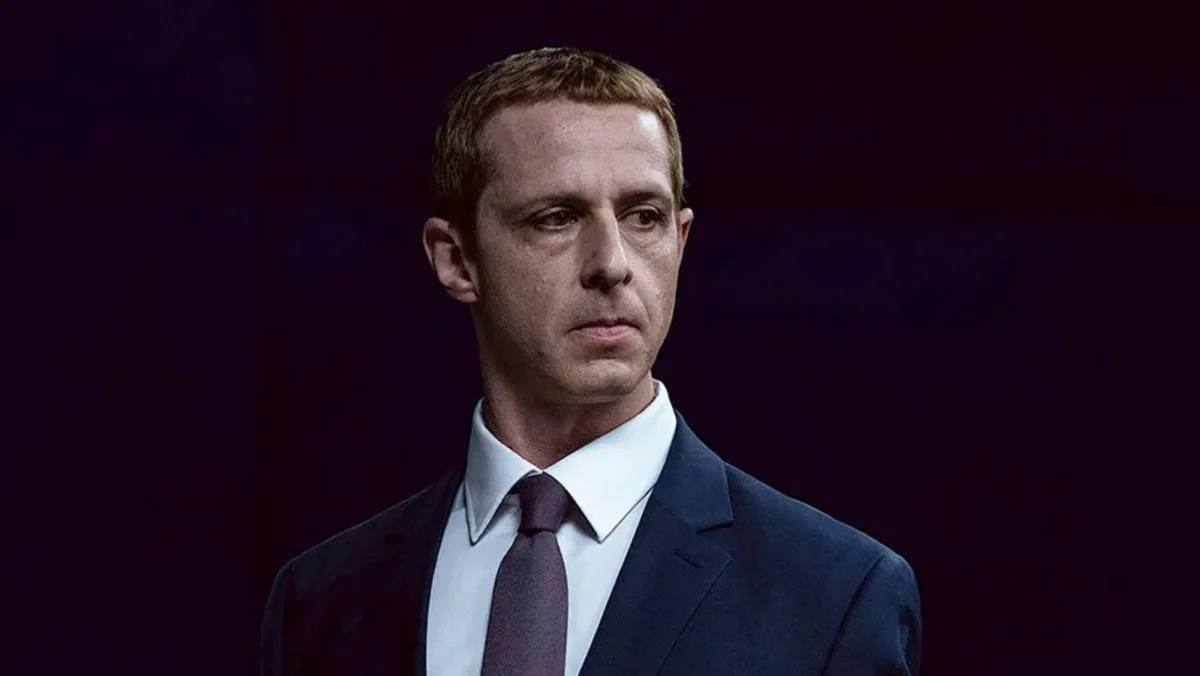
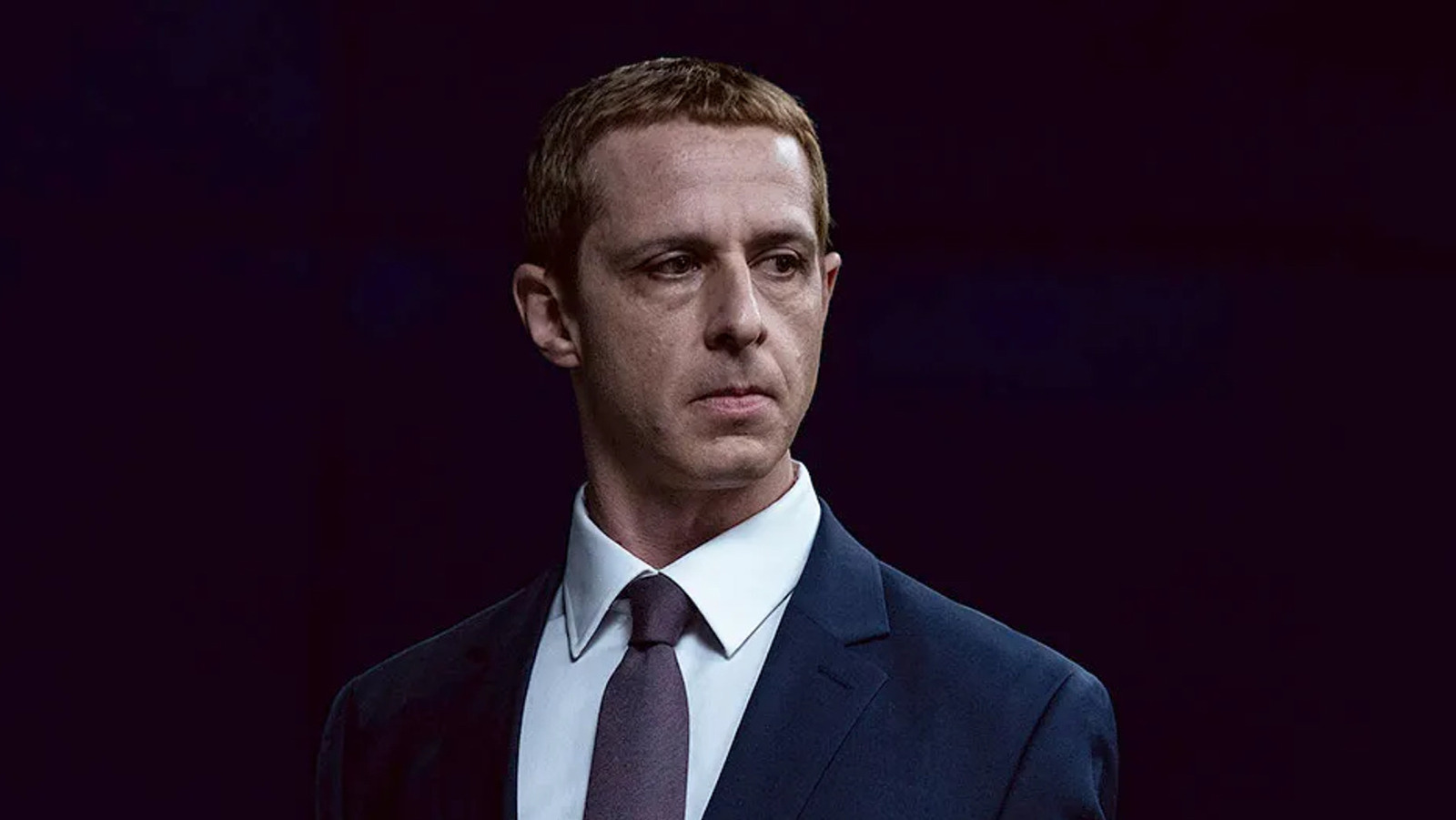
Jesse Eisenberg famously imbued his version of Zuckerberg in The Social Network with a complex, albeit icy, sliver of underlying humanity. In The Social Reckoning, that humanity has been entirely stripped away. Jeremy Strong portrays Zuckerberg as an emotionless, ghoulish husk.
Adorned with a severe, unsettling haircut and heavy makeup designed to evoke a corpse-like pallor, Strong plays the tech billionaire as a creature who crawled out of a crypt to masquerade as a titan of industry. While this caricature aligns with public cynicism toward modern tech oligarchs, Sorkin undermines the characterization in the third act by uncharacteristically granting Zuckerberg a sudden, brief crisis of conscience—a narrative choice that rings completely hollow.
The lone bright spot in these corporate sequences is Bill Burr, who injects a much-needed dose of grounded energy as a confidant futilely urging Zuckerberg to pull back from the brink of societal ruin.

Official Responses and Behind-the-Scenes Realities
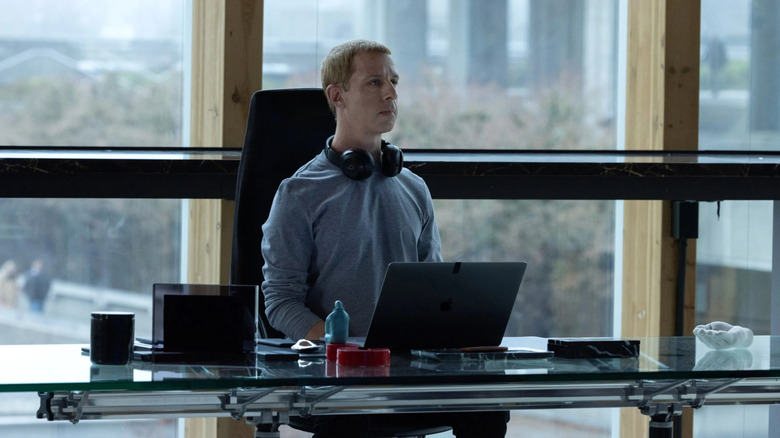
The transition from David Fincher’s meticulous aesthetic to Aaron Sorkin’s directorial flat-footedness is perhaps the film’s greatest technical casualty. While Sorkin remains a master of dialogue on the page, his direction in The Social Reckoning is devoid of visual style. The film relies heavily on uninspired, static shots of characters sitting in generic hotel rooms staring intently at charts and graphs on glowing laptop screens.
Furthermore, the musical landscape suffers immensely. Trent Reznor and Atticus Ross, whose pulsing, hypnotic score defined the psychological dread and momentum of The Social Network, did not return for the sequel. In their place, Alexandre Desplat contributes a barely-there, profoundly underwhelming score that drifts into the background, leaving key dramatic beats entirely unanchored.
Studio executives at Sony Pictures Releasing are positioning the film as a vital autumn prestige release, yet early critical reception points to a profound disconnect between the gravity of the subject matter and the sleepy execution of the final product.
Implications
Ultimately, The Social Reckoning collapses under the weight of its own ideological confusion. Sorkin clearly set out to craft an All the President’s Men-style crusading drama celebrating truth, justice, and corporate accountability. However, he runs headfirst into an insurmountable narrative wall: the bad guys won.
In the real world, despite massive public outcry, regulatory hearings, and congressional depositions, Mark Zuckerberg remains obscenely wealthy and immensely powerful. Meta rebranded, but its platforms continue to thrive on algorithmic outrage. By forcing a Capra-esque, feel-good narrative arc onto a story that ultimately lacks a redemptive conclusion, Sorkin misses the grim, inescapable reality of our digital age.
Even the film’s title proves to be a misnomer. There was no true reckoning. Society has not logged off, and we likely never will. As a cinematic companion piece, The Social Reckoning serves as a frustrating reminder of lightning that refused to strike twice—leaving audiences to ponder a future where technology dictates our reality, poorly dramatized on screen and entirely unchecked in the real world.
