
Amazon MGM Launches Unprecedented Oscar Campaign for Project Hail Mary, Pushing Puppeteer James Ortiz into Best Supporting Actor Race
LOS ANGELES — In what could become one of the most unconventional and historically significant awards-season pushes in Academy Awards history, Amazon MGM Studios has officially unveiled its comprehensive 15-category FYC (For Your Consideration) slate for Phil Lord and Christopher Miller’s blockbuster sci-fi epic, Project Hail Mary.
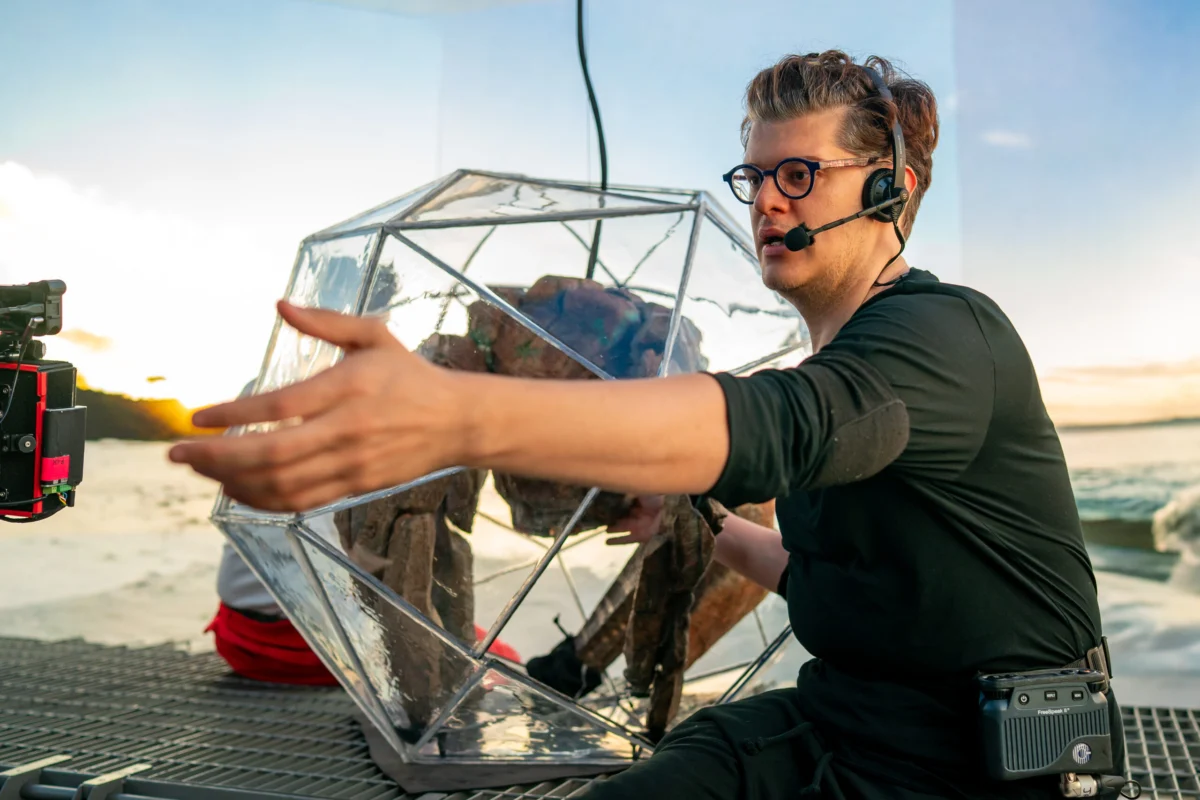
At the forefront of this ambitious strategy is a groundbreaking submission: the studio is actively campaigning for James Ortiz—the principal performer who both voiced and physically puppeteered Rocky, the endearing, multi-limbed, stony alien companion to Ryan Gosling’s stranded astronaut—in the Best Supporting Actor category.

If Ortiz manages to secure a nomination, it would shatter decades of institutional resistance from the Academy of Motion Picture Arts and Sciences (AMPAS) toward non-traditional, creature-based, and voice-driven performances. As Hollywood gears up for the 99th Academy Awards, the move signals a bold statement from Amazon MGM: they believe the heartbeat of their interstellar epic isn’t just rendered in post-production visual effects, but delivered through the tangible, breathing artistry of practical puppetry.
Main Facts: Breaking Down the Project Hail Mary Oscar Slate
Based on Andy Weir’s bestselling novel of the same name, Project Hail Mary stars Ryan Gosling as Ryland Grace, a lone astronaut who wakes up with amnesia on a desperate, last-chance mission to save Earth from an extinction-level solar cataclysm. Along the way, he forms an unlikely friendship with Rocky, an extraterrestrial lifeform hailing from the planet Erid.

To bring Rocky to life, directors Phil Lord and Christopher Miller bypassed pure computer-generated imagery in favor of a hybrid approach, collaborating with Henson protégés Neal Scanlan and the renowned Creature Shop. At the mechanical and emotional center of this creation was James Ortiz, whose on-set performance gave Rocky his soul, distinct cadence, and rhythm.
Recognizing the monumental impact of this character, Amazon MGM’s FYC campaign spans 15 major categories for the upcoming Academy Awards:

- Best Picture: Amy Pascal, Ryan Gosling, Phil Lord, Christopher Miller, Aditya Sood, Rachel O’Connor, Andy Weir (Producers)
- Best Director: Phil Lord, Christopher Miller
- Best Adapted Screenplay: Drew Goddard (Screenplay); based on the novel by Andy Weir
- Best Actor: Ryan Gosling
- Best Supporting Actress: Sandra Hüller
- Best Supporting Actor: James Ortiz, Lionel Boyce
- Best Cinematography: Greig Fraser
- Best Film Editing: Joel Negron
- Best Casting: Jeanne McCarthy, Nicole Abellera Hallman
- Best Production Design: Charles Wood (Production Designer), John Bush (Set Decorator)
- Best Costume Design: David Crossman, Glyn Dillon
- Best Makeup and Hairstyling: Candice Banks
- Best Original Score: Daniel Pemberton
- Best Sound: Erik Aadahl, Ethan Van Der Ryn, Michael Semanick, Juan Peralta, Stuart Wilson
- Best Visual Effects: Paul Lambert, Mag Sarnowska, Neal Scanlan, Chris Corbould
The inclusion of Ortiz and co-star Lionel Boyce in Best Supporting Actor sits alongside heavy-hitting technical submissions like Greig Fraser’s cinematography and Daniel Pemberton’s original score, cementing the studio’s belief that Project Hail Mary is a holistic cinematic achievement.
Chronology: From Page to Screen to the Awards Circuit
The journey of Project Hail Mary to the center of the Hollywood awards conversation follows a carefully orchestrated timeline of literary success, high-profile production, and calculated festival-season positioning.

2021–2024: Development and Practical Innovation
Following the massive success of Ridley Scott’s The Martian—another adaptation of an Andy Weir sci-fi survival novel—Amazon Studios acquired the rights to Project Hail Mary with Ryan Gosling attached to star and produce. Screenwriter Drew Goddard, who adapted The Martian to critical acclaim and an Oscar nomination, returned to pen the script.
When Phil Lord and Christopher Miller signed on to direct, a central creative pillar was established: Rocky the alien could not feel like a mere cartoon or a cold CGI construct. The filmmakers enlisted creature designer Neal Scanlan and puppeteer-actor James Ortiz to develop a practical, physical presence for Rocky on set, allowing Gosling to act opposite a tangible, responsive partner rather than a tennis ball on a C-stand.

Late 2025–October 2026: Pre-Release Hype and Special Screenings
As post-production wrapped under high secrecy, industry whispers began circulating about the emotional core of the film—specifically the chemistry between Gosling’s Ryland and Ortiz’s Rocky. Special screenings held in Los Angeles throughout October 2026, including a high-profile presentation at Ross House attended by Gosling, Lord, and Miller, generated immediate critical enthusiasm. Gold Derby odds began positioning the film as a major player across both technical and above-the-line categories.
Fall 2026: The Official FYC Strategy Drop
With the theatrical release establishing strong commercial momentum, Amazon MGM finalized its awards blueprint. By placing James Ortiz directly into the Best Supporting Actor conversation, the studio ignited a fiery industry debate regarding how the Academy defines an "acting" performance in the modern era of blockbusters.

Supporting Data: The Precedent and the Odds
To understand the weight of Amazon MGM’s gamble, one must look at both historical precedent and current prognostications on the awards circuit.
History of Academy Snubs for Non-Traditional Performances
The Academy of Motion Picture Arts and Sciences has historically shown a rigid aversion to recognizing physical puppetry, voice acting, and motion-capture performances within its acting branches. Despite delivering cultural touchstones and universally acclaimed portrayals, past innovators have been systematically shut out:

- Jim Henson: The Muppet maestro revolutionized puppetry and voice performance, yet never received a competitive acting nomination from the Academy.
- Robin Williams (Aladdin): Williams’ manic, genre-defining vocal performance as the Genie won a special Golden Globe and shifted how animated films cast celebrity talent, but was entirely bypassed by Oscar voters.
- Andy Serkis (The Lord of the Rings trilogy): Despite creating one of the most complex, psychologically rich characters of the 21st century through his physical motion-capture and vocal performance as Gollum, Serkis was famously denied an Oscar nomination due to debates over the boundaries between actor and digital effects.
James Ortiz’s campaign directly challenges this institutional precedent. Because Rocky was manifested on set through physical puppetry manipulated and voiced live by Ortiz—supplemented later by visual effects clean-up rather than total digital replacement—the performance bridges the gap between traditional theater craft and modern blockbuster filmmaking.
Comparative Analysis: The Martian vs. Project Hail Mary
Industry analysts have frequently drawn comparisons between Project Hail Mary and Ridley Scott’s 2015 adaptation of The Martian. Both properties share author Andy Weir, screenwriter Drew Goddard, and a premise centered on an American astronaut utilizing scientific ingenuity to survive isolated planetary peril.

- The Martian (2015): Secured seven Academy Award nominations (Best Picture, Best Actor for Matt Damon, Best Adapted Screenplay, Best Production Design, Best Sound Editing, Best Sound Mixing, and Best Visual Effects). While ultimately blanked on Oscar night, it triumphed at the Golden Globes, winning Best Motion Picture – Musical or Comedy and Best Actor for Damon.
- Project Hail Mary (2026): According to current Gold Derby odds and expert tracking, Amazon MGM’s sci-fi epic is poised to surpass its spiritual predecessor’s footprint. Analysts are projecting heavy traction not just in technical categories like Sound, Production Design, and Visual Effects, but securely in Best Picture, Best Actor (Gosling), Best Adapted Screenplay, and Cinematography.
Official Responses and Industry Reactions
The rollout of the Project Hail Mary FYC slate has elicited strong reactions across Hollywood guilds, critics’ circles, and awards prognosticators.
Phil Lord and Christopher Miller have been vocal champions of Ortiz’s contributions during press events, emphasizing that the emotional integrity of the film hinges entirely on the audience believing in Rocky as a living, feeling entity.

"We didn’t want Rocky to feel like a video game character dropped in during post-production," Miller noted during a recent roundtable discussion. "James poured his entire body, voice, and soul into that rig every single day on set with Ryan. What you see and feel on screen is a live, breathing artistic collaboration between two actors."
Industry guild members have also responded positively to the transparency of the submission. By dual-submitting Ortiz alongside fellow supporting actor Lionel Boyce, Amazon MGM is signaling that Ortiz’s work is recognized as a legitimate dramatic performance rather than a novelty technical credit.

Furthermore, creature designer Neal Scanlan praised the studio’s willingness to honor the physical arts: "Puppetry is acting. Voice is acting. Physicality is acting. For too long, the barrier between ‘traditional’ acting and creature work has been artificially rigid. James delivered a performance that broke our hearts, and he deserves to be evaluated alongside any other dramatic actor this season."
Implications: What This Means for the Future of Oscar Campaigns
Amazon MGM’s aggressive strategy with Project Hail Mary carries broad implications that could permanently alter how studios campaign for hybrid creature and voice performances at future Academy Awards.

- Redefining the Acting Branch: If James Ortiz manages to break through the historical barrier that locked out Andy Serkis and Jim Henson, it would establish a monumental precedent. It would force AMPAS voters to re-evaluate how physical puppetry, on-set creature performance, and localized vocal delivery are categorized.
- Elevating Practical Effects in the CGI Era: In an era dominated by green screens and digital augmentation, studios are increasingly leaning toward hybrid filmmaking to ground actors in reality. By validating Ortiz’s work through an acting campaign, Amazon MGM is incentivizing future blockbusters to invest in practical, on-set performance partners rather than relying exclusively on post-production visual effects.
- The Blockbuster Oscar Blueprint: Following the multi-award successes of genre-bending spectacles like Everything Everywhere All at Once and Dune, major studios are learning that high-concept science fiction can successfully compete across both above-the-line and below-the-line categories if pushed with a unified, prestigious campaign narrative.
As voting for the 99th Academy Awards approaches, all eyes will be on the Academy’s acting branch. Whether Project Hail Mary can successfully bridge the gap between hard sci-fi entertainment and high-art prestige remains to be seen, but one thing is certain: Rocky, and the man who brought him to life, have already secured a legendary place in awards-season history.
