
The Chessboard of Shadows: Gabriele Salvatores Begins Production on ‘The Lüneburg Variation’
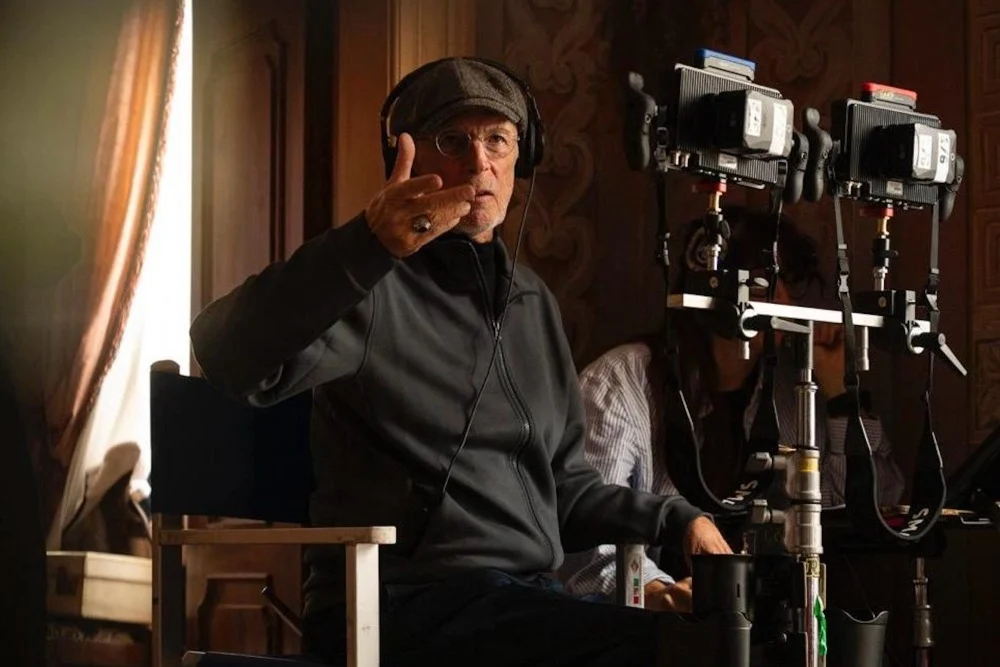
In a high-stakes convergence of European cinematic talent, Oscar-winning director Gabriele Salvatores has officially commenced principal photography on his latest feature, The Lüneburg Variation. The film, a psychological noir steeped in the esoteric and violent history of professional chess, brings together two of the continent’s most distinguished actors: Sebastian Koch, the haunting star of Germany’s Academy Award-winning The Lives of Others, and Toni Servillo, the iconic face of Paolo Sorrentino’s The Great Beauty.
As production kicks off in the historic port city of Trieste, the project has already garnered significant industry attention, positioning itself as one of the most ambitious European co-productions of the coming year.
The Genesis: From Page to Screen
The Lüneburg Variation is an adaptation of the acclaimed novel by Italian author Paolo Maurensig. Since its publication, the book has achieved status as a modern classic, translated into 25 languages and lauded for its intricate, almost clockwork structure.
The narrative acts as a labyrinthine puzzle. It opens with the mysterious suicide of Dieter Frisch, a wealthy and successful Munich businessman, found dead near Vienna. This tragedy serves as the catalyst for a narrative journey that traverses time, unraveling a decades-long vendetta played out across the checkered board. At its core, the film explores how a game—often perceived as sedentary and intellectual—can serve as the vessel for the most primal human impulses: revenge, obsession, and the cold, calculated destruction of an adversary.
For Salvatores, who secured an Oscar for his 1991 masterpiece Mediterraneo, this film represents a departure into darker, more abstract territory. "It is the story of a duel that lasts more than 40 years, fought by two adversaries on the battlefield of a chessboard," Salvatores said in an official statement. "Chess! The most violent sport in existence and, perhaps, the least cinematic. It’s a great challenge, and one I was happy to take on."
Chronology and Production Scope
The production schedule for The Lüneburg Variation is slated for a nine-week intensive shoot, with the crew splitting time between the atmospheric, Austro-Hungarian architecture of Trieste and the vibrant urban landscapes of Rome.
The filming process is expected to be a rigorous endeavor, requiring a precise aesthetic to capture the dualities present in Maurensig’s writing. The director has emphasized that he intends to move beyond the traditional portrayal of the game. "I want to delve into the violent, magical, esoteric and mysterious dimension of chess—that is, instead, truly cinematic," Salvatores noted. "Maurensig envisioned a film of half-light; darkness and fire. Compelling and cruel. I hope I can deliver just that."
The production is supported by the Friuli Venezia Giulia Film Commission, which has played a pivotal role in facilitating the location scouts and infrastructure required for the film’s unique visual demands.
Supporting Data and The Creative Ensemble
Beyond the marquee names of Koch and Servillo, the film boasts a formidable supporting cast, bridging generational and cultural gaps in European cinema.
- Damian Hardung: Known for his breakout performance in the international hit Maxton Hall.
- Thomas Prenn: The South Tyrol-born actor who gained global recognition for his work in Terrence Malick’s A Hidden Life.
- Eduardo Scarpetta: A rising star of Italian cinema, widely praised for his compelling turn in the adaptation of Elena Ferrante’s My Brilliant Friend.
The film’s "behind-the-lens" talent is equally impressive, with a team hand-picked to cultivate the specific "half-light" atmosphere Salvatores demands:

- Director of Photography: Diego Indraccolo, tasked with translating the claustrophobia of a chess match into wide-screen, noir-inspired visuals.
- Production Designer: Rita Rabassini, who must bridge the gap between the modern-day suicide and the historical flashbacks that span four decades.
- Costume Designer: Patrizia Chericoni, responsible for the period-accurate nuances of the characters’ shifting fortunes.
- Composer: Federico De Robertis, whose score will be critical in underscoring the tension of the silent, cerebral battles on screen.
Official Responses and Industry Backing
The project is being spearheaded by Lotus Production, a subsidiary of the Leone Film Group. Raffaella Leone and Andrea Leone are leading the production efforts, signaling a high level of confidence in the film’s marketability and artistic weight.
"We are very happy to be working with Gabriele Salvatores, a filmmaker and director we have always loved for the mastery with which he takes you by the hand and transports you into his world, making you fall in love with cinema all over again," said Raffaella Leone in a press statement. "This is real cinema—great cinema with a capital C."
The financing and distribution structure is a testament to the collaborative nature of European filmmaking. RAI Cinema is handling the distribution within Italy through its 01 Distribution arm, while RAI Cinema International Distribution is managing the global sales effort. The production is further bolstered by associations with Vice Pictures, Indiana, and MDE, reflecting a unified effort to elevate the project for both domestic and international audiences.
Implications: The Cinematic Language of Chess
The challenge of filming chess is a trope that has bedeviled directors for decades. Because the game is internal and silent, visual storytelling often relies on hyper-stylized sequences or voice-overs to convey intensity. However, Salvatores is looking to flip the script.
By focusing on the "esoteric" and "magical" elements, the director is likely to treat the chessboard not as a prop, but as a character—a site of cosmic conflict. If successful, The Lüneburg Variation could redefine how intellectual games are portrayed in modern noir, moving away from the "cold calculation" aesthetic seen in previous works and into something far more visceral and unsettling.
Furthermore, the casting choice of Koch and Servillo is a deliberate strategic move. Both actors are masters of restrained, internal performances. In The Lives of Others, Koch portrayed the moral awakening of a Stasi officer through subtle shifts in expression; in The Great Beauty, Servillo embodied the existential fatigue of a man reflecting on a lifetime of aesthetic excess. Their partnership suggests that the film will rely on heavy, dialogue-driven psychological warfare rather than traditional action beats.
The Path Forward
As the cameras roll in Trieste, the anticipation within the European film circuit is palpable. The Lüneburg Variation arrives at a time when audiences are increasingly hungry for "prestige noir"—films that offer the tension of a thriller alongside the philosophical depth of literature.
For the Leone Film Group, the success of this project could establish a new blueprint for international co-productions, demonstrating how regional European literature can be adapted into high-budget, globally accessible cinema. For Gabriele Salvatores, it is another opportunity to prove why he remains one of Italy’s most vital and inventive directors.
While the film is currently in the early stages of its nine-week schedule, the project’s clear artistic vision, combined with its powerhouse cast and robust financial backing, suggests that The Lüneburg Variation will be a significant contender upon its eventual release. The game has begun, and if the early rhetoric is to be believed, the final move will be nothing short of explosive.
