
The Reluctant Star: Why James Caan Despised His Cult Sci-Fi Hit, ‘Alien Nation’
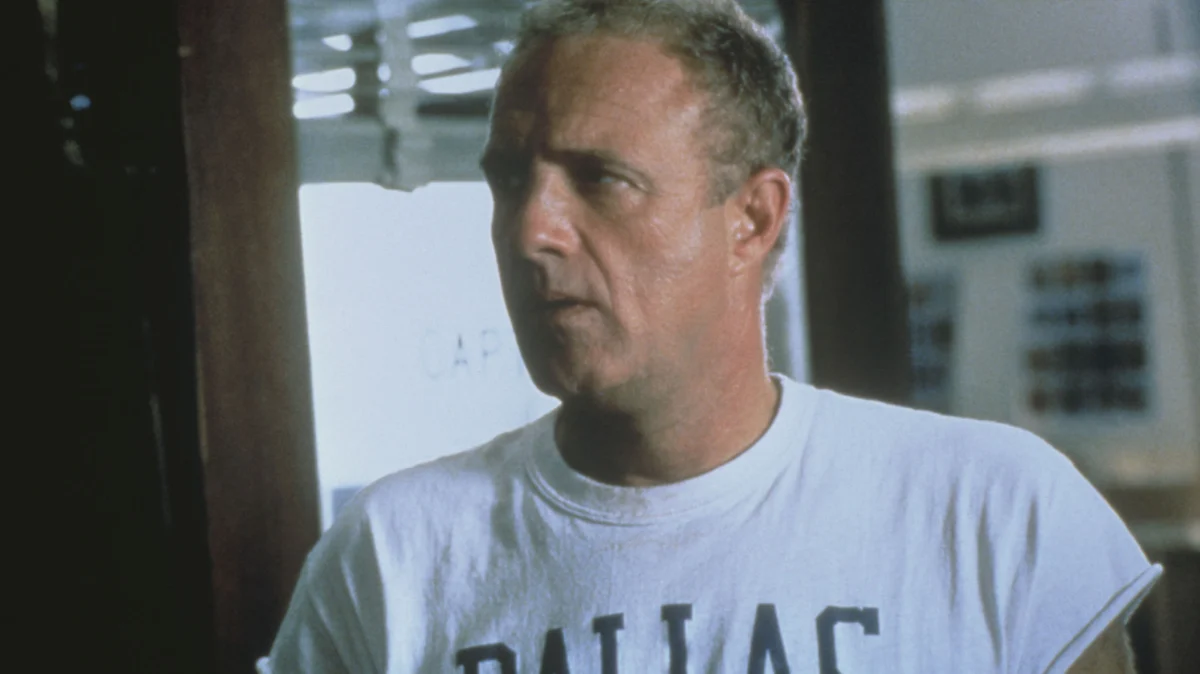
In the pantheon of Hollywood’s most iconic actors, James Caan stands as a titan of intensity and naturalistic grit. From his explosive turn as Sonny Corleone in "The Godfather" to his nuanced, understated brilliance in Michael Mann’s "Thief," Caan was an actor who thrived on gravitas. Yet, his filmography is not without its curiosities. During the 1980s, a decade defined by a shift toward high-concept blockbusters and genre experimentation, Caan’s career slowed to a crawl. Amidst this period of professional transition, he starred in the 1988 science-fiction police procedural "Alien Nation."
While the film would go on to launch a sprawling multimedia franchise—spawning a television series, a collection of novels, comic books, and a series of made-for-television movies—Caan famously harbored a visceral disdain for the project. For the actor, "Alien Nation" represented everything he disliked about the direction of commercial filmmaking in the late 80s: prosthetic-heavy creature features, high-concept gimmicks, and a departure from the character-driven dramas that defined his legacy.
The Context: A Career in Flux
To understand Caan’s reaction to "Alien Nation," one must first examine the trajectory of his career during the 1980s. Following an incredibly prolific 1970s, where he appeared in 18 films, the 1980s saw Caan retreat from the spotlight, appearing in only six feature films. While he took on high-caliber projects like "Thief" (1981) and collaborations with auteurs like Francis Ford Coppola, the decade was marked by a distinct lack of momentum.
It wasn’t until 1990, with his harrowing performance as Paul Sheldon in Rob Reiner’s adaptation of Stephen King’s "Misery," that Caan experienced a career renaissance. Interestingly, Caan would later recount "Misery" as one of the most physically and emotionally grueling experiences of his professional life. Caught between these two poles—the prestige of his early career and the difficult rebirth of his later years—"Alien Nation" sits as a bizarre, uncomfortable outlier that Caan seemingly wished to erase from his resume entirely.
Chronology of a Franchise
The genesis of "Alien Nation" is rooted in the "buddy-cop" subgenre that dominated the 1980s, filtered through a lens of science fiction and social allegory. The premise: in 1988, a massive extraterrestrial spacecraft lands in the Mojave Desert. The ship, it is revealed, is a slave vessel carrying 300,000 members of a humanoid species known as the Tenctonese, or "Newcomers."
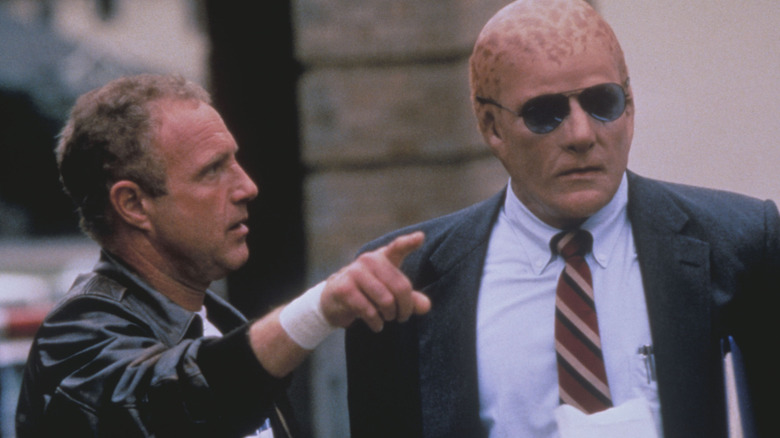
By 1991, the narrative jumps forward to show the Newcomers fully integrated into the fabric of Los Angeles society. They hold menial jobs, navigate the complexities of naturalization, and face systemic discrimination. James Caan plays Matthew Sikes, a jaded, bigoted LAPD detective who, after the murder of his partner, finds himself unhappily paired with Sam Francisco (Mandy Patinkin), the first Newcomer detective.
Despite lukewarm critical reception—the film holds a 50% rating on Rotten Tomatoes—the movie found its footing with audiences. It grossed approximately $32 million against a $16 million budget, a modest success that proved the concept had legs. Following the film’s release, the intellectual property expanded rapidly:
- 1989–1990: A television series premiered, starring Gary Graham and Eric Pierpoint. The show pivoted away from the film’s procedural focus, diving deep into Tenctonese biology, cultural assimilation, and social politics.
- 1992: Malibu Comics launched a series of books, including a surreal crossover with the "Planet of the Apes" franchise.
- 1994–1997: The franchise saw a revival through five television films: "Dark Horizon," "Body and Soul," "Millennium," "The Enemy Within," and "The Udara Legacy."
The "Potato-Head" Grievance: Caan’s Disdain
James Caan’s distaste for the film was not merely a matter of creative differences; it was visceral and, at times, crudely stated. In a 1990 interview with the Los Angeles Times, Caan famously remarked that "Alien Nation" "made me gag so badly I’d rather say gonorrhea."
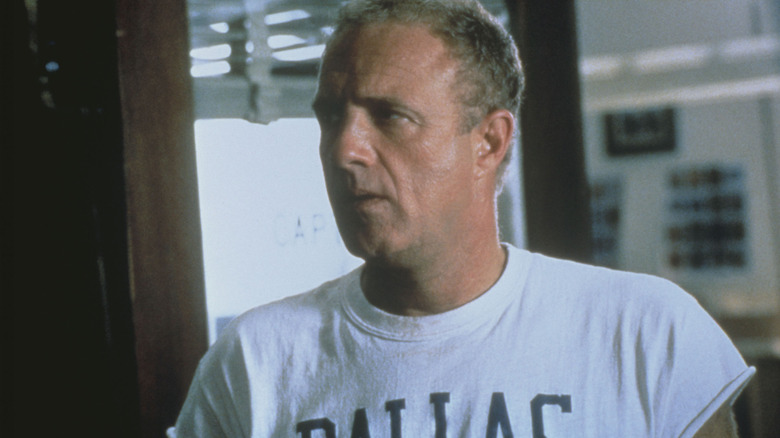
His grievances were twofold. First, he was deeply unimpressed with the creative execution of the film, specifically pointing to the direction of Graham Baker. While Caan maintained a degree of professional courtesy—often pivoting to praise his co-star, Mandy Patinkin, whom he described as "a riot"—he made it clear that the set environment was stifling.
Second, and perhaps more importantly, was the "potato-head" factor. The heavy prosthetic makeup required for the Newcomers was a point of deep contention for Caan. He viewed the reliance on such physical gimmicks as a regression in his craft. In his mind, he was an actor defined by psychological depth, not by reacting to extraterrestrial make-up effects. As he stated in a 2013 interview with the A.V. Club, when asked about the film, his immediate, sharp reaction was: "Why the f**… Why would you bring up that*?"
Critical Reception vs. Cult Status
Roger Ebert, in his original 1988 review, gave the film two stars. He noted that while the premise was inventive, the filmmakers fell into the trap of adhering too strictly to the conventions of the police procedural, failing to fully capitalize on the radical sci-fi potential of their world-building.
However, critics often fail to gauge the "cult" appeal of a property. While reviewers criticized the thin plotting, fans of the genre were captivated by the show’s willingness to explore the "Newcomer" experience. The television series, in particular, expanded on the film’s mythology in ways that were both weird and compelling. Audiences were treated to bizarre details, such as the fact that Tenctonese are intoxicated by sour milk or that their reproductive process involves a unique, marsupial-like physiological transfer between partners. These elements elevated "Alien Nation" from a generic cop flick into a meaningful, if flawed, exploration of xenophobia and integration.
Long-term Implications and Modern Legacies
The shadow of "Alien Nation" has lingered in Hollywood for decades. In 2016, reports surfaced that filmmaker Jeff Nichols was attached to write and direct a remake. The prospect of a modern, prestige-level reimagining of the concept suggested that, while James Caan may have loathed the original, the core premise remained potent enough to attract top-tier talent.
However, the project faced the same challenges as the original: defining what "Alien Nation" actually is. By 2024, it was confirmed that the planned remake had been stripped of the "Alien Nation" branding, repurposed into an entirely original science-fiction concept. This suggests that the franchise, while culturally significant, remains a difficult property to adapt without falling into the "gimmick" trap that so repelled Caan in the first place.
Conclusion: A Tale of Two Perspectives
James Caan’s hatred for "Alien Nation" is a fascinating case study in the divide between an actor’s artistic standards and the commercial realities of the industry. For Caan, the film was an embarrassment—a "potato-head movie" that served as a low point in a career defined by giants like Coppola and Mann. For the fans, however, the film and its subsequent TV series represent a cornerstone of late-80s sci-fi television—a daring, socially conscious allegory that, despite its limitations, left an indelible mark on pop culture.
Ultimately, Caan’s disdain does not diminish the film’s legacy; if anything, it highlights the friction between the actor’s high-minded dedication to his craft and the often absurd, fantastical nature of the genre cinema he found himself in. While Caan may have wanted to forget the experience, the enduring popularity of the "Alien Nation" universe ensures that his performance as the grumpy Detective Sikes remains a permanent fixture of 1980s cult history.
