
Miniature Titans: The Revolution of Handheld LED Lighting in Modern Production
The landscape of professional video production has undergone a seismic shift over the last decade. Where once cinematographers were beholden to cumbersome tungsten fresnels, bulky HMIs, and the logistical nightmare of high-draw power requirements, the modern filmmaker now carries the power of a studio in a backpack. The democratization of LED technology has transformed the industry, moving from high-end, niche equipment to accessible, high-performance tools that define the "run-and-gun" aesthetic of the 2020s.
Today, small-form-factor LED lights—often no larger than a smartphone—have become the industry standard for everything from delicate eye lights and subtle background accents to critical on-camera fill lighting. As manufacturing costs have plummeted while output quality and color accuracy have soared, the barrier to entry for high-quality lighting has vanished. Below, we explore the current state of handheld lighting, the specific tools that have redefined the craft, and the implications for the future of independent cinema.
The Evolution of Portable Illumination
To understand the current market, one must look at the trajectory of the technology. Ten years ago, portable lights were largely relegated to cold, green-tinted panels that sacrificed color rendering index (CRI) for convenience. Professional productions largely avoided them, opting for battery-powered CFLs or modified tungsten units.
However, the rapid maturation of Surface Mount Device (SMD) LEDs changed the game. Manufacturers like Aputure and Nanlite began prioritizing high TLCI (Television Lighting Consistency Index) scores, ensuring that skin tones remained natural even when shooting in non-controlled environments. This shift from "utility lighting" to "cinematic lighting" has allowed solo operators to achieve production values that previously required a dedicated G&E (Grips and Electric) team.
Essential Hardware: The Top Contenders
The following units have become staples in the kits of professional cinematographers and content creators alike, proving that budget constraints no longer equate to low-quality visual output.
1. Aputure MC: The Credit Card-Sized Powerhouse
The Aputure MC remains a benchmark for versatility. Measuring roughly the size of a credit card, it offers a bi-color range from 3200K to 6500K. What separates the MC from its predecessors is its 100-level saturation adjustment, allowing for precise color control in any environment.
Technical Capabilities:
- Color Range: 3200K–6500K
- Control: Integrated Sidus Link app compatibility, which offers a robust, low-latency connection for remote adjustment.
- Utility: Featuring a magnetized back, the MC can be mounted to metal surfaces—pipes, door frames, or camera rigs—without the need for cumbersome clamps or light stands.
2. Lume Cube RGB Panel Pro: The Event Videographer’s Choice
In the high-pressure environment of event videography—where lighting changes in seconds—the Lume Cube RGB Panel Pro has established itself as an indispensable tool. Featuring 263 LEDs and a 1000-lumen output, it offers the brightness necessary to overcome ambient light in large ballrooms or outdoor wedding venues.
Supporting Data:
The primary advantage of the Panel Pro is its endurance. It boasts a battery life of four hours at 50% brightness, a critical metric for videographers who cannot afford to swap batteries during a ceremony or keynote presentation. Its ability to be mounted directly to a camera cage via a standard ¼-20 thread makes it the ultimate "run-and-gun" companion.
3. Nanlite LumiPad 11: Compact Efficiency
Nanlite has made significant inroads by positioning itself as the "value-leader" in the professional space. The LumiPad 11 is a study in minimalist design, measuring a mere 1.4 inches in thickness and weighing only 0.6 lbs.
While it lacks the sheer raw power to serve as a primary key light in a large-scale feature, it excels as a fill or backlight. Its diffused output provides a soft, flattering quality that is difficult to achieve with raw LED panels. Nanlite’s commitment to providing comprehensive warranties further bolsters its reputation among independent creators who prioritize equipment longevity.
4. Aputure MT Pro: The Hidden Flare
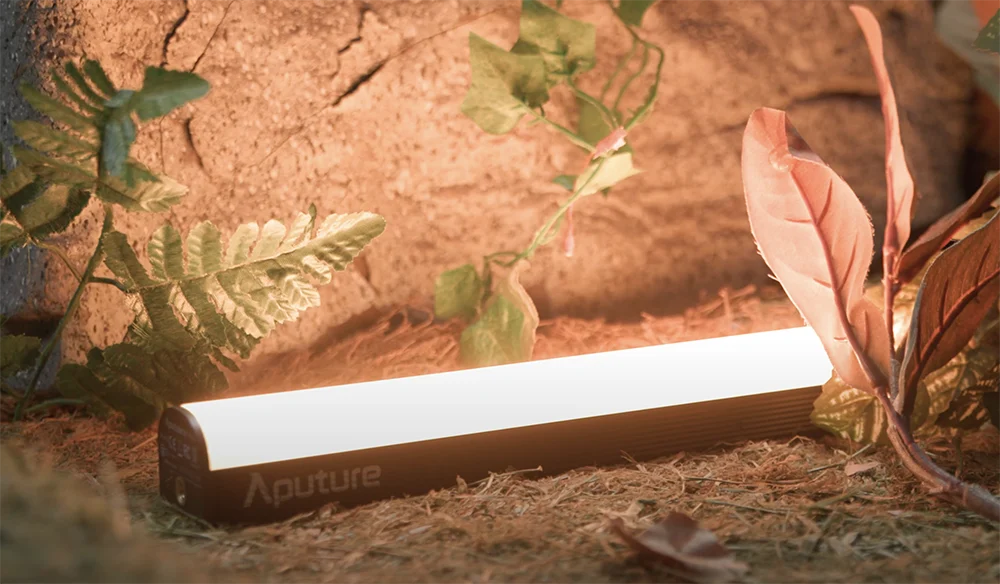
The rise of the "mini-tube" light has changed how directors approach set design. The Aputure MT Pro allows for placement in areas previously inaccessible to standard lighting units. Whether tucked behind books, hidden inside kitchen cabinets, or placed behind foliage, the MT Pro adds depth and dimension to otherwise flat interview setups. Its ability to provide seamless, flicker-free light in tight spaces is a testament to how far miniaturized hardware has come.
5. Nanlite PavoTube II 6C: Speed and Versatility
The PavoTube II 6C is the definitive tool for documentary filmmakers working on a tight schedule. Its internal Li-ion battery supports 65 minutes of operation at full intensity. With a CRI of 98 and a CCT range of 2700K to 7500K, it provides professional-grade color accuracy on the fly.
Programmable Effects:
The unit comes pre-loaded with cinematic effects—including lightning, police sirens, and camera flashes. These features allow a single operator to simulate complex lighting environments without external triggers or advanced DMX control systems.
6. Amaran AL-MX: The Rugged "Brick"
Often referred to as "the brick," the Amaran AL-MX is built for durability. While heavier than the plastic-housed alternatives, its metal construction allows it to survive the rigors of field production. Its "Boost Mode," which outputs up to 1100 lux at 0.5m, is a lifesaver when filming in total darkness, serving as both a work light and a capable key light for close-up subjects.
Implications for Modern Production
The rise of these compact lighting solutions has shifted the industry’s philosophy from managing light to sculpting light.
The Cost of Entry
The most significant implication of this technological advancement is the democratization of visual storytelling. Five years ago, a kit offering the functionality of the products listed above would have cost thousands of dollars. Today, a filmmaker can outfit a full, multi-point lighting rig for the price of a single professional-grade lens. This has enabled a new generation of creators to produce high-quality, cinematic content without the backing of a large studio.
Workflow Efficiency
The integration of smartphone applications—specifically Aputure’s Sidus Link and Lume Cube’s native software—has reduced the time spent on "tweaking." Lighting designers can now adjust the color, intensity, and flicker effects of a light placed in a difficult-to-reach location without having to move their camera or interrupt the subject. This efficiency translates directly into more time for creative decision-making and performance coaching.
Future Outlook: Power and Integration
As we look toward the future, the integration of AI-assisted lighting control and even higher battery energy densities will likely further shrink the size of these units. We are moving toward a future where "lighting" is no longer a task performed by a crew, but an intuitive part of the camera-operator’s workflow.
Conclusion
The evolution of handheld LEDs is not merely a story of smaller components; it is a story of enhanced creative liberty. Whether it is the Aputure MC’s magnetic convenience or the Nanlite PavoTube’s programmable versatility, these tools have proven that the constraints of budget and space are no longer valid excuses for poor production value. For the modern filmmaker, the "best" light is no longer the biggest or the most expensive—it is the one that is available, reliable, and capable of transforming a flat, uninspired shot into a cinematic masterpiece.
As manufacturers continue to push the boundaries of output and efficiency, the industry will continue to see a shift toward smaller, faster, and more creative production environments, ensuring that the next decade of filmmaking is as visually striking as the last.
