
DJI Neo 3 Leaks Point to a Massive Upgrade: Larger Sensor, Native Vertical Shooting, and the New RC Mini Controller
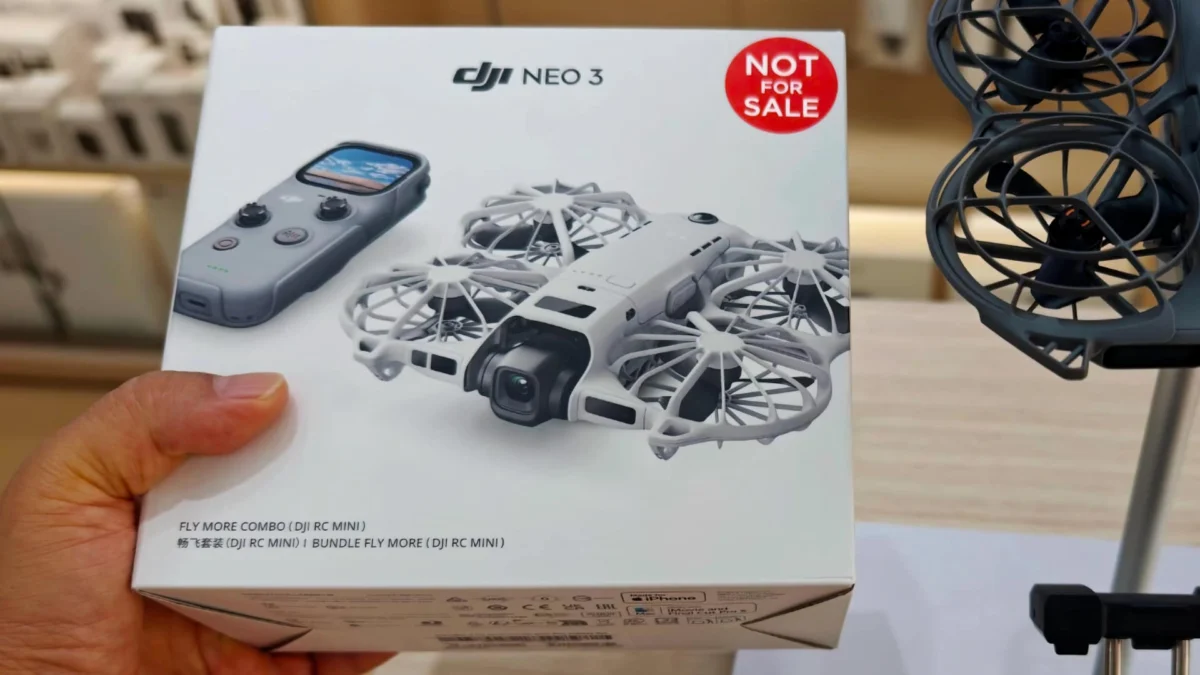
Global Technology Desk — The consumer drone market is buzzing with anticipation as increasingly solid leaks reveal what could be DJI’s most ambitious ultra-light drone to date. While DJI has yet to make an official announcement, a wave of leaked marketing materials, registration documents, and hands-on videos point toward the impending launch of the DJI Neo 3.
Building upon the success of its predecessor, the Neo 3 is shaping up to be far more than a simple iterative update. Industry insiders and prominent leak sources suggest that DJI is addressing the core limitations of previous ultra-compact entry-level drones by introducing a dramatically larger camera sensor, native vertical video capture, and a dedicated pocket-sized controller equipped with a built-in display.
As the rumor mill moves into overdrive, consumers, content creators, and hobbyists are analyzing every leaked detail to see how the Neo 3 will reshape the pocket-drone landscape.
Main Facts
The forthcoming DJI Neo 3 introduces several significant hardware and software advancements that bridge the gap between ultra-portable novelty drones and high-performance cinematic tools.
1. A Substantially Upgraded Camera Sensor
The crown jewel of the leaked Neo 3 specifications is an entirely overhauled camera package. According to a leaked marketing sheet published by serial tech leaker Igor Bogdanov, the Neo 3 is slated to feature a 1/1.1-inch square sensor.
This represents a monumental leap forward from the 12-megapixel, 1/2-inch sensor found on the previous-generation DJI Neo 2, which featured no optical zoom capabilities. The larger sensor on the Neo 3 enables two critical features:
- Native Vertical Shooting: By utilizing a square sensor configuration, creators can capture vertical video natively without sacrificing resolution through digital cropping or physically rotating the gimbal mechanism. This caters directly to the booming demand for short-form video content on platforms like TikTok, Instagram Reels, and YouTube Shorts.
- 2x Lossless Zoom: The massive sensor area provides enough overhead to achieve a 2x lossless zoom via an in-sensor crop, drastically increasing compositional flexibility for aerial videographers.
Furthermore, the physical dimensions and shape of this rumored sensor match the sensor utilized in DJI’s latest Osmo Action 6 camera, lending significant credibility to the leaked documentation. While exact video resolutions, frame rates, and bitrates remain unconfirmed by official channels, industry analysts agree that 4K recording at 60 frames per second will serve as a baseline expectation.
2. The Introduction of the RC Mini Controller
Perhaps the most notable user-experience shift in the Neo 3 ecosystem is the inclusion of the RC Mini—a compact, pocket-sized remote controller featuring an integrated display screen.
Leaked video footage showcases a streamlined design incorporating two short control sticks, a combined return-to-home and pause button, a vibrant orange shutter button, and a ribbed scroll wheel situated on the top edge. While full-sized DJI enterprise and consumer controllers utilize rear scroll wheels to tilt the gimbal, the exact function of the Neo 3’s wheel remains a subject of speculation among early reviewers.
The RC Mini heavily mirrors the design philosophy of the RC Mini AG, a specialized remote control launched by DJI in China for agricultural drone applications. That industrial counterpart features a 1.97-inch display boasting a 410 x 494 resolution, an 800-nit peak brightness level for outdoor visibility, OcuSync 4 video transmission capabilities reaching up to 10 kilometers (6.2 miles), and an approximate three-hour battery life per charge. While consumer adaptation details are pending final confirmation, the integration of a built-in screen means pilots will no longer need to tether their smartphones to the controller for standard operations.
3. Airframe Redesign, Weight, and Safety Features
Regulatory and manufacturing leaks provide a clear picture of the Neo 3’s physical profile:
- Weight: A Chinese regulatory registration listing dated September 21 cites the Neo 3 (operating under model number DEN326) at 192.7 grams (6.8 ounces). While this makes the Neo 3 approximately 28% heavier than its predecessor, it remains comfortably below the critical 250-gram regulatory threshold that mandates rigorous registration in many global aviation jurisdictions.
- Propeller Guards: Leaked imagery highlights a transition from the solid, enclosed propeller rings seen on the Neo 2 to modern hub-and-spoke propeller guards, balancing aerodynamic efficiency with safety.
- Sensory Arrays: The airframe includes an upward-facing sensor and a small, rectangular screen embedded in the nose directly behind the gimbal housing. This nose screen glows blue upon powering up the aircraft, though its exact diagnostic or status-reporting function has yet to be fully detailed.
- Integrated Transceiver: The separate transceiver module required by older models has been completely removed from the packaging list. Analysts suggest this component has been fully integrated into the main airframe, accounting for a portion of the drone’s slight weight gain.
Chronology of Leaks and Expected Release Timeline
The timeline leading up to the anticipated launch of the DJI Neo 3 has been characterized by steady, escalating disclosures from well-connected industry insiders.
- Early September 2025: Initial chatter regarding a successor to the Neo series begins circulating within enthusiast forums. Early speculation points toward a potential September product launch window.
- September 21, 2025: Regulatory filings surface in China, officially logging model number DEN326 at a takeoff weight of 192.7 grams and offering the first official baseline metrics of the physical hardware.
- October 1, 2025: Serial leaker Igor Bogdanov publishes comprehensive marketing specification sheets detailing the 1/1.1-inch square sensor, native vertical video capabilities, and upgraded autonomous flight modes.
- October 6, 2025: A leaked unboxing video emerges online, verifying the contents of the forthcoming "Fly More Combo" retail packaging and offering the first clear visual confirmation of the RC Mini controller.
- Mid-October 2025: As supply chain preparations solidify, industry consensus shifts regarding the launch schedule. The initial September rollout window slips to October or November 2025, mirroring DJI’s historical release cadences (such as the DJI Neo 2, which launched in China on October 30, 2024, followed by global markets two weeks later).
Supporting Data and Technical Breakdown
To fully contextualize the leap between generations, a comparative analysis of leaked Neo 3 specifications against its predecessor reveals significant hardware evolution:
| Feature / Metric | DJI Neo 2 (Previous Gen) | DJI Neo 3 (Leaked / Rumored Spec) |
|---|---|---|
| Sensor Size | 12 MP, 1/2-inch sensor | 1/1.1-inch square sensor |
| Vertical Video | Cropped / Rotated | Native vertical capture |
| Optical / Digital Zoom | None | 2x lossless zoom (via sensor crop) |
| Takeoff Weight | ~150 g | 192.7 g (Model DEN326) |
| Controller Options | Smartphone / Standard RC-N3 | RC Mini (with built-in display) |
| Obstacle Detection | Basic / Vision-based | Upgraded omnidirectional detection |
| Flight Time | ~19 minutes | To be determined (Pending payload testing) |
The Fly More Combo Ecosystem
Leaked packaging materials and unboxing documentation reveal that the DJI Neo 3 Fly More Combo will ship with a robust set of accessories designed for immediate deployment. The box contents include:
- The DJI Neo 3 aircraft
- The RC Mini controller
- An RC Mini Expansion Cover
- Three intelligent flight batteries
- A dedicated multi-battery charging hub
- An Anti-Loosening Pad
- Two sets of spare propellers
- A standard maintenance screwdriver
- A USB-C connectivity cable
Official Responses and Market Context
As is standard practice for consumer technology manufacturing giant DJI, the company has maintained strict silence regarding the existence, specifications, or pricing structure of the unannounced Neo 3. Official press releases, teaser campaigns, and media event invitations have yet to be issued.
However, industry observers note that the silence from Shenzhen does little to dampen retail preparations. Distributors and regional supply chain partners are reportedly already positioning inventory channels in anticipation of a late-autumn release.
Pricing and Availability Outlook
Predicting the retail price of unannounced DJI hardware involves analyzing historical pricing models:
- The current-generation DJI Neo 2 retails for approximately $229 for the drone-only configuration, while the Fly More Combo featuring the RC-N3 controller commands roughly $399.
- Given the substantial hardware upgrades packed into the Neo 3—specifically the inclusion of a much larger 1/1.1-inch sensor and the advanced RC Mini controller with a built-in screen—price inflation is considered inevitable.
- Market analysts estimate a baseline price increase of at least $70 to $100, though official figures remain pure speculation until DJI makes an announcement.
Furthermore, international consumers—particularly those in the United States—must navigate ongoing regulatory and geopolitical complications surrounding Chinese-manufactured drone technology. Industry watchers expect that, similar to recent hardware releases, the DJI Neo 3 may only be accessible in the United States via gray-market importation channels rather than mainstream domestic retail outlets.
Implications for the Consumer Drone Market
The impending arrival of the DJI Neo 3 carries profound implications for casual creators, vloggers, and the broader ultra-light drone sector.
1. Blurring the Line Between Toys and Professional Tools
Historically, sub-250g pocket drones aimed at beginners involved severe compromises in image quality, dynamic range, and stability. By packing a massive 1/1.1-inch sensor into an airframe weighing under 200 grams, DJI is effectively democratizing high-end cinematic imaging. Creators who previously relied on bulky setups or heavy action cameras mounted to gimbals will now have access to professional-grade low-light performance and color depth in a device that fits inside a jacket pocket.
2. Streamlining the Content Creation Workflow
The integration of native vertical video capture addresses a major friction point for modern social media influencers. By eliminating the need to post-process cropped horizontal footage or mechanically rotate gimbals, the Neo 3 optimizes the pipeline from capture to publication. Paired with upgraded autonomous features like SelfieShot 2.0, high-speed ActiveTrack with automated cinematic movements, and rapid file-transfer protocols, the drone is explicitly engineered for instant content generation.
3. Independence from Mobile Devices
The inclusion of the RC Mini controller represents a major ergonomic victory for solo creators. For years, operating compact drones required juggling a smartphone, clamping it into a bulky controller mount, managing cables, and dealing with screen glare or incoming phone calls. A dedicated, pocket-sized controller with a bright, built-in display allows for instant power-on and deployment—transforming aerial photography from a deliberate production setup into an effortless, spontaneous activity.
As autumn progresses toward the anticipated October or November launch window, all eyes remain fixed on DJI headquarters. If current leaks hold true, the DJI Neo 3 is poised to redefine what consumers can expect from an entry-level, ultra-portable aerial platform.
