
The Franchise Frontier: Navigating the Complex Web of IP Rights in the Paramount-Warner Bros. Megadeal
The cinematic landscape underwent a seismic shift this week as David Ellison’s Skydance finalized its $111 billion acquisition of Paramount, effectively merging the legendary studio with the powerhouse assets of Warner Bros. Discovery. This massive consolidation brings together an unprecedented treasure trove of intellectual property (IP), from the dark, gritty streets of Gotham to the vast, star-faring expanse of the Star Trek universe.
Yet, as executives, fans, and industry analysts look toward a future of "synergistic" content, a hard reality is settling in: owning a studio does not necessarily mean owning the freedom to mash its icons together. The dream of a shared universe featuring Batman, Optimus Prime, and Harry Potter remains firmly in the realm of fan fiction, constrained by a complex, decades-old web of legal guardrails, licensing agreements, and the protective instincts of original creators.
A History of Hurdles: The "Transformers" and "G.I. Joe" Precedent
The logistical nightmare of merging franchises is not a new concept; it was a primary headache for Brian Robbins, the former CEO of Paramount Pictures, during his 2022 tenure. Robbins, envisioning a bold future for the Transformers franchise, sought to merge the Autobots with the G.I. Joe universe, beginning with a crossover coda in Transformers: Rise of the Beasts.
While Robbins successfully secured the blessing of executive producer Steven Spielberg and the corporate backing of Hasbro—which owns both toy lines—he hit a major wall: Michael Bay. The director, whose vision defined the first four Transformers films, was staunchly opposed to the merger. Bay feared that the intersection of these two iconic brands would "cheapen" the series, stripping away the gravitas he had painstakingly built.
"I called him 50 times," Robbins revealed in a 2023 interview. "I would not let him off the hook. And when he finally stopped dodging my calls, we got him to sign off."
Despite that hard-won victory, the vision never fully materialized. With Robbins ousted following the Skydance takeover in 2025, the studio has officially abandoned the Transformers–G.I. Joe crossover. Instead, the current leadership has pivoted: they have tapped Danny McBride to reboot the G.I. Joe franchise as a standalone series, while simultaneously bringing Bay and Spielberg back to the fold for an eighth Transformers film. It is a lesson in the fragility of creative synergy; even when the corporate stars align, the visionaries behind the lens often have the final say.
The Legal Labyrinth: Understanding Chain of Title
The sheer scale of the Paramount-Warner Bros. merger—combining assets like HBO, CBS, MTV, NewLine, and Adult Swim—might look like a playground for cross-pollination on a spreadsheet. However, the legal reality is governed by "chain of title," the history of ownership and licensing that dictates what a studio is allowed to do with a character.

Rachel Landy, a professor at the Cardozo School of Law, explains that rights are rarely absolute. "If something is entirely original to Warner Bros. and wasn’t based on any preexisting book or comic book, they likely have 100 percent of the rights, and they can be transferred," Landy says. "But a lot of their marquee products are based on comic books, books, toys, and dolls. When Warner Bros. went to make a movie, they had to get permission from some holder of the underlying rights and obtain a license."
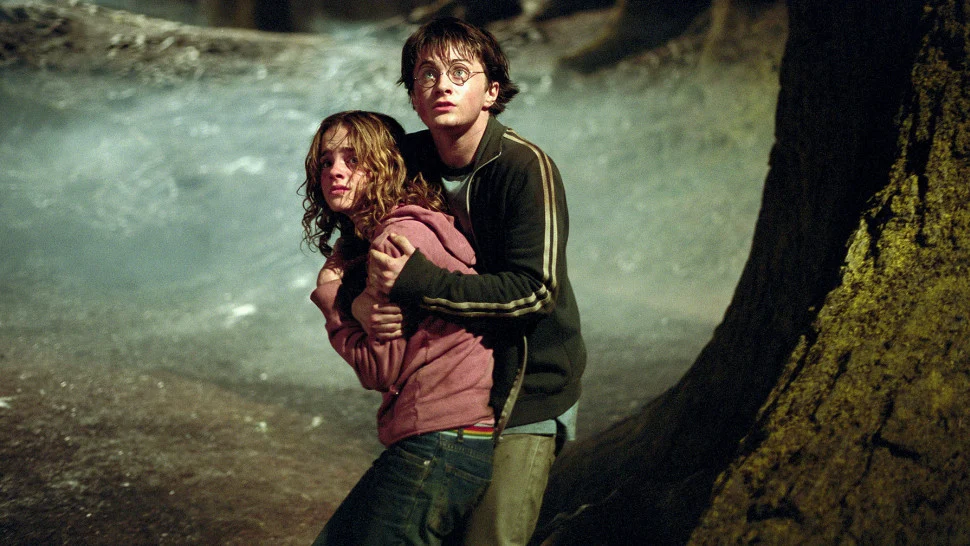
This nuance is what keeps the Wizarding World tethered to J.K. Rowling. While Warner Bros. owns the film rights, they cannot simply transplant Harry Potter into other franchises without explicit consent—a concession that the author is notoriously protective of. Similarly, the Lord of the Rings films are produced under an often contentious, tightly negotiated licensing agreement with the J.R.R. Tolkien estate.
Even Star Trek, often cited as a crown jewel of Paramount, is not as simple as it seems. While the studio owns the series following its 2019 merger with CBS, those rights are distinct from the film series, which have been subject to their own complex ownership history over the decades.
The Myth of the "Ultimate Crossover"
For the casual observer, the prospect of a "DC x Paramount" event seems like a logical next step for a company as large as the new entity. However, industry insiders suggest this is highly unlikely for live-action properties.
"When it comes to comic books, you need to stay true to the canon," one executive noted. "Fans can get really mad."
The backlash against perceived "cheapening" of franchises is a genuine concern for studio heads. Protecting the integrity of the intellectual property is often more valuable than the short-term buzz of a crossover. Furthermore, the contracts themselves often prohibit such shifts. As Orly Ravid, associate dean of the Southwestern Law School’s Donald E. Biederman Entertainment, Media, and Sports Law Institute, points out: "You always have to go back to what the original contract says can happen and what kind of allowances it provides for how characters can be adapted in different settings."
There is, however, a potential escape hatch: animation. The success of The LEGO Movie demonstrated that audiences are far more willing to accept, and even embrace, a tonal mashup when the medium allows for a suspension of disbelief. In a toy-based or animated world, the rules of canon are more flexible, and the legal constraints on "tonal integrity" are significantly easier to navigate.

Strategic Implications: Rebooting the Vault
The immediate goal for David Ellison and the new leadership team is not to force disparate worlds together, but to revitalize the ones they already own. The "diligence" process—combing through the archives to decide what to reboot, what to revive, and what to keep in the vault—is the true engine of the $111 billion deal.
Skydance’s film chiefs, Dana Goldberg and Josh Greenstein, have already signaled a return to "proven" commodities. Their initial slate includes sequels to Days of Thunder and World War Z, a live-action Teenage Mutant Ninja Turtles adaptation, and a new Paranormal Activity film. This indicates a strategy focused on deepening the value of existing IP rather than attempting to forge new, risky connections between them.
Furthermore, the "assignment" clauses in most modern licensing contracts protect the studio from losing control of their properties during a merger. Nearly every major contract includes language that allows the studio to transfer rights to "any entity with which the company is merged." This ensures that the massive library of films and shows stays firmly in the hands of the new conglomerate, preventing creators from using the merger as an excuse to reclaim their characters.
Navigating the Political and Creative Climate
The merger has not been without its critics, particularly regarding the political affiliations of the new ownership. Ellison’s reported outreach to the Trump administration to facilitate the deal has caused ripples of concern among left-leaning artists and creators.
Professor Landy suggests that this could complicate the studio’s relationship with its talent pool. "Those who don’t agree with the politics of Paramount’s ownership may look more closely at their contracts to get a sense of what will be assigned as part of the merger and what consent rights they’ll continue to have," she warns.
As the dust settles, the new Paramount-Warner Bros. entity faces a delicate balancing act. They must appease shareholders by maximizing the exploitation of their vast IP library while simultaneously maintaining the trust of the creators and directors who actually make the content.
For now, the era of the "Cinematic Universe" appears to be shifting. The future is not in forced, legally tenuous crossovers that threaten to dilute brand identity, but in the meticulous, strategic management of individual franchises. While we may never see Batman on the bridge of the Enterprise, we will certainly see a more aggressive, reboot-heavy strategy designed to keep the studio’s most valuable assets relevant for a new generation of viewers. The vault has been opened, but the gatekeepers remain vigilant—and for the sake of the franchises themselves, that may be exactly what is required.
