
Nostalgia, Technicolor, and Vengeance: Anna Biller’s The Face Of Horror Brings Glamorous Macabre to the London Film Festival
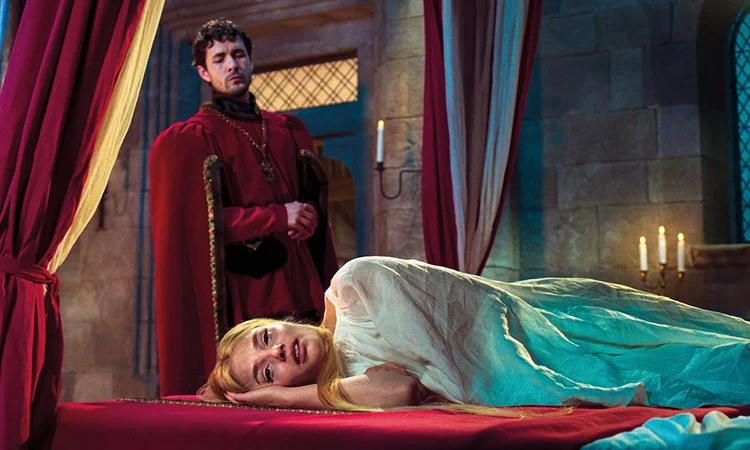
Main Facts: A Modern Throwback to 1960s Euro-Horror
For generations of British television viewers who grew up during the 1960s and 1970s, the after-school viewing schedule carried a distinct flavor of continental surrealism. Long before the era of multi-channel digital broadcasting and immediate streaming, British children’s television was frequently flooded with imported European programs. These continental acquisitions—ranging from the French adaptation of Daniel Defoe’s Robinson Crusoe to the East German, phantasmagorical fairy tale The Singing Ringing Tree—left an indelible mark on the psyche of young viewers.
Decades later, these programs are regarded with a potent mix of affection, irony, and cult reverence, primarily remembered for their idiosyncratic, heavily accented dubbing, dreamlike atmospheres, and charmingly primitive special effects.
Enter acclaimed filmmaker Anna Biller, whose latest cinematic creation, The Face Of Horror, captures that exact stylistic lightning in a bottle. While Biller may not have explicitly designed the film as a direct homage to quirky children’s television of yesteryear, the structural and aesthetic influences are impossible to ignore. Complete with heightened theatricality, brightly saturated palettes, and retro-fitted practical magic, The Face Of Horror is uniquely positioned to secure a fiercely dedicated cult following of its own.
Headlining the BFI London Film Festival with screenings scheduled for October 15 and 17, The Face Of Horror transports audiences back to a stylized, hyper-aestheticized medieval England. Blending the lurid, saturated color palettes of 1960s Hammer Horror with the narrative tropes of classic gothic melodrama, the film offers an arresting visual feast. Led by a stellar ensemble cast featuring Kristine Froseth, Ellie Bamber, Jonah Hauer-King, Leo Suter, and Bella Heathcote, the feature-length project balances campy pastiche with a genuine reverence for a bygone era of filmmaking craftsmanship.
As film critics and festival-goers prepare for its upcoming exhibition, The Face Of Horror is already sparking lively debates regarding the boundaries between parody, homage, and authentic cinematic nostalgia. Though a wide UK theatrical release date has yet to be formally confirmed by distributors, the film’s festival buzz guarantees it will be one of the most talked-about genre releases of the autumn season.
Chronology: A Tale of Greed, Betrayal, and Spectral Retribution
The narrative architecture of The Face Of Horror unfolds as a classic gothic tragedy infused with modern feminist subversion. Set against an impossibly pristine and anachronistic backdrop of medieval England, the plot kicks into motion when two yeoman’s daughters, the gentle Eleanor (played by Kristine Froseth) and her fiercely protective sister Beatrice (played by Ellie Bamber), capture the wandering eyes of local opportunists.
Enter the roguish knight Edward Carnifax (Jonah Hauer-King) and his calculating squire Richard (Leo Suter). Driven by a ruthless determination to seize the sisters’ lucrative family inheritance, the two men orchestrate a vicious plot. They murder the girls’ father in cold blood, deftly framing a band of wandering outlaws for the crime. With the patriarch out of the way and the estate vulnerable, Edward deceitfully marries Eleanor, cementing his control over the family’s fortunes.
However, domestic bliss proves fleeting within the world of medieval melodrama. Easily bored by the realities of marriage and the demands of a newborn baby, Edward’s notoriously wandering eye soon fixes upon a wealthier, more dangerous prize: the alluring and affluent Countess Isabel, portrayed with icy glamour by Bella Heathcote.
The psychological turning point of the narrative arrives when Eleanor discovers her husband’s blatant infidelity. Heartbroken and betrayed, Eleanor dies under deeply suspicious and gruesome circumstances. Yet, death is far from the end for the wronged heroine. Buoyed by supernatural forces and assisted by her fiercely determined sister Beatrice—who refuses to let her sibling’s murder go unpunished—Eleanor’s ghost returns from the grave. What follows is a systematic, chilling quest for vengeance against the men who manipulated, exploited, and ultimately discarded her.
Supporting Data: Aesthetics, Craftsmanship, and the Technicolor Legacy
A critical examination of The Face Of Horror requires an appreciation of its meticulous artistic direction. Anna Biller has never been a filmmaker who works in half-measures; her previous directorial efforts, such as the critically acclaimed The Love Witch, demonstrated an encyclopedic knowledge of cinema history and a peerless dedication to physical craft. In The Face Of Horror, Biller trains her stylistic lens on the vibrant, high-contrast aesthetic of 1960s Technicolor horror, most famously championed by Britain’s Hammer Film Productions and Italy’s giallo masters.
Consequently, Biller’s version of the Middle Ages bears little resemblance to gritty, mud-soaked historical realities. Instead, it is populated by glamorous women boasting long, gleaming locks reminiscent of classic Hollywood starlets. Every character appears squeaky clean, sporting immaculate, contemporary-inflected makeup and impossibly perfect teeth. The visual mise-en-scène is so hyper-stylized that viewers joked in early screenings that they could practically smell the vintage perfume radiating off the screen.
Adding to the anachronistic charm, Jonah Hauer-King leans heavily into theatrical swashbuckling, frequently indulging in a hearty, booming laugh reminiscent of Errol Flynn in the 1938 cinematic classic The Adventures Of Robin Hood. The color palette is so intensely vivid and saturated that it practically demands sunglasses, evoking an era when film stock was engineered to dazzle the eye rather than mimic naturalism.
Furthermore, the film’s technical execution relies heavily on old-school, tactile special effects. Eschewing the hyper-realistic, computer-generated imagery that dominates contemporary studio blockbusters, Biller opts for optical illusions, practical lighting tricks, and traditional makeup effects, particularly during the sequences where Eleanor operates in full ghost mode. This devotion to retro craft invokes a potent wave of nostalgia among cinephiles.
Interestingly, despite its horrific title, the film displays a delayed-fuse approach to gore. The first act operates largely as a psychological melodrama and a satirical social comedy, with blood and visceral horror deliberately withheld until the narrative crosses its halfway threshold. Once the dam breaks in the second half, however, the red stuff flows freely, gushing in gloriously uninhibited, old-school horror movie fashion.
Official Responses and Critical Reception
As The Face Of Horror prepares for its high-profile screenings at the BFI London Film Festival on October 15 and October 17, early critical reception has begun to crystallize. Industry insiders and festival programmers have praised Biller’s unwavering commitment to her artistic vision, noting that the film operates on multiple layers simultaneously.
Early reviews highlight the film’s slippery relationship with genre categorization. Upon its initial reels, The Face Of Horror frequently plays like a laugh-out-loud parody, poking gentle fun at the melodramatic tropes, wooden acting styles, and melodramatic plotting of mid-century period pieces. Yet, as the runtime progresses, this overt comedic irony subtly recedes into the background. It is replaced by a sincere, earnest exploration of the very tropes it initially lampoons, revealing Biller’s true artistic intention: to meticulously re-create a lost cinematic world of glamour and macabre spectacle that has nearly faded from modern memory.
Critics have noted minor pacing hurdles, pointing out that the film occasionally labors its points and that its generous two-hour running time could benefit from a tighter trim in the editing suite. Despite these structural observations, reviewers universally agree that the sheer level of artisanship, coupled with the gloriously knowing, straight-faced performances from the central cast, elevates the project far above standard genre fare.
Cast members have expressed profound enthusiasm for working within Biller’s intensely controlled aesthetic parameters. Speaking on the collaborative process, lead actors have lauded the director’s hands-on approach to costume, set design, and performance coaching, emphasizing that maintaining a completely straight face amidst such heightened, campy material was both a thrilling challenge and an acting masterclass.
Implications: The Cult Potential and Future of Retro-Aesthetic Cinema
The arrival of The Face Of Horror at the London Film Festival arrives at a fascinating cultural juncture for contemporary cinema. In an entertainment landscape increasingly saturated by algorithmic content, CGI-heavy superhero spectacles, and gritty "reimaginings" of classic properties, Anna Biller’s work carves out a vital, fiercely independent niche. By looking backward to the 1960s—drawing inspiration from both European children’s television anomalies and British gothic horror—Biller proves that artificiality and deliberate stylistic excess can be utilized as tools of profound artistic subversion.
The film’s implications for the horror genre are manifold. First, it demonstrates that audiences—particularly festival attendees and arthouse patrons—possess an insatiable appetite for cinema that prioritizes tactile craftsmanship and historical pastiche over gritty realism. The meticulous recreation of Technicolor lighting, physical set design, and practical effects serves as a direct rebuke to the homogenized look of modern digital cinematography.
Second, The Face Of Horror strengthens the ongoing conversation surrounding feminist genre filmmaking. By taking the classic damsel-in-distress trope of medieval romance and turning it into a supernatural tale of sisterly solidarity and spectral vengeance, Biller subverts the patriarchal structures inherent in historical melodramas. Eleanor and Beatrice are not merely passive victims of medieval misogyny; they are active agents of their own otherworldly justice, reclaimed through the empowering lens of horror cinema.
Finally, the film’s trajectory points toward an assured second life as a midnight movie and cult classic. Much like Biller’s The Love Witch, The Face Of Horror is built for repetition. Its rich visual layers, quotable dialogue, and joyful embrace of cinematic artificiality practically demand multiple viewings.
As festival audiences file into the London auditoriums on October 15 and 17, they will not merely be watching a film; they will be participating in an evolving cult phenomenon. While UK distribution partners have yet to officially lock in a wide release date, the mounting critical praise and unmistakable festival buzz ensure that The Face Of Horror will haunt cinema discussions for months to come.
