
The Legacy of the Last Airbender: How the New Aang Movie Bridges the Gap to The Legend of Korra
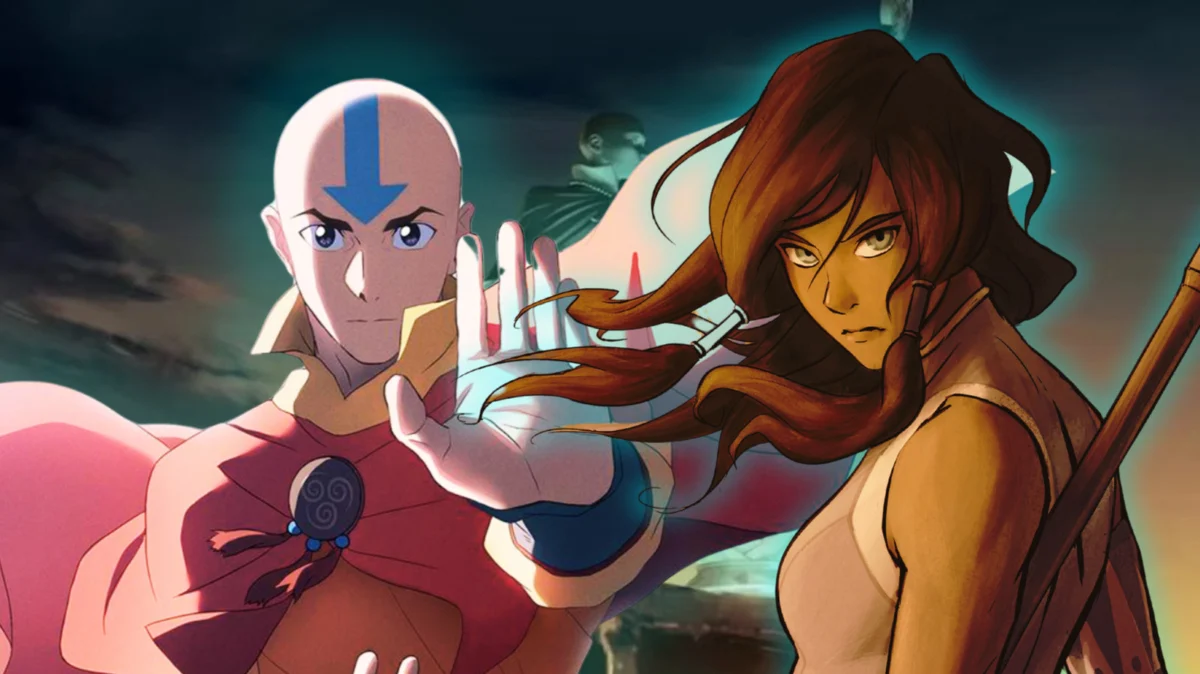
The world of Avatar: The Last Airbender has long thrived on the delicate balance between elemental mastery and spiritual responsibility. With the release of the new feature film Avatar Aang: The Last Airbender, the franchise has finally begun to fill the critical narrative vacuum between the conclusion of Aang’s original journey and the emergence of Avatar Korra. By exploring the immediate aftermath of the Hundred Year War, the film provides a necessary context for the socio-political evolution of Republic City and the tragic history of the Air Nomads.
Warning: This article contains major spoilers for the film "Avatar Aang: The Last Airbender."
Main Facts: Aang’s Burden in a Post-War World
The narrative of Avatar Aang: The Last Airbender centers on a maturing Aang, portrayed by Eric Nam, roughly a decade after the fall of Fire Lord Ozai. While the original series was a masterpiece of ensemble storytelling—where the redemption arc of Zuko (Steven Yeun) was as pivotal as the protagonist’s growth—this film shifts the spotlight firmly onto Aang.
Aang is a man haunted by the ghost of his own past. Despite the restoration of global peace, he remains a figure of profound isolation. Haunted by nightmares of the Fire Nation’s genocide of the Air Nomads, Aang struggles to reconcile his identity as the "last" of his people with his responsibility to a world that is rapidly modernizing. The film opens with a poignant flashback to the Southern Air Temple, grounding the viewer in the trauma that Aang has carried since he was thawed from his century-long hibernation.
The primary conflict is sparked by the discovery of Tagah (Dave Bautista), an ancient Airbender who had been cryogenically preserved. Tagah possesses a relic of immense power: the staff of Sonam, an Avatar who lived 5,000 years prior. The staff, capable of granting airbending to non-benders, serves as the film’s "MacGuffin," driving a wedge between Aang’s commitment to natural balance and Tagah’s radical desire to restore the Air Nation by force.
Chronology: The Foundation of Republic City
To understand the world of The Legend of Korra, one must understand the construction of the United Republic of Nations. Avatar Aang offers a rare glimpse into the early days of this experiment.
The Birth of a Cultural Melting Pot
Following the war, Aang and Fire Lord Zuko faced the impossible task of deconstructing a century of segregation. The film depicts the early development of Republic City, built upon the ruins of Fire Nation colonies in the Earth Kingdom. For Aang, this city represents a double-edged sword: it is a triumph of harmony, yet it is also a place where his own culture is conspicuously absent.
The Rise of the Air Acolytes
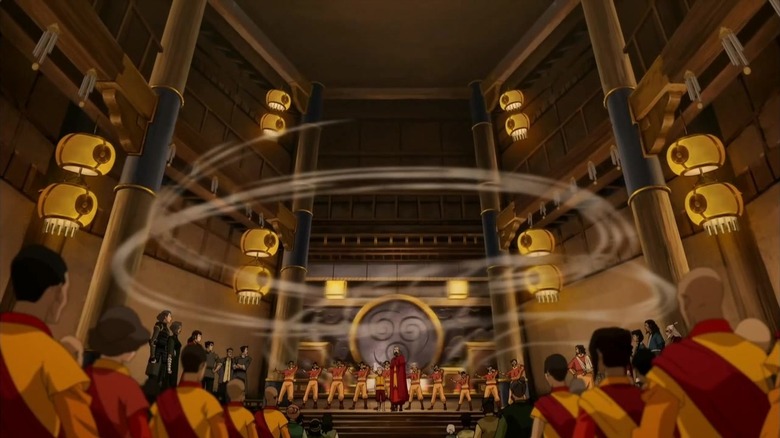
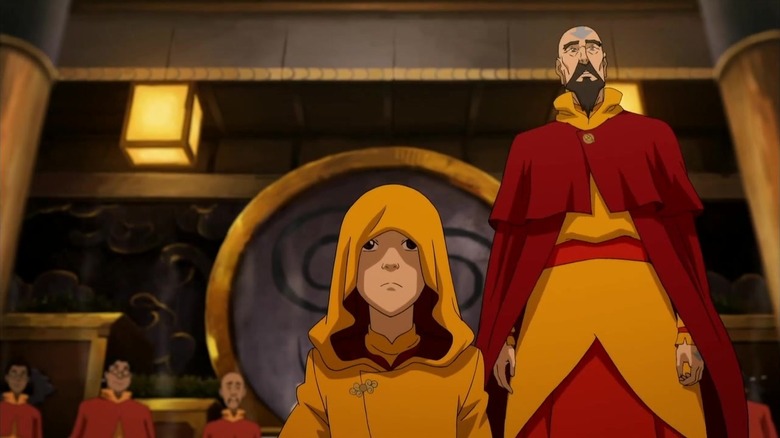
A turning point in the film occurs when Aang realizes that he cannot force the return of the Air Nomads, but he can preserve their philosophy. The film depicts the construction of the Air Temple on an island in the harbor of Republic City—the very same island that serves as a sanctuary for Tenzin and his family decades later. By recruiting the first "Air Acolytes," Aang begins the slow, deliberate process of institutionalizing Air Nomad culture, a critical precursor to the era of Korra.
The Return of the Sky Bison
One of the most emotional beats in the film is the discovery of a hidden herd of sky bison. In the original series, Appa was believed to be the last of his kind. The film reveals that a hidden temple—long forgotten—harbored a surviving population. This discovery resolves a long-standing question for fans of Korra regarding the sudden re-emergence of the species, framing them as a fragile, rebounding population rather than a magic fix.
Supporting Data: The Spiritual Mechanics of Bending
The inclusion of Sonam’s staff provides the franchise with a new, deeper understanding of how bending functions within the spiritual ecosystem.
Sonam, the Avatar of her era, utilized her connection to the Spirit World to facilitate the "birth" of new benders. The film posits that bending is not merely a genetic trait, but a spiritual resonance that can be awakened under specific conditions. Tagah’s attempt to use the staff to build an "Air Empire" serves as a cautionary tale. When Aang eventually destroys the staff—acting on the wisdom imparted by the spirit of Avatar Xian (He Huy Quan)—he is effectively choosing to protect the world from a forced, unnatural evolution.
This act of destruction is a direct precursor to the "Harmonic Convergence" seen in The Legend of Korra. The film establishes the precedent that bending is tied to the balance between the physical and spirit worlds. When Korra later reconnects these worlds, the "rebirth" of airbending is not a random event, but the universe self-correcting—a theme rooted in the very mechanisms Aang encountered and chose to suppress in this film.
Official Responses and Thematic Implications: The "Denied" and the Equalists
Perhaps the most significant contribution the film makes to the franchise’s lore is the introduction of "The Denied." This faction of non-benders, driven by the resentment of living in a world where a minority possess god-like powers, provides the ideological blueprint for Amon and the Equalists from The Legend of Korra.
The Failure of Social Integration
The Denied argue that the power gap between benders and non-benders creates an inherent inequality that cannot be ignored. While the film frames their leader as an antagonist, the dialogue highlights a legitimate grievance: the trauma of the 100-year war left the non-bending population in a state of perpetual vulnerability.
A Critical Look at Politics
Critics have often noted that the political themes in The Legend of Korra were somewhat underdeveloped, often resorting to "benders vs. non-benders" without fully addressing the systemic socio-economic disparity. Avatar Aang inherits this ambiguity. The film acknowledges the grievances of the Denied but ultimately sidelines their struggle in favor of a climactic battle.
However, the film’s inclusion of this group serves a vital narrative purpose: it acknowledges that Republic City was not born in a vacuum of peace. The social stratification of the Avatar world is not just a fantasy element; it is a source of real-world tension. By showing that Aang had to contend with anti-bending sentiment, the film suggests that the "Equalist" movement was not a sudden anomaly, but the inevitable boiling point of decades of systemic imbalance that even Aang could not fully resolve.
Implications for the Franchise
Avatar Aang: The Last Airbender acts as a bridge, not just between two shows, but between two eras of ideology. It shows a younger, more vulnerable Aang who is still learning that being the Avatar does not mean having the power to fix everything.
The Legacy of Choice
Aang’s decision to destroy Sonam’s staff is perhaps his most mature act in the film. It signifies the transition from a hero who seeks to "save" the world to a leader who understands that peace must be organic. By refusing to play god, Aang sets the stage for the challenges that Korra will eventually face. He learns that the preservation of culture—through the Air Acolytes—is more sustainable than the preservation of raw power.
Conclusion: The Bridge to Korra
The film effectively frames the 70-year gap between the two series as a period of profound trial and error. It transforms Republic City from a mere setting into a living character, shaped by the scars of war, the idealism of Aang, and the underlying resentment of those left behind.
For the dedicated Avatar fan, this film provides the missing pieces of a puzzle. It explains the presence of the Air Acolytes, the recovery of the sky bison population, and the simmering political unrest that would eventually define the early years of the Korra era. Most importantly, it reminds the audience that the Avatar’s journey is never truly finished; every peace won in one generation is merely the foundation for the conflicts of the next.
