
The End of an Era: AMC Announces Fourth and Final Season of The Walking Dead: Daryl Dixon
Main Facts
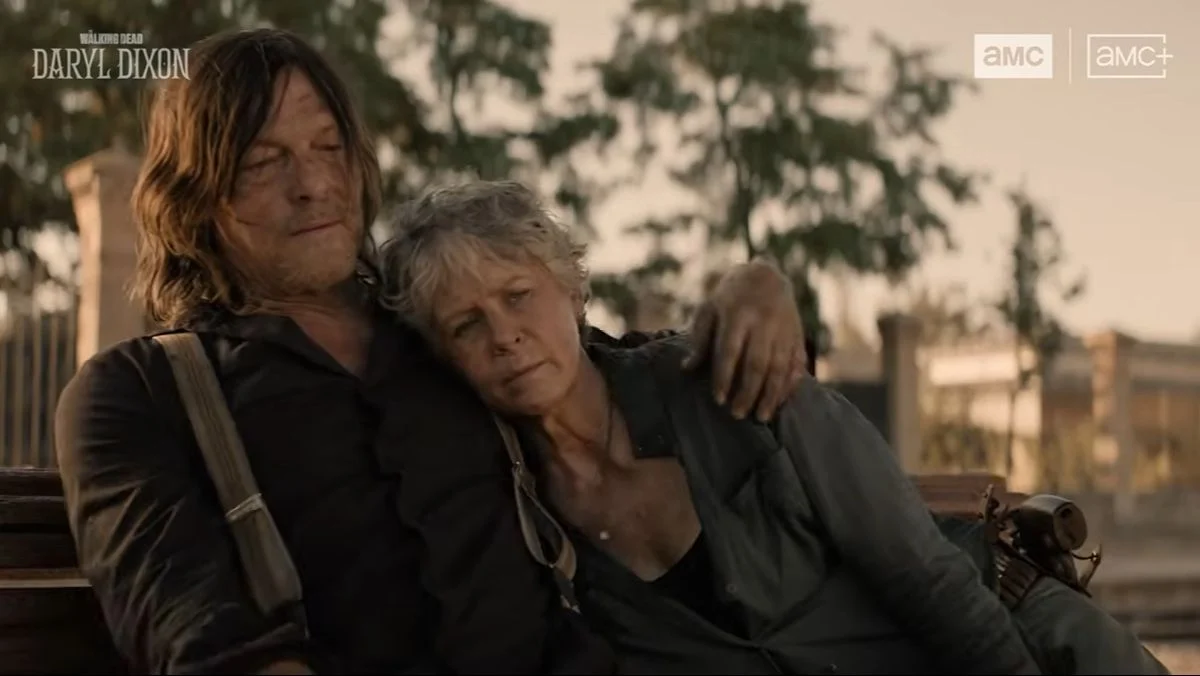
The sprawling universe of The Walking Dead is bracing for another monumental milestone as AMC officially confirms that its hit international spinoff, The Walking Dead: Daryl Dixon, will conclude with an upcoming fourth season. Set to premiere in February 2027, the final chapter promises to bring the harrowing transatlantic saga of fan-favorite survivors Daryl Dixon (Norman Reedus) and Carol Peletier (Melissa McBride) to a definitive and emotionally charged close.
The announcement arrived alongside a sweeping teaser trailer released by AMC. The promotional footage serves not only as a preview of the high-stakes dangers awaiting the duo in Season 4—where their primary objective remains finding a way back to American soil amidst relentless chaos—but also as a sweeping retrospective of their unbreakable bond. Spanning well over a decade of television history, the partnership between Daryl and Carol has evolved from a chance meeting in the ruined landscape of the Georgia apocalypse into one of the most enduring, deeply resonant friendships in modern pop culture.
Alongside the Season 4 premiere window, AMC announced a major streaming consolidation for franchise enthusiasts. Beginning January 7, all preceding seasons of the flagship The Walking Dead series will become available to stream on AMC+, uniting the original mothership series with its modern spinoffs under one digital roof ahead of Daryl and Carol’s grand finale.
Chronology: A Journey from Georgia to Europe
To fully appreciate the weight of The Walking Dead: Daryl Dixon coming to a close, one must retrace the remarkable, cross-country timeline that brought Norman Reedus and Melissa McBride’s characters to this juncture.
The Early Days in Georgia (2010–2012)
When viewers were first introduced to Daryl and Carol in the earliest seasons of The Walking Dead, they were vastly different people surviving in a hostile Georgia wilderness. Carol began her journey as a timid, deeply traumatized woman weighed down by domestic abuse, whose life was subsequently shattered by the tragic loss of her young daughter, Sophia. Daryl, meanwhile, was introduced as a volatile, fiercely independent redneck tracker who initially kept the core group at arm’s length.

However, shared grief and mutual survival forged an unexpected alliance. Through the horrors of Hershel’s farm and the brutal confines of the abandoned prison, Carol and Daryl became each other’s emotional anchors. Their transformation from solitary survivors into a surrogate family defined the emotional core of the series’ golden era.
The Widening Gyre and Separation (2013–2022)
As the timeline advanced through the Governor’s assaults, the destruction of Alexandria, and the Whisperer War, Carol and Daryl weathered unspeakable losses. Yet, their loyalty never wavered. They were the constants in a constantly shifting apocalyptic landscape. When the flagship series concluded its historic 11-season run in November 2022, it left behind an open-ended future for the duo, teasing that their stories were far from finished.
The European Odyssey (2023–2026)
The Walking Dead: Daryl Dixon took the franchise in a bold, unprecedented direction by transporting Daryl across the Atlantic Ocean to a post-apocalyptic France. Tasked with navigating foreign terrain, fractured factions, and a new breed of aggressive walkers, Daryl found himself embroiled in a complex mission involving a mysterious boy named Laurent and a religious movement known as the Union of Hope.
By the time Carol tracked him down, bridging the massive geographical divide in subsequent seasons, the series transformed into an epic international adventure. Now, as the narrative prepares to pivot into its fourth and final season, the central conflict pulls the narrative full circle: a desperate fight to navigate the perils of the old world and find their way home to America.
Supporting Data and Franchise Integration
AMC’s strategic rollout for the conclusion of Daryl Dixon highlights the network’s ongoing effort to curate and capitalize on its prestige horror library. The decision to drop the entirety of the original The Walking Dead series onto AMC+ starting January 7, 2027—just weeks before the February premiere of Daryl Dixon Season 4—is a calculated move to drive platform engagement.
- Franchise Timeline: Spanning from the 2010 series premiere of the original show to the 2027 conclusion of Daryl Dixon, the continuous narrative arc of Carol and Daryl will have spanned 17 years of television production.
- Platform Synergy: AMC+ continues to serve as the definitive home for the expanding TWDU (The Walking Dead Universe), housing other recent spinoffs such as The Walking Dead: Dead City and The Walking Dead: The Ones Who Live.
- Geographic Scope: Season 4 marks the culmination of a narrative that expanded the franchise’s footprint from regional American states (Georgia, Virginia) to Western Europe (France), showcasing how the global pandemic affected distinct cultures differently.
Official Responses and Creative Direction
While AMC has kept specific plot details for the final season under strict wraps, the creative team has frequently spoken about the unique nature of the Daryl and Carol dynamic. Showrunners and network executives have consistently emphasized that the international setting was chosen not merely for visual spectacle, but to push the characters outside their comfort zones.
In interviews discussing the evolution of the spinoff, Norman Reedus and Melissa McBride have often credited the longevity of their characters to the unspoken trust between the actors and the deep emotional authenticity written into their scripts. The Season 4 teaser trailer leans heavily into this sentiment, utilizing archival footage from their earliest days in Georgia alongside sweeping cinematic shots of their European trials.
Although AMC has framed Season 4 as the conclusion for The Walking Dead: Daryl Dixon, executives and producers have repeatedly noted that the broader Walking Dead Universe remains a living, breathing entity. The teaser’s concluding tone hints that while this specific chapter is drawing to a close, the legacies of Carol Peletier and Daryl Dixon are woven permanently into the fabric of the franchise, leaving the door open for potential future appearances or crossovers within the expanding television landscape.
Implications for the Future of the Walking Dead Universe
The conclusion of The Walking Dead: Daryl Dixon in February 2027 marks the end of a very specific, foundational era for AMC’s premier franchise. When The Walking Dead first premiered, serialized prestige horror on basic cable was an unproven commodity. Over a decade and a half later, the universe has birthed multiple iterations, changing the landscape of modern television production.
- The Shift Toward Limited Spinoffs: Unlike the protracted multi-season runs of the past, AMC’s modern approach favors tightly plotted, finite narrative arcs (as seen with The Ones Who Live and now concluding with Daryl Dixon). This allows creators to deliver cinematic conclusions without wearing out the premise.
- Streaming Strategy: By centralizing the entire franchise on AMC+, the network is cementing its dedicated streaming app as an essential destination for horror and drama fans, signaling a transition away from traditional broadcast dependencies.
- The End of an Original Guard: With Daryl and Carol’s story reaching its terminus, the universe is officially stepping away from its direct, original 2010 roots. How AMC chooses to sustain the franchise moving forward—whether through new generations of survivors or alternative geographical settings—will depend heavily on how satisfyingly this final season resolves the emotional threads woven over the last seventeen years.
As the countdown to February 2027 begins, fans of the apocalypse have a clear roadmap: revisit the roots of the outbreak on AMC+, re-experience the losses and triumphs of the Georgia fields, and prepare to say goodbye to two of television’s most resilient survivors as they attempt one final journey home.
