
The Backbone of Sound: A Comprehensive Guide to XLR and Jack Cables in Modern Production

In the intricate world of film, video, and audio production, the invisible threads that bind creative vision to technical execution are, quite literally, cables. While the focus of any production often centers on the lens, the camera sensor, or the performance of the actors, the auditory experience—which accounts for 50% of the cinematic impact—is entirely dependent on the integrity of the signal chain. At the heart of this chain lie two ubiquitous yet fundamentally different connectors: the XLR and the Jack.
Whether you are a seasoned field recordist navigating a chaotic set or an aspiring sound engineer building your first home studio, understanding the distinction between these two standards is not just technical knowledge; it is a prerequisite for professional survival.
The Role of Audio Cables: Understanding the Signal Chain
Audio cables serve as the arteries of any production environment. Their primary mandate is the lossless transmission of electromagnetic signals from a source (such as a shotgun microphone or a synthesizer) to a destination (such as a field recorder, an audio interface, or a mixing console).
However, the "how" of this transmission varies wildly depending on the cable architecture. Factors like impedance, shielding, and connector design dictate not only the clarity of the audio but also its resilience against the harsh, electrically noisy environments of modern production. To understand why we use one cable over the other, we must examine the history, the physics, and the practical implications of these two essential technologies.
A Chronological Perspective: From Telegraphs to Industry Standards
The history of audio connectivity is a timeline of evolving signal requirements.
The Evolution of the Jack (The 19th-Century Legacy)
The "Jack" connector—specifically the TRS (Tip-Ring-Sleeve) and TS (Tip-Sleeve) variants—has roots that trace back to the early 19th century. Originally designed for manual telephone switchboards, these connectors were engineered for rapid, frequent patching. As electrical engineering advanced, these robust, simple connectors were adapted for audio transmission. By the mid-20th century, the 1/4-inch jack had become the universal language of musical instruments, particularly electric guitars and amplifiers, cementing its place in the consumer and semi-pro audio ecosystem.

The Rise of the XLR (The Professional Benchmark)
In contrast, the XLR connector was born from a need for precision. Developed in the 1940s by James H. Cannon, the founder of Cannon Electric, the XLR (originally the Cannon X series, later adding a Latch and Rubber compound) was designed to address the shortcomings of earlier, less reliable connectors. By the 1950s, the three-pin design had become the industry gold standard for high-fidelity audio, specifically for the burgeoning television and broadcast industries. Its locking mechanism and balanced architecture made it the clear choice for mission-critical recording.
The Physics of Sound: Balanced vs. Unbalanced
The core technical distinction between XLR and Jack cables lies in their electrical architecture.
XLR: The Power of Balanced Signals
An XLR cable is a "balanced" cable. It utilizes three pins: Pin 1 (Ground), Pin 2 (Positive/Hot), and Pin 3 (Negative/Cold). The magic happens through a process called "Common-Mode Rejection." The signal is sent down both the positive and negative wires; however, the signal on the negative wire is phase-inverted.
When the audio reaches the destination, the receiving device flips the negative signal back into phase. Because any external electromagnetic interference (EMI) or radio-frequency interference (RFI) typically hits both wires equally, flipping the phase cancels out the noise while reinforcing the original audio signal. This makes XLR cables nearly immune to the hum and buzz that plagues long cable runs.
Jack: The Simplicity of Unbalanced Signals
Most standard 1/4-inch or 3.5mm Jack cables are "unbalanced." They consist of a signal wire and a ground wire. Without the phase-cancellation mechanism of the XLR, these cables act as antennas, susceptible to picking up noise from nearby power lines, Wi-Fi routers, or lighting ballasts. While they are perfectly sufficient for short connections—such as plugging a guitar into an amplifier or headphones into a laptop—they struggle over distances, usually becoming noisy after exceeding 15 to 20 feet.
Supporting Data: When to Use What
| Feature | XLR (Balanced) | Jack (Unbalanced) |
|---|---|---|
| Primary Use | Professional Audio/Microphones | Consumer/Instrument/Headphones |
| Noise Rejection | High (Common-Mode Rejection) | Low |
| Durability | High (Locking Mechanism) | Moderate (Friction Fit) |
| Signal Distance | Long runs (up to 100m+) | Short runs (under 5m) |
| Complexity | Higher | Lower |
The Case for XLR in Filmmaking
In the high-stakes environment of a film set, there is no room for "good enough." XLR cables are mandatory for capturing location dialogue. A boom operator might be running 30 feet of cable from a shotgun mic to a bag-mounted recorder; in this scenario, an unbalanced cable would result in an unusable, buzzing track. Furthermore, the locking mechanism of the XLR ensures that a stray foot or a sudden movement doesn’t disconnect the signal at a critical moment during a take.

The Case for Jack in Production
Despite the dominance of XLR, the Jack connector remains vital. It is the interface for most headphones used on set, the standard for portable devices, and the go-to for synthesizers and electric instruments. When recording a line-level signal from a keyboard into an interface, a 1/4-inch TRS cable is often the most efficient choice, provided the distance is short.
Official Industry Perspectives: The Experts Weigh In
Industry professionals, from location sound mixers to studio technicians, maintain a unified consensus: XLR is for the signal path; Jack is for the monitoring path.
"The reliability of an XLR connection is what keeps the production moving," notes a leading location sound recordist. "We use specialized, high-shielding XLR cables to ensure that we are capturing the raw performance without interference. If the cable fails, the production stops. That’s why we prioritize the locking, balanced nature of XLR."
On the other hand, manufacturers of audio gear note that the miniaturization of consumer technology—like smartphones and DSLR cameras—has kept the 3.5mm jack relevant. "While XLR is the king of the studio, the 3.5mm TRS connector allows for the portability that modern content creators require," states a spokesperson for a major audio interface manufacturer. "The key is understanding the limitations: if you are going into an XLR input from a 3.5mm device, you must use a proper DI (Direct Injection) box to ensure signal integrity."
Implications for Modern Production
The choice of cable impacts more than just the audio quality; it dictates the workflow and the budget.
The Cost of Reliability
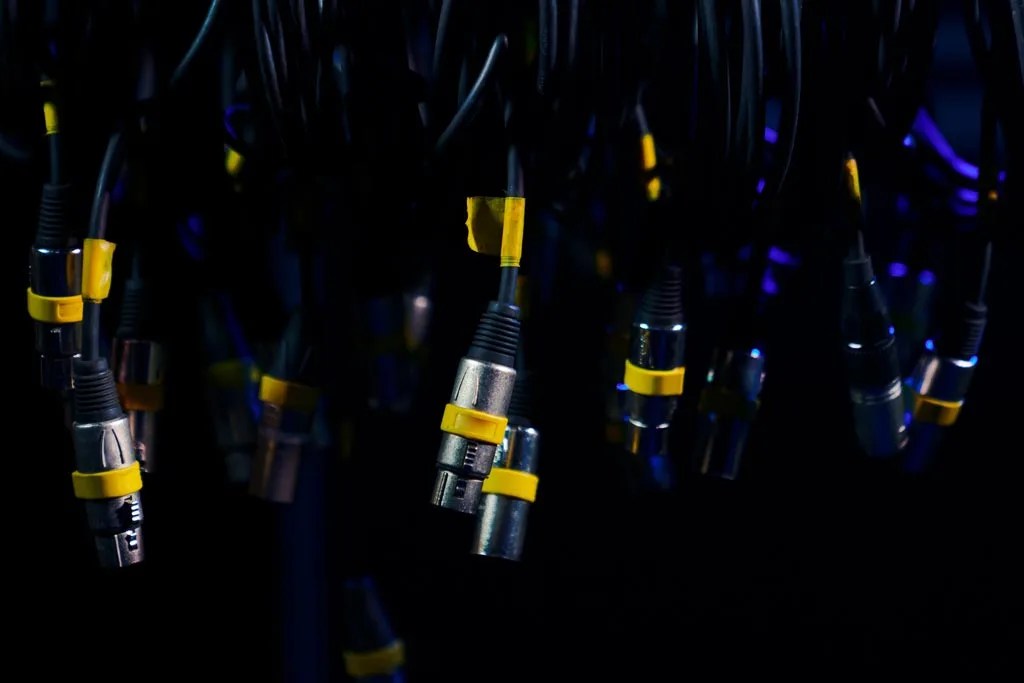
Investing in high-quality XLR cables is an insurance policy for a production. Cheaper, thin-shielded XLR cables can lead to "intermittent shorts" which are notoriously difficult to diagnose in the field. Professional production teams often allocate a significant portion of their gear budget to high-end cabling (such as those from Canare or Mogami), knowing that these cables will last for years and protect the most expensive assets in their kit—the microphones.
Troubleshooting and Signal Flow
A common point of failure on set occurs when an operator attempts to convert an unbalanced jack signal to a balanced XLR input without proper impedance matching. This can result in a significant drop in volume, an increase in noise floor, or even the potential for equipment damage if phantom power (48V) is accidentally applied to a device not designed for it.
The professional standard is to always use a dedicated adapter or a DI box when transitioning between these two formats. This ensures that the signal remains clean, the levels are correctly matched, and the delicate pre-amps of the camera or recorder are protected.
Conclusion: Mastering the Connection
The debate between XLR and Jack is not a competition; it is a classification of tools. One is built for the rigors of professional transmission—noise-free, secure, and long-range—while the other is designed for the versatility and compactness required for consumer gear and short-distance instrument patching.
As you advance in your career in film and audio production, remember that the most "pro" move you can make is to respect the signal chain. By understanding the electrical differences between these two vital connectors, you move from merely plugging things in to engineering a sound system that is resilient, reliable, and ready for the demands of any project. Whether you are shielding a signal against the hum of a studio or simply ensuring your headphones don’t pop out during a final mix, your knowledge of these cables is the silent hero of your production.
