
Sony Unveils the ECM-AX10: The World’s First Smartphone-Centric Eclipsa Audio Microphone Aimed at Reimagining Mobile Spatial Content Creation
Main Facts
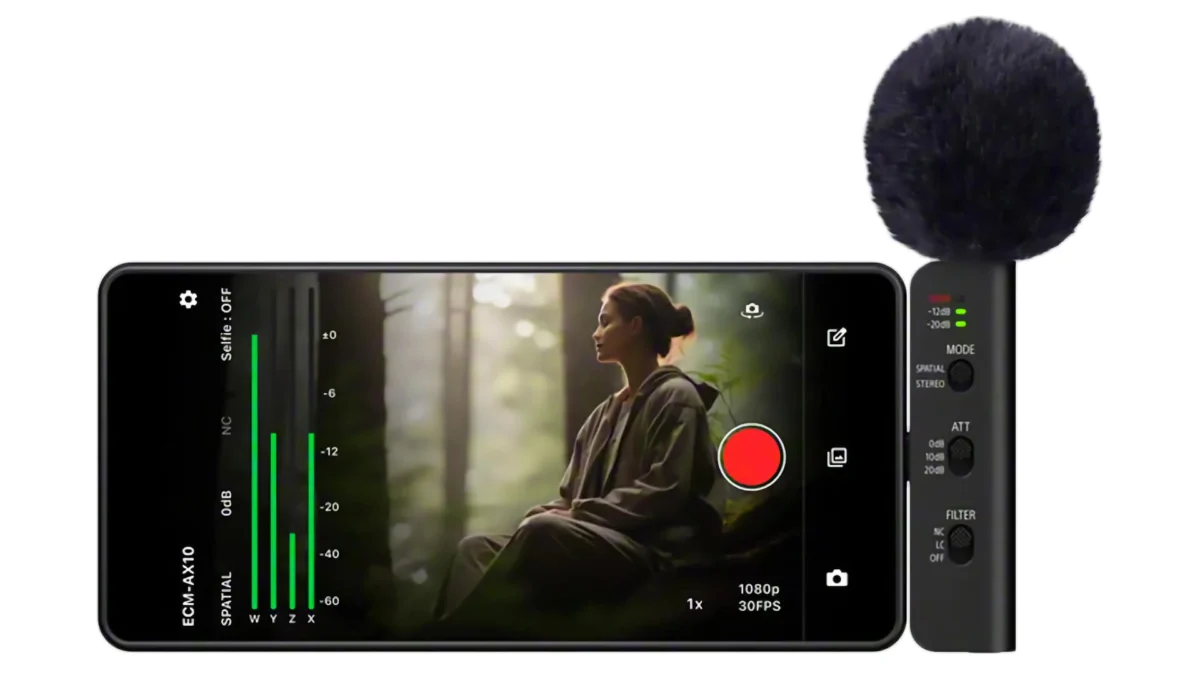
Sony has officially announced the ECM-AX10, billed as the world’s first smartphone-oriented microphone certified for Eclipsa Audio. Positioned as a compact, powerful, and highly portable USB-C spatial audio microphone, the device targets mobile filmmakers, vloggers, and modern content creators who want to capture immersive, multi-dimensional sound without dragging around cumbersome traditional field-recording rigs.
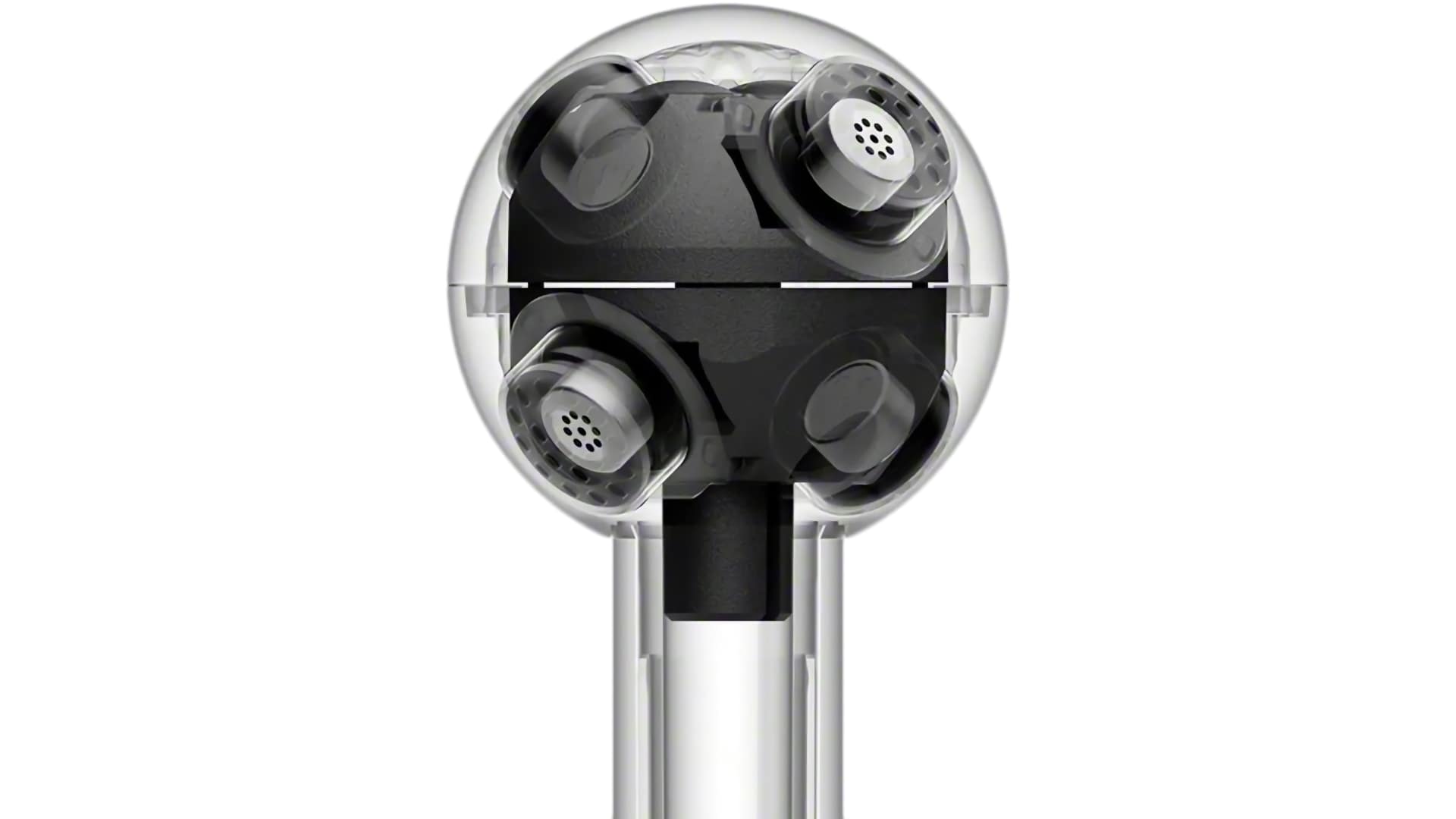
Priced at $249 and currently available for pre-sale, the ECM-AX10 is built around a newly developed spherical microphone module containing four high-performance omnidirectional capsules. These capsules feed directly into advanced spatial audio processing software that accurately recreates a sense of physical space, source direction, and distance.
Weighing in at a feather-light 24 grams (0.85 ounces), the microphone is engineered to mount seamlessly onto compatible smartphones via a direct USB-C connection, adding virtually no noticeable bulk or balance issues to a mobile handheld rig.
The microphone features three distinct recording modes to accommodate various production workflows:
- Ambisonics Recording: Designed to pair with Sony’s Spatial Audio Video Tool app, this mode allows creators to capture and publish content natively in Eclipsa Audio—the emerging open-source spatial audio format spearheaded by tech giants Google and Samsung.
- Binaural Recording: Leveraging Sony’s proprietary spatial audio technology (famously utilized in its 360 Reality Audio ecosystem), this mode provides immersive 3D audio experiences optimized for headphones in environments where Eclipsa Audio format support is unavailable.
- Traditional Stereo Recording: For standard applications, the microphone reverts to conventional stereo recording, ensuring complete compatibility with general video-capture and audio-recording apps across mobile platforms.
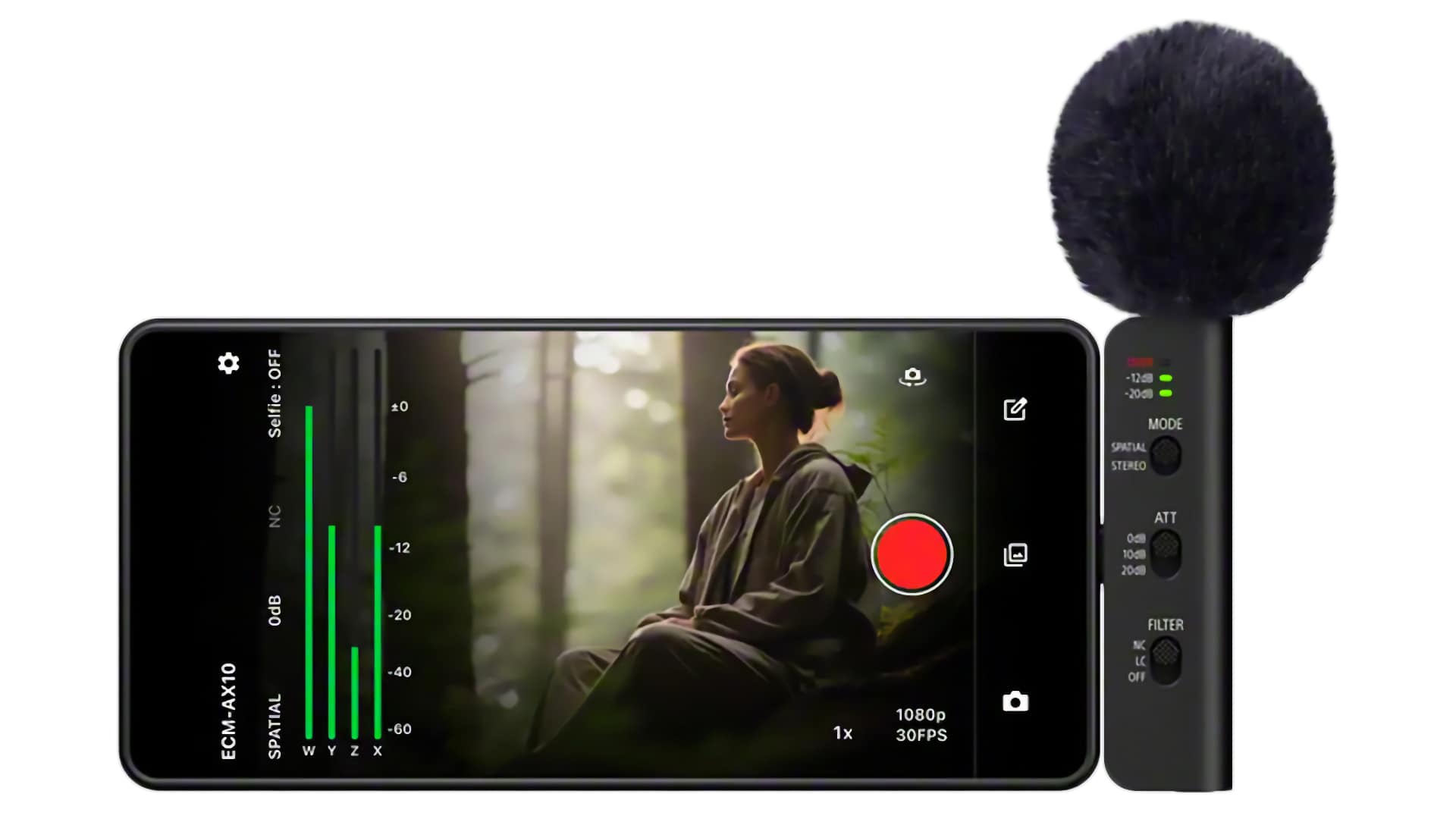
Alongside the hardware, Sony is launching the Spatial Audio Video Tool application, which enables users to shoot, review, perform basic edits, and export professional-grade spatial audio video directly on their smartphones. Sound quality tuning for the microphone was overseen by Sony PCL, a specialized entity within the broader Sony Group.
Chronology
The journey toward mobile-first spatial audio hardware has been a gradual evolution, heavily influenced by the convergence of mobile computing power, changing consumption habits, and software standardization efforts across the tech industry.
- The Rise of Immersive Audio Formats: For years, spatial and immersive audio formats—such as Dolby Atmos—dominated high-end cinema and dedicated multi-channel home theater installations. However, capturing true spatial sound required expensive Ambisonic microphone arrays, multi-track field recorders, and complex post-production digital audio workstation (DAW) workflows that were entirely inaccessible to casual creators and solo smartphone vloggers.
- The Eclipsa Audio Partnership: Recognizing a massive gap in the market for an open, royalty-free alternative to proprietary immersive formats, Google and Samsung joined forces to develop and promote Eclipsa Audio. Designed to take on industry giants like Dolby, Eclipsa aimed to standardize spatial sound for online video platforms, particularly YouTube. Yet, industry analysts noted a significant bottleneck: while software ecosystems were evolving to support the format, there was a severe lack of affordable, prosumer-grade hardware capable of capturing Eclipsa-compatible spatial audio natively on portable devices.
- Sony’s Engineering and Tuning Phase: Behind closed doors, Sony—leveraging its extensive history in audio engineering and consumer electronics—began developing a miniaturized spherical module capable of housing a four-capsule array within a sub-30-gram footprint. Sony PCL was brought in to fine-tune the acoustic signatures, ensuring that the miniature omnidirectional capsules could faithfully separate sound stages in real time.
- Product Announcement and Pre-Sale Launch: Sony officially pulled back the curtain on the ECM-AX10, positioning it as the missing hardware link for the Eclipsa Audio ecosystem. The company opened pre-orders at an MSRP of $249, signaling its intent to capture the booming mobile creator economy.
Supporting Data
To understand the engineering marvel and market positioning of the Sony ECM-AX10, it is helpful to examine the specifications and structural metrics that define the device:
- Form Factor: Spherical microphone module housing a four-capsule array.
- Capsule Configuration: Four omnidirectional capsules capturing discrete directional vectors for spatial processing.
- Connectivity: Direct plug-and-play USB-C connection designed for modern smartphones and mobile rigs.
- Weight: Approximately 24 grams (0.85 oz), ensuring high stability when mounted on mobile devices or gimbals.
- Price Point: $249 USD (available for pre-order).
- Supported Audio Formats:
- Eclipsa Audio (via Ambisonics mode and Sony’s Spatial Audio Video Tool app).
- Binaural Audio (powered by Sony’s proprietary 360 Reality Audio algorithms).
- Standard Stereo.
- Ecosystem Compatibility: Optimized for YouTube publishing via Eclipsa Audio standards; works alongside Google and Samsung mobile architectures.
- Companion Software: Spatial Audio Video Tool app for shooting, monitoring, editing, and exporting spatial video on mobile.
Official Responses and Industry Perspectives
The announcement of the ECM-AX10 has sparked considerable discussion among audio engineers, content creators, and tech commentators regarding the future of mobile media production.
Industry stakeholders and executives from the hardware and software sectors have long pointed out that spatial audio adoption on consumer platforms has been stifled primarily by hardware scarcity. Representatives from Google and Samsung have previously emphasized that while consumers are increasingly consuming immersive media through compatible headphones and earbuds, the creation pipeline has historically remained restricted to high-end studios equipped with multi-thousand-dollar Ambisonic microphone systems.
By introducing a $249 mid-budget option, Sony is directly addressing this hurdle. In official product briefings, Sony highlighted that the ECM-AX10 allows users to complete an entire production workflow—from acoustic capture to final export—exclusively on a smartphone.
However, industry analysts remain cautiously optimistic. While the hardware specs are impressive, market researchers note that consumer demand for user-generated spatial video content on platforms like YouTube is still in its infancy. Creators accustomed to traditional mono or stereo vlogging audio must be convinced that the added complexity and editing steps of spatial audio yield enough viewer engagement to justify upgrading their kit.
Sony’s collaboration with Sony PCL for acoustic tuning has been widely praised by early audio reviewers, who note that the company’s deep heritage in microphone design—dating back to legendary studio and broadcast mics—lends immediate credibility to the ECM-AX10’s sonic performance.
Implications
The launch of the Sony ECM-AX10 carries profound implications for the creator economy, the ongoing format wars in immersive audio, and the future of mobile journalism and filmmaking.
1. Democratization of Immersive Content Creation
For years, creating 3D or spatial audio required specialized knowledge of Ambisonic B-format translation, spatial panners, and multi-channel mixing. By integrating four omnidirectional capsules into a device that weighs less than an ounce and plugs directly into a phone’s USB-C port, Sony has radically lowered the barrier to entry. Mobile journalists, travel vloggers, and independent filmmakers can now capture the ambient atmosphere of a bustling street market, a live musical performance, or a sporting event with authentic directional cues, all without carrying external battery packs, bulky recorders, or XLR cables.
2. A Vital Catalyst for the Eclipsa Audio Ecosystem
The success of open-source standards like Google and Samsung’s Eclipsa Audio relies entirely on a chicken-and-egg dynamic: platforms will not heavily push formats if creators aren’t making content, and creators won’t make content if the hardware is too expensive or difficult to use. As the world’s first Eclipsa Audio-certified smartphone microphone, the ECM-AX10 acts as the crucial spark needed to kickstart a flywheel of user-generated spatial content. If creators adopt the hardware and flood platforms like YouTube with Eclipsa-formatted videos, consumer awareness and platform support will naturally accelerate.
3. Shifting Consumer Expectations in Mobile Audio
As smartphones increasingly replace traditional cameras for daily content creation, the expectations for mobile audio quality are rising exponentially. Viewers are no longer forgiving of muddy, compressed mono audio captured by built-in phone microphones, especially as spatial headphone adoption continues to surge globally. Devices like the ECM-AX10 signal a definitive shift toward spatial-first mobile storytelling, where audio is no longer treated as an afterthought, but as an active, immersive dimension of the viewing experience.
Conclusion
Sony’s ECM-AX10 represents a bold, calculated step into the next generation of mobile content creation. By bridging the gap between professional Ambisonic technology and consumer-friendly USB-C hardware, Sony has provided the market with the tool it desperately needed to make spatial audio practical, affordable, and mobile. Whether the creator community embraces spatial video en masse remains to be seen, but with a $249 price tag and seamless YouTube Eclipsa Audio integration, the ECM-AX10 gives mobile filmmakers every reason to start exploring the third dimension of sound.
