Critical Darling, Box Office Ghost Town: Why DreamWorks’ Forgotten Island Stumbled in Theaters
By Film Industry Desk Published: September 2026
Main Facts
The modern theatrical landscape continues to present a perplexing paradox: critically adored original animation is frequently struggling to capture the commercial momentum necessary to turn a profit on the big screen. The latest casualty of this industry-wide trend is DreamWorks Animation’s ForgottenIsland. Despite launching to widespread critical acclaim and an exceptional 95% approval rating on Rotten Tomatoes—bolstered by an equally enthusiastic 96% audience score—the film cratered during its domestic and international opening weekend.
Distributed by Universal Pictures, Forgotten Island managed a paltry $12.8 million domestically in its debut, landing flatly in fifth place at the weekend box office. Overseas markets failed to rescue the picture, adding a mere $7.8 million for a dismal $20.6 million global opening.
While the film benefits from a relatively controlled, mid-tier production budget of $80 million—a departure from the bloated $150–$200 million price tags typically attached to major studio tentpoles—its opening weekend figures fall dangerously short of financial viability. For an original animated feature to achieve true profitability, industry standards dictate that it must gross roughly two and a half to three times its production budget globally, pushing Forgotten Island’s ultimate target destination closer to the $200 million mark.
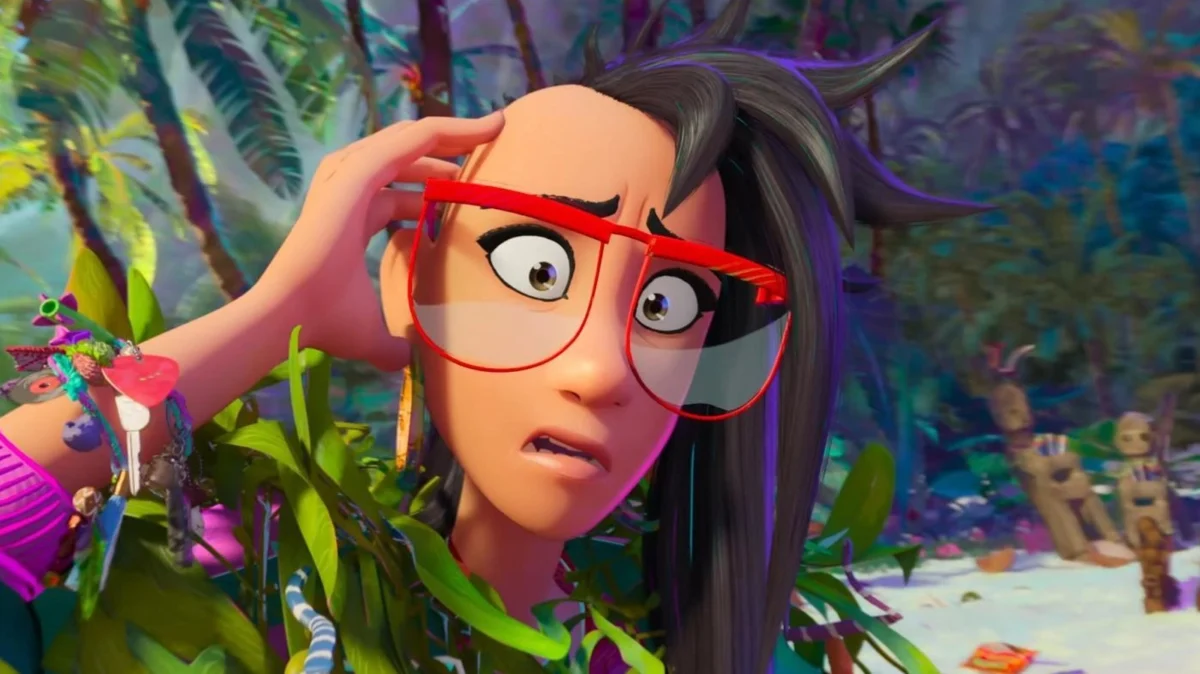
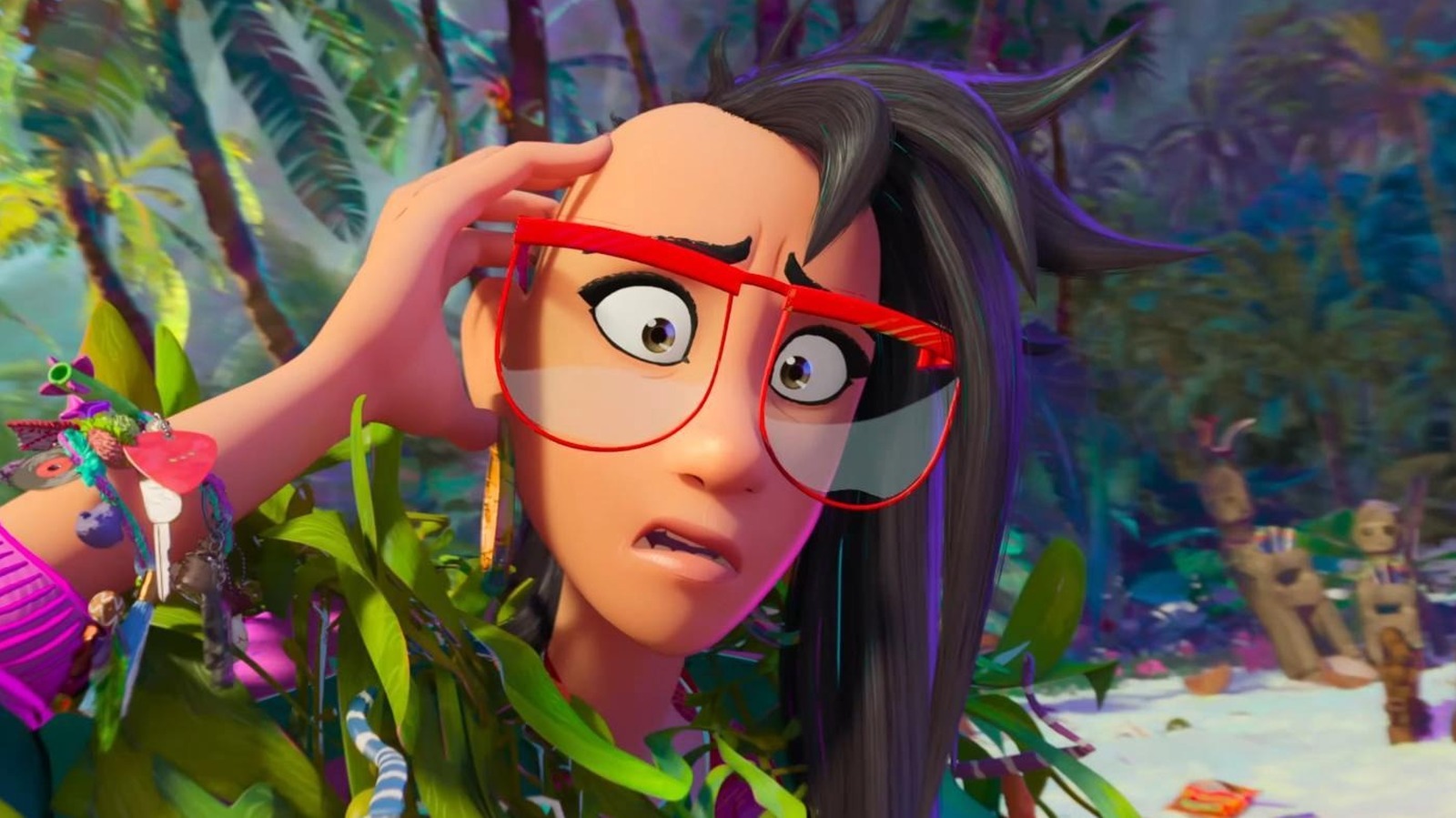
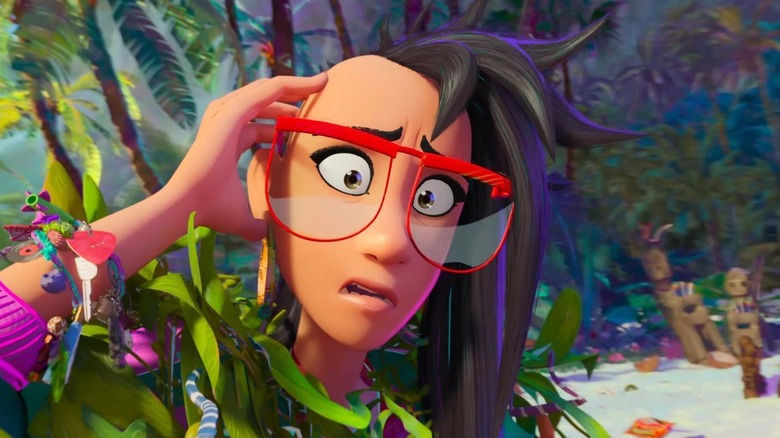
Directed by the acclaimed filmmaking duo Joel Crawford and Januel Mercado, whose previous collaboration Puss in Boots: The Last Wish proved to be a historic box office anomaly, Forgotten Island blends emotional resonance with rich cultural mythology. The film follows two best friends, Jo (voiced by Grammy-winning artist H.E.R.) and Raissa (Liza Soberano), whose final night together is interrupted by a mysterious portal. This gateway transports them to the mythical, fantastical island of Nakali, a realm filled with the magical creatures rooted in the Filipino folklore of their upbringing.
Yet, stellar word-of-mouth, star-studded voice casting, and top-tier creative direction were not enough to pierce through a crowded September box office dominated by nostalgic rereleases, horror hits, and live-action counter-programming.
Chronology of the Release and Weekend Standings
To understand the scope of Forgotten Island’s underperformance, one must examine the competitive topography of the weekend box office.
The Weekend Battleground: Universal and DreamWorks targeted a mid-September release window, a historically tricky corridor that falls between the tail end of the lucrative summer blockbuster season and the pre-holiday autumn rush.
The Competition: The weekend charts presented a chaotic mix of returning heavyweights and fresh live-action releases. In a surprising display of box office longevity, Marvel Studios’ Avengers: Endgame recaptured the imagination of moviegoers, climbing back to the top of the charts a full seven years after its initial historic run. Meanwhile, Zach Cregger’s horror-thriller Resident Evil continued to bleed ticket sales from competing demographics following a dominant opening frame.
Newcomer Struggles: Among fresh releases, Forgotten Island found itself thoroughly outpaced. Robert Pattinson’s vehicle Primetime captured the fourth-place spot with a $19.1 million domestic haul, while Brad Pitt’s rugged survival thriller Heart of the Beast claimed higher ground with a $20 million opening.
The Final Tally: DreamWorks’ latest offering was relegated to fifth place domestically with its $12.8 million frame, rendering its global trajectory an uphill battle from day one.
Supporting Data and Historical Context
The plight of Forgotten Island is not an isolated incident; rather, it is the continuation of a worrying systemic pattern plaguing original animated features in the post-pandemic box office era.
The Original Animation Curse
While branded intellectual property, sequels, and cinematic universes routinely print money—evidenced by the billion-dollar dominance of franchises like Inside Out, Despicable Me, and Spider-Verse—original cinematic animation has become a high-stakes gamble.
Pixar’s Struggles: Pixar Animation Studios has fought a similar war. Aside from the miraculous word-of-mouth legs demonstrated by Elemental in 2023, original Pixar concepts have faced severe theatrical headwinds. Notably, Elio suffered a heavy box office rejection in 2025, forcing Disney to reevaluate how it introduces non-franchise concepts to families accustomed to streaming platforms.
The Disney Animation Front: Walt Disney Animation Studios experienced parallel pain points with the chilly reception of Strange World in 2022 and the underperformance of Wish in 2023.
Broader Industry Trends: Even outside the traditional studio duopoly, original bets like GOAT managed a modest $195 million worldwide earlier this year, signaling that audiences are increasingly hesitant to invest time and capital into unfamiliar cinematic universes.
The "Legging Out" Precedent
DreamWorks Animation is no stranger to miraculous box office resurrections. Universal Pictures has twice demonstrated that a slow-starting animated feature can overcome a dismal opening weekend through sheer exceptional word-of-mouth.
Puss in Boots: The Last Wish (2022/2023): The film opened to an unassuming $12.4 million domestically in December 2022. However, driven by universal critical adoration and viral social media praise, it "legged out" through the winter months to accumulate an astonishing $480.4 million worldwide.
Migration (2023/2024): Mirroring its predecessor, Universal’s Migration also opened to a soft $12.4 million in December 2023, eventually climbing past the $300 million mark globally.
The Seasonal Disadvantage
While Puss in Boots and Migration pulled off historic box office miracles, analysts point out a crucial distinction: timing. Both films enjoyed a December release date, capitalising on the notoriously "leggy" holiday corridor where children are out of school for weeks and January provides an open runway with minimal major competition.
In contrast, Forgotten Island entered theaters in September, a month historically characterized by the return-to-school slump and significantly shorter theatrical lifespans before major autumn and holiday blockbusters crowd the marquee.
Official Responses and Industry Reactions
As the box office numbers solidified, executives and industry observers have begun weighing in on the implications of the film’s theatrical stumble.
Neither Universal Pictures nor DreamWorks Animation has issued a formal panic statement, largely due to the studio’s measured financial exposure. By keeping the production budget pegged at a disciplined $80 million—significantly lower than the $150 million-plus price tags usually associated with computer-animated event films—the studio mitigated catastrophic financial loss.
However, anonymous studio insiders have expressed frustration regarding shifting consumer habits. One prominent distribution analyst noted:
"When you deliver a film that achieves a 95% on Rotten Tomatoes and genuinely resonates with families and cultural communities alike, you expect the audience to show up on opening weekend. Instead, theatrical moviegoers have been conditioned to treat original animation as ‘wait-for-streaming’ content, while saving their hard-earned ticket dollars exclusively for known brands and sequels."
On social media, filmmakers and animation guilds have rallied behind Forgotten Island, utilizing platforms like X (formerly Twitter) and Instagram to beg audiences to support the film in theaters before it transitions to PVOD (Premium Video on Demand). Directors Joel Crawford and Januel Mercado have emphasized the profound cultural significance of bringing Filipino folklore to a global stage through high-end studio animation, a sentiment echoed by voice stars H.E.R. and Liza Soberano.
Implications for the Future of Original Animation
The commercial failure of Forgotten Island—despite its elite artistic quality—sends shockwaves through Hollywood’s animation pipeline, carrying severe long-term consequences for the medium.
1. Risk Aversion at Major Studios
When pristine, critically beloved original films fail to recoup their production costs, studio boardrooms take immediate notice. Financial controllers are increasingly likely to slash greenlights for original concepts, pushing creative executives to double down on safe bets, reboots, legacy sequels, and established intellectual property. If the choice is between funding a risky, culturally rich original myth like Nakali or greenlighting The Bad Guys 3 or Shrek 5, risk-averse studio heads will invariably choose the franchise.
2. The Direct-to-Streaming Threat
Theatrical box office failures for original films accelerate the narrative that family audiences no longer view animation as an essential theatrical event unless it features familiar characters. This perception risks pushing future mid-budget original animated features straight to subscription streaming services, depriving artists of the theatrical canvas and denying audiences the shared experience of discovering new cinematic worlds on the big screen.
3. Cultural Representation in Jeopardy
Forgotten Island broke essential ground by placing Filipino culture, mythology, and modern diaspora experiences at the absolute center of a major Hollywood studio release. When these high-profile representation milestones underperform commercially, short-sighted studio executives may mistakenly attribute the failure to the subject matter rather than structural marketing challenges, release timing, or shifting consumer habits. This creates a chilling effect on future diverse storytelling initiatives within major animation houses.
The Road Ahead
Can Forgotten Island pull off a miraculous, Puss in Boots-style theatrical turnaround? Mathematically, the odds are firmly stacked against it. Needing to clear roughly $200 million globally from a $20.6 million start requires an unprecedented multiplier effect in a marketplace that moves on to the next shiny object with ruthless speed.
Nevertheless, Forgotten Island remains in theaters. For cinephiles, animation enthusiasts, and industry observers advocating for bold, original storytelling, the film stands as a tragic paradox: one of the best movies of the year, forced to fight for its very survival in a system that may not value originality until it is gone.