
Olivia Colman and Alexander Skarsgård Weave a Bizarre Tale of Romance and Satire in the Fairy-Tale Comedy Wicker
Main Facts: The Premise and Star-Studded Cast of Wicker
In a picturesque yet brutally traditional seaside village where inhabitants are identified solely by their trades, a resilient and resolutely single woman decides she has had enough of relentless local mockery. The narrative anchors itself on a brilliantly eccentric premise: when the social friction and intensely personal teasing become entirely too much to bear, the titular Fisherwoman takes matters into her own hands. Her solution? To commission a custom-made husband.
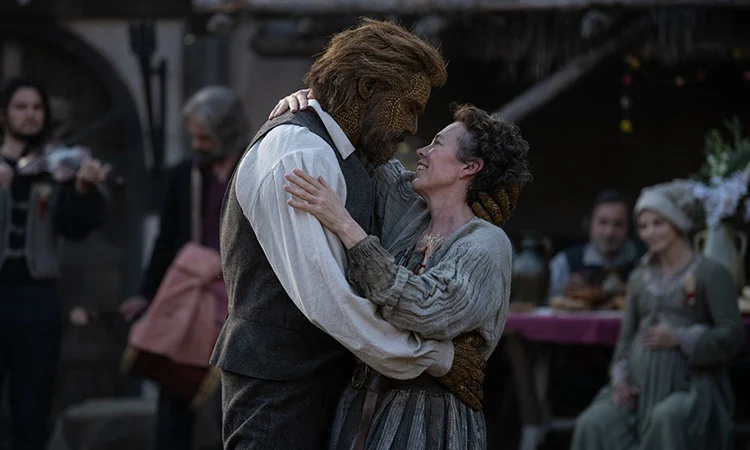
Directed with a keen eye for whimsical fantasy and sharp comedic timing, Wicker features a stellar, powerhouse cast. Academy Award winner Olivia Colman steps into the role of Fisherwoman, anchoring the film with her signature emotional depth and comedic dexterity. She is joined by Emmy Award winner Peter Dinklage, who plays the village’s resident basket maker—a flamboyant, solitary outcast whose artistic craftsmanship makes the entire bizarre endeavor possible. Meanwhile, global heartthrob Alexander Skarsgård takes on the remarkably demanding and physical role of Wicker, the 100% woven man brought to life to serve as the ultimate romantic partner.
Despite initial semantic confusion with classic folk-horror tropes, Wicker bears virtually no relation to The Wicker Man legend. Instead, industry critics and early reviewers have drawn thematic and tonal comparisons to darkly funny sci-fi and romantic comedies such as Companion (2025) and I’m Your Man (2021). Blending sharp satire, romance, and bawdy humor, the film explores the boundaries of companionship, societal surveillance, and the pursuit of love in a world entirely unequipped for modern emotional nuances.
Chronology: From Custom Craftsmanship to Marital Discord
The narrative progression of Wicker unfolds across a distinct sequence of events, tracking the rapid rise and complicated fall of an unconventional union.
1. The Commission and Creation
Weary of the daily harassment regarding her solitary lifestyle and unkempt reputation, Fisherwoman approaches the town’s eccentric basket maker. Known for his flamboyant style and isolated existence, the basket maker agrees to construct a bespoke partner. For one intense month, the intricate construction of the 100% wicker husband takes place behind closed doors.
2. The Altar and Instant Harmony
Exactly one month later, the wicker man-to-be stands rigidly at the village altar. Fisherwoman’s initial shock and skepticism rapidly dissolve into unadulterated joy. She discovers that her newly fashioned husband is the absolute picture of perfection: attentive, compliant, and remarkably adept in the bedroom, quickly proving to be an exceptional partner in every conceivable way.
3. Gossip, Malice, and Mildew
Naturally, an impossible romance cannot hide for long in a claustrophobic medieval community. The couple’s unconventional domestic bliss immediately sparks localized gossip, which quickly metastasizes into malicious rumors and deep-seated suspicion. To complicate matters further, the physical realities of organic architecture begin to set in, with Wicker occasionally succumbing to a rather unfortunate, dramatic bout of mildew.
4. The Threat of Separation
As jealousy overtakes the village—bolstered by rigid social constructs and patriarchal traditions—Fisherwoman is suddenly forced to confront the heartbreaking and terrifying prospect of a life torn away from the man she has grown to deeply cherish.
Supporting Data: Production Design, Humor, and Critical Reception
Wicker operates within a carefully constructed cinematic universe, supported by high-caliber production values, nuanced performances, and a distinct comedic voice.
- World-Building: The film is set in a meticulously realized medieval-style village. Facilities are brutally basic, and social attitudes reflect a regressive historical era. Notably, traditional romantic rituals are subverted: instead of exchanging gold rings, marriages are sealed when the husband snaps a heavy metal collar around his wife’s neck. Once locked, the wife is legally and socially mandated to execute her husband’s every bidding, rendering genuine emotional equality nearly impossible.
- Special Effects and Set Design: Alexander Skarsgård’s physical portrayal of Wicker stands out as a triumph of practical design and performance art. Even when dealing with environmental hurdles like moisture and mildew, Wicker remains an intricate, visually striking creation. The village itself serves as a masterclass in atmospheric set creation.
- Humor Profile: The film leans heavily into raunchy, physical comedy without crossing entirely into explicit territory. Gags range from the structural collapse of a bed on the newlyweds’ wedding night (a recurring structural hazard) to sharp one-liners and sly references to "fornicating furniture" that consistently win over audiences.
- Standout Performances: Alongside the central trio of Colman, Dinklage, and Skarsgård, the film benefits from a series of finely tuned supporting turns. Most notably, Richard E Grant delivers an unforgettable, scene-stealing cameo that adds an extra layer of theatrical flair to the production.
Official Responses and Industry Insights
As Wicker prepares for its high-profile festival run and subsequent theatrical distribution, early industry responses highlight a fascinating tension between the film’s undeniable charm and its narrative depth.
Critics and festival programmers have widely praised the picture’s sheer audacity. The pairing of Olivia Colman and Alexander Skarsgård has been hailed by casting directors as a stroke of genius, utilizing Colman’s grounded, deeply human relatability against Skarsgård’s uncanny, inanimate-yet-all-too-human presence.
However, early critical consensus points to a lingering narrative hunger. While the film dives headfirst into fantasy, satire, and visual spectacle, reviewers have noted that when the screenplay occasionally dips its toes into heavier, more serious thematic waters regarding institutional control and female autonomy, it "hardly gets damp." Industry analysts suggest that while audiences are bound to fall in love with the picture’s unique aesthetic and comedic timing, a deeper exploration of the dark historical and folkloric elements hinted at by the title could have elevated the project from an endearing curio into an absolute masterpiece of satirical cinema.
Implications: Where Wicker Fits in Modern Cinema
The release of Wicker arrives at a fascinating cultural crossroads for cinematic romantic comedies and speculative satire. By utilizing genre-bending elements—blending historical fantasy with modern relationship anxieties—the film speaks directly to contemporary conversations surrounding artificial intimacy, social surveillance, and the lengths to which individuals will go to escape loneliness.
Furthermore, the film’s commentary on patriarchal marriage traditions—symbolized by the literal locking of the metal collar—serves as a biting critique of historical gender roles disguised as whimsical fairy-tale escapism. Even if the film occasionally pulls its punches when addressing these darker motifs, its sheer willingness to experiment with tone establishes a compelling template for future genre-blending comedies.
Screening Information
Fans eager to witness this cinematic oddity won’t have to wait long. Wicker is officially scheduled to screen at the prestigious London Film Festival on October 7, 10, and 14, before opening broadly in UK cinemas starting October 30, 2026.
