
The Architecture of Choice: Lim Hayeon’s ‘Beach Fictions’ Challenges the Narrative of Self
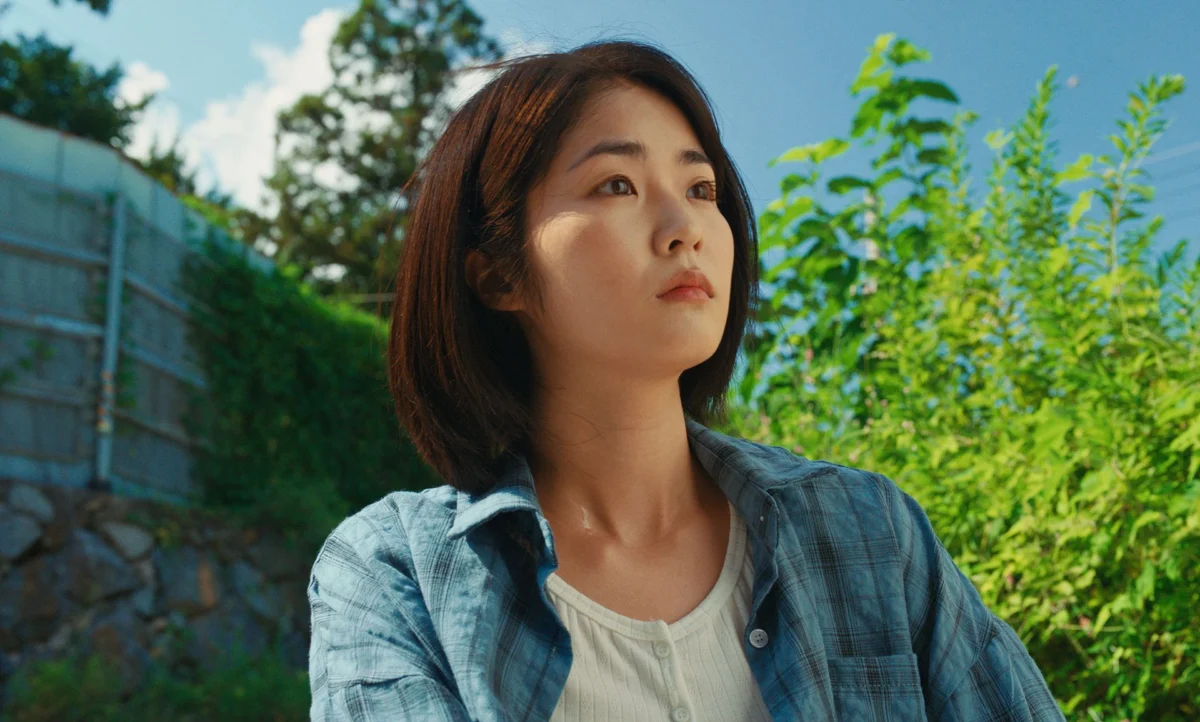
In the landscape of contemporary South Korean cinema, few directorial debuts have arrived with as much poise, philosophical curiosity, and formal confidence as Lim Hayeon’s Beach Fictions. A standout entry in the main competition at this year’s Busan Film Festival, the film acts as a cinematic diptych, presenting two diverging versions of a single day in the life of a young woman named Tae-ju.
While the film’s structural DNA—revisiting a day to explore the butterfly effects of minor decisions—invites comparisons to the works of Hong Sangsoo, particularly Right Now, Wrong Then, Lim establishes a distinct voice. At 145 minutes, Beach Fictions is a film that breathes, utilizing its extended runtime to meditate on the tension between fatalism, self-determination, and the imaginative forces that shape our identities. Produced as a graduation project by the prestigious Korean Academy of Film Arts (KAFA), it marks the arrival of a significant new talent in both writing and direction.
The Chronology of a Life: Drafts and Redrafts
Beach Fictions opens with an iridescent, almost dreamlike sequence. Cinematographer Sinuk Park captures a nocturnal Incheon, his camera gliding from a shimmering cityscape into the intimate, mood-lit hum of a restaurant. We are introduced to Tae-ju (played with remarkable, quiet intensity by Hansol Park) from behind, isolated even within a group of friends.
The narrative voiceover, provided by a novelist named Ewha (Sujeong Ye), introduces a metatextual layer immediately. As Ewha observes the superficiality of Tae-ju’s social circle, the audience is positioned as a secondary observer—a witness to a life being analyzed as it happens. The chronology of the film follows a deliberate, bifurcated path:
- The Fracture: Tae-ju suffers a series of social and personal blows—the betrayal of friends gossiping behind her back and a lackluster breakup with her casual partner, Hyun-jin.
- The Escape: Seeking solace, Tae-ju retreats to a coastal guesthouse. On the train, she encounters Ewha, who hints that Tae-ju is the living embodiment of a character she is currently penning.
- The Re-entry: The film’s second half essentially "re-boots" the narrative. Small variables are altered—a phone repair, a different social interaction, a psychic’s advice—leading to subtle, yet profound shifts in Tae-ju’s romantic and personal trajectory with a charismatic street magician named Manhyuk (Kim Wookyum).
Supporting Data: The Craft Behind the Concept
The efficacy of Beach Fictions relies heavily on its formal construction. The film’s "breezy" pacing is deceptive; it is a meticulously calibrated machine.
- Performance: Hansol Park’s portrayal of Tae-ju is a masterclass in subtlety. She manages to embody both the "fragile, will-o’-the-wisp" archetype of a character in flux and a deeply wounded, human woman asserting her own agency. Her chemistry with Kim Wookyum—who plays the polarizing Manhyuk—shifts palpably between the two narrative segments, illustrating how the same person can be perceived as a savior or a cautionary tale depending on the lens through which they are viewed.
- Audio-Visual Palette: Wonhong Lee’s jazz-infused piano score is instrumental in defining the mood. The music functions as an emotional barometer, tilting scenes from the "cozy" to the "nervy" with minimal shift in the visual frame. The sun-drenched coastal aesthetics serve as a counterpoint to the underlying melancholy, creating a sensory experience that feels both lived-in and ethereal.
- The Metatextual Bind: The script grapples with the concept of authorship. By introducing Ewha as a surrogate for the audience (and the director), Lim explores the vulnerability of young women in a society that often expects them to be "blank canvases" upon which others project their desires.
Official Responses and Festival Reception
Following its world premiere at the Busan Film Festival, Beach Fictions has garnered significant praise from critics and festival programmers alike. Its reception has been characterized by surprise at the maturity of a graduation project.
"The film is a rarity," noted one festival programmer during the event’s wrap-up. "It manages to be intellectually rigorous regarding the nature of storytelling, while remaining entirely accessible and emotionally resonant."
The primary challenge identified by critics regarding its global trajectory is its length. At 145 minutes, the film tests the conventional limits of "light" arthouse dramas. However, the consensus is that the runtime is a deliberate choice, allowing the audience to truly sit with the character’s internal shifts. As it moves toward the international festival circuit, the film is expected to find a home with specialist streaming platforms that prioritize high-concept, auteur-driven cinema.
Implications: The Philosophical Weight of the Everyday
At its core, Beach Fictions asks a profound question: Is life merely a series of drafts and redrafts? Lim Hayeon posits that our "characters" are never finished—they are perpetually in progress.
The Burden of Agency
The film explores the tension between being a character in someone else’s story and the author of one’s own. When Ewha suggests that Tae-ju resembles the protagonist of her novel, the film forces the viewer to wonder: Does Tae-ju have true agency, or is she merely reacting to the narrative currents set in motion by those around her? This mirrors the real-life struggle of young women navigating social expectations, where the pressure to conform often feels like a pre-written script.
The Power of the "Fine Gradation"
One of the most striking aspects of the film is that the two narratives do not result in drastically different lives. There is no grand "Sliding Doors" epiphany where one path leads to tragedy and the other to utopia. Instead, the differences are subtle—a change in tone, a slightly different emotional outcome, a deeper sense of self-awareness. This "happy-sad" realism suggests that change is not found in massive, world-altering events, but in the minor adjustments of our internal monologue and the company we choose to keep.
Future Prospects for Lim Hayeon
As a graduation project, Beach Fictions sets an impossibly high bar. It serves as a manifesto for Lim’s directorial style: elegant, formally disciplined, and deeply empathetic. Her ability to handle complex, meta-textual themes without losing the "breezy" charm of a character study suggests a filmmaker who is already in command of her craft.
For the international audience, the film serves as a reminder that the most compelling dramas are often those that occur in the quiet spaces between events. Whether or not Beach Fictions finds a broad audience, it has firmly established Lim Hayeon as an auteur to watch. Her future works will undoubtedly be parsed for the same warmth and intellectual curiosity that make this debut such a vital, if understated, addition to the canon of contemporary South Korean cinema.
In conclusion, Beach Fictions is a work that refuses to "cross anything out." It invites us to view our own lives not as static entities, but as ongoing, collaborative manuscripts—ones where, with every choice, we get to decide if we are the protagonist or merely the background noise. It is, ultimately, a film about the beauty of being unfinished.
