
Unmasking the Horror: Crystal Lake Showrunner Brad Caleb Kane Reveals His Favorite Brutal Kill of the Season
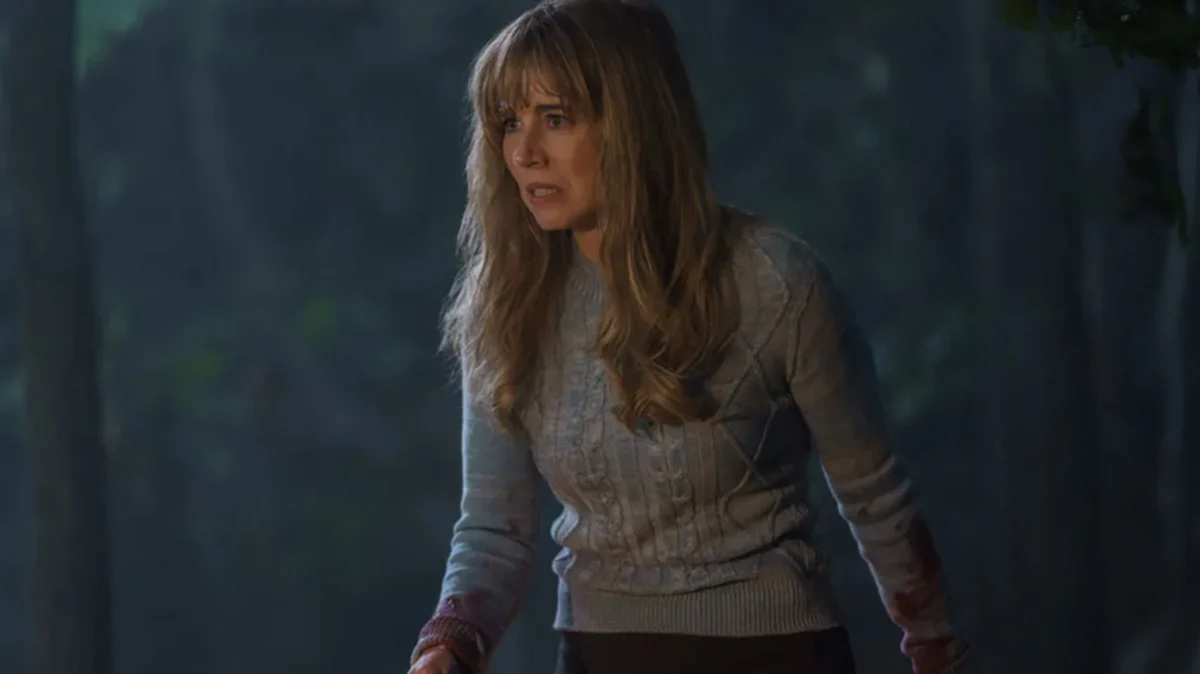
Warning: This article contains minor spoilers for Peacock’s "Crystal Lake" series.
Since its explosive inception in 1980, the Friday the 13th franchise has undergone a fascinating critical reappraisal. What began as a brazen attempt to capitalize on the burgeoning 1980s slasher boom—famously selling tickets based on the sheer body count and gruesome nature of its special effects—has evolved into a subject of deep cultural analysis. Scholars and die-hard horror aficionados alike have spent decades unpacking the franchise’s themes of morality, suburban anxiety, and campfire folklore.
Yet, even the most high-brow film critics and intellectual fans must concede a foundational truth of the series: the kills are the main event.
From elaborate machete decapitations to sleeping bag tree-smashings, the currency of Camp Crystal Lake has always been creative, over-the-top carnage. For decades, fandoms have passionately debated and ranked every single dispatch in the cinematic canon. Now, Peacock’s prequel series Crystal Lake is carrying that crimson-soaked torch into the modern television landscape. Behind the wheel of this highly anticipated series is creator, showrunner, and executive producer Brad Caleb Kane, a filmmaker who deeply understands that you cannot have Friday the 13th without a healthy dose of visceral mayhem.
In an exclusive interview, Kane opened up about the philosophy behind the carnage in Crystal Lake, revealing not only how the team approached orchestrating the season’s fatalities, but pinpointing his absolute favorite kill of the entire run—a moment that arrives early in Episode 6, titled "Kill Them, Mommy."
Main Facts: The Anatomy of Crystal Lake’s Brutal Slasher Philosophy
While crafting the narrative architecture of Crystal Lake, Kane faced the daunting task of expanding a lean, straightforward cinematic premise into a serialized television drama without losing the visceral punch that fans demand. Speaking on the writing room’s approach to violence, Kane clarified that he did not enforce a rigid quota or mandatory rule requiring a specific number of wild kills per episode.
Instead, the horror organically bled into the storytelling. Because the DNA of the series is rooted in the tragedy and vengeance that birthed Jason Voorhees and his mother, Pamela, the violence serves as a narrative punctuation mark rather than mere empty-calorie splatter.
However, when pressed to select a standout moment from a season brimming with creative homages and bloody set pieces, Kane bypassed the numerous decapitations, throat-slits, and ambient slasher fodder. Instead, his finger landed squarely on a pivotal, character-defining sequence in the sixth episode. For Kane, the ultimate kill of the season is less about the technical mechanics of the special effects and more about psychological liberation—the moment Pamela Voorhees fully embraces her dark destiny.
Chronology: Tracing Pamela Voorhees’ Descent into Murderous Empowerment
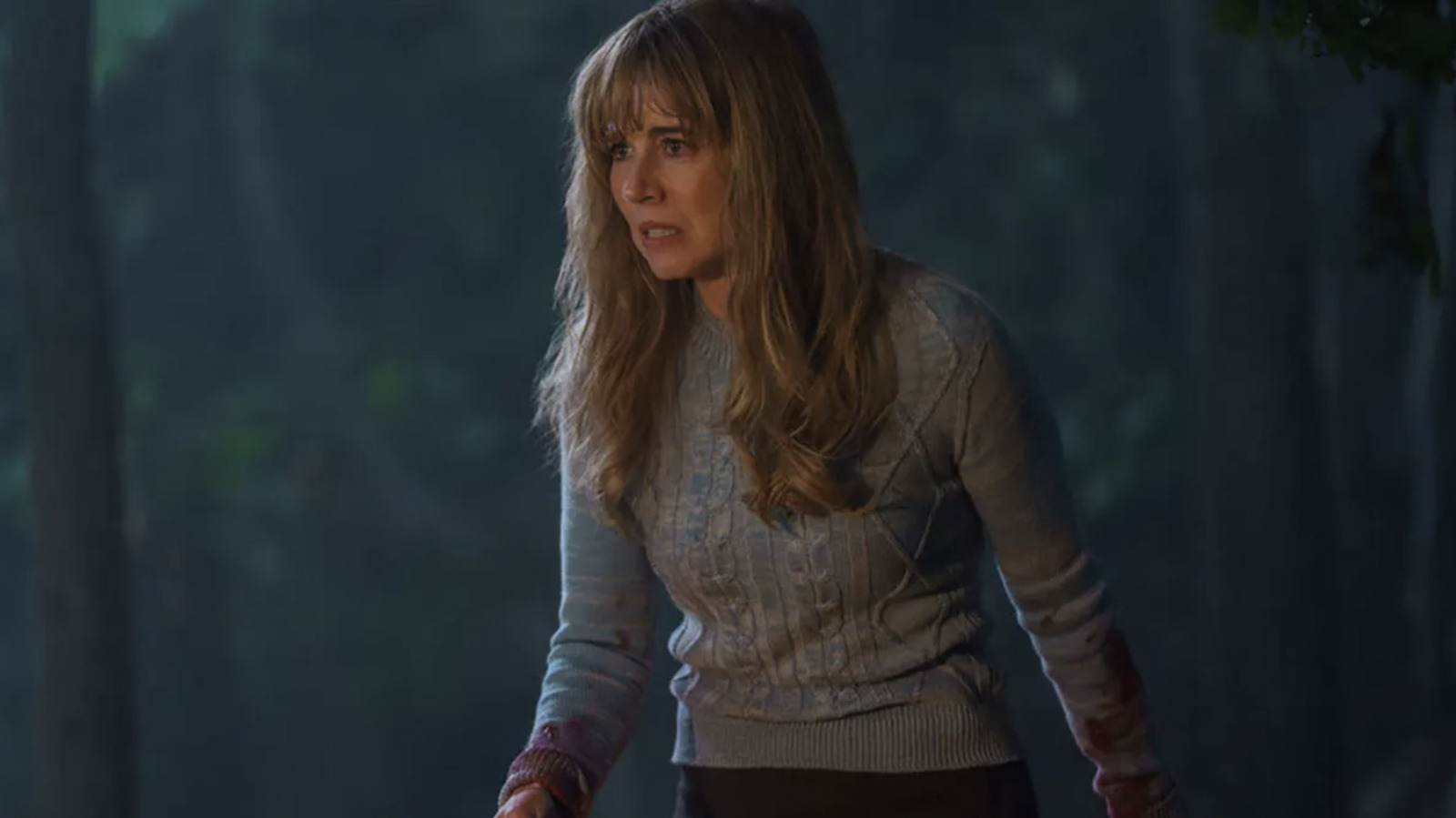
To understand why Kane’s favorite kill carries such immense weight, one must examine the narrative arc of the series up to that point. The first half of Crystal Lake spends a considerable amount of time establishing the psychological burden carried by Pamela, brilliantly brought to life by actress Linda Cardellini.
The Slow Burn to Unleashed Rage
Throughout the early episodes, Pamela is depicted as a woman wrestling with internal demons. She is not yet the remorseless, hyper-focused killing machine seen in the original 1980 film; rather, she is a complex figure experiencing a tense internal struggle. The murderous impulses lurking inside her are present—itching to break free, occasionally leaking out in moments of desperation or fury—but she actively resists them.
The tension builds systematically across the season’s first five episodes, creating a pressure cooker of maternal grief, societal failure, and suppressed rage. The audience watches a woman pushed closer and closer to the edge by a world that has failed her family and her child.
The Boiling Point: Episode 6, "Kill Them, Mommy"
The dam finally bursts at the beginning of Episode 6. The narrative context for the sequence is fueled by absolute outrage: a nomadic tribe of hippies has inadvertently dosed an adolescent girl named Grace (played by Gwendolyn Sundstrom) with a dangerous, near-fatal amount of acid.
For Pamela, this is the ultimate unforgivable sin. Armed with righteous, terrifying fury, she descends upon the hippies’ campsite to "clean house."
The ensuing sequence is a masterclass in slasher filmmaking, densely packed with multiple brutal murders in rapid succession. Pamela ruthlessly dispatches a camper by driving a knife straight through his camera lens—a brilliant visual nod to the voyeuristic nature of the genre. She follows this up by mercilessly slaughtering a couple mid-coitus, a sequence that horror historians will likely read as a loving, explicit homage to the infamous split-by-pole kill from Jason Goes to Hell: The Final Friday.
Supporting Data: The Breakdown of Kane’s Favorite Set Piece
While the campsite massacre offers an embarrassment of riches for gore hounds, it is a specific, unflinching moment of localized violence within that sequence that captured Kane’s imagination.
Describing his favorite kill of the season, Kane highlighted Linda Cardellini’s visceral performance during a prolonged, relentless stabbing sequence:
"I think for me, my favorite kill of the season is the first time Linda really locks into accepting who she is and delights in ridding herself of someone. And that actually happens in the top of episode 1:06, the top of Episode 6. […] It is a stabbing and it is a gleeful stabbing, and it is in her mind completely justified, and it is done Terminator-like over and over and over and over and over again. So that’s probably my favorite one."
Why the "Terminator-Like" Approach Works
Kane’s comparison of Pamela’s movements to the relentless, unstoppable nature of James Cameron’s The Terminator is telling. This is not a panicked, defensive killing born of self-defense; it is methodical, algorithmic, and emotionally intoxicating for the character.
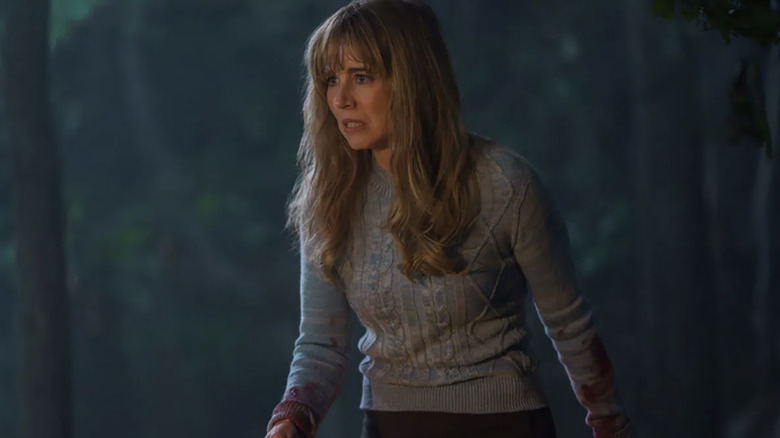
The repetition of the action—stabbing over and over and over again—elevates the scene from a standard television murder to a terrifying psychological milestone. It represents the death of the old Pamela Voorhees and the complete birth of the legendary slasher icon. The physical toll of the performance, paired with Cardellini’s ability to convey a chilling sense of "gleeful" liberation, turns a standard horror trope into an unforgettable character beat.
Official Responses and Creative Insights
The production of Crystal Lake has been heavily scrutinized by a passionate global fanbase eager to see how the legendary camp lore would be translated to the small screen. Network executives at Peacock, alongside the creative team, recognized early on that striking the right balance between psychological drama and campy slasher entertainment would make or break the series.
Brad Caleb Kane’s willingness to lean into the visceral, unapologetic nature of the kills signals a profound respect for what makes the Friday the 13th universe endure. Rather than attempting to "elevate" the material by stripping away the blood—a trap many modern horror reboots fall into—Kane and his writers have chosen to weaponize the gore, using it as a direct physical manifestation of trauma and character evolution.
Furthermore, Linda Cardellini’s casting and performance have received widespread acclaim behind the scenes. Transitioning an actor known for grounded, empathetic dramatic work into a cold-blooded slasher icon required a delicate touch. According to the production team, Cardellini’s commitment to physicalizing Pamela’s internal shift during the Episode 6 massacre was total, resulting in days of intense, emotionally draining stunt and FX work on set.
Implications: What This Means for the Future of Crystal Lake
Kane’s spotlighting of Episode 6 carries significant implications for the trajectory of the series and the broader horror television landscape.
1. Elevating Slasher Television Through Character Arc
Historically, television adaptations of slasher franchises have struggled to sustain momentum because the killers are often treated as static forces of nature from episode one. By anchoring Pamela Voorhees’ transformation in a slow-burn psychological arc that culminates in the explosive violence of Episode 6, Crystal Lake proves that long-form television can successfully marry character development with high-body-count slasher tropes.
2. Redefining Female Villains in Horror
Pamela Voorhees occupies a unique, hallowed space in horror history as one of cinema’s most terrifying maternal villains. By framing her transition into a murderer not just as a tragedy, but as a moment of "murderous empowerment" where she "delights in ridding herself of someone," the series offers a deeply provocative, albeit deeply disturbing, exploration of agency through violence. It challenges audiences to sit with the discomfort of sympathizing with a killer who finally finds her purpose in the absolute destruction of others.
3. Setting the Bar for Future Seasons
With Crystal Lake currently streaming on Peacock, the benchmark for franchise kills has officially been raised. If Episode 6 represents the narrative and physical climax of Pamela’s awakening, fans will undoubtedly tune into subsequent episodes and potential future seasons expecting an even higher caliber of creative mayhem.
As the woods of Crystal Lake continue to harbor dark secrets, Brad Caleb Kane and his team have proven that they know exactly what the audience came for: a masterclass in suspense, stellar performances, and a whole lot of gleeful, unstoppable bloodshed.
