
Unleashing the Swarm: Black Mandala and Stephen Roach Team Up for Horror-Punk Feature Rise of the Rats
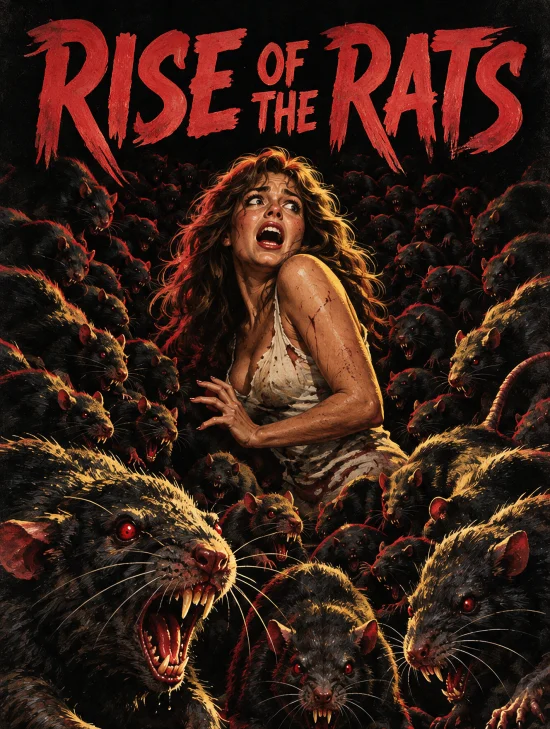
Main Facts
Genre cinema is about to get a heavy dose of leather, safety pins, and razor-sharp teeth. International sales and production banner Black Mandala has officially announced its latest blood-soaked acquisition: Rise of the Rats. Directed by genre stalwart Stephen Roach—recognized for his previous works including The Crucifix: Blood of the Exorcist and Cookster: The Darkest Days—the upcoming feature promises a visceral collision of classic 1980s creature-feature terror and contemporary British punk subculture.
Drawing explicit inspiration from beloved genre cornerstones such as Joel Schumacher’s The Lost Boys, Wes Craven’s A Nightmare on Elm Street, and Joe Dante’s Gremlins, Rise of the Rats aims to recapture the anarchic, unpredictable energy of midnight movies. Yet, despite its heavy homage to Hollywood’s golden age of practical-effects horror, the film is unapologetically rooted in a distinctively British aesthetic.
The narrative centers on Kayla Thornhill, a fiercely independent and rebellious young punk who finds herself forced into an uneasy road trip with her estranged father, Jack. Their destination is Ditchfield, a bleak, unassuming town that holds deeply buried family roots. However, what is supposed to be a tense homecoming quickly spirals into a fight for survival. Ditchfield is currently suffering under the boot of a relentless, unnatural rat infestation. Beneath the greasy surface of the town’s routine municipal problems lies a rotting history of collective violence, long-hidden secrets, and a supernatural manifestation of generational guilt known only as the Rat Man.
As hordes of bloodthirsty rodents flood the streets and the death toll begins to skyrocket, Kayla is thrust into a terrifying reckoning. She must decipher her father’s murky past and confront a dark, communal secret that the residents of Ditchfield believed they had successfully buried forever. Black Mandala is handling international sales for the project, positioning the film as a major player in the global indie horror market.
Chronology of Production and Development
While horror features often spend years lingering in development hell, the trajectory of Rise of the Rats reflects a targeted, momentum-driven approach characteristic of modern independent genre filmmaking.
The foundational concept for the film began germinating in the mind of writer-director Stephen Roach well before principal photography commenced. Roach sought to pivot away from sterile, digital-heavy horror tropes in favor of an organic, highly stylized cinematic movement. Conceptualized as a love letter to the fearless, character-driven horror of the late 20th century, the script was developed with a deliberate focus on balancing high-octane entertainment with psychological subtext.
Casting and pre-production focused heavily on capturing the specific socio-cultural milieu necessary to sell a "horror-punk" picture. Finding the right talent to embody Kayla Thornhill—a character requiring both vulnerable emotional depth and an authentic, anti-authoritarian punk exterior—was central to the early phases. Simultaneously, the production design team began conceptualizing the decaying, claustrophobic atmosphere of Ditchfield, utilizing practical locations to enhance the sense of grimy realism.
As principal photography wrapped and the film moved into post-production, Black Mandala stepped in to secure international representation. The announcement of the acquisition marks the official transition of Rise of the Rats from a regional independent production into an internationally distributed property. Moving forward, the film is slated for a strategic festival run and subsequent worldwide distribution rollouts, allowing horror audiences across the globe to witness the chaos in Ditchfield firsthand.
Supporting Data and Creative DNA
To fully understand what Rise of the Rats brings to the contemporary horror landscape, one must analyze the cinematic ingredients that shaped its creation. The production relies heavily on practical creature effects, atmospheric lighting, and high-energy pacing—elements that defined the horror boom of the 1980s.
The 1980s Blueprint
- The Lost Boys (1987): Infused Rise of the Rats with its anti-establishment youth culture, atmospheric moodiness, and a sense of belonging found within outsider circles.
- A Nightmare on Elm Street (1984): Provided inspiration for how a town’s collective sins can manifest into a supernatural stalker who forces the younger generation to pay for the sins of their parents.
- Gremlins (1984): Informed the chaotic, horde-based terror of small creatures wreaking absolute havoc in an otherwise ordinary, picturesque community.
Creative Team Pedigree
Director Stephen Roach brings a wealth of hands-on indie filmmaking experience to the project. Having previously helmed The Crucifix: Blood of the Exorcist and Cookster: The Darkest Days, Roach has cultivated a reputation for pushing genre boundaries on independent budgets. Unlike filmmakers who rely solely on CGI, Roach’s past work emphasizes texture, grit, and visceral tension—traits that are proving essential in bringing hordes of aggressive rodents and the grotesque Rat Man to life on screen.
The Anatomy of the Monster
In Rise of the Rats, the antagonist is more than a biological nuisance. The Rat Man and his vicious swarms serve as a physical manifestation of:
- Inherited Trauma: The psychological scars passed down from parents to children, particularly within dysfunctional family dynamics like the one shared between Kayla and Jack.
- Guilt and Complicity: The dark legacy of a town that chose silence over justice following a decades-old act of brutal, collective violence.
- Abandonment: The emotional fallout of broken homes and neglected youth, reflected in Kayla’s journey into the heart of darkness.
Official Responses and Creative Vision
The thematic depth of Rise of the Rats goes far beyond standard B-movie creature carnage. In statements released alongside the official Black Mandala announcement, writer and director Stephen Roach elaborated on the core philosophy driving the project.
According to Roach, the inception of the film stemmed from a craving for cinema that refuses to play it safe:
"Rise of the Rats grew out of a desire to create a horror film driven by a true punk spirit—something energetic, entertaining, rebellious, and full of character. That attitude runs through every element of the film, from its visual style and performances to the strange and dangerous world at the heart of the story."
However, Roach was quick to emphasize that the film’s high-octane aesthetic is paired with a surprisingly profound narrative spine. Beneath the leather jackets, flying fur, and visceral gore lies an exploration of human accountability:
"Beneath the fun and chaos, however, lies something much darker. At its core, the film explores what happens when the past is allowed to rot. Rise of the Rats is not simply a monster, but a manifestation of inherited trauma, guilt, violence, and abandonment."
By framing the monster as an embodiment of psychological decay, Roach and Black Mandala are positioning the feature to appeal to fans of elevated horror while retaining the crowd-pleasing, midnight-movie thrills that define the genre’s most enduring classics.
Implications for the Independent Horror Landscape
The acquisition and upcoming release of Rise of the Rats carry several notable implications for the broader independent horror market, particularly regarding how international sales agencies curate and market genre content.
1. The Resurgence of Punk Aesthetics in Horror
For years, the horror genre was dominated by polished supernatural thrillers and hyper-clean digital aesthetics. The success of indie films embracing grungier, counter-cultural tones points to a growing audience appetite for cinema that mirrors the raw, unfiltered energy of punk rock. By explicitly adopting this ethos, Rise of the Rats bridges the gap between old-school creature features and modern youth-centric rebellion, setting a potential blueprint for future indie productions.
2. Creature Features Making a Comeback
The cinematic landscape has experienced waves of zombies, slashers, and haunted house tales. Rise of the Rats signals a welcome revival for animal-attack and horde-based creature features. By updating the subgenre with modern psychological themes—such as generational trauma and municipal cover-ups—the film elevates what could otherwise be a straightforward camp classic into a resonant, socially aware piece of storytelling.
3. Black Mandala’s Market Influence
As the international sales agent for the film, Black Mandala continues to solidify its reputation as a premier home for daring, boundary-pushing international horror. By championing projects helmed by visionary indie directors like Stephen Roach, Black Mandala provides a vital pipeline for regional genre films to reach global audiences, ensuring that unique cinematic voices from the UK and beyond find their rightful place on the world stage.
As Ditchfield prepares to descend into chaos, and as Kayla Thornhill faces the horrific legacy of her father’s hometown, Rise of the Rats stands ready to remind audiences why some secrets—and some swarms—refuse to stay buried.
