
The Mini-LED Revolution: How Pocket-Sized Lighting Transformed Modern Filmmaking
In the past decade, the landscape of cinematic lighting has undergone a seismic shift. Once defined by heavy, power-hungry tungsten units and complex rigging, the industry has pivoted toward a "run-and-gun" philosophy. This evolution is driven by the rapid maturation of LED technology, which has moved from a novelty into the undisputed industry standard for professional productions of all scales. Today, a filmmaker’s greatest asset isn’t necessarily a massive lighting grid, but rather the ability to carry a studio’s worth of versatility in a single camera bag.
For independent creators, documentarians, and corporate videographers, the emergence of high-performance, compact LED lights has democratized professional-grade visuals. These handheld devices—capable of acting as backlights, eye lights, or creative accent tools—have become indispensable. Below, we examine the current state of the market, the top-tier hardware driving this trend, and why these tools are essential for the modern production workflow.
The Technological Trajectory: From Dim Bulbs to Cinematic Precision
The democratization of lighting began with the refinement of Surface Mount Device (SMD) LEDs. A decade ago, affordable LED panels were notorious for poor color rendering—often casting a sickly green or magenta hue—and lacked the output to serve as anything more than a glorified flashlight.
However, key manufacturers have bridged this gap through rigorous R&D, focusing on High Color Rendering Index (CRI) and Television Lighting Consistency Index (TLCI) scores. Modern compact lights now offer color accuracy that rivals traditional cinema fixtures, allowing for seamless integration into mixed-lighting environments. This technical leap, coupled with advanced lithium-ion battery management, has transformed the "mini light" from a budget hobbyist tool into a professional-grade production staple.
The Powerhouses: A Curated Selection of Essential Handheld Lights
While the market is flooded with options, a few specific models have risen to the top due to their reliability, build quality, and feature sets.
1. Aputure MC: The Industry Benchmark
The Aputure MC is widely regarded as the "Swiss Army Knife" of portable lighting. With a footprint roughly the size of a credit card, this bi-color unit (3200K-6500K) offers 100 levels of saturation adjustment, allowing for full RGB color control. Its hallmark feature, however, is its integration into the Aputure ecosystem.
Controlled via the Sidus Link app, the MC offers stable connectivity that allows users to manipulate color, intensity, and built-in lighting effects from a smartphone. Its magnetic backing is a game-changer; it allows filmmakers to mount the unit onto metal surfaces—from door frames to camera rigs—eliminating the need for bulky stands or clamps. For the mobile filmmaker, the MC is essentially a permanent resident of their Pelican case.
2. Lume Cube RGB Panel Pro: The Event Videographer’s Choice
For those operating in fast-paced environments like wedding or corporate event videography, the Lume Cube RGB Panel Pro is an unparalleled asset. Featuring 263 LEDs that produce 1,000 lumens of output, this unit provides the punch required to fill a scene while remaining small enough to mount directly to a camera cage.
The standout metric for the Panel Pro is its battery efficiency. It can sustain 2.5 hours of operation at full intensity, extending to 4 hours at 50% power. This makes it an ideal choice for "run-and-gun" shooters who cannot afford to swap batteries during a pivotal moment of a live event. Furthermore, its ability to shift colors makes it a versatile tool for background "practical" lighting, adding production value to static talking-head interviews.
3. Nanlite LumiPad 11: Sleek Portability
Nanlite has carved out a significant share of the market by offering robust, "no-nonsense" lighting solutions. The LumiPad 11 exemplifies this philosophy. At a mere 1.4 inches thick and weighing only 0.6 lbs, it is the definition of a portable fill light.
While its output is not intended to replace a primary key light, it excels at providing soft, diffused light to lift shadows in a scene. Its form factor allows it to be tucked into corners, behind subjects, or near monitors where larger fixtures would be impossible to place. Nanlite’s commitment to consistent, reasonably priced hardware—backed by reliable warranties—has made them a favorite among production houses that prioritize gear longevity.
4. Aputure MT Pro: The Hidden Accent Light
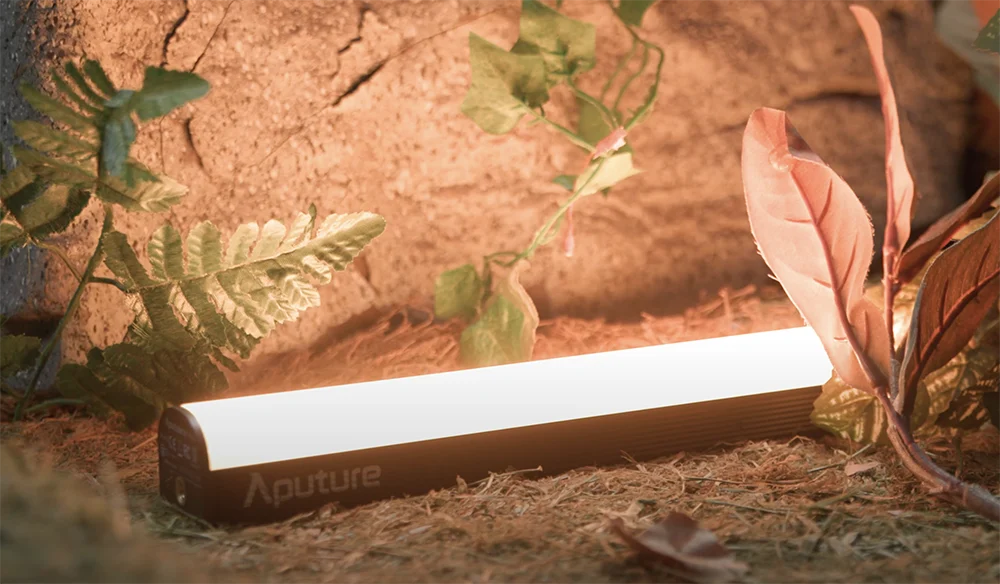
The rise of the "tube" light has changed how we think about light placement. The Aputure MT Pro is a compact, full-color LED tube that serves as a masterclass in creative lighting. Because of its narrow, elongated shape, it can be hidden behind everyday objects—bookshelves, plants, or under cabinet edges—to add depth and flare to a shot.
In professional interviews, the MT Pro is frequently used to add a subtle pop of color to the background or to provide a "rim light" that separates the subject from the backdrop. Its versatility lies in its ability to be inconspicuous while fundamentally changing the mood of a scene.
5. Nanlite PavoTube II 6C: Speed and Efficiency
The PavoTube II 6C is the primary competitor to the MT Pro and is arguably the king of the "quick-turnaround" documentary. When shooting a documentary, there is rarely time for elaborate lighting setups. The 6C is designed to be pulled out of a bag, turned on, and positioned in seconds.
With an adjustable color temperature range of 2700K to 7500K and a CRI of 98, the quality of light is professional-grade. It also includes a suite of programmable lighting effects—simulating lightning, police sirens, camera flashes, or flames—which can add an instant layer of cinematic tension to a production without the need for complex post-production editing.
6. Amaran AL-MX: The Rugged "Brick"
Often referred to by professionals as "The Brick," the Amaran AL-MX is a bi-color unit built for extreme durability. It is heavier than the others on this list, but that weight translates to a solid metal construction that can withstand the rigors of field production.
Boasting an output of 1,100 lux at 0.5m in "Boost Mode," this light is surprisingly powerful for its size. It is the preferred choice for outdoor shooters who need a reliable, high-output light to illuminate gear in the dark or to act as a harsh, punchy key light in dimly lit environments. Its ruggedness makes it the perfect companion for landscape photographers or videographers working in challenging weather conditions.
Implications for Future Productions
The shift toward these compact, high-output LED fixtures has several profound implications for the industry:
- Lowered Barriers to Entry: The cost-to-performance ratio of these lights means that students and entry-level creators can achieve "Hollywood-style" lighting setups that were previously only possible with thousands of dollars of equipment.
- Reduced Crew Sizes: Because these lights are portable, lightweight, and often battery-operated, the need for a large electric crew to manage cabling and heavy stands is significantly reduced. Solo operators are now capable of executing complex multi-point lighting setups.
- Creative Flexibility: Filmmakers are no longer tethered to AC power. This allows for shooting in unconventional locations—caves, moving vehicles, or dense forests—where the only limiting factor is the filmmaker’s own creativity.
- Integration of Smart Tech: The integration of smartphone apps (Sidus Link, Lume Cube App) means that lighting is becoming part of the "Internet of Things" in the studio. A single operator can now control a dozen lights simultaneously, adjusting color, intensity, and effects from a single interface.
Conclusion
The evolution of handheld LED technology has moved beyond the simple quest for brightness. It is now about control, color accuracy, and, most importantly, speed. Whether you are a wedding videographer needing a light that lasts through the reception, or a documentary filmmaker needing to set the mood for an interview in minutes, the current generation of compact LEDs offers a solution.
As battery technology continues to improve and the cost of RGB-capable LEDs continues to drop, we can expect the gap between "prosumer" and "professional" cinema equipment to close further. For the modern creator, the message is clear: the future of lighting is small, it is wireless, and it is more powerful than ever. Investing in a solid, versatile handheld light is no longer an optional luxury—it is the fundamental building block of the modern cinematic aesthetic.
