
The Unbroken Resistance: ‘Free Leonard Peltier’ and the Legacy of Indigenous Struggle
By Bailey Pennick
The 2025 Sundance Film Festival became the stage for a cinematic moment that blurred the lines between historical record and breaking news. Just days before the world premiere of Free Leonard Peltier, a documentary helmed by directors Jesse Short Bull and David France, the subject of the film—a man whose name has become synonymous with the struggle for Indigenous rights in America—saw his life altered. After 50 years of incarceration, President Joe Biden commuted Leonard Peltier’s life sentence to house arrest.
While the news brought a wave of relief to the activist community, the premiere at The Ray Theatre was marked less by a sense of "mission accomplished" and more by a sobering reflection on the systemic realities of the United States. For the survivors, filmmakers, and activists in attendance, the film is not merely a biography; it is an indictment of a government that has spent half a century holding a man hostage to political expediency.
The Long Road: A Chronology of Incarceration
To understand the weight of Free Leonard Peltier, one must understand the timeline of a struggle that has spanned generations.
- 1973: The Wounded Knee Occupation at the Pine Ridge Reservation brings national attention to the corruption of the tribal government and the systematic neglect of the Oglala Lakota people.
- 1975: A violent shootout at the Pine Ridge Reservation leaves two FBI agents and one Native American man dead. This event serves as the catalyst for the subsequent legal persecution of members of the American Indian Movement (AIM).
- 1976: Leonard Peltier is extradited from Canada and convicted for the deaths of the two FBI agents in a trial marred by allegations of coerced testimony, withheld evidence, and prosecutorial misconduct.
- 1977: Peltier is sentenced to two consecutive life terms, beginning a half-century journey through the federal prison system.
- 1977–2025: Over the course of 49 years, Peltier’s case becomes a global cause célèbre. International human rights organizations, including Amnesty International, repeatedly label him a political prisoner, citing the lack of a fair trial.
- January 2025: Days before the Sundance premiere, the Biden administration issues a commutation, granting Peltier a path to house arrest.
The Documentary: A Lens into Systemic Failure
Directors Jesse Short Bull and David France have crafted a sprawling, deeply researched narrative that goes far beyond the legal intricacies of the Peltier case. The film meticulously documents the rise of the American Indian Movement (AIM), framing the conflict at Pine Ridge not as an isolated incident, but as the inevitable collision between a sovereign people and a federal apparatus designed to subjugate them.
The film forces the viewer to confront the "nightmare" of the 1970s—the corruption within the reservation system, the heavy-handed involvement of the U.S. State Department, and the lingering scars of the boarding school era. As the credits rolled at The Ray Theatre, the prevailing sentiment in the room was one of profound distrust in the mechanisms of American justice.
Jean Roach, an Indigenous activist who was present at Pine Ridge during the 1975 incident, spoke during the post-premiere panel with a mixture of raw emotion and deep-seated skepticism. "It was really emotional watching all that stuff that we’ve been through," she told the audience. When asked about the news of Peltier’s impending release, her reaction was measured. "I really want to thank everybody—it wasn’t just a few of us. Worldwide, we’ve had support for Leonard," she noted, before pausing to add the qualifier that many who have lived through the U.S. government’s broken promises share: "I can’t believe it till I see him come out."
The Creative Vision: Why Now?
For filmmakers Jesse Short Bull and David France, the project was a mandate from the "Creator." Short Bull emphasized the spiritual and collaborative nature of the production, noting that the project felt guided by a force larger than themselves.
"For whatever reason, I think the Creator kept pushing us together," Short Bull remarked. "Pushing David and I together to see how we could try to serve this story."
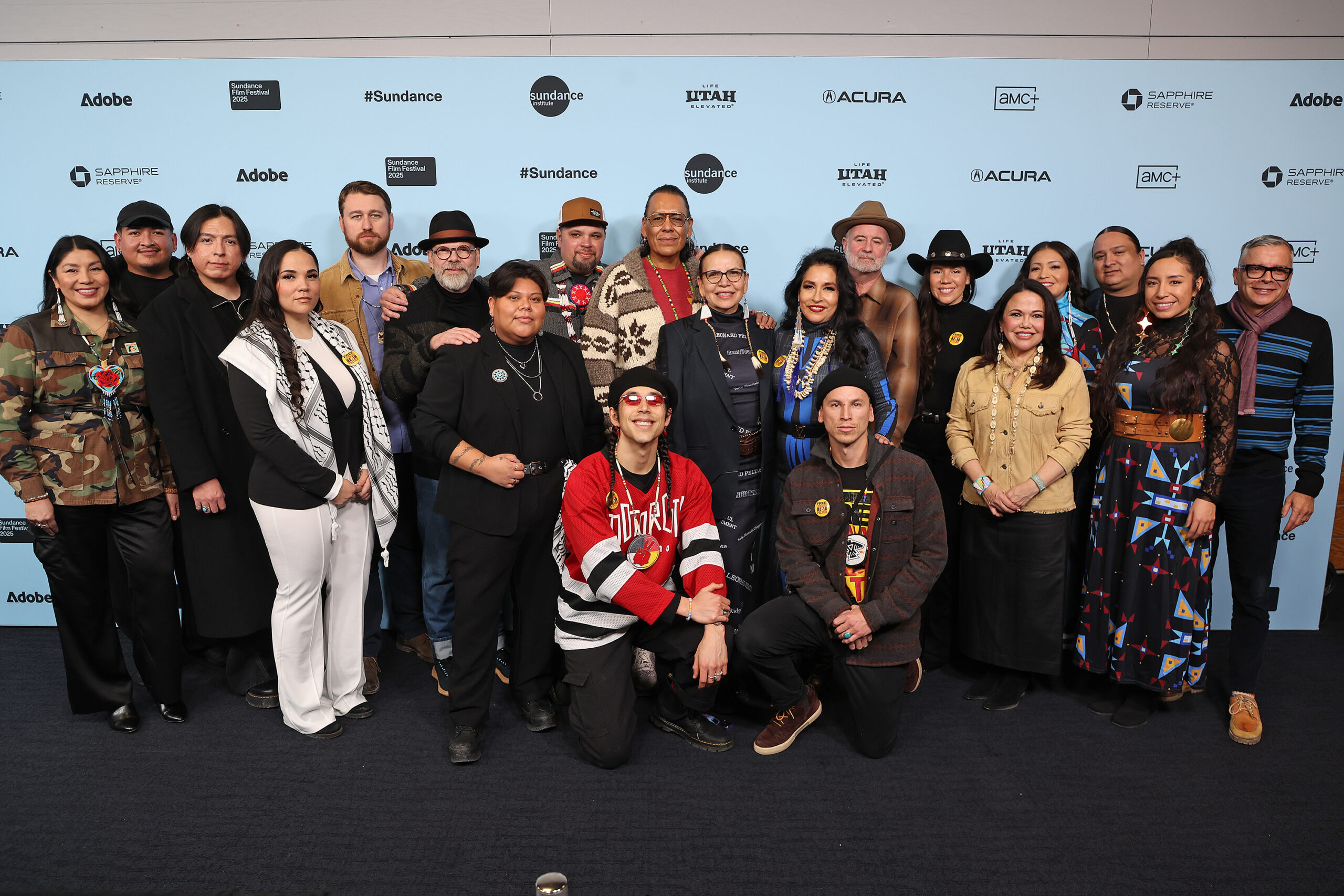
David France, an veteran documentarian, spoke of the profound impact the project has had on his own perspective. "I have followed Leonard’s case for 50 years since his arrest and have learned so much from the American Indian Movement and the work that they did back then and continue to do today," France said. "When I realized that Leonard’s 50th anniversary was coming up—the anniversary of his incarceration—I thought it was time for me to play my part in adding my voice to the ‘Free Leonard Peltier’ movement."
Official Responses and the Reality of Clemency
The commutation of Peltier’s sentence by the Biden administration is, by any metric, a monumental shift in the status quo. However, the official response from the activist community is that the commutation is not a gift; it is a long-overdue acknowledgement of a miscarriage of justice.
In the hallways of Sundance, the conversation quickly pivoted from the specifics of the pardon to the broader implications of the struggle. Activist Nick Tilsen provided a poignant analysis of what this "victory" actually represents. He warned against viewing the news as the conclusion of the story.
"I don’t think it’s just about the next month, and I don’t think this film is just about the last 49 years," Tilsen explained. "I think this film is about everything the Indigenous people have been through since the founding of this country. Every single one of Leonard’s struggles—from the boarding schools that he survived, all the way to his prosecution and his incarceration—that’s how this country has always treated Indigenous people."
Implications: A Call to Mobilize Against Authoritarianism
The film serves as a bridge between the historical fight for Indigenous sovereignty and the current political climate in the United States. As Tilsen noted, the timing of the film’s release—coinciding with the rise of authoritarianism in domestic politics—gives the narrative an urgent, contemporary relevance.
"Now we have a huge opportunity because we have not had that many victories as Indian people, but we have one now," Tilsen told the audience, receiving nods of agreement from the large group of collaborators on stage. "It is timely of where we are at in history. At this moment, this film, his resistance, our resistance, is relevant right now at this historical moment when we’re watching the rise of authoritarianism here in the United States. We cannot fight authoritarianism in the shadows; we have to mobilize if we want a future. If Leonard Peltier can fight for 49 years and win, then let’s go."
Supporting Data: The Persistence of Inequity
The story of Leonard Peltier is a statistical outlier that reflects a broader systemic issue. According to data from the Bureau of Justice Statistics and various human rights watchdogs, Indigenous people in the United States remain significantly overrepresented in the carceral system.
- Sentencing Disparities: Research from the Sentencing Project suggests that Native Americans receive longer sentences than white defendants for similar crimes, mirroring the long-term patterns seen in the Peltier case.
- Historical Context: The boarding school era, which the film references, resulted in the forced assimilation of hundreds of thousands of Native children, creating generational trauma that researchers now link to higher rates of incarceration and poverty within tribal nations.
- Global Recognition: The Peltier case has been reviewed by the United Nations Working Group on Arbitrary Detention, which has repeatedly cited violations of international law in his continued imprisonment, further highlighting the divide between U.S. domestic policy and global human rights standards.
Conclusion: Beyond the Screen
The Free Leonard Peltier documentary does not end with a neat resolution or a celebratory fade-to-black. Instead, it leaves the audience with a mandate: to recognize that the freedom of one individual is merely a single step in a much larger, ongoing march toward justice.
As the 2025 Sundance Film Festival concludes, the film stands as a testament to the endurance of the human spirit. Whether or not Leonard Peltier walks free in the coming days, his life has become a beacon for a movement that refuses to be silenced by the weight of the state. The message delivered by the crew at the premiere was clear: the struggle is not over. The fight against the systems that allowed for half a century of injustice continues, and if the energy in The Ray Theatre is any indication, the next generation of activists is ready to take up the mantle.
