
Caught in a Time Loop: Why Prime Video’s ‘Blade Runner 2099’ Struggles to Escape the Shadow of 1982
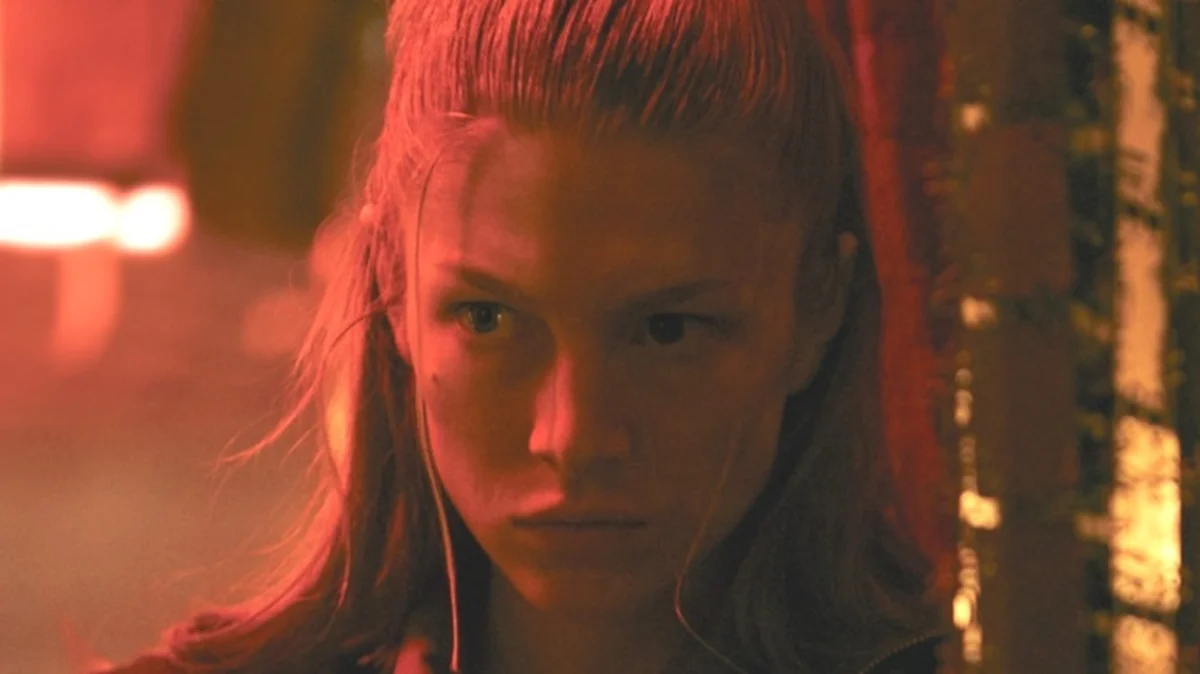
Prime Video’s much-anticipated limited series Blade Runner 2099 occupies a strange and contradictory space in contemporary science fiction television. Set in a future world that should, logically, bear the scars of immense technological progress and societal evolution, the series finds itself creatively tethered to the early 1980s aesthetic and narrative preoccupations of Ridley Scott’s original cinematic masterpiece.
Helmed by showrunner Silka Luisa, the series wears its reverence for the proto-cyberpunk urtext like a badge of honor. Yet, that unyielding fidelity has birthed a fundamental structural problem: for all its futuristic dressings, Blade Runner 2099 is trapped in a narrative time loop, recycling core plot mechanics that the franchise ostensibly resolved decades ago in its own internal chronology.
Main Facts: The Premise and the Paradox of Blade Runner 2099
At its core, Blade Runner 2099 presents a world where bioengineered replicants have largely conquered organic mankind, leading to a desperate underworld dynamic where elite Los Angeles Police Department officers—known as blade runners—hunt down uncooperative human targets.
The primary narrative engine driving the first four episodes centers on a high-stakes manhunt. Blade runner Olwen (portrayed by screen legend Michelle Yeoh) and her partner "Marian"—who is actually an undercover human named Cora, played by Hunter Schafer—are tasked with tracking down Marek (Johnny Harris). Marek is Olwen’s former partner and a prime person of interest for the underground resistance network that Cora secretly serves.
By Episode 4, the mystery surrounding Marek’s sudden departure unravels: he has gone rogue in search of a fabled golden orb. Believed to contain a preserved memory from the long-deceased replicant inventor Eldon Tyrell, this artifact supposedly holds the cryptographic and biological secrets to open-ended replicant longevity. With Olwen operating under a strict physiological countdown—she has a mere eight days left to live—Marek’s desperate quest to save her serves as the emotional anchor of the early episodes.
While narratively compelling on a micro-level, this quest relies on a macro-plot point that feels frustratingly familiar, sparking debate among critics and fans over whether the franchise is innovating or merely imitating.
Chronology: A Franchise Trapped in a 4-Year Countdown
To understand the core issue plaguing Blade Runner 2099, one must examine the chronology of the franchise across its three major cinematic and episodic installments:
1. The 1982 Original (Blade Runner)
Directed by Ridley Scott and loosely adapted from Philip K. Dick’s novel Do Androids Dream of Electric Sheep?, the original film established the tragic baseline of replicant existence. Manufactured by the Tyrell Corporation primarily for hazardous grunt work in off-world colonies, Nexus-6 model replicants were hardcoded with a strict four-year lifespan. This built-in expiration date was designed to prevent them from developing unchecked emotional maturity or staging uprisings against their human masters. The entire plot of the 1982 film hinges on Roy Batty (Rutger Hauer) and his rogue crew infiltrating Los Angeles to confront Eldon Tyrell directly, demanding an extension to their finite lives.
2. The 2017 Sequel (Blade Runner 2049)
Denis Villeneuve’s critically acclaimed sequel vaulted the timeline forward, gracefully expanding the universe’s lore. By 2049, the hard-deadline problem had seemingly been addressed by corporate evolution. Early in the film, the protagonist K (Ryan Gosling) confronts Sapper Morton (Dave Bautista), a Nexus-8 model replicant who notes he has been living and working on a protein farm since 2020—making him far older than the archaic four-year limit. Furthermore, the 2036 prequel short film established that Niander Wallace (Jared Leto) and his Wallace Corporation—having absorbed the bankrupt Tyrell Corporation—engineered new generations of compliant replicants capable of living indefinitely at the maker’s whim.
3. The 2099 Television Era
Despite more than half a century of canonical technological evolution away from the Tyrell Corporation’s archaic limitations, Blade Runner 2099 thrusts its characters right back into the exact same conflict. The hunt for Tyrell’s lost secret to replicant immortality treats decades of in-universe progression as if it never happened, raising questions about continuity and narrative ambition.
Supporting Data: Production Values, Direction, and Performances
While the narrative may tread familiar waters, Blade Runner 2099 succeeds admirably in its atmospheric execution, production design, and character framing.
Composer Leopold Ross expertly captures the shimmering electric desolation and cool jazz ambiance established by predecessors Vangelis (in 1982) and the team of Benjamin Wallfisch and Hans Zimmer (in 2049). The sonic landscape remains distinctly Blade Runner, grounding the viewer in a rain-slicked, neon-drenched dystopia.
Furthermore, the series retains the franchise’s signature approach to action sequences. Unlike modern sci-fi blockbusters where combat is often stylized, slick, and superheroic, fights in the Blade Runner universe feel chaotic, desperate, and terrifyingly visceral. A brutal jail-cell scuffle between Cora and a former colleague in Episode 1 mirrors the raw, exhausting violence of Harrison Ford’s Deckard fighting Leon (Brion James) in the original film, emphasizing survival over choreography.
On the performance front, the series provides a significant career stepping stone for Hunter Schafer. Best known for her emotionally heightened work in HBO’s Euphoria, Schafer transitions effortlessly into the gritty demands of science-fiction action. Following the path of former HBO contemporaries like Zendaya (Dune) and Jacob Elordi (Frankenstein), Schafer anchors the series’ emotional weight, effectively selling high-stakes dialogue within a demanding futuristic setting alongside Michelle Yeoh.
Official Responses and Creative Intentions
Showrunner Silka Luisa and the executive production team—which includes Ridley Scott—have maintained that returning to the roots of the franchise was an intentional choice designed to appeal to both longtime purists and a new generation of streaming audiences.
Insiders close to Prime Video’s production note that the series was deliberately paced to evoke the contemplative, noir-heavy pacing of the 1982 film rather than the kinetic, sprawling geopolitical canvas of Villeneuve’s 2049. By narrowing the focus back to the primal fear of mortality and the search for a creator’s lost wisdom, the creators sought to recapture the existential dread that made the original film a cultural touchstone.
However, official promotional materials and early critical reactions highlight a growing schism among viewers: while the aesthetic replication is near-flawless, the conceptual stagnation has become a prominent talking point in industry discourse.
Implications for the Future of the Blade Runner Universe
The creative choices made in Blade Runner 2099 carry significant implications for how legacy sci-fi properties are adapted for serialized television.
- The Trap of Nostalgia Pastiche: When a franchise relies too heavily on recreating the specific plot mcguffins of its progenitor—such as the hunt for Tyrell’s lifespan secrets—it risks creative bankruptcy. Replicants fighting for longer lives was a revolutionary thematic concept in 1982; by 2099, in a world shaped by Niander Wallace’s genetic engineering, it feels like a step backward.
- Expanding Horizons vs. Retreading Ground: Blade Runner 2049 proved that a sequel could respect its predecessor while boldly expanding the sociopolitical and technological boundaries of its world. Blade Runner 2099 demonstrates the opposite risk: prioritizing comforting familiarity over bold narrative progression.
- The Viability of High-End Sci-Fi TV: Despite its storytelling redundancies, the series proves that high-budget, atmospheric cyberpunk television can secure top-tier talent like Michelle Yeoh and Hunter Schafer. How the series resolves its overarching plot in its remaining episodes will likely determine whether it is remembered as a hollow copy or a worthwhile expansion of a beloved sci-fi canon.
As Blade Runner 2099 continues its run on Prime Video, it remains a gorgeous, moody paradox: a show about the distant future that cannot stop looking back at its own past. Whether audiences will forgive its repetitive narrative beats for the sake of its stellar atmosphere and performances will ultimately define the legacy of television’s latest trip to the dystopian streets of Los Angeles.
