
Blade Runner 2099 Season Finale Recap and Analysis: The Ultimate Voight-Kampff Test for the Audience
Introduction: The Philosophy of the Flesh
“If we couldn’t tell the difference, then there isn’t one.”
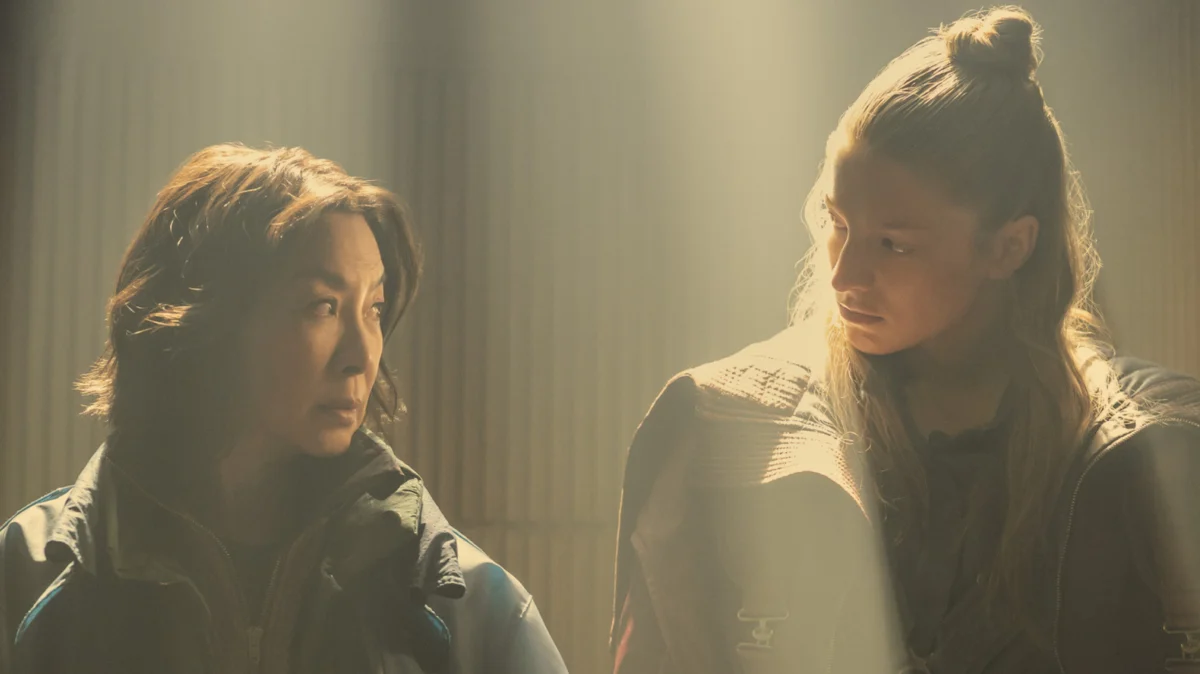
Spoken by Cora (Hunter Schafer) to Elias (Lewis Gribben) in the penultimate episode of Prime Video’s ambitious sci-fi epic Blade Runner 2099, this line serves as the philosophical anchor for the series. The shocking revelation that their adopted mother, Helena (Sheila Atim)—one of the two original Nexus-1 models—had been hiding in plain sight shakes Cora to her core. It reframes the central, burning question that has plagued the franchise since Ridley Scott’s 1982 original: What does it actually mean to be human?
These questions of authenticity, mimicry, and the illusion of difference echo with deafening intensity through the series’ breathtaking final episode. Both Cora and Olwen are forced to confront their own humanity—and the fragile architecture supporting it—in ways that leave viewers questioning the very nature of identity long after the credits roll.
Chronology of the Finale: A Descent Into the Wasteland
The Showdown at the Launch Facility
The finale opens with a chilling blast from the past: an vintage Tyrell Corporation advertisement pitching the marvels of the Nexus-1 replicants. From there, we are thrust headfirst into the modern wasteland, specifically the spacecraft launch facility where Julius (Tom Burke)—the last living Nexus-1—has established his stronghold.
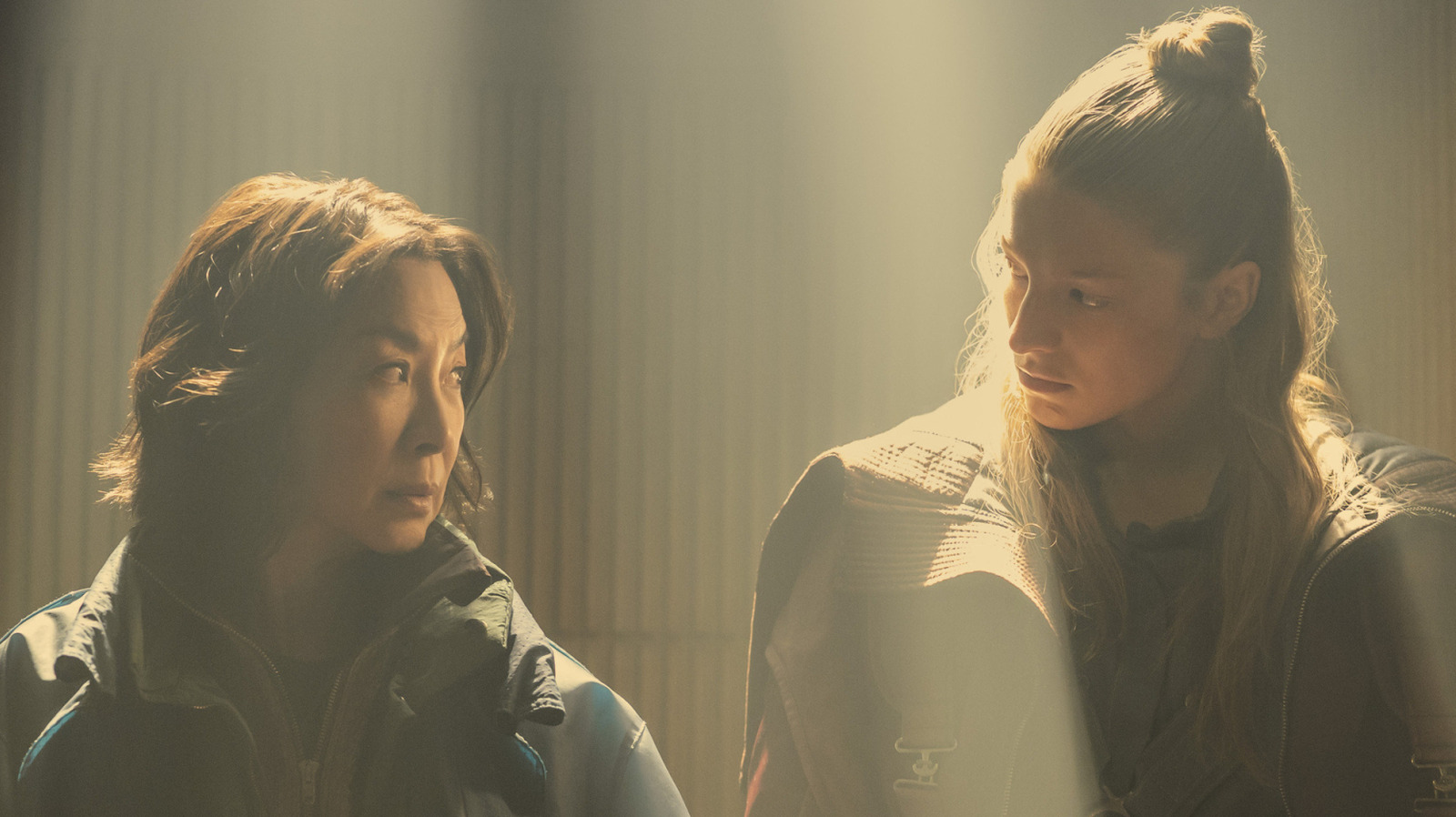
Cora and Olwen breach the perimeter, immediately crossing paths with Hodge (Wil Coban), one of Julius’s indoctrinated lackeys. Like many of the newly awakened replicants rallying to Julius’s radical cause, Hodge has crossed the threshold into something altered and unyielding. When Hodge turns hostile, Olwen dispatches him with cold efficiency.
However, the protagonists quickly find themselves overwhelmed after stumbling directly into the subterranean bunk rooms of the newly christened Nexus-1s. In the ensuing melee, both Cora and Olwen sustain heavy injuries. Clotilde (Amy Lennox)—brought back to life via Julius’s rewritten genetic code—fractures Cora’s hand. Yet, because the newly birthed replicants are disoriented and largely unarmed, Cora and Olwen carve a bloody path through the vanguard.
Amidst the chaos, a quiet, melancholic moment emerges. Cora confesses her deep, wistful love for the ocean, while Olwen tries to mentally map out where she might flee once her terrestrial obligations are fulfilled. They part ways briefly to hunt down Julius, setting the stage for individual reckonings.
Uncovering the Tyrell Resurgence
Back in Los Angeles, Elias is sweating bullets, anxiously awaiting the mandatory police sweeps following Julius’s devastating bombing of the city’s replicant birthing center. Distrustful of Cora’s true allegiances, Elias convinces Bebeto (Dimitri Abold) to help him track down Ray (Maurizio Lombardi)—the mysterious corporate fixer who originally contracted Cora to hunt down the Tyrell memory.
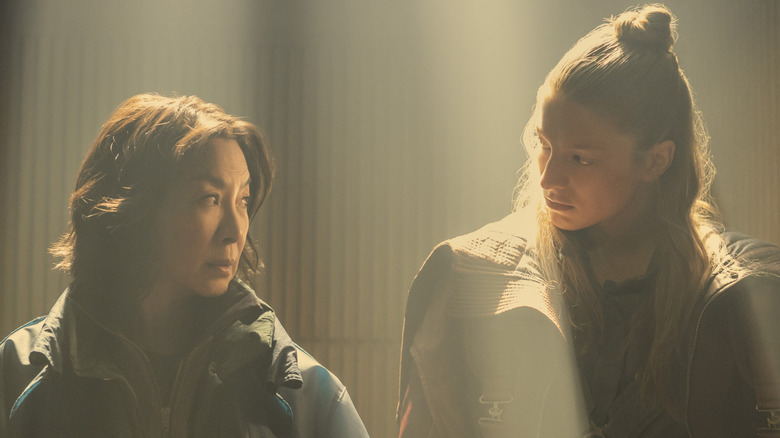
Dodging patrols, the duo locates Ray’s front business, only to discover a high-end black-market storefront dealing in Nexus-1 longevity upgrades. The truth is staggering: Ray is not merely a broker, but an executive of a secretly resurgent Tyrell Corporation. His quest for the Nexus-1 memory was driven by pure capitalism—to sell extended lifespans to wealthy, elite replicant clientele.
Ray pitches a pragmatic, brutal vision of the future to the bewildered young men: the only way humans can claw back systemic power is by buying it back. Elias, disgusted by this cynical maneuver, storms out. Bebeto, however, lingers. Tempted by an offer to oversee terrestrial operations while Ray returns to the stars, Bebeto weighs his options—though the devil’s bargain requires him to surrender Cora’s location.
The Fall of Julius
Deep within the bowels of the facility, Julius finally corners Cora. Beaten, battered, and bruised, Cora throws his past in his face, reminding him that Helena abandoned him and that she stole the memory core precisely to keep it out of his hands.
As Julius raises a makeshift weapon to execute Cora, Olwen intervenes, buying precious seconds before she, too, is overpowered. When Julius targets Olwen, Cora makes a desperate, selfless leap to take the blow. The sheer audacity of this empathetic act stops Julius for a microsecond—just long enough for Olwen to draw her weapon. Julius strikes Cora down, potentially delivering a fatal blow, but Olwen fires, critically wounding him.
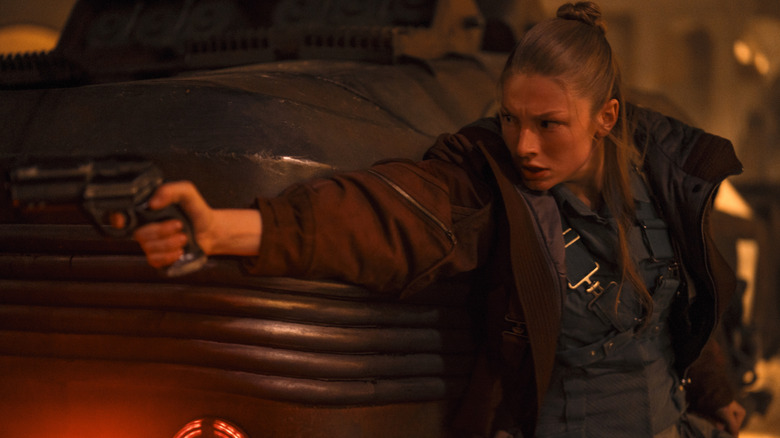
With his dying breaths, Julius crushes the Tyrell memory crystal, taunting Olwen that she will never unlock the secrets to eternal life without him. Olwen delivers one of the series’ most iconic lines before ending him:
“I’ve made so many worlds. I won’t live in yours.”
Weeping openly, Olwen cradles Cora’s unconscious body. Whether her tears are shed for Cora’s impending death or for the paradise lost, the depth of their bond is undeniable.
Supporting Data & Narrative Motifs: Competing Visions of the Future
As the episode barrels toward its conclusion, the narrative unfurls in a striking montage that outlines two diametrically opposed futures for humanity and artificial life alike:
- Elias’s Populist Uprising: Armed with Cora’s security keys, Elias flies to the island where he, Cora, and Helena once lived. Seated in the old broadcast room, he records a public transmission taking credit for Julius’s attack, reframing the terrorism as a human rebellion. “Replicants think our days are over,” he broadcasts across Los Angeles. “I won’t be their prisoner anymore.” Though Ray’s promised revolution was a corporate lie, Elias’s genuine fervor threatens to plunge L.A. into chaotic violence.
- Ray’s Corporate Recolonization: While Elias broadcasts, we see Bebeto listening intently, followed by a shot of Ray’s drone scanning Julius’s corpse. Ray smiles. Even with the crystal destroyed, he believes he can reverse-engineer the original Nexus-1 model from the remains.
Official Responses and Creative Direction
Showrunner and lead creatives have deliberately left the season’s final beats ambiguous, treating the narrative not as a closed box, but as an open-ended philosophical inquiry. Executive producers noted prior to release that Blade Runner 2099 was designed to lean heavily into the psychological paranoia established by Philip K. Dick’s source material and expanded by Denis Villeneuve in Blade Runner 2049.
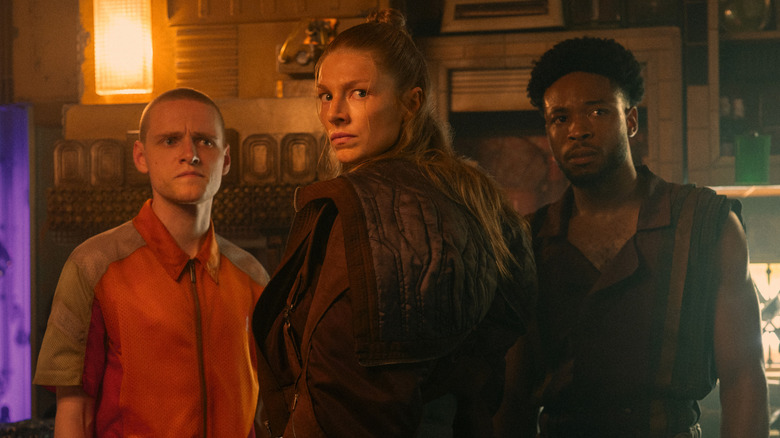
The decision to frame the finale around a literal and metaphorical Voight-Kampff test for the audience was intentional. By refusing to confirm whether characters like Cora underwent a full Nexus-1 rebirth, the creative team shifts the burden of judgment entirely onto the viewer.
Implications: The Final Voight-Kampff Test
The final moments of the season offer a masterclass in ambiguity.
In a wasteland lab, a Nexus-1 birthing bag ruptures. A hand emerges—bearing a striking resemblance to Cora’s, though the face remains obscured. Meanwhile, Olwen walks out into the blinding desert toward a spacecraft, eventually launching into the cosmos to stare out at a distant, glowing planet of her own creation.
The climax shifts to the LAPD tower. A woman bearing Cora’s exact likeness—complete with a tightened, clinical hairstyle and piercing eyes—enters the classic Voight-Kampff testing room administered by a young clerk (Katelyn Rose Downey). Instead of answering questions, Cora reverses the dynamic, probing the young administrator’s deepest personal traumas.

Is this Cora human, or has she been rewritten as a Nexus-1? The series pointedly refuses to provide a definitive answer. Instead, the testing machine delivers its verdict: Her empathy levels are off the charts, far exceeding normal human baselines.
When the terrified clerk threatens to report her, Cora offers a profound parting truth:
“You think you’ve forgotten how to be a person… But you still have that. Someone loved you. Someone put that care in you. You haven’t forgotten.”
The Verdict on Season 1
Blade Runner 2099 succeeds because it refuses easy answers. Whether Cora is flesh-and-blood or synthetic, the show argues that the origin of empathy matters far less than its existence. It is the care we receive, and the love we pass on, that ultimately defines our humanity.
As the credits roll over the infinite expanse of the stars, the ultimate Voight-Kampff test has been handed to us. How did you grade the finale? Let us know your thoughts below.
