
Unpacking Mike Flanagan’s Carrie: A Masterclass in Modern Horror That Misses One Crucial Mark
Introduction
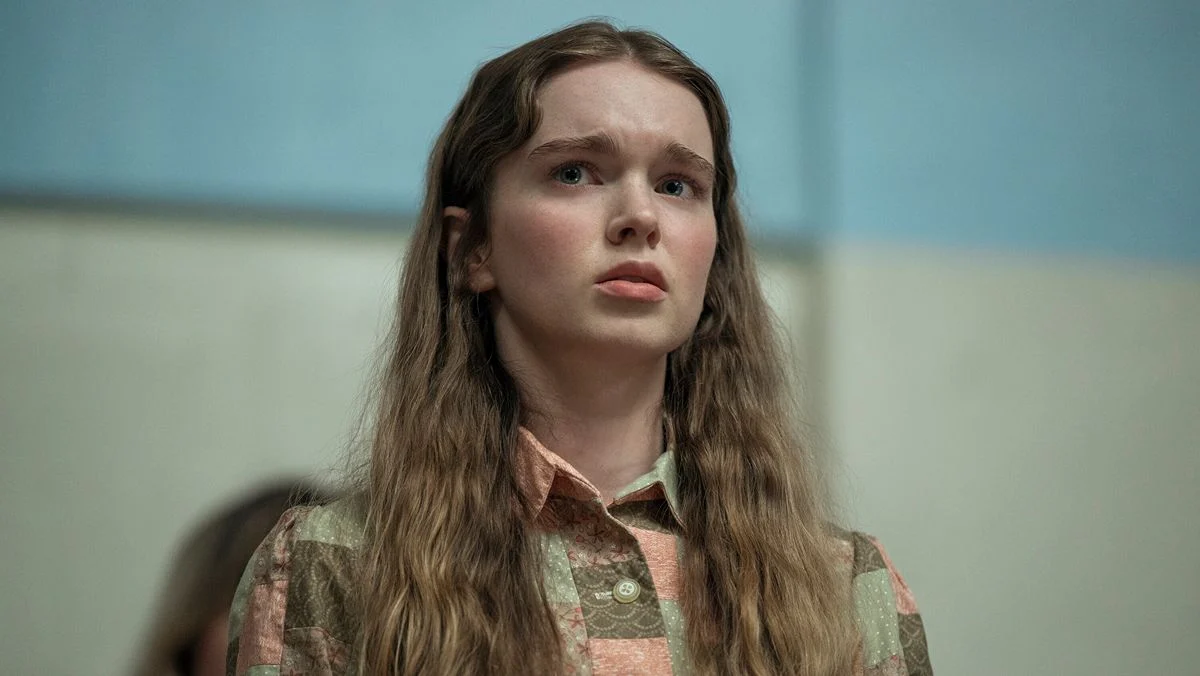
Against all odds, Prime Video’s new television adaptation of Stephen King’s seminal 1974 horror novel, Carrie, is a remarkable creative triumph. Helmed by acclaimed horror auteur Mike Flanagan (Midnight Mass, The Haunting of Hill House), the series breathes fresh air into a text that has already seen multiple cinematic adaptations, most notably Brian De Palma’s legendary 1976 film. Flanagan manages the impossible by faithfully honoring the major story beats while deftly modernizing the narrative for a contemporary 2026 audience.
Yet, despite its numerous strengths, the series introduces a singular, polarizing creative choice: it fundamentally alters the tragic climax of the story. By shifting the blame for the catastrophic prom massacre away from Carrie White (played by Summer H. Howell) and onto a newly introduced character, the series inadvertently lets its titular protagonist off the hook. While this narrative pivot clearly aims to clear the runway for potential future seasons that extend far beyond King’s original ending, it strips the story of its most harrowing and morally complex thematic weight.
Main Facts: A Bold New Vision for a Classic Tale
The Creative Force Behind the Adaptation
Mike Flanagan has built a career on deeply empathetic, character-driven horror, making him seemingly the ideal creator to tackle Stephen King’s breakthrough novel. His eight-episode adaptation, now streaming in its entirety on Prime Video, preserves the core elements of the original text—religious fanaticism, severe bullying, and the agonizing isolation of adolescence—while framing them through a 21st-century lens.
The Central Controversey: Agency and Accountability
The primary fracture point for critics and longtime fans alike lies in how Flanagan handles Carrie’s infamous vengeful rampage. In King’s novel and De Palma’s film, Carrie is pushed to her absolute breaking point by a relentless campaign of torment, culminating in the cruel pig’s blood prank at the high school prom. Her subsequent slaughter of her classmates and destruction of the town are entirely her actions—horrific, indiscriminate, and devastatingly absolute.

In Flanagan’s version, however, an intervention by a new character named Emaline (Thalia Dudek) alters this trajectory. When asked if she can "take the wheel" during the chaos of the prom, Emaline steps in to commit the deliberate acts of mass murder. Consequently, Carrie is absolved of her most heinous crimes, transforming a cautionary tale about the human capacity for reciprocal evil into a narrative inflected with themes of supernatural possession.
Chronology of the Narrative Shift: From Page to Prime Video
To understand how Flanagan’s adaptation reaches this controversial juncture, it is helpful to trace the escalation of the series’ plot and its departures from King’s literary blueprint.
1. The Introduction of the Secret Society
One of the most sweeping structural additions to Flanagan’s adaptation is the integration of a secret society of women gifted with various psychic abilities, including telekinesis, pyrokinesis, and telepathy. This hidden cabal has operated in the shadows for centuries, monitoring individuals who manifest extraordinary mental powers.
Upon entering high school, Carrie White immediately draws the attention of this covert organization. Among them is Emaline, a young astral projector played with eerie poise by Thalia Dudek. Initially appearing to Carrie as a sympathetic, unseen peer at school—evoking comparisons to classic psychological thrillers like The Sixth Sense—Emaline’s true nature is eventually revealed. She is not a ghost or a figment of a fractured mind, but a living practitioner capable of projecting her consciousness across vast distances.

2. The Prom Night Intervention
The tension peaks during the senior prom sequence. When bully Chris Hargensen (Alison Thornton) executes the infamous prank, drenching Carrie in pig’s blood, the emotional trigger for the classic massacre is pulled.
However, before Carrie can fully unleash her unmitigated rage, Emaline manifests psychically at her side. Asking permission to "take the wheel," Emaline assumes control of Carrie’s physical body and psychic energy. While the initial, accidental destruction at the prom stems from Carrie’s raw shock, the calculated, systemic murder spree that follows is orchestrated and executed by Emaline.
3. Survival and the Horizon of Season Two
Because Emaline shoulders the burden of the massacre’s worst atrocities, Carrie White survives the catastrophic events of the season finale. This survival shatters the self-contained tragedy of King’s original ending, opening the door for an expanded television universe that could span multiple seasons.
Supporting Data & Production Insights
- Platform Availability: All eight episodes of Carrie dropped simultaneously on Prime Video, backed by heavy promotion from Amazon MGM Studios.
- Cast & Crew: Headlined by Summer H. Howell as Carrie White and Thalia Dudek as Emaline, the series features a stellar supporting ensemble including Alison Thornton as Chris Hargensen. The production design blends classic high school tropes with moody, atmospheric cinematography characteristic of Flanagan’s stylistic catalog.
- Reception: Critical consensus heavily praises the series’ pacing, emotional depth, and modernized social commentary, though reviews remain divided on the handling of the prom sequence.
Official Responses and Creative Justification
While Mike Flanagan and his writing team have not explicitly mapped out every beat of a potential second season, industry insiders and thematic analysis point to a clear logistical motivation: serial television demands a sustainable protagonist.

If Carrie White were to commit premeditated mass murder on the scale depicted in the finale, she would permanently cross the threshold from tragic victim to irredeemable villain. For a multi-season television format to succeed, the audience must retain a baseline of sympathy and willingness to root for the central character. By dividing the culpability between Carrie’s initial reactive defense and Emaline’s calculated possession-like control, the creators preserve Carrie’s fundamental innocence, ensuring she remains a viable protagonist moving forward.
Implications: What is Lost When the Monster is Remade?
The core brilliance of Stephen King’s Carrie has always rested on an uncomfortable, deeply human premise: that ordinary people, when subjected to systemic cruelty, isolation, and institutional abuse, are capable of monstrous acts.
The Problem of the "Bad Seed" vs. the Pushed Soul
Society often prefers to categorize mass murderers and perpetrators of horrific violence as "bad seeds"—individuals born without a conscience or fundamentally broken from the start. This worldview offers a comforting psychological distance, implying that regular people pushed to their limits do not harbor the capacity for such darkness.
King’s novel rejected that comfort. Carrie was not a demon, nor was she possessed; she was a deeply neglected, bullied teenager who finally snapped. When readers and viewers sympathized with her retaliatory rage—despite knowing it was morally abhorrent—it forced them into a state of profound moral introspection.

The Cost of Absolution
By introducing astral projection, psychic cabals, and a proxy executioner in Emaline, Flanagan’s adaptation removes that sharp edge of moral ambiguity. Carrie is granted an alibi for her worst atrocities.
While this creative swing successfully modernizes the narrative framework and sets up an intriguing sci-fi/horror expanded universe for future seasons, it fundamentally softens the blow of the story’s thesis. The horror of Carrie was never just about telekinesis or high school cruelty; it was about the terrifying realization that kindness and innocence can be systematically eroded until absolute evil takes root organically.
Conclusion
Mike Flanagan’s Carrie remains a masterclass in modern horror television—brilliantly acted, beautifully shot, and anchored by an incredible lead performance from Summer H. Howell. It succeeds in almost every conceivable way as a contemporary reimagining. Yet, in its quest to pave the way for future storytelling, it sacrifices the uncompromising moral complexity that made the original tale a timeless masterpiece. It is a minor misstep in an otherwise stellar achievement, but for purists of horror, it is a heavy price to pay.
