
Beyond the Cogs and Crows: LAIKA’s Epic Stop-Motion Masterpiece Wildwood Pushes the Boundaries of Animation
Main Facts
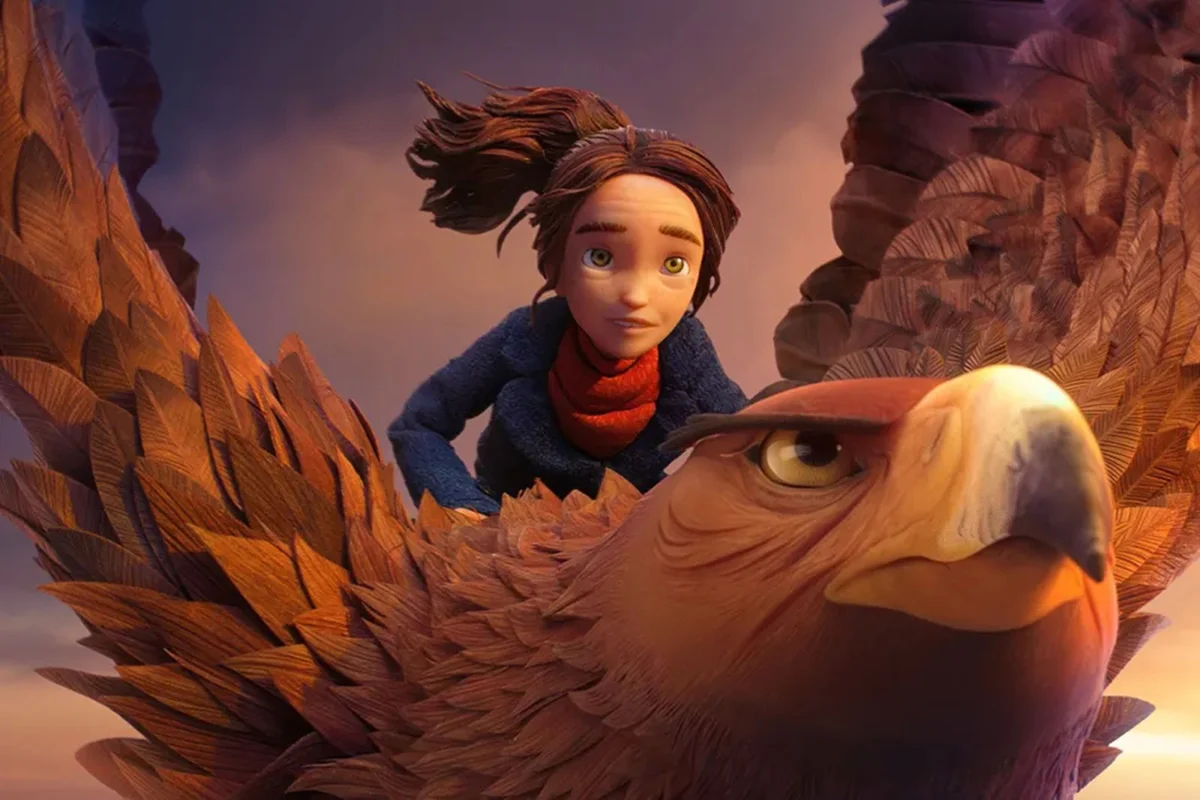
LAIKA, the renowned stop-motion animation studio that first bewitched and terrified audiences in 2009 with Coraline, is returning to the silver screen with its most ambitious, sprawling, and visually arresting project to date: Wildwood. Directed by studio chief Travis Knight, the film is a lavish, uncompromising adaptation of the 2011 young adult fantasy novel by Colin Meloy, lead singer of the indie-folk band The Decemberists.
Slated to open in theaters on October 23 following its world-premiere acclaim at the 2026 BFI London Film Festival, Wildwood immediately establishes a tone that refuses to pander to the sanitized sensibilities of modern mainstream children’s entertainment. The narrative kicks off in modern-day Portland with a striking, gothic cold open: a young boy commits suicide, ripping open his own chest to reveal that he is an automaton operated by intricate cogs. The unsettling imagery sets the stage for a dark, atmospheric journey that pulls viewers deep into a world styled more after the Brothers Grimm and J.R.R. Tolkien than Disney or contemporary multiplex fare.
The voice cast features an impressive roster of talent, including Peyton Elizabeth Lee as protagonist Prue McKeel, Jacob Tremblay as her nerdy classmate Curtis, alongside Jake Johnson, Maya Erskine, and Carey Mulligan as the sinister former governess Alexandra. Earning a hard-fought PG-13 rating within its first sixty seconds, Wildwood positions itself not as a cheap horror knockoff, but as an emotionally resonant, high-stakes dark fairytale that trusts its audience to grapple with themes of mortality, grief, and trauma.
Chronology of Production and Release
- 2011: Colin Meloy publishes the New York Times bestselling YA novel Wildwood, the first installment in his acclaimed fantasy trilogy set in an alternate, magical version of the Portland wilderness.
- 2015–2019: Following the release of Kubo and the Two Strings (2016) and Missing Link (2019)—the latter of which holds the record as the most expensive stop-motion film ever made, despite an underwhelming box-office return—LAIKA quietly begins development on the adaptation of Meloy’s universe.
- 2024–2025: Production ramps up under Travis Knight’s directorship, utilizing cutting-edge rapid prototyping and classical stop-motion techniques to render massive forest environments, complex puppet mechanics, and sweeping battle choreography.
- Late 2025 / Early 2026: The film is completed, boasting a technical scope that industry insiders begin comparing to Peter Jackson’s The Lord of the Rings trilogy.
- September 2026: Wildwood makes its highly anticipated world premiere at the 2026 BFI London Film Festival, instantly cementing itself as a critical darling and earning praise as one of the finest animated films in recent memory.
- October 23, 2026: The film officially opens in commercial theaters nationwide.
Supporting Data and Creative Evolution
To understand the weight of Wildwood, one must look at the trajectory of LAIKA as a studio. Since their breakout hit Coraline, the studio has steadfastly avoided becoming a one-trick pony reliant purely on superficial horror tropes. While 2012’s ParaNorman leaned heavily into overt horror references—and is widely regarded by critics as the studio’s weakest, most derivative effort—subsequent releases have systematically sought to revive unfashionable or financially risky genres in modern animation.
However, this artistic ambition has historically come at a steep financial cost. Missing Link attempted a globe-trotting Victorian adventure in the vein of Jules Verne and The Lost City of Z, driving production budgets sky-high while failing to recoup its expenses at the box office. Wildwood risks repeating this financial tightrope walk, yet it doubles down on scale rather than scaling back.
Technically, Wildwood represents a watershed moment for stop-motion animation. The production team successfully translates sweeping, epic-scale warfare into the physical medium of miniature puppets and handcrafted sets. Critical comparisons to the Battle of Helm’s Deep from The Lord of the Rings are not hyperbolic; the film manages to stage large-scale military clashes between anthropomorphic coyote armies and town factions while still holding space for quiet, devastating character beats where the psychological scars of violence are rendered palpably.
Furthermore, the film’s environmental transformations—such as reeds rapidly choking physical sets in real-time sequence staging—showcase a level of tactile craftsmanship that CGI-dominated studios simply cannot replicate. True to LAIKA tradition, the film’s credits close with a behind-the-scenes look at the painstaking fabrication process, maintaining the studio’s philosophy of acting as illusionists who willingly pull back the curtain to show audiences how the magic is made.

Narrative Breakdown and Official Perspectives
The story follows modern Portland teenager Prue McKeel (Peyton Elizabeth Lee), who is explicitly warned by her hippie parents (Jake Johnson and Maya Erskine) never to take her baby brother, Mac, outside. Naturally, the rule is broken. Their carefree morning walk turns into a nightmare when a murder of crows—reminiscent of the iconic avian terror in Alfred Hitchcock’s The Birds—swarms the playground and abducts the infant, whisking him away into the dense, forbidden forest surrounding the city limits.
Accompanied by her perceptive classmate Curtis (Jacob Tremblay), Prue ventures into the uncharted, overgrown woods. A mysterious path opens before them, but they are quickly separated after an ambush by an army of anthropomorphic coyotes. Prue finds herself imprisoned as an outsider in a strange woodland town, while Curtis is brought before Alexandra (Carey Mulligan). Rather than treating Curtis as a prisoner, Alexandra views him as a replacement for her own long-dead son—a child she has repeatedly attempted to build artificial replicas of.
Alexandra has also captured baby Mac to serve a dark, manipulative purpose, escalating underlying tensions among the warring factions of the forest. To rescue her brother, Prue must navigate a fractured realm on the brink of collapse and defeat Alexandra’s machinations.
While studio heads and marketing departments often panic at the prospect of alienating younger demographic groups with dark material, Travis Knight and screenwriter Chris Butler have maintained an unwavering faith in their audience. Speaking on the thematic weight of the film, early critical analyses draw parallels to the work of Japanese animation master Hayao Miyazaki. Much like Spirited Away or Princess Mononoke, Wildwood refuses to sanitize its fairytale world, allowing wonder and grimness to occupy the same space. Characters are permanently marked by the darkness they encounter, proving that children’s entertainment does not need to be toothless to be impactful.
Broader Implications for the Animation Industry
In an era where major Hollywood animation studios are increasingly risk-averse, relying on safe intellectual property, formulaic sequels, and algorithm-tested formulas, Wildwood stands out as a defiant counter-programming anomaly. It is an expensive, uncompromising, handcrafted epic that challenges the notion of what "family-friendly" animation is allowed to look and feel like.
There is a distinct possibility that Wildwood may struggle to capture broad, mainstream box-office dominance among very young children, particularly given its uncompromising PG-13 tone and unsettling visual motifs. Yet, its cultural footprint may ultimately mirror that of legendary cult milestones—much like the famous industry axiom that the few thousand people who bought the first Velvet Underground record all went on to form their own bands. Wildwood serves as an artistic beacon, inspiring a new generation of young viewers who see it to pick up pencils, clay, and cameras, realizing that art can be dark, beautiful, and profoundly complex.
For adult cinephiles and animation purists, Wildwood arrives as a breathtaking reminder of the visceral magic and terror inherent in classic folklore. By marrying the scale of high-fantasy epics with the meticulous, soul-crushing labor of stop-motion animation, LAIKA has delivered not only a career-defining triumph for Travis Knight but indisputably one of the greatest animated films of the modern era.
