
The Painter of Time: Gu You’s Cinematic Odyssey Beyond the Trilogy
Chinese filmmaker Gu You, formerly known as Gu Xiaogang, has spent the better part of a decade crafting a cinematic language that transcends the traditional boundaries of narrative film. Drawing deep inspiration from the scrolling compositions of ancient Chinese landscape painting, Gu has established himself as a singular voice in contemporary art-house cinema. With his latest feature, The First Taste of Loneliness, currently making its world premiere in competition at the Busan International Film Festival, the director has confirmed that his ambitious exploration of the relationship between landscape and human existence will not conclude with a trilogy, as originally planned. Instead, he is already deep into research and development for a fourth installment—one that promises to pivot toward genre-driven storytelling.
The Architecture of a New Vision
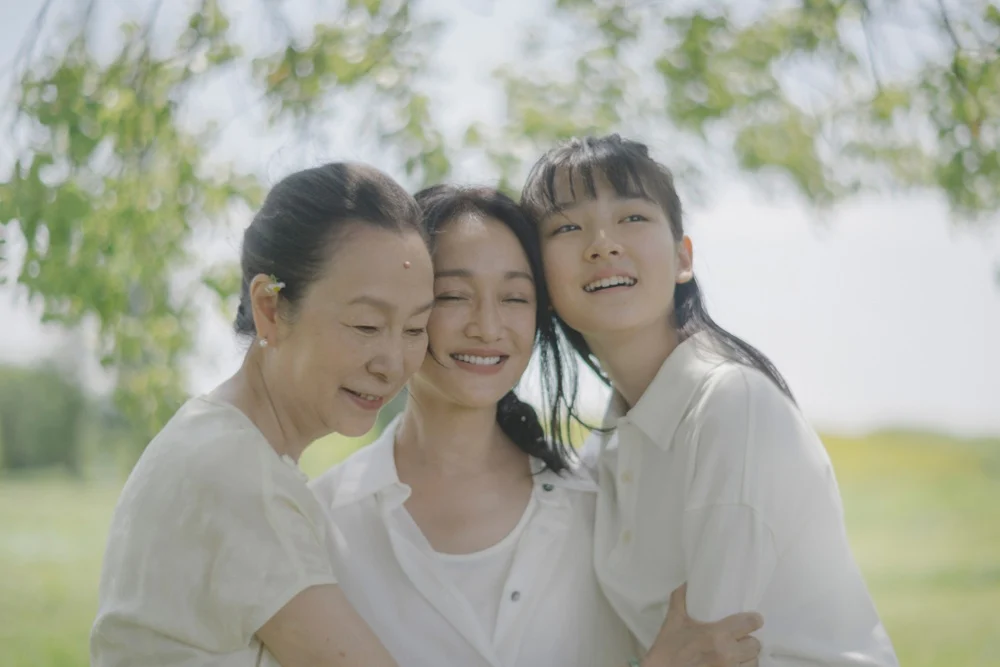
The First Taste of Loneliness represents a profound evolution for Gu. Produced by Hangzhou Shanshui Films in collaboration with France’s Tandem Films, the project brings together an A-list cast including Zhou Xun, Xi Meijuan, and Wang Shengdi. The film follows three generations of women navigating the aftermath of a patriarch’s death, exploring how the sudden void left by a loved one forces a reckoning with mortality and isolation.
For Gu, the decision to extend his cycle of films—which began with the critically acclaimed Dwelling in the Fuchun Mountains (2019) and continued with Dwelling by the West Lake (2023)—was born of necessity. "While making the second film, I realized this is a topic that requires continuous exploration," Gu told Variety. "What the relationship between landscape and cinema truly is? It is so difficult, extraordinarily difficult. Overall, even though I have completed three films, I feel as though I am only just beginning. I’ve only grasped a tiny fragment of that relationship."
Chronology of a Cinematic Journey
Gu You’s ascent has been marked by a rigorous, almost meditative commitment to his craft. His debut, Dwelling in the Fuchun Mountains, set a high bar, famously becoming the first Chinese-language film to close the Cannes Critics’ Week in 2019. It established his signature aesthetic: long, fluid takes that mirror the unrolling of a traditional silk scroll, inviting the viewer to traverse space and time at a deliberate, contemplative pace.
The success of his debut was followed by Dwelling by the West Lake, which competed at the Tokyo International Film Festival in 2023 and opened the Beijing International Film Festival the following year. It was during this period that Gu’s stature on the international stage was solidified, underscored by his receipt of the prestigious Kurosawa Akira Award, an honor that made him its youngest-ever recipient.
The First Taste of Loneliness acts as the latest pivot in this trajectory. The narrative roots itself in personal tragedy; the film’s premise was shaped by the death of Gu’s father-in-law shortly after the director’s marriage. This life event catalyzed a period of profound reflection for Gu and his wife, serving as the emotional bedrock for a story that interweaves the Buddhist concept of enlightenment through affliction with the evocative verses of Song Dynasty poet Su Dongpo.
Supporting Data and Production Methodology
The production of The First Taste of Loneliness was defined by a commitment to organic realism. Gu and his cinematographer, Takimoto Mikiya, adhered to a set of six strict rules, the most vital of which was that every frame must function as a stand-alone painting. The film consists of just over 50 shots—a remarkably low count for a feature-length production, achieved through the use of grueling, extended takes.
Gu consciously rejected the convenience of digital stitching or CGI, opting instead for the "raw power" of location shooting. This approach presented significant logistical hurdles, particularly given the shift from the non-professional actors used in his debut to high-profile stars like Zhou Xun.
"In the first film, we used non-professionals who could blend into the background," Gu explained. "With stars like Zhou Xun, the challenge was immense." To capture scenes in public spaces, such as hospitals, the crew had to employ a "guerrilla" style of filmmaking. If a location was compromised by the presence of a crowd, the team was forced to abandon the site entirely, rewrite the scene, and find a new environment that preserved the authentic realism required by their aesthetic.
The result, according to Gu, is a masterclass in performance. "I felt like I was appreciating a master at work," he said of Zhou Xun. "She truly is a master, especially with such long takes. We call it ‘acting without acting.’ She appears simply to be living life, yet delicately conveys every nuance."
The Societal Lens: An Aging East
Beyond its aesthetic achievements, the film offers a piercing look at the shifting social dynamics of modern China. One narrative thread explores the life of a widow (Xi Meijuan) who seeks companionship again, a decision that creates friction within her family. Gu notes that as China, like Japan and South Korea, grapples with an aging population, the "empty nest" syndrome and the complexities of parental remarriage have become urgent social topics.
Gu acknowledges that these themes are perceived differently across cultures. Comparing the reception of his work to the films of Hong Sang-soo, Gu observed, "In France, this [the friction caused by parental dating] didn’t seem to be an issue at all. Europeans might find it somewhat trivial or sentimental, but in the East, it remains relatively conservative and tied to traditional emotions."
Future Implications: The Turn to Genre
As Gu looks toward his fourth project, the industry is buzzing with the news that he intends to step outside the purely "art-house" container. He has hinted that the next installment may experiment with the conventions of the road movie, romance, or suspense thriller.
This pivot does not suggest a abandonment of his principles, but rather an expansion of them. Gu remains deeply fascinated by the interplay between the "snow" of life’s beauty and the "mud" of its loneliness. He views the integration of these opposing forces as the ultimate goal of his cinema.
Furthermore, while Gu is a proponent of technology in his daily life—using AI for logistical office tasks—he remains a staunch traditionalist when it comes to the lens. He sees his work as a corrective to the hyper-digitized nature of modern visual media. "Precisely because we live in this era, we want to return to the core essence of cinema," Gu stated. "We want to tell audiences: this was captured in reality."
Conclusion
The persistence of Gu You’s vision suggests that we are witnessing the formation of a lifelong project—a sprawling, multi-part inquiry into what it means to exist in a rapidly changing landscape. By refusing to be categorized as merely a maker of slow-burn dramas, and by embracing the potential of genre, Gu is positioning himself to challenge his audience in new and unexpected ways.
As The First Taste of Loneliness prepares for its broader release following the Busan International Film Festival, it serves as a testament to the idea that, in the hands of a true artist, even the most fleeting moments of grief can be transformed into a lasting, visual meditation on the human condition. For Gu You, the scroll is still unrolling, and the true work is only just beginning.
