
The Soundtrack of Duality: How Laura Karpman’s Jazz Score Became the Soul of American Fiction
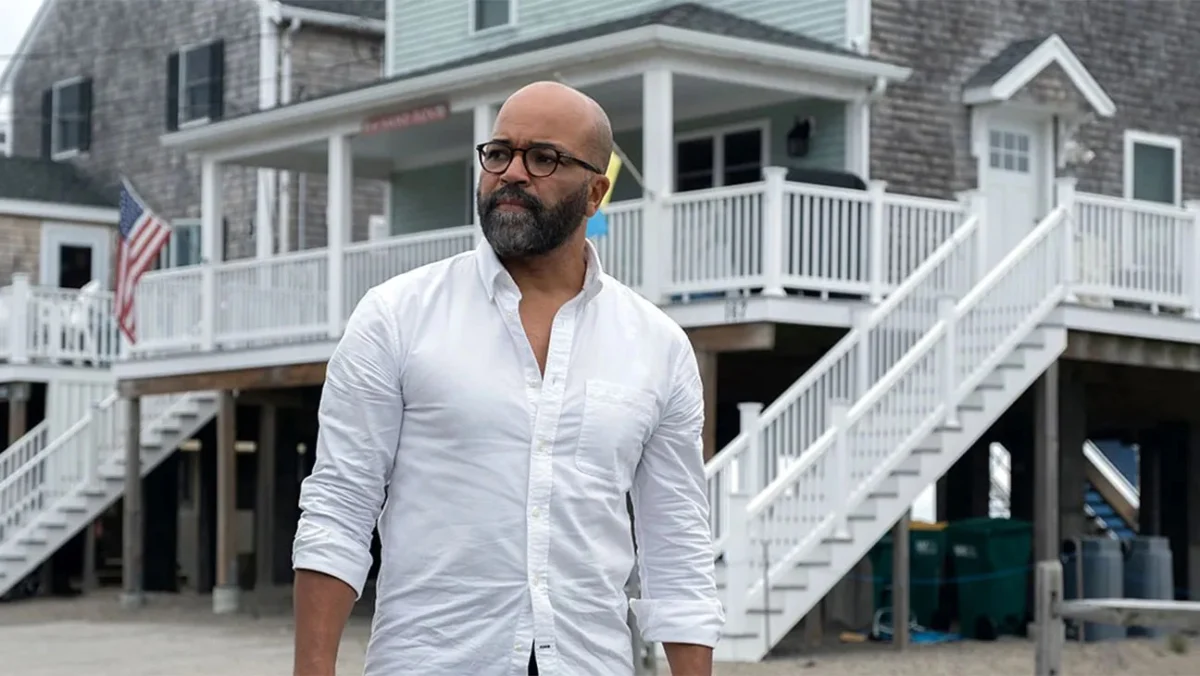
In Cord Jefferson’s directorial debut American Fiction, the narrative is a masterclass in tonal tightrope walking. The film oscillates with effortless grace between biting cultural satire, intimate family drama, and grounded romance. Yet, as the film’s protagonist, Thelonious “Monk” Ellison—played with weary, brilliant precision by Jeffrey Wright—navigates the absurdity of the publishing industry and the heart-wrenching realities of his personal life, the film’s most profound emotional truths are often unspoken.
When the dialogue hits a wall or the characters find themselves unable to articulate their internal fractures, the score takes over. Composed by the prolific Laura Karpman, the jazz-infused musical landscape of American Fiction does not merely underscore the action; it acts as a silent participant in the film’s discourse. Through a meticulous interplay of instrumentation and thematic invention, Karpman’s work provides the connective tissue that allows the audience to feel the precise frequency of the characters’ hidden selves.
The Genesis of a Sonic Language
The collaboration between Cord Jefferson and Laura Karpman began with a singular vision: the music needed to be as agile and intellectual as the screenplay itself. From the outset, Karpman identified the actors’ voices as fundamental instruments within her ensemble. She viewed her role not as a provider of background atmosphere, but as a conversational partner to the dialogue.
“When Jeffrey [Wright] delivers a line, the saxophone plays something in response that is truly dancing with the dialogue,” Karpman explained in an interview with IndieWire. She describes the interaction as musicians “swapping fours”—a jazz term for alternating short solos—where the cadence of human speech becomes indistinguishably intertwined with the breath of the saxophone and the trill of the flute. This deliberate synchronization lends the film an improvisational, spontaneous texture, even though every note was chosen with architectural precision to ensure maximum emotional resonance.
Thelonious Monk: The Architectural Influence
The film’s title character, Monk, is named in homage to the legendary jazz pianist Thelonious Monk, a choice that served as the primary North Star for Karpman’s compositional process. While the production team briefly flirted with the idea of utilizing the jazz legend’s actual recordings, they ultimately pivoted, recognizing that the film’s specific narrative demands required a bespoke sonic identity.

Karpman turned to the structural philosophy of Thelonious Monk’s playing style to decode the protagonist’s duality. “The way Monk plays, his left hand and right hand almost feel like two different musicians,” she noted. “The left hand is pointed and sharp and blocky, and the right hand is fluid and moves quickly.”
This dichotomy proved to be the perfect musical metaphor for the film’s protagonist, who is simultaneously the rigid, high-minded college professor and the cynical, creative force behind his literary alter ego, Stagg R. Leigh. Karpman channeled this into a theme characterized by jagged, rhythmic playfulness, which could, at a moment’s notice, melt into the lush, vulnerable melodies required for the film’s romantic subplots. The music was tasked with the heavy lifting of guiding the audience through radical shifts in tone, often providing the emotional "permission" to laugh at scenes that were simultaneously tragic and ridiculous.
Family Dynamics and the Art of Being Out of Sync
Beyond the individual character studies, Karpman developed a distinct “family theme” to anchor the sequences involving Monk’s mother and siblings. To capture the complex, often strained nature of these familial bonds, she employed a novel technical approach: using two instruments to play identical musical material, but with a slight, deliberate offset in timing.
“It’s the way this family works—they always feel a little out of sync,” Karpman observed. This technique serves as a profound sonic representation of the characters’ inability to fully connect, despite sharing the same fundamental “material.” The emotional payoff occurs when these instruments finally align in harmony during a pivotal scene between Monk and his brother. The resolution is subtle yet devastatingly effective, demonstrating the power of music to translate abstract family dysfunction into a visceral experience for the viewer.
The “My Pafology” Concerto: Layering High and Low Art
One of the film’s most critical sequences involves Monk writing “My Pafology,” a deliberately crude, exploitative novel intended to mock the literary world’s fetishization of Black trauma. As Monk types, the score moves beyond traditional accompaniment to become an exploration of his internal process.

Karpman layered multiple pianos to illustrate the descent into his alter ego’s mindset. The music begins as a mysterious, atmospheric piece, gradually introducing a secondary piano with a restless, wandering line. As the scene intensifies, a full string orchestra joins the mix. Notably, Karpman incorporated recordings from a restored Steinway B, an instrument with a storied history, having been gifted to her father by the famous Hollywood hairstylist Sydney Guilaroff. The resulting sound is a sophisticated, orchestral blues that acts as a bridge between the “high art” of a piano concerto and the “low art” of the genre fiction Monk is forced to produce.
Chronology of Composition: Playing with Genre
The film’s climactic sequence, which presents a singular life event through three distinct narrative lenses, required a tour-de-force of musical dexterity from Karpman. She had to compose three separate, yet thematically linked, iterations of the same scene:
- The Realistic Approach: A revisit to the themes established during the writing of “My Pafology.”
- The Romantic Comedy Approach: A lush, sweeping, and triumphantly melodic score.
- The Action-Oriented Approach: A high-tension composition inspired by the gritty, percussive aesthetic of 1990s police dramas.
Karpman referred to this as a “cool exercise” in genre-bending. It was the ultimate test of her score’s versatility, proving that the themes were not static, but living entities capable of supporting vastly different cinematic moods while maintaining their core identity.
Implications for Modern Film Scoring
The success of the American Fiction score highlights a shift in how directors and composers are approaching the relationship between sound and story. By eschewing the "wall-to-wall" orchestral approach in favor of a jazz-inflected, ensemble-based score, Karpman has created a blueprint for how to handle films that occupy multiple genres simultaneously.
The score’s ability to "turn on a dime" without losing the audience’s emotional tether is a testament to the sophistication of modern film music. It suggests that, in the hands of a composer who understands the structural DNA of a film, music can do more than just manipulate audience reaction; it can define the intellectual and emotional boundaries of the story itself.

For Cord Jefferson, the music provided the safety net required to take creative risks. For the audience, it provided a compass, guiding them through the complex, often contradictory landscape of Monk’s world. In American Fiction, the score is not just a secondary layer—it is the heartbeat of the narrative, proving that sometimes, the most profound things are expressed not through words, but through the spaces between the notes.
Official Responses and Industry Reception
The critical consensus surrounding American Fiction has consistently highlighted the score as a standout element. Critics have noted that while the script is razor-sharp, it is Karpman’s music that prevents the film from feeling overly cerebral or cold. By grounding the intellectual satire in the warm, humanizing tones of jazz, the music creates a bridge between the protagonist’s cold exterior and his deeply emotional interior.
Industry insiders have pointed to the film as a prime example of "thematic precision"—a concept where the composer works in tandem with the editor and director to ensure the sound design is as narrative-driven as the cinematography. Karpman’s work has since been lauded as a career-defining achievement, solidifying her reputation as a composer capable of navigating the most challenging tonal requirements with an ease that belies the immense technical complexity of her work.
As American Fiction continues to resonate with audiences, its legacy will likely include a renewed appreciation for the role of jazz in contemporary film. It serves as a reminder that the best soundtracks are those that act as a character in their own right, capable of whispering the truths that the characters themselves are not yet ready to say aloud.
